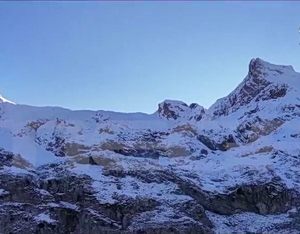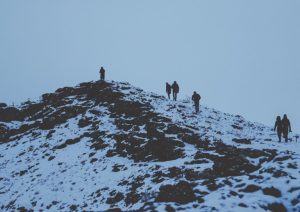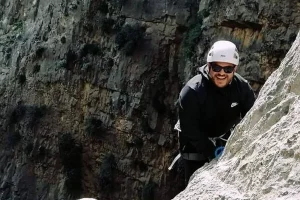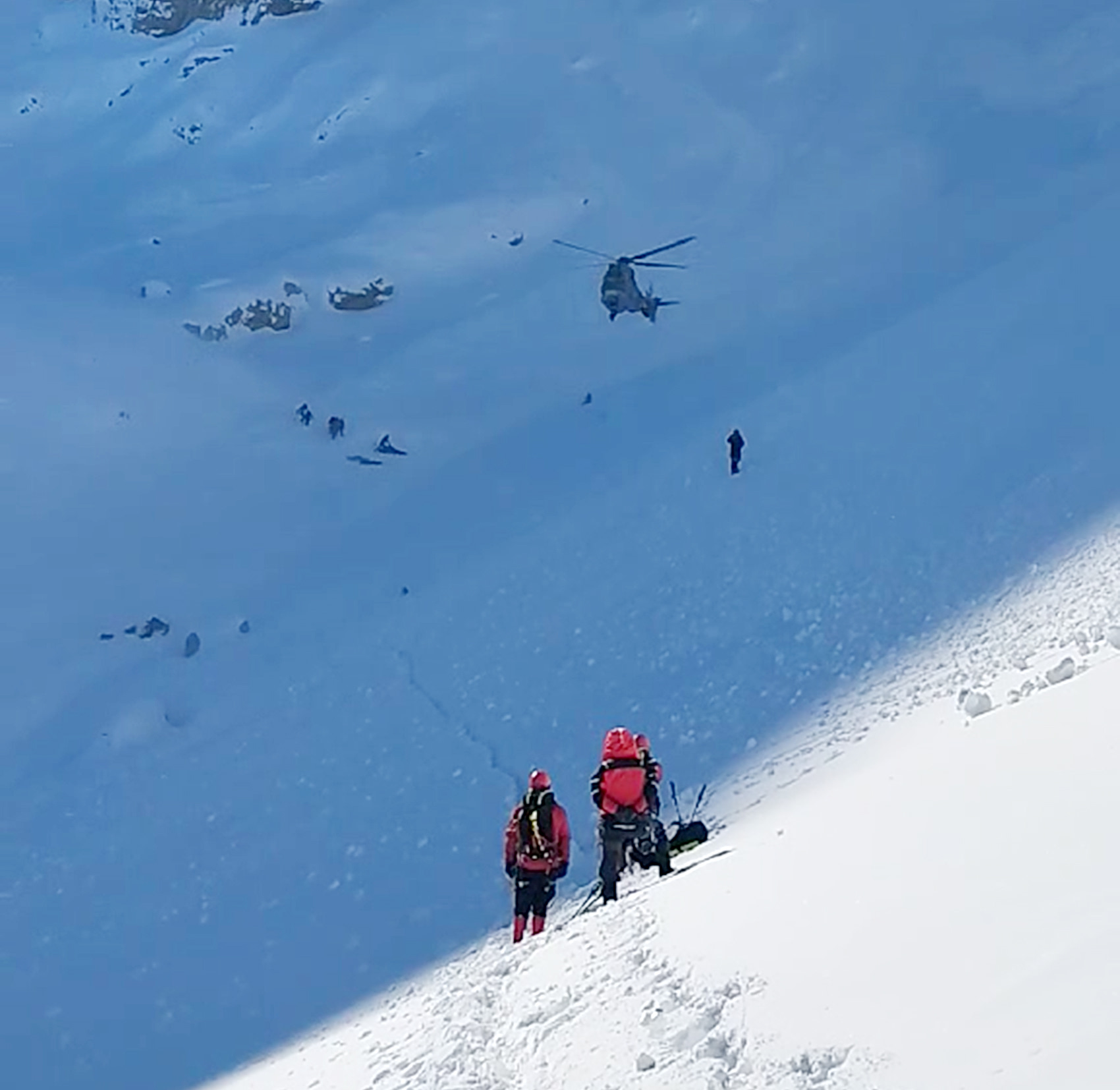
The framework for rescuing mountaineers in Greece is entering a phase of significant changes, aiming to limit dangerous choices and to shift the financial burden to those who undertake unjustified risks. In particular, citizens who proceed with reckless and dangerous mountaineering or climbing activities and subsequently request assistance from the Fire Service and other agencies for their rescue will now be required to cover themselves the particularly high cost of rescue operations.
This amount can reach tens of thousands of euros, as it includes both helicopter flights — calculated at more than 1,500 euros per hour — as well as the transport and deployment of ground forces. Hundreds of such cases are recorded each year.
The regulation follows the logic of the existing framework for boat owners and operators, who, when they depart from ports despite sailing bans and require rescue, are charged the costly expenses of Coast Guard mobilization. The Ministry of Climate Crisis and Civil Protection, under its political head Ioannis Kefalogiannis, is preparing — as revealed by “V” — to promote, through a joint ministerial decision, the transfer of rescue operation costs to the mountaineers themselves. Similar measures already apply in countries such as Germany and Austria, with international standards being examined by the Ministry’s competent services.
Aim: Reduction of Dangerous Excursions
The purpose of the forthcoming regulations is to reduce dangerous and costly choices by citizens who move unprepared in the mountains, without appropriate equipment and necessary training, often in adverse weather conditions, and end up getting lost. At the same time, the aim is to limit human losses from such risky excursions into nature, often undertaken without any preparation.
Representatives of mountaineering clubs point out that at least 30% of those attempting such reckless ascents of mountain ranges, etc., are amateurs, without sufficient infrastructure and awareness of the dangers they may face. Indicative of the escalation of the problem is that during the recent holiday period the Fire Service handled approximately 50 incidents, mainly involving disorientation, falls, entrapment in snow, and other events, many of which are not publicized.
Within the framework of the Ministry’s new policy, the involvement of insurance companies is also expected, following foreign models. Companies will provide insurance coverage to those active in the Greek mountains and beyond and, in the event of an accident, will assume the rescue cost that would otherwise burden the State.
This insurance will be accompanied by specific conditions. According to those studying the new measure, insured individuals will be required to possess appropriate equipment and to avoid ascents when official warnings about dangerous weather conditions have been issued. Otherwise, compensation will not be paid — as is also the case in road accidents caused under the influence of alcohol.
It is estimated that the new measure will function both as a deterrent and educational tool, contributing to limiting risks and unjust loss of life in the name of a careless “walk in the mountains.” Data from the competent authorities and rescue teams are revealing. Each year, between three and six people lose their lives during mountaineering or hiking on dangerous trails, while at least 20 to 40 search and rescue operations are carried out, in addition to dozens more that do not reach public attention.
On Mount Olympus alone, over the past 75 years, 70 deaths have been recorded. It is noteworthy that approximately 90% of mountaineering activity — with more than 100,000 visitors annually — is concentrated on Olympus, followed by the Pindus range and other mountainous regions of the country. The recent tragedy in Vardousia with four dead mountaineers, as well as earlier fatal incidents — on Olympus in December 1976, on Mainalo in February 2005, in Tzoumerka in January 2022, and on Helmos in February of the same year — with a total of 19 dead mountaineers, reflect the heavy “blood toll” of mountain excursions.
The Hellenic Mountaineering and Climbing Federation supervises more than 80 clubs throughout the country, covering activities such as ascents, hiking, and alpinism. Another 35 clubs and associations fall under the Federation of Naturalist–Mountaineering Associations of Greece, while dozens of local and independent bodies are active offering climbing, hiking, and maintenance of trails and shelters. As Evangelos Misiakos, president of the Hellenic Mountaineering Association of Athens — Association of Mountaineering, Climbing, Skiing, and Ascents — states to “V,” the transfer of rescue costs and the establishment of insurance constitute necessary measures to limit risks and reckless choices. The association already insures — against accidents — 100 athletes engaged in sport climbing and ski mountaineering, as well as another 40 members undergoing relevant training.
According to him, approximately 1,000 members are active, having, however, adequate training and knowledge of the ascent field, snow quality, and related risks. Nevertheless, as Mr. Misiakos notes, “indeed the percentage of those who operate in a dangerously amateur manner is significant and constantly increasing.”
The Coast Guard’s charges and penalties for similar operations are determined by a circular of January 2020. A characteristic case occurred in Crete, where a couple rescued in bad weather conditions was charged 1,894 euros per hour for the mobilization of a Coast Guard vessel, 1,230 euros per hour for Super Puma helicopter flights, and six euros per hour for the employment of each coast guard officer.
The Briton Who Paid 14,000 Euros
Abroad, in many regions of Italy, mountaineers who violate climbing regulations are charged for their rescue, even with cost calculations per minute of helicopter flight. In fact, a British mountaineer paid more than 14,000 euros after being rescued in the Alps, as he had ignored relevant warnings.
For this reason, many choose to join organized clubs that provide rescue insurance coverage up to a specific amount that may exceed 25,000 euros. In Germany, assistance to non-injured individuals or in cases of loss of orientation is usually charged to the citizens themselves. Thus, many are members of mountaineering clubs that also provide insurance coverage of up to 20,000 euros.
A similar regime applies in Austria and Slovakia, where the relevant cost is transferred to citizens and insurance companies. The same applies in Switzerland, where Rega (Swiss Air-Rescue), a private non-profit organization, is also active and undertakes a large part of rescue missions.