 Μake us preferred on Google
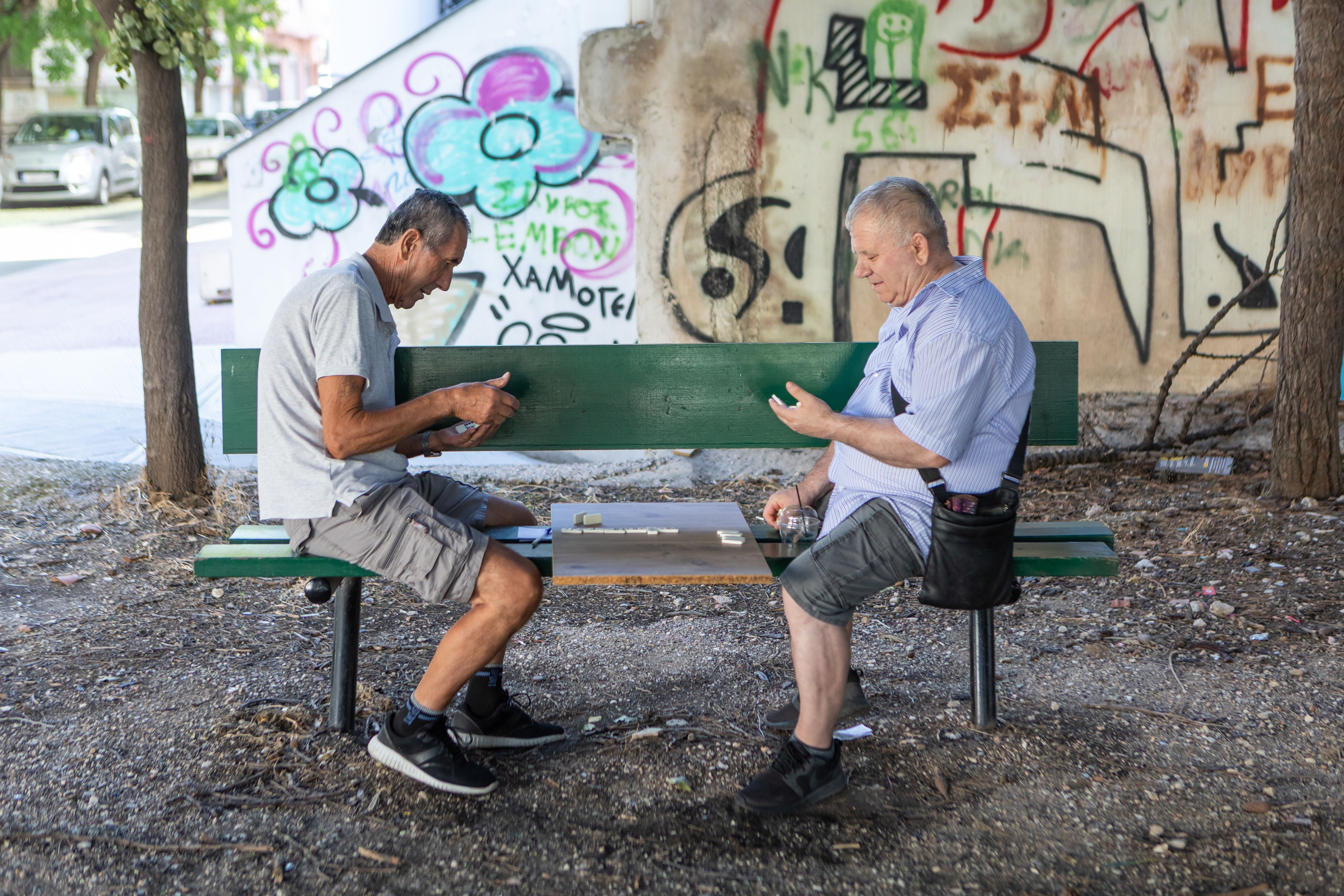
 As temperatures climb to 95 degrees Fahrenheit (35 degrees Celsius), the sprawling public housing complexes of Dourgouti in Athens’ Neos Kosmos district still provide a welcome refuge from the summer heat. Mature trees, open courtyards, and small squares—an increasingly rare urban luxury in modern Athens—offer shade where residents gather on benches, children ride bicycles, and neighbors tend to their balconies. Nearby, tourists navigate the maze-like neighborhood with smartphones in hand.
Few visitors would guess that this quiet residential district, tucked behind the hotels and office towers lining Syngrou Avenue, was once one of Athens’ largest shantytowns. Fewer still would realize that the former refugee settlement now stands at the center of another major transformation, as rising rents, short-term vacation rentals, and growing housing demand gradually reshape its identity.
A Neighborhood Born From Refuge
Dourgouti’s history mirrors that of modern Athens itself.
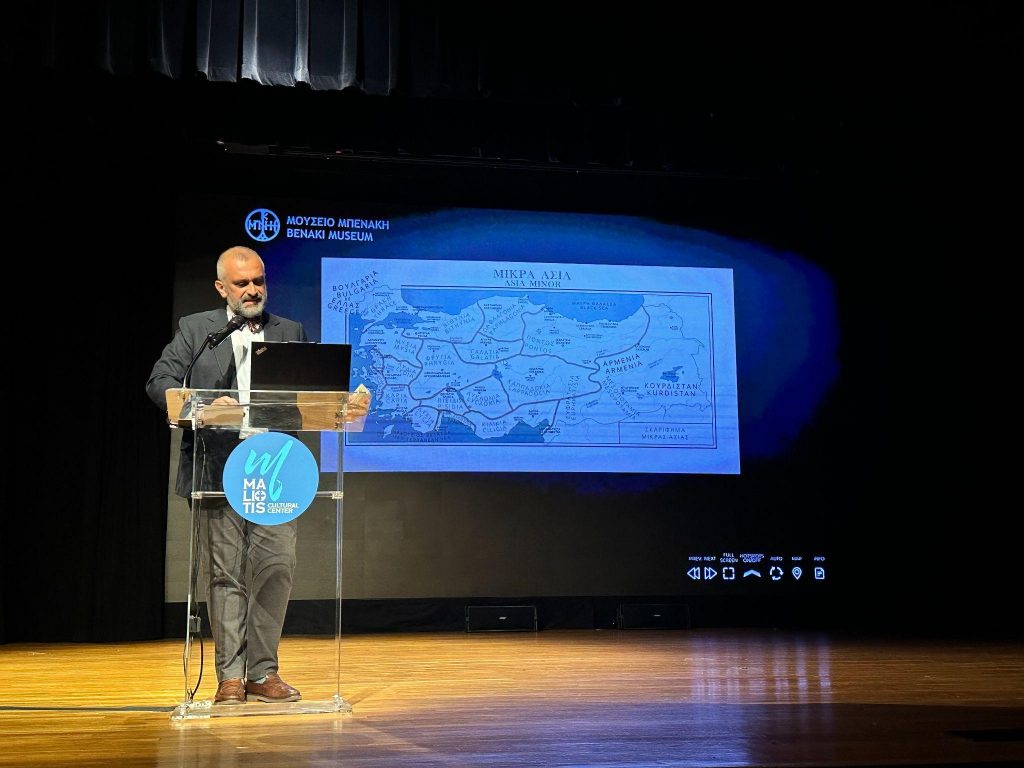
Although the area existed as farmland during the 19th century, its destiny changed after the Asia Minor Catastrophe of 1922, when thousands of Greek refugees from Smyrna, Pontus, and other parts of Asia Minor settled there alongside Armenians fleeing persecution in the Ottoman Empire.
Within just a few years, Dourgouti had become one of Athens’ largest refugee settlements, commonly known for decades as “Armenika” because of its sizable Armenian community.
Housing consisted of makeshift wooden and metal shacks with little infrastructure and poor sanitation. Despite the difficult living conditions, residents built a close-knit community based on mutual support, and the neighborhood retained its multicultural character for decades.
A Vision for Social Housing
The area’s transformation began in the mid-1930s, when the Greek state sought an innovative solution to the refugee housing crisis.
Architects Kimon Laskaris and Dimitris Kiriakos designed the first eight apartment buildings, drawing inspiration from European modernism and the Bauhaus movement. Their simple facades, flat roofs, emphasis on natural light, and expansive communal spaces introduced a radically new approach to affordable housing in Greece.
The most dramatic change came after World War II. During the 1950s and 1960s, large public housing complexes containing up to 96 or even 102 apartments were constructed, providing homes for thousands of workers, refugees, and internal migrants. For many families, receiving the keys to one of these apartments meant obtaining a permanent home for the first time.
A Gateway for New Beginnings
The neighborhood never stopped welcoming newcomers.
Singer Haris Alexiou spent her early childhood in one of Dourgouti’s housing complexes after her widowed mother moved from the town of Thebes to Athens in search of a fresh start.
Her story was far from unique. For decades, the neighborhood served as the first stop for thousands of people arriving in Athens hoping to build a better life. Housing developments such as Dourgouti became vehicles for social mobility, giving people without property or stability a home, an address, and a sense of belonging.
That role continued into more recent decades.
Alexis, now 92, moved to Dourgouti from Albania about 25 years ago. Working as a kiosk operator, transport company employee, and public transportation ticket seller, he eventually purchased his apartment. Later, all three of his sons also bought homes in the same neighborhood.
A short distance away lives Andreas, a Kurdish tailor from Syria who arrived in Greece three decades ago. According to residents, Dourgouti has continued doing what it has done since 1922—offering a fresh start to people rebuilding their lives.
Gentrification Changes the Neighborhood
Residents say the area’s appeal increased significantly after the 2004 Olympic Games, when the buildings’ facades were last renovated with state support. The introduction of the tram system and the neighborhood’s proximity to central Athens and major tourist attractions further boosted interest from homebuyers and renters.
Where few once wanted to live, housing is now increasingly sought after.
Longtime residents say the change is visible not only in rising prices but also in the people they encounter each day. Families who lived in Dourgouti for generations gradually moved away as their children established lives elsewhere, leaving apartments to enter the rental or property market.
“Most Greeks left. Their children didn’t stay here—they built their lives elsewhere. But the homes remained, and today they have a different value,” says Nikos, who has lived in the neighborhood since the 1960s.
He also recalls a stronger sense of community in the past.
“We all knew each other. You knew who lived in every building, who needed help, who was celebrating. Now you see new faces, but often you don’t even know the name of the person living next door.”
Despite these changes, residents say Dourgouti still retains much of its neighborhood atmosphere. Its open spaces and small squares continue to foster a sense of community rarely found in Athens’ densely built urban center.
“It’s peaceful here. You still see people sitting outside and children playing. Neighborhood life hasn’t disappeared completely,” says Georgia, who moved to Greece from Albania in the early 1990s.
According to local residents, a two-bedroom apartment in the public housing complexes can now rent for €500 to €600 per month—prices that would have once seemed unimaginable in a neighborhood originally created to address social housing needs.
At the same time, an increasing number of apartments are being listed on short-term rental platforms. For many residents, the digital lockboxes hanging beside the aging entrance doors of apartment blocks have become the clearest symbol of Dourgouti’s latest chapter: a neighborhood built for refugees now adapting to the era of tourism.