 Μake us preferred on Google
 As Greece braces for another challenging wildfire season, questions of preparedness, resource availability, and fire prevention measures are once again at the forefront of public discourse. With the country already experiencing dozens of wildfires daily, authorities are focusing on fast response, advanced technology, and international cooperation to tackle the growing threat—largely fueled by climate change and prolonged drought.
Early Signs Point to a Difficult Summer
The 2025 fire season officially began nearly two months ago, and early indicators suggest it could be as severe as previous years. Experts warn of heightened risk due to persistent drought and rising temperatures, which have made Greek landscapes even more susceptible to fire.

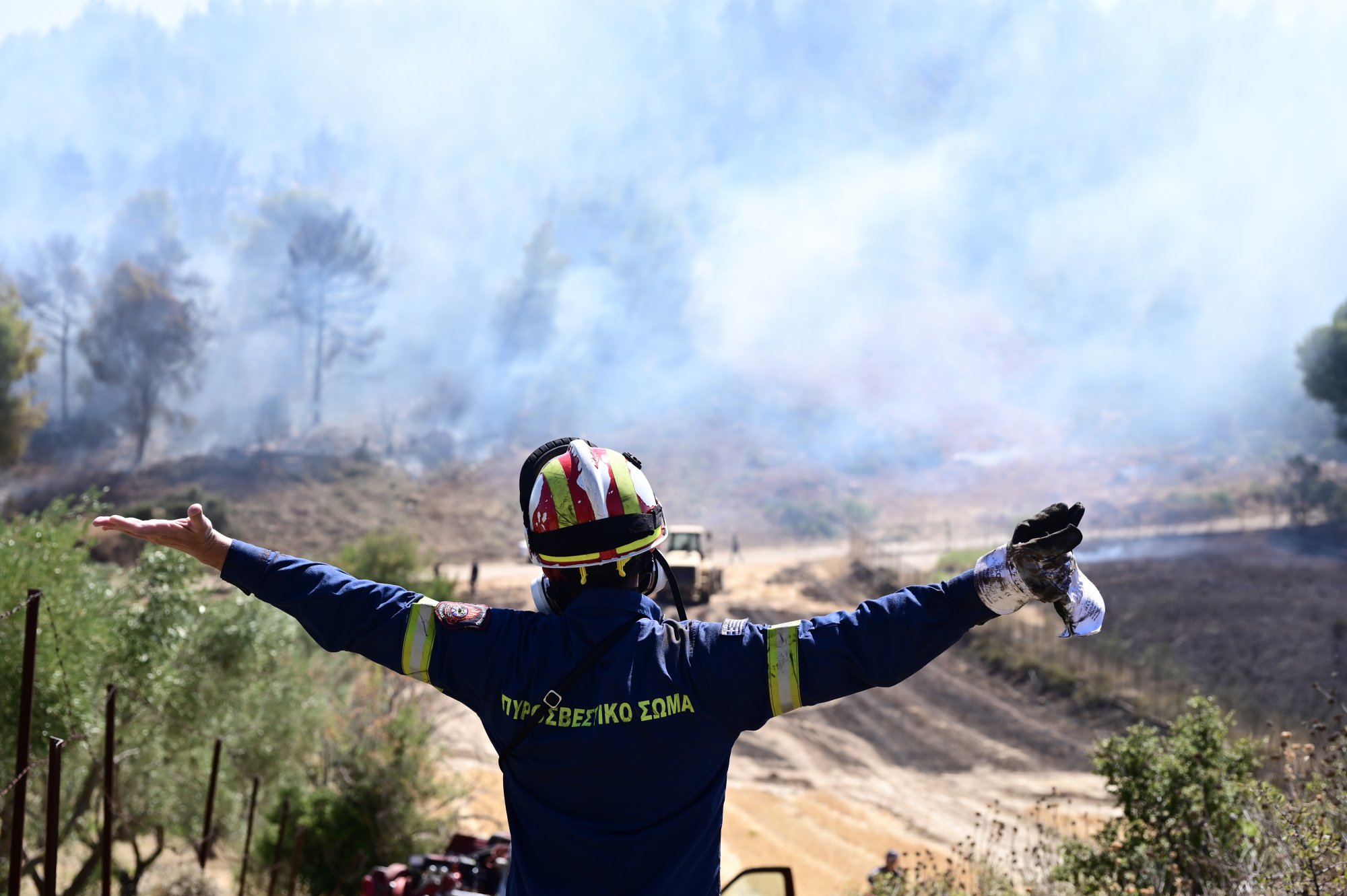
Κατάσβεση πυρκαγιάς κοντά στο χωριό Λίμνη του Δήμου Βόλβης, Θεσσαλονίκη, 20 Ιουνίου 2024.
Roughly 90% of wildfires are attributed to human negligence or intentional arson. As such, the government has placed significant emphasis on early detection technologies like drones, alongside stricter enforcement of property maintenance regulations.
Public Responsibility and Stricter Regulations
The Greek government has continued to promote the concept of individual responsibility, particularly in ensuring private land is properly cleared of combustible material. This year, property owners were required to complete land clearing by June 15. While declarations of compliance have increased significantly compared to 2024, many municipalities are struggling to inspect the reported plots due to understaffing.
For instance, the municipality of Markopoulo-Mesogeia saw a surge in property declarations—from 700 last year to 4,000 this year. However, the number of inspectors remains insufficient.
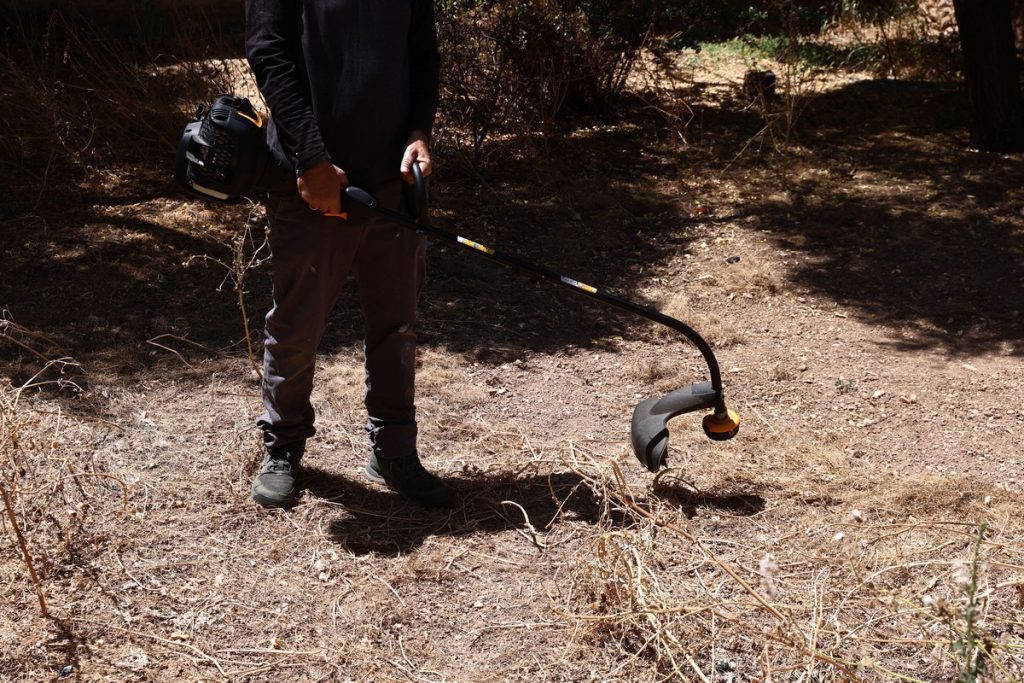
Failing to submit a land-clearing declaration can result in a €1,000 fine. Submitting a false declaration may lead to a prison sentence of up to two years and additional daily financial penalties. Cleanup costs, if conducted by the municipality, are also billed directly to non-compliant property owners. Fines for fire-related violations can reach as high as €54,000. In a significant legal shift, arson is now classified as a felony with correspondingly harsher penalties.
Expanded Forest Commando Units
Greece has significantly expanded its elite wildfire response teams, known as E.MO.D.E. (Forest Commandos). Last year, there were 16 units with 1,060 firefighters and 90 scientific staff. This summer, 21 units are operational, with 160 additional personnel added to the ranks. New teams have been deployed in Chania, Ilia, Evia, and Zakynthos, with another planned for Kavala.

One of the most notable upgrades in Greece’s wildfire strategy is the deployment of 82 drones across various regions. This nearly doubles last year’s fleet of 45 drones. These unmanned aircraft are key to identifying fires early and ensuring swift intervention by firefighting units.
European and NATO Support
For the fourth consecutive year, Greece is receiving support through the European Union Civil Protection Mechanism. Between July 1 and September 15, 323 firefighters from Austria, Bulgaria, France, Moldova, Romania, and the Czech Republic will be stationed in Athens, Thessaloniki, and Patras.
Additionally, Greece will benefit from four medium-sized amphibious firefighting aircraft provided through European resources. Greece is also reciprocating by deploying a 20-person EMODE team to Corsica from September 1 to 15, assisting French firefighters on the ground.
Incredible and shocking footage released by the Hellenic Ministry of Defence.
CL-215,CL-415 and CH-47DG during aerial firefighting and water scoop.
pic.twitter.com/LsUJFElDUr— Leonidas ToEat ♎☘🇬🇷🇬🇧 (@AnAthenianToLDN) July 19, 2023
Through NATO’s NSPA program, Greece has leased 30 aircraft from Australian companies—15 Aviation B214 ST helicopters and 15 Air Tractor AT-802F Fire Boss planes. These aircraft, supported by flight and maintenance crews, will operate in Greece for 120 days, with deployment completed by June 28.
In collaboration with U.S.-based Erickson, Greece has also leased six S-64 Air Crane helicopters, known for their large 9,800-liter capacity and ability to draw water from various sources. In periods of peak demand, this number could rise to nine.
National Aerial Firefighting Fleet
Greece’s own aerial resources remain a crucial part of the effort. The country has 17 Canadair aircraft (10 CL-215 and 7 CL-415), though only about half are expected to be fully operational. To modernize its fleet, Greece has ordered seven new DHC-515 aircraft, with deliveries scheduled between 2027 and 2030.
In total, the 2025 aerial firefighting fleet consists of 82 aircraft—33 owned by Greece and 49 leased. However, the number is subject to change depending on wear and technical issues.
Core Challenges: Aging Equipment and Workforce
The total firefighting force for summer 2025 is 18,031 personnel. This includes 11,746 permanent staff, 1,860 on five-year contracts, 1,455 forest commandos, and 2,500 seasonal firefighters. Additionally, there are 5,500 civil protection volunteers and 5,000 volunteer firefighters.
Nevertheless, staffing shortfalls persist. In 2024, the gap was estimated at 3,600 positions; in 2025, that figure is expected to rise to 4,000.
Despite significant investments, Greece continues to grapple with systemic challenges in its firefighting infrastructure. These include an aging fleet of both vehicles and aircraft, as well as a high average age among firefighters. The average firefighter is now 47 years old, and many retirements are not being offset with new permanent hires.
Firefighters’ unions report that the government often relies on seasonal workers as a stopgap, a solution viewed as insufficient for such a critical service.