 Μake us preferred on Google
 As Greece grapples with a growing demographic crisis and population decline across many parts of the country, one mountain village in central Greece is offering a strikingly different picture.
In Chrysomilia, part of the Municipality of Meteora in the Trikala region, young families are not only staying in their hometown but also having several children.
“Seventy percent of the couples in our village have three or more children,” said Nikos Stefopoulos, president of the Chrysomilia Municipal District.
Young couples are staying and raising families
Chrysomilia is located about 50 kilometers (31 miles) from Trikala, at an elevation of 900 meters (2,950 feet) on the northern slopes of Mount Neraida.
While young people in many parts of Greece leave rural communities for major cities or other countries, young couples in Chrysomilia are choosing to remain in the village and start families there.
According to Stefopoulos, families with only two children are relatively uncommon. Having larger families has become a tradition passed down from one generation to the next, with younger residents following the example of their parents and grandparents by raising their children in the village.
“Chrysomilia is full of life”
Around 500 people currently live permanently in Chrysomilia, while the population increases significantly during the summer months.
Residents primarily work in agriculture, livestock farming, beekeeping and seasonal forestry jobs.
The village has an elementary school and a nursery, while its cafes and tavernas fill with young people each evening.
Stefopoulos said young residents do not want to leave Chrysomilia because they cannot imagine their lives away from their hometown.
A village shaped by history and tradition
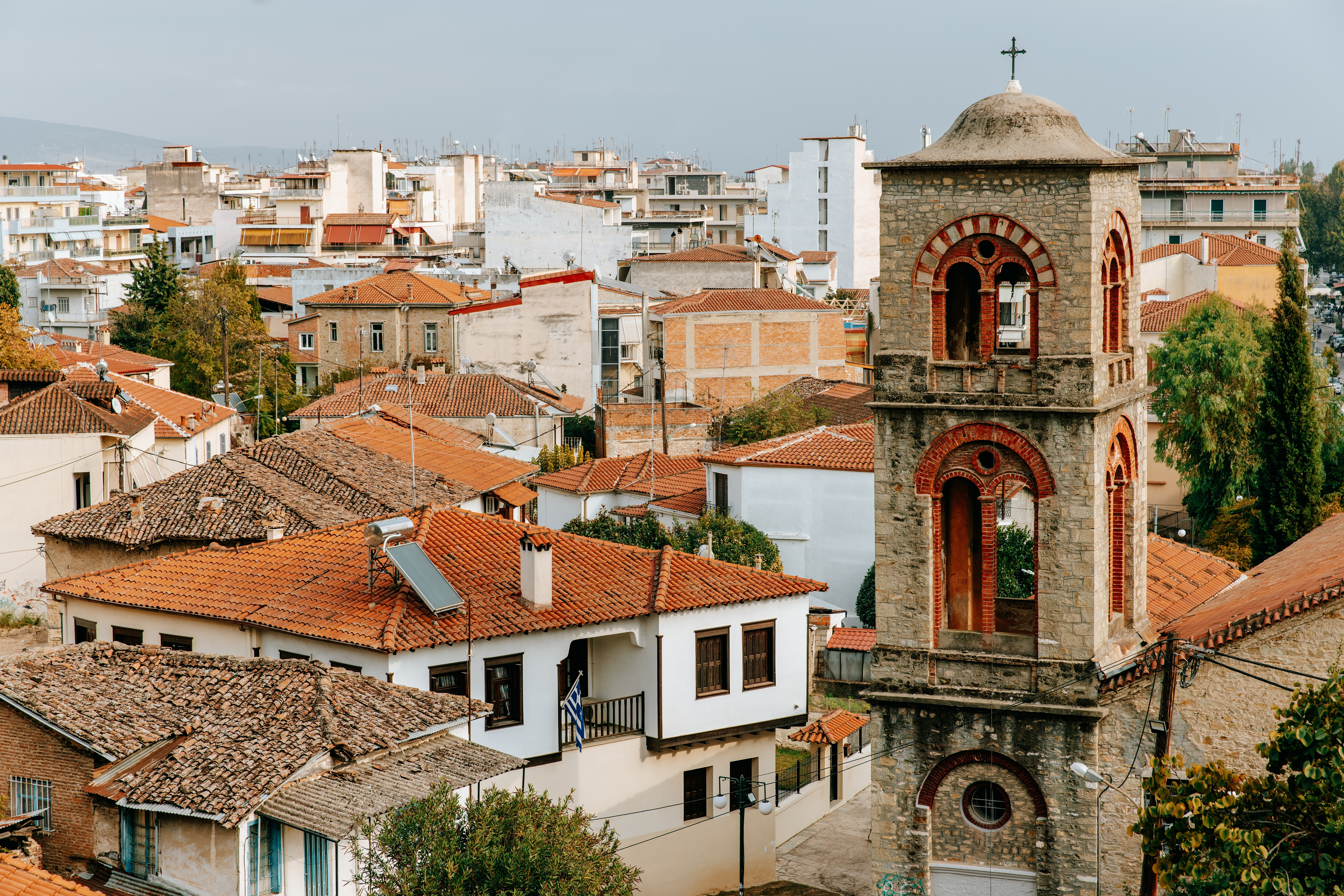
Chrysomilia is surrounded by forests of cedars, firs and chestnut trees and is considered one of the liveliest villages in the wider Pindus region.
According to local residents, its name comes from a variety of local apples known as “skioupia,” or “golden apples.”
The village was burned by German forces in 1943, but a number of its traditional stone houses, churches, the Monastery of the Taxiarchis and bridges at Koukourava and Rountzi have survived.
Every year around August 15, the village also holds a major traditional festival featuring celebrations, dancing and local traditional products.
Investment aimed at keeping families in the village
Meteora Mayor Lefteris Avramopoulos describes Chrysomilia as a “distinctive example of a living village” that has managed to retain its residents, particularly young families.
Over the past 2½ years, the municipality has carried out improvements at the local medical clinic, elementary school and nursery. It has also secured €600,000 for an upgrade of the village sports field, which is expected to be completed in 2027.
The municipality is also supporting livestock farmers through land-clearing work and improvements to the rural road network.
“Chrysomilia proves that our villages can have a future,” Avramopoulos said, emphasizing that the goal is to continue investing in people and infrastructure that allow families to remain and build their lives in their communities.