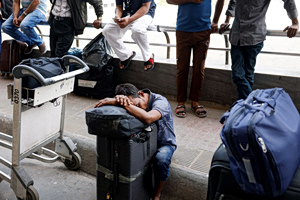
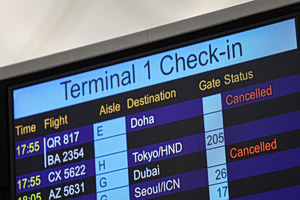
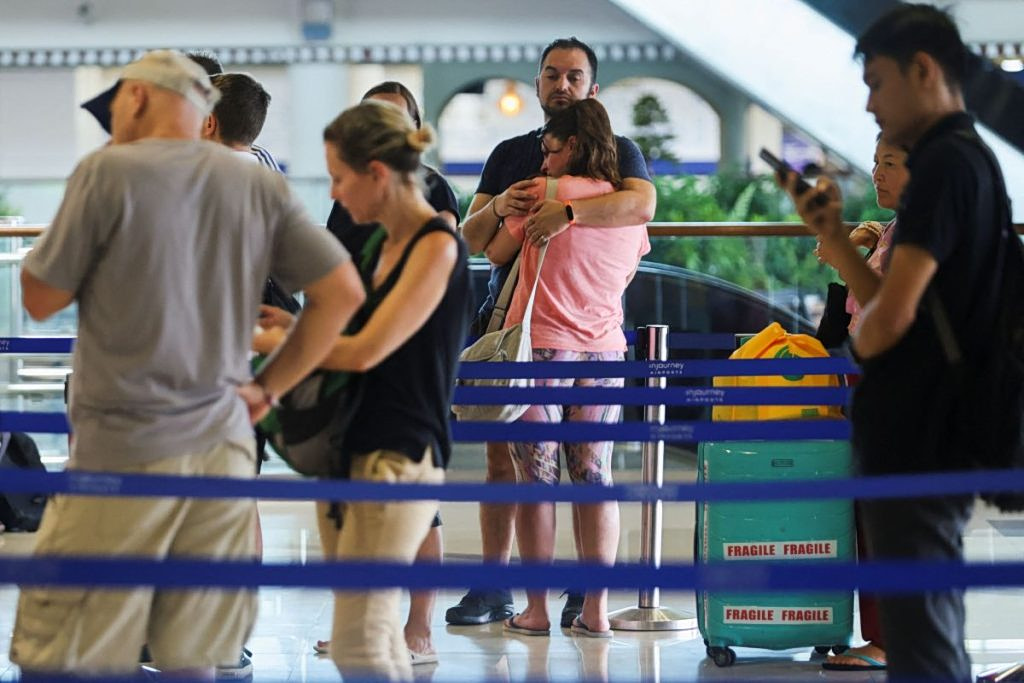
Greek travelers remain stranded in Hanoi after their return flight—scheduled via Doha—was canceled due to the ongoing war, leaving them trapped with expired visas, mounting daily fines, and what they describe as a lack of support from both the airline and the Greek embassy in Vietnam.
What was meant to be a routine return to Athens on Sunday morning has turned into a bureaucratic nightmare.
Trapped Between Bureaucracy and Blame-Shifting
Caught in a web of red tape and responsibility being passed from one authority to another, the group now faces an increasingly difficult situation.
According to Manos Gialouris, a resident on the island of Lesvos stuck in Vietnam who spoke to To Vima, the airline’s response was minimal.
“When our flight was canceled, the only thing the airline did was send us a link to fill out a form—but it doesn’t even open,” he says. “Beyond that, they left us to our fate. Their offices are in Doha, and we can’t even communicate with them.”
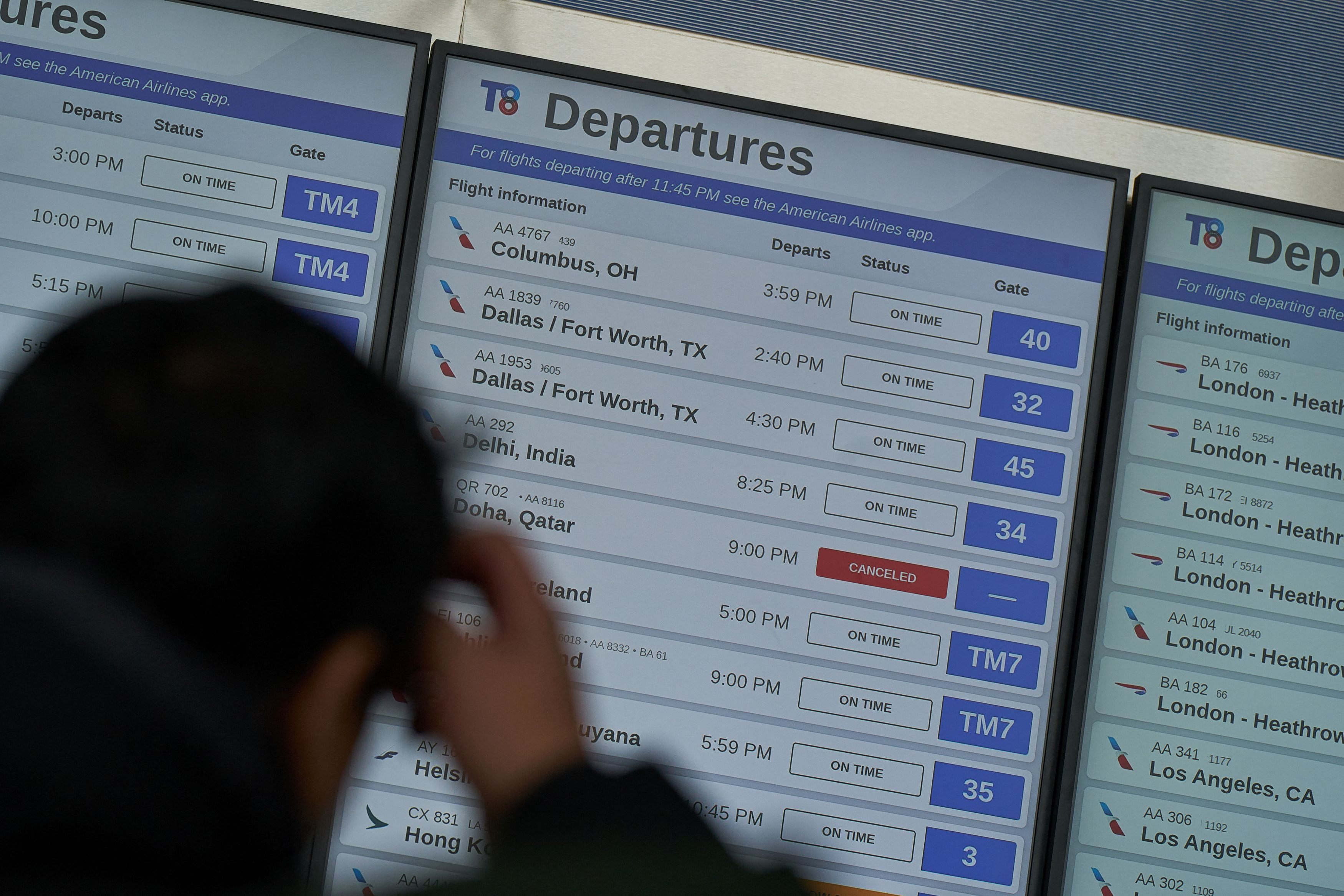
A traveler looks at a departures board displaying a cancelled Qatar Airways flight for Doha, amid the U.S.-Israel conflict with Iran, at Terminal 8 at John F. Kennedy (JFK) International Airport in New York City, U.S., March 2, 2026. REUTERS/Bing Guan
Families Desperate for Answers
Relatives and friends back in Greece, growing increasingly anxious, contacted the Vietnamese embassy in Athens in search of a solution.
They were told to reach out to the Greek embassy in Vietnam. The same guidance came from Greece’s Ministry of Foreign Affairs: the solution, they were told, lies with the Greek embassy in Hanoi.
Complaints Over Lack of Assistance
On Monday morning, when the embassy in Hanoi opened, one of the stranded travelers—who also needed to visit a pharmacy—first went to the embassy to seek help with repatriation.
According to their account, there was little interest in resolving their situation.
“The response we got was: go to the pharmacy at this location, and for the visa, you can apply online,” they told To Vima.
A Risky Choice: Stay or Leave
After a heated exchange with embassy staff, a Vietnamese woman who had lived in Greece stepped in to help. She accompanied the stranded travelers to a local authority responsible for visas and asylum issues.
There, they were told that in order to issue new visas, they would need to surrender their passports for at least a week while the process is completed.
But that creates a serious dilemma: if a suitable flight to Athens becomes available during that time, they would be unable to leave the country.
“We’re Paying for a War We Didn’t Cause”
The stranded Greeks say they are not asking for much—only coordination with the Greek state to help secure a visa extension, given that their documents expired due to circumstances beyond their control.
“It’s not our fault that a war broke out, and now we’re being forced to pay for hotels, food, and daily fines,” says Gialouris. “We’ve left our jobs behind and we’re bleeding financially. The embassy could have been more cooperative.”
He also expressed gratitude toward members of the local Greek community in Vietnam, who have shown solidarity and support—something he says has been lacking from official Greek authorities.