New allegations have emerged about the private medical practice in Athens’ Kolonaki district where popular Greek singer Giorgos Mazonakis died last week, as authorities investigate the clinic’s operation, the treatment he was due to receive, or had received, and the conduct of the two physician owners – husband and wife – of the establishment.
Several former patients reportedly visited the practice seeking treatment for health problems and were offered plasmapheresis, a specialized blood-filtering procedure that has become central to the investigation. One case involves a 44-year-old woman who was allegedly told by the female doctor under investigation and now jailed that she had only 24 months to live unless she followed her recommendations.
The physician reportedly proposed plasmapheresis at a cost of 5,000 euros and prescribed a range of non-prescription products, including vitamins, probiotics, dietary supplements and cannabis products. The initial cost of the products was reportedly 545 euros, while an alleged recommendation to take double doses raised the monthly expense above 1,000 euros. Patients were reportedly instructed to follow the regimen for three to six months.
Authorities are examining claims that patients were directed to specific suppliers and pharmacies to obtain the products, including para-pharmaceutical companies around the greater Athens area. The reported price differences between those outlets and online retailers are also being examined for potential financial benefit.
The allegations come as authorities investigate the death of Mazonakis, 54, who suffered cardiac arrest Wednesday at the Kolonaki practice and was transferred unconscious to Elpis Hospital, where his death was confirmed. An autopsy is expected to help establish the precise cause of death.
The two defendants who own the practice were arrested Thursday on charges of fatal exposure. Authorities are examining whether the clinic was legally authorized to perform plasmapheresis. The Athens Medical Association has said the facility was licensed as an internal medicine practice and that its license did not authorize the procedure, which requires specialized infrastructure and personnel. The doctors’ lawyer has rejected allegations of illegality and said the equipment had been declared to the medical association.

The female physician has told police that she first saw Mazonakis on Tuesday and that he appeared unwell, with unclear speech and difficulty standing for long periods. She said he returned the following day for plasmapheresis after telling her he had not slept and was anxious.
According to her account, the treatment itself had not yet begun when Mazonakis’ condition deteriorated during preparations for the procedure. She said his blood pressure and oxygen saturation suddenly fell while a venous catheter was being inserted. She and her husband began CPR and called emergency services.
The physician has also said she did not obtain written consent for the treatment, arguing that Mazonakis’ decision to attend the practice indicated his willingness to undergo the procedure. Her account of the timing of his arrival is being examined alongside other evidence gathered by investigators.
Her husband, an internist, has said he was not involved in the treatment and was away from the practice when the incident occurred. He has claimed he returned after being informed of Mazonakis’ collapse and performed CPR until emergency responders arrived.
The investigation is examining the doctors’ statements, the clinic’s licensing and equipment, the medical procedure and the forensic evidence. The performer’s lawyer, Charalambos Lykoudis, has said Mazonakis had no known health problems, while urging that all potential responsibilities be investigated.
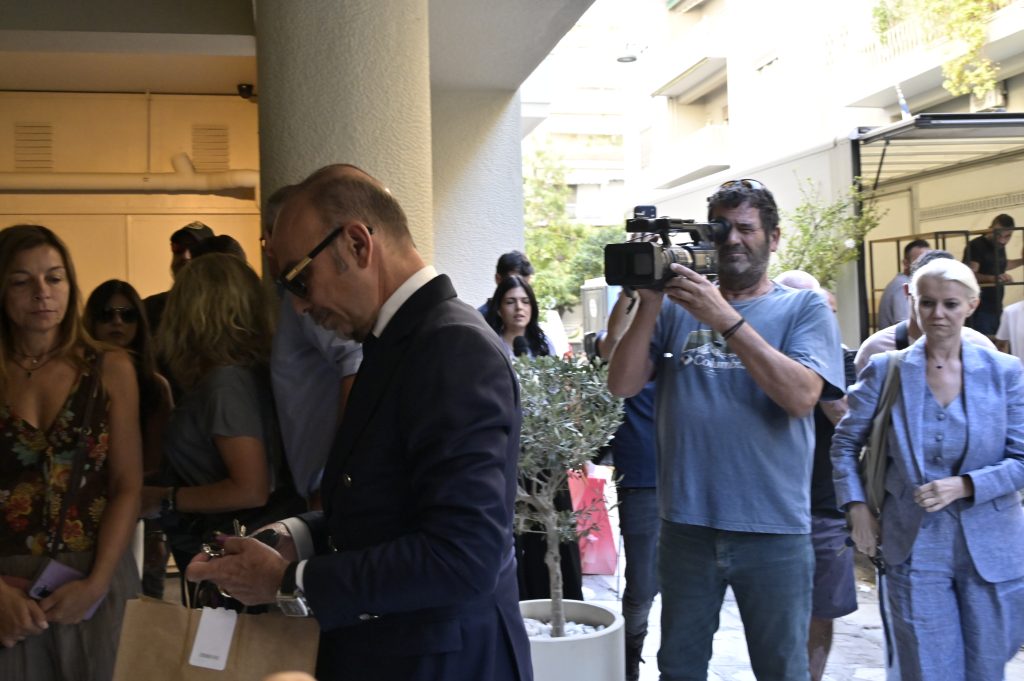
The medical practice on Korneadou Street in Kolonaki, where Giorgos Mazonakis reportedly suffered cardiac arrest before being transferred to Elpis Hospital (Michalis Papanikolaou / Eurokinissi)
The case has also prompted warnings from University of Athens professors about treatments marketed as “regenerative” or “anti-aging” without sufficient scientific evidence or regulatory approval.
Mazonakis, one of Greece’s best-known popular singers, had a career spanning more than three decades.
A funeral is scheduled for Monday at Agia Triada (Holy Trinity) Cathedral in the near-Piraeus Nikaia district, with burial at the Third Cemetery of Athens.