Μake us preferred on Google
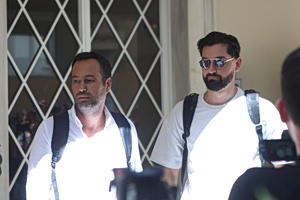
 Startling new details are emerging about the final moments of singer Giorgos Mazonakis, who died on Wednesday as a result of cardiac arrest, at the clinic run by two physicians who were subsequently arrested.
According reports on the day, the two doctors are reported to have tried to erase traces of his presence at the clinic while, at the same time, someone was searching artificial intelligence tools for ways to revive him.
The new information comes from an examination of electronic devices seized as part of the investigation, and takes on added weight now that both doctors face a felony charge of causing death through exposure to risk, brought as co-principals. The two were referred to an investigating magistrate for questioning and were given until Monday to respond.
The photo deleted from the doctor’s phone
One of the most significant findings, according to reports, turned up during analysis of the doctor’s mobile phone. Investigators recovered a photo showing Mazonakis lying on the bed of the plasmapheresis machine. The photo had been deleted from the device.
Authorities are now trying to establish exactly when it was taken. One theory under serious consideration is that the photo dates from the day the singer died, though that still needs to be confirmed through digital forensic analysis. Pinpointing the timing of the file is considered important, since it could provide another objective marker of what was happening at the clinic, and at what stage of the procedure Mazonakis was in before he went into cardiac arrest.
An AI search shortly before his death
The most unusual finding, though, concerns what happened on a computer while Mazonakis was still inside the clinic, shortly before he died. According to protothema.gr’s sources, the digital data suggest someone was using the computer at that time to search for what should be done to revive a patient.
Investigators are looking into whether that search was carried out using an AI tool. In simple terms, while an emergency involving the singer was unfolding at the clinic, someone appears to have put a question to an AI system about how a patient could be saved or revived.
Authorities now need to determine who ran the search, the exact time it happened, what was typed into the query, what answer came back, and whether the finding lines up in time with Mazonakis’s cardiac arrest.
Only Mazonakis’ appointments were deleted from the calendar
Findings from the clinic’s computer raise equally serious questions. According to protothema.gr, examination of the electronic calendar found that entries related to Mazonakis’s appointments had been deleted.
What has drawn investigators’ particular interest is that the calendar as a whole, or a large number of appointments, does not appear to have been wiped. The missing entries were specifically tied to the singer.
Authorities are now trying, through digital analysis, to recover the data and establish which days and times he had visited or was due to visit the clinic, as well as when the deletions took place. The finding is directly tied to investigators’ efforts to reconstruct the exact timeline of Mazonakis’ visits, especially given security camera footage that has already become central evidence in the case. Protothema.gr reported one of the first inconsistencies in the case yesterday. According to information gathered by investigators, Mazonakis entered the clinic shortly after 1:00 p.m., not after 4:00 p.m. as the doctors claimed in their initial statements.
Investigators seek data from the plasmapheresis machine
Significant attention is now also being placed on the plasmapheresis machine itself. Experts will try to extract all available data from its software to determine when it was switched on and when it stopped operating.
The machine’s digital records could help investigators more precisely reconstruct what happened inside the clinic and compare that timeline against witness statements, camera footage and other digital evidence. The investigation has already shown that the equipment’s data is one of the main areas investigators are focused on. Computers, hard drives, other digital storage devices, documents and medical preparations have been seized from the clinic.
Secretaries’ phones also seized
As part of the same investigation, the phones belonging to the clinic’s secretaries have also been seized. Investigators are looking for any communication or other digital evidence that could help cross-check visits, appointments, arrival times and the events of the critical day.
Examination of these devices is proceeding alongside analysis of the computer and phones belonging to those involved, so authorities can build a single, consistent timeline.
Digital evidence at the center of the investigation
The new details carry added weight now that the case has moved into the judicial phase. The Athens First Instance Prosecutor’s Office has brought a felony charge against the two doctors, and the evidence gathered by investigators already includes a large number of digital and physical exhibits.
At the same time, the exact cause of death remains undetermined based on the initial forensic examination. More answers are expected from toxicology and histology tests, meaning the full forensic picture has not yet been established.