North Euboea, the northern part of Greece’s second-largest island after Crete, is slowly emerging from one of the country’s most devastating environmental disasters.
Five years after catastrophic wildfires swept through the region in August 2021, the landscape is showing encouraging signs of recovery, with forests beginning to regenerate naturally and efforts underway to revive the local economy.
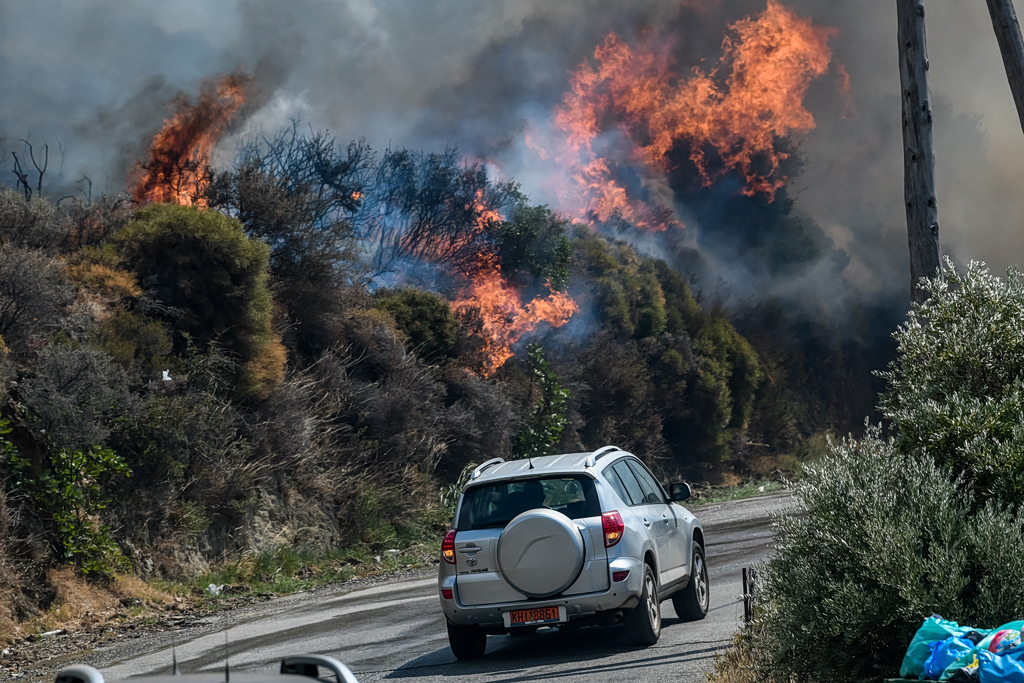
Wildfire in Marmari, Euboea, Monday, Aug. 23, 2021. (EUROKINISSI / MICHALIS KARAGIANNIS)
The recovery comes as wildfires once again affect parts of Greece, underscoring the scale of the disaster North Evia experienced five years ago.
“I will never forget that summer. Those memories are etched in my mind, when we saw the flames reaching the beach at Agia Anna,” said Antonis Syrigos, a resident of Agia Anna. “We learned that villages and homes had been engulfed in flames and the fire service was absent. The state was generally absent. That is why the destruction was so extensive.”
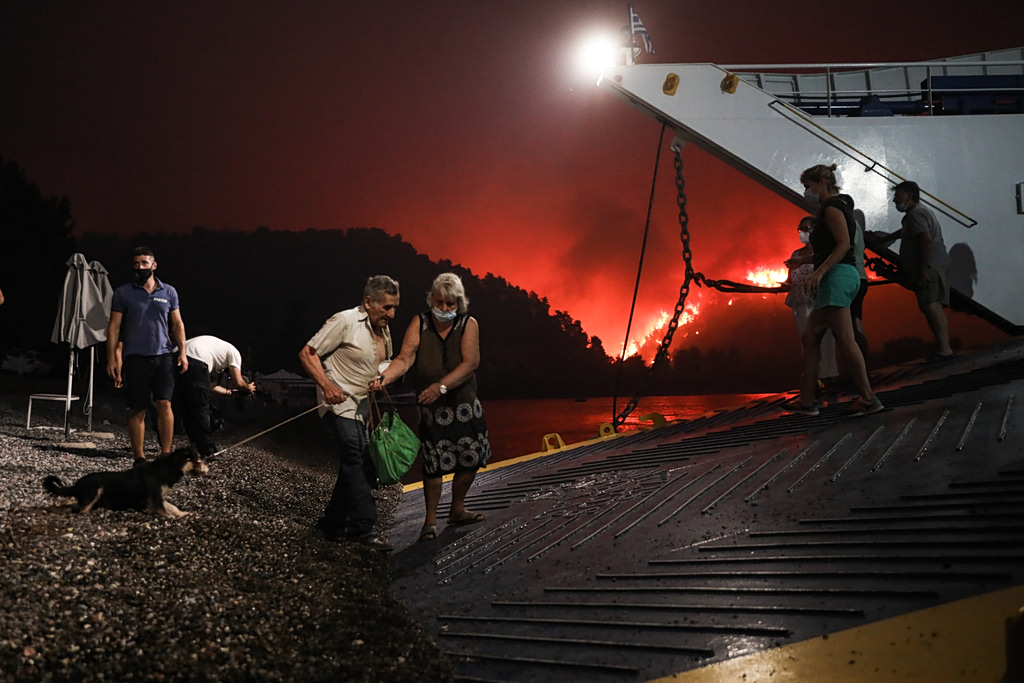
Evacuation of Limni, Euboea, Friday, Aug. 6, 2021. Residents and vacationers leave the area by ferry. (EUROKINISSI/SOTIRIS DIMITROPOULOS)
A largely unspoiled destination
Despite the devastation, North Evia remains one of Greece’s more authentic and less commercialized destinations.
Located about two to four hours from Athens, either by road via Chalkida or by a short ferry ride from Arkitsa, the region combines forests, mountains, waterfalls, gorges and long sandy beaches with clear waters.
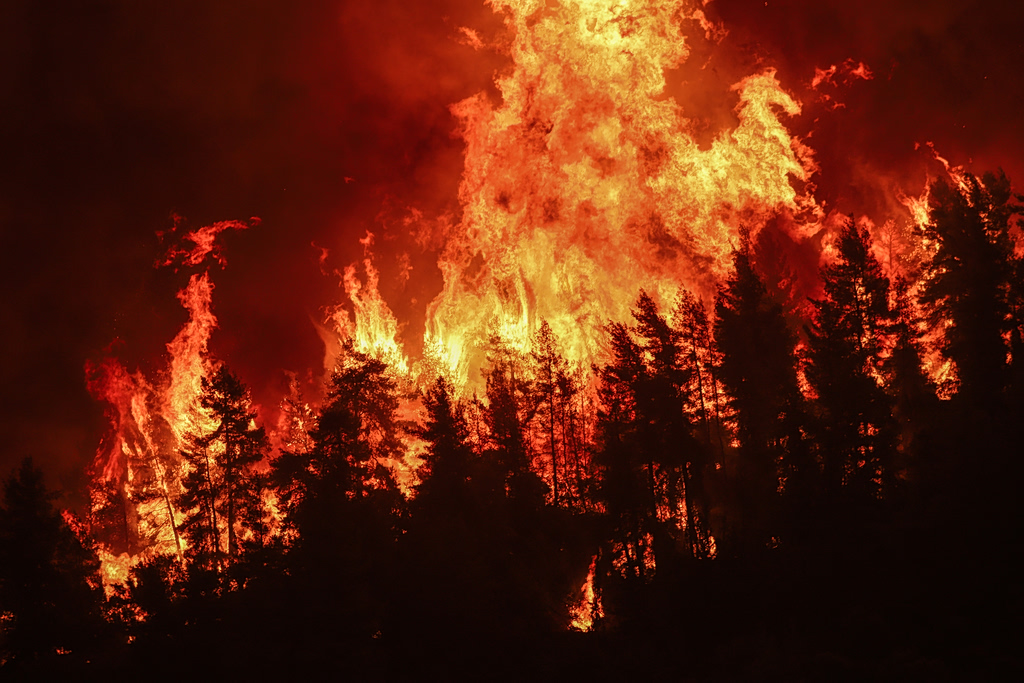
Wildfire in Northern Euboea, Sunday, Aug. 8, 2021. Scene From the Village of Gouves. (EUROKINISSI/VASILIS REMBAPIS)
Among its best-known attractions are the Lichadonisia, also known as the Lichades, a group of small islands at the northern tip of Evia. Their blue waters and secluded coves have often drawn comparisons with the Seychelles.
The region is also known for its thermal springs. Edipsos, the largest spa town in Greece, has more than 80 hot springs that have been used since antiquity. According to Greek mythology, Hercules regained his strength there. The town has also hosted figures such as opera singer Maria Callas and today offers modern spas, public hydrotherapy facilities and naturally heated coastal waters.
Other notable destinations include Limni, known for its maritime tradition and picturesque streets, as well as Agia Anna, Rovies, Pili and the petrified forest of Kerasia.
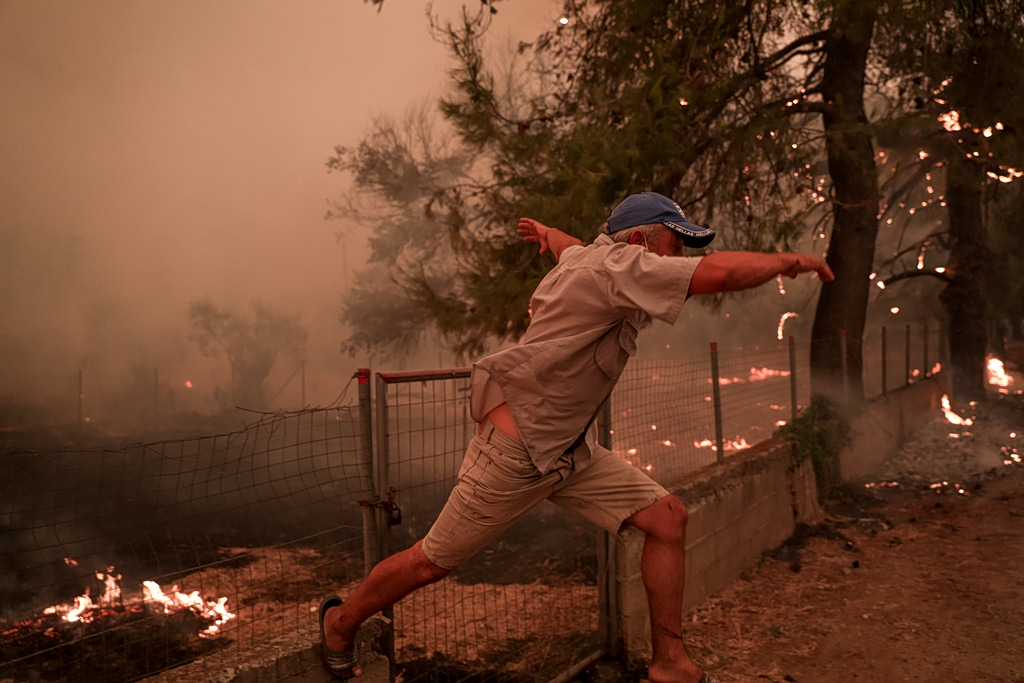
Wildfire in Northern Euboea, Sunday, Aug. 8, 2021. Scene From the Village of Pefki.(EUROKINISSI/VASILIS REMBAPIS)
The beaches range from organized locations with beach bars to quieter spots suitable for relaxation, diving, water sports or swimming.
The 2021 wildfire disaster
North Euboea, a region rich in pine forests, plane trees and beaches, experienced one of the biggest ecological disasters in modern Greek history in 2021.
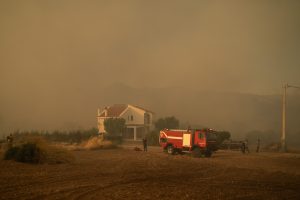
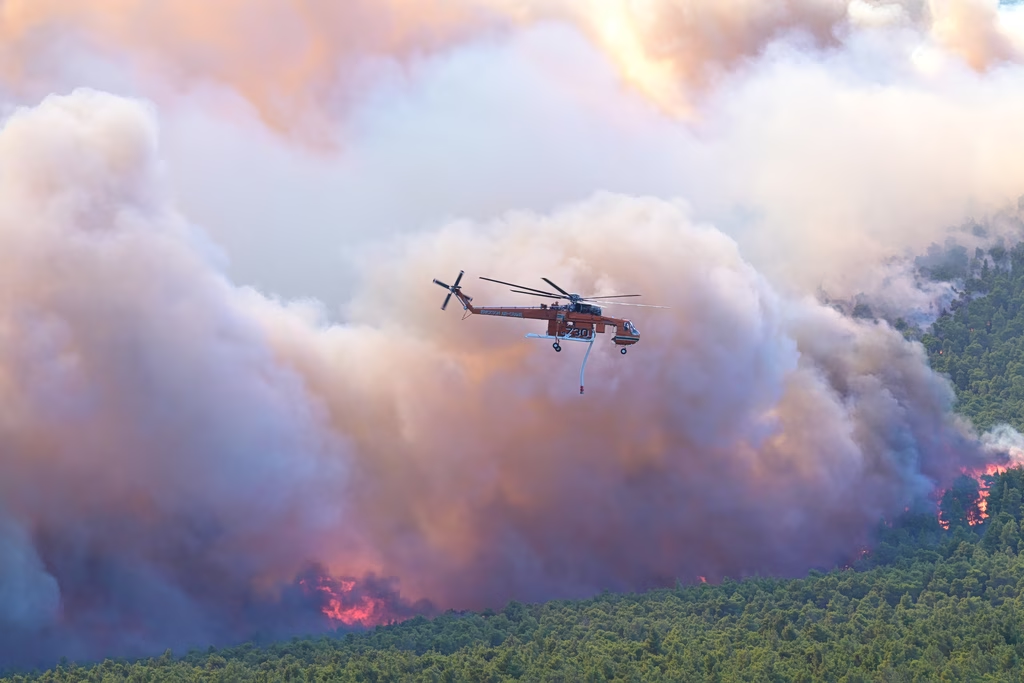
The main wildfire broke out on August 3 amid an extreme heat wave and strong winds. It burned out of control for about 10 days, destroying approximately 153086 acres, including more than 113320 acres of forest.
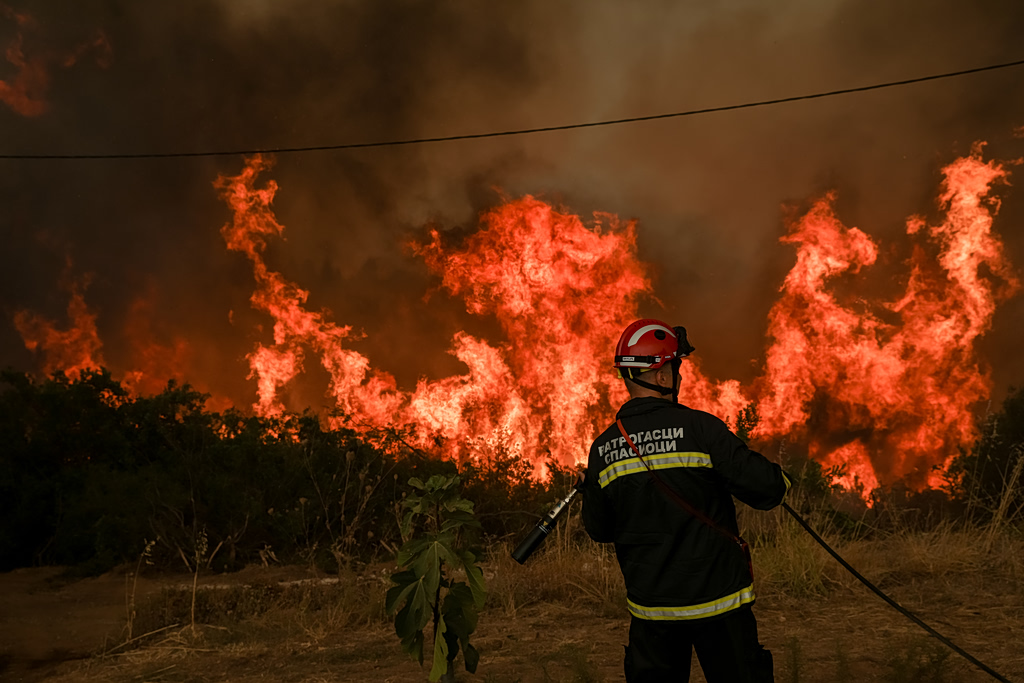
Firefighters and residents battle flare-ups in northern Euboea after efforts to contain the wildfire fronts on the northeastern side of the island. Serbian firefighters are also assisting. Monday, Aug. 9, 2021. (EUROKINISSI/VASILIS REMBAPIS)
The fire reached the sea, destroyed or severely affected areas including Agia Anna, Vasilika, Mantoudi, Rovies and Kerasia, and threatened Istiaia and Edipsos.
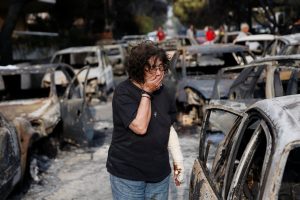
The disaster forced mass evacuations, including by ferry, while thousands of animals were lost. Residents faced skies filled with smoke as they attempted to fight the flames themselves.
The fire also dealt a major blow to the local economy, affecting the production of pine resin and honey, as well as tourism.
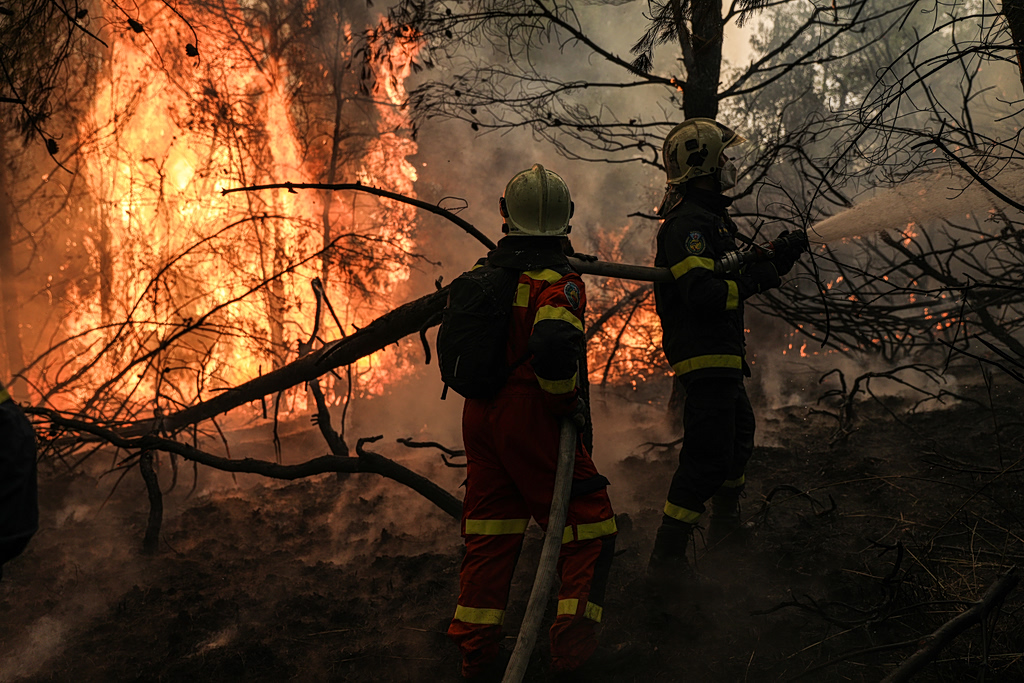
Fire Reignites Across Euboea as Wildfire Rages for Eighth Day, Tuesday, Aug. 10, 2021. Scene From the Avgaría Fire Front. (EUROKINISSI/VASILIS REMBAPIS)
The disaster occurred amid an historic heat wave, low humidity and strong winds. Experts also pointed to longstanding problems including the accumulation of combustible vegetation, understaffed forestry services and inadequate prevention measures.
The destruction of forests subsequently increased the risk of flooding and landslides because burned areas could no longer hold soil in place.
The government responded with flood-control projects, including measures to reinforce streams around Istiaia. It also established the North Evia Reconstruction Committee, an initiative involving 71 projects with a budget of about 390 million euros.
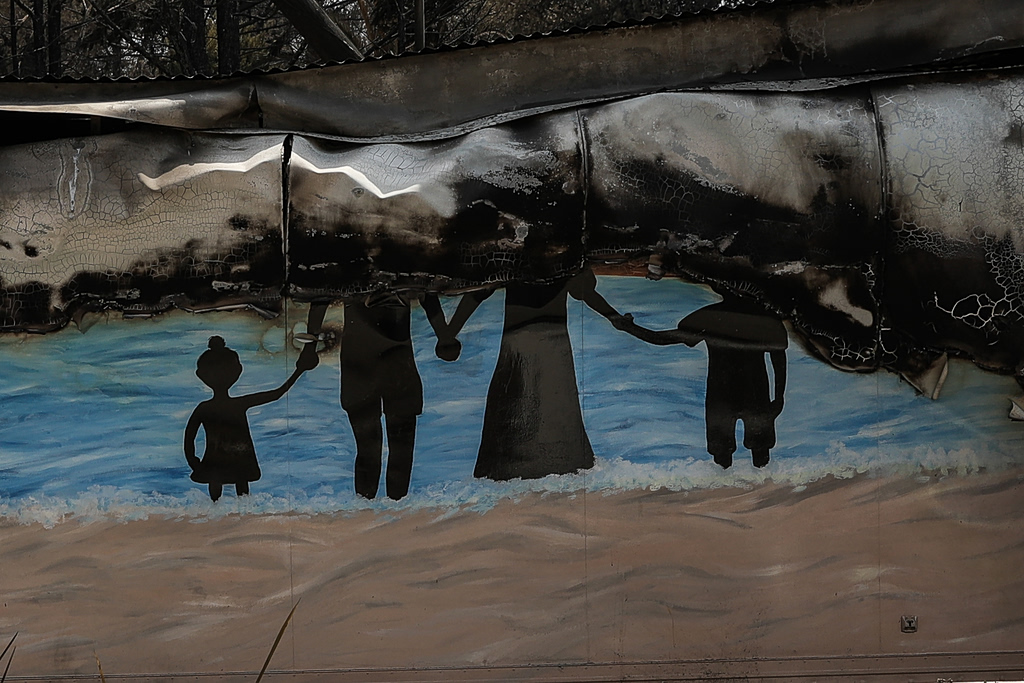
Wildfires Burn Across Northern Euboea for Ninth Day, Wednesday, Aug. 11, 2021. Scene From Agia Anna. (EUROKINISSI/VASILIS REMBAPIS)
Five years of recovery
Five years later, regeneration is progressing slowly.
Much of the natural regrowth has occurred without human intervention, while artificial reforestation has remained limited to relatively small areas amid delays, budget cuts and bureaucracy.
New pine shoots are emerging, offering visible signs of recovery. Initiatives such as “New Forest” and efforts to develop a forest economy focused on biomass, resin and ecotourism are also providing hope for the region.
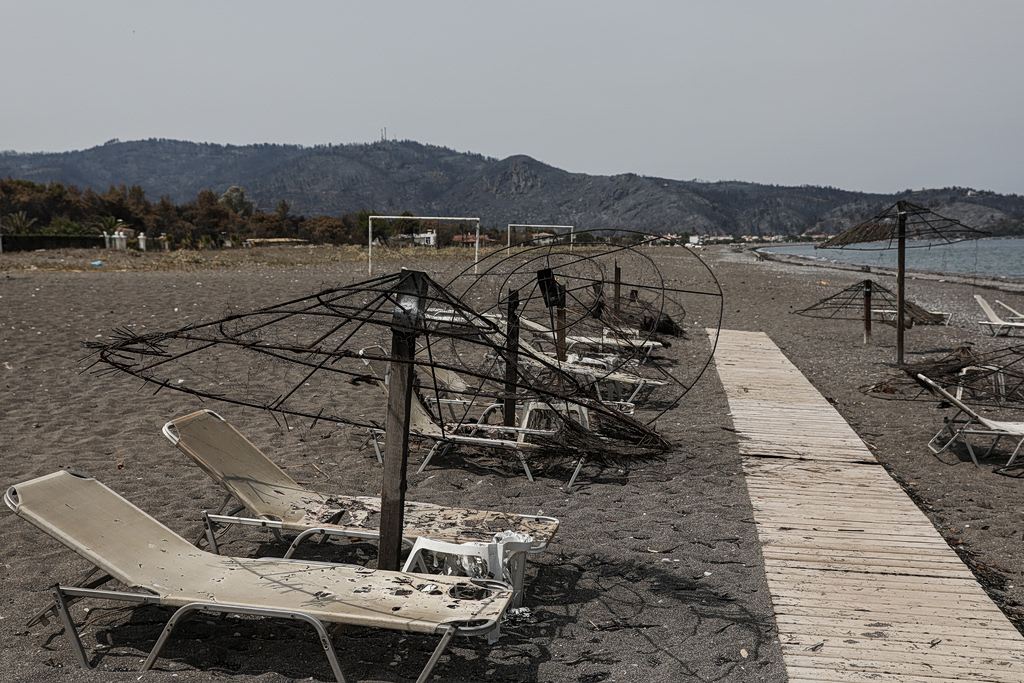
Wildfires Burn Across Northern Euboea for Ninth Day, Wednesday, Aug. 11, 2021. Scene From Agia Anna. (EUROKINISSI/VASILIS REMBAPIS)
Residents and scientists, however, continue to highlight major challenges, including understaffed forestry offices, delays in reforestation and the need for meaningful support for local communities.
North Euboea has been described by international media as a “capital of the consequences of global warming.” It is now gradually becoming an example of resilience, provided that authorities and local communities continue investing in prevention and sustainable development.
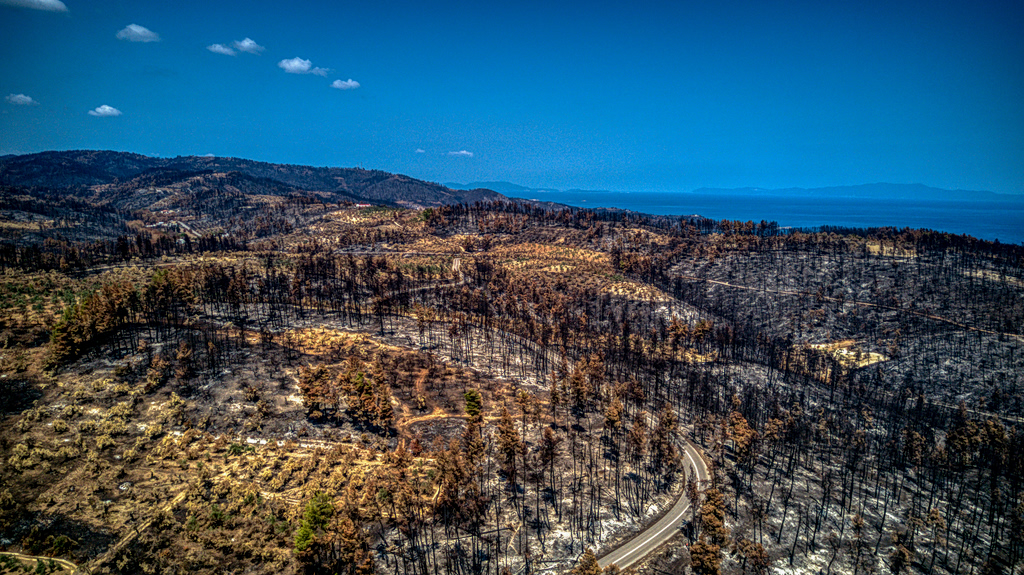
Northern Euboea: Fire Damage Near Agia Anna Seen From Above
Visitors can also contribute to the region’s recovery by supporting local businesses and purchasing local products.
International recognition
The New York Times included North Evia among its “52 Places for a Changed World,” highlighting the region’s efforts to recover and rebuild.
Visitors are encouraged to support the local economy by buying products such as olive oil, figs, honey and tsipouro, a traditional Greek spirit.
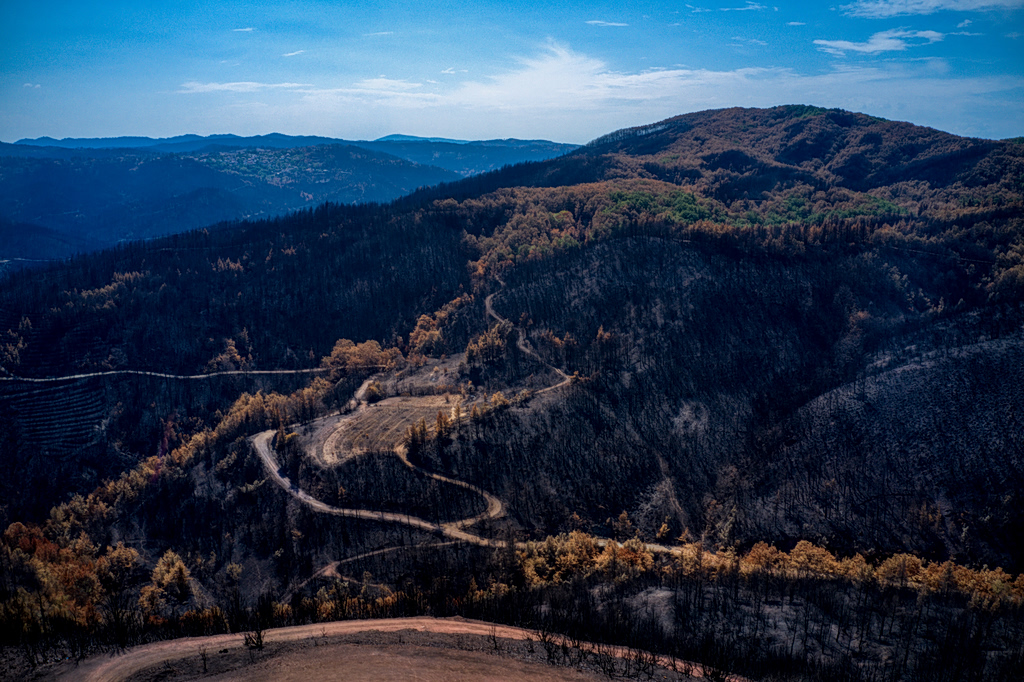
Northern Euboea: Fire Damage Near Agia Anna Seen From Above
The region offers an alternative to Greece’s busiest tourist destinations and can appeal to families, couples and solo travelers seeking quieter vacations.
However, North Evia still faces practical challenges. Its road network remains difficult in places, with narrow roads and numerous curves. In settlements such as Agia Anna Beach, there is no pharmacy, while the nearest health center, in Mantoudi, is not easily accessible.
Even so, the region retains its natural beauty and remains relatively free of mass tourism — offering a destination where visitors can experience both the landscape and a community still rebuilding after one of Greece’s worst wildfire disasters.
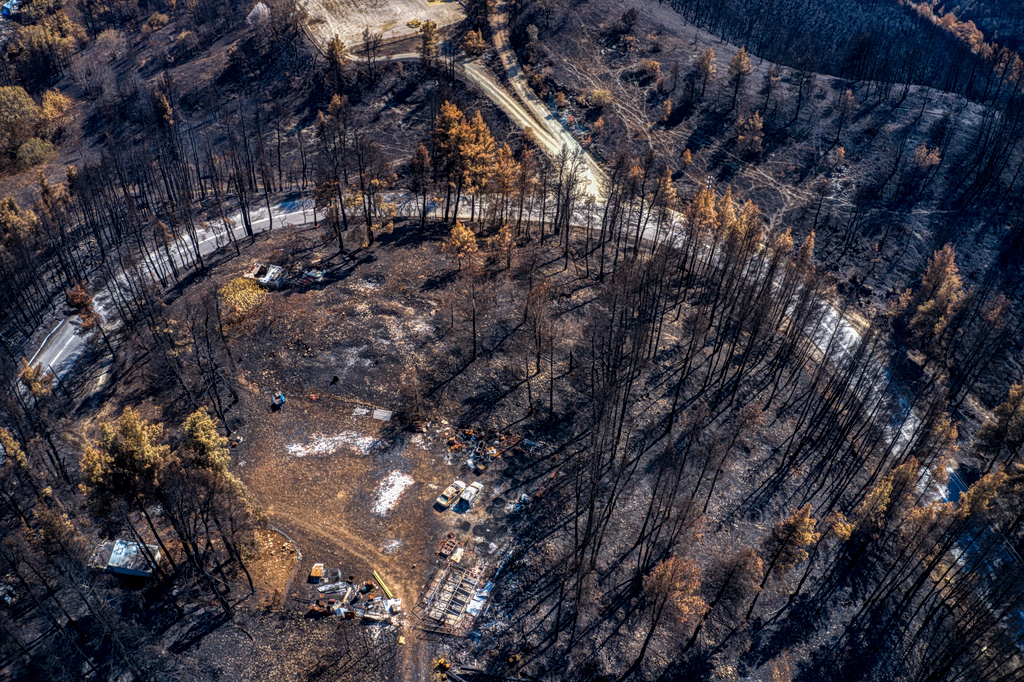
Northern Euboea: Fire Damage Near Agia Anna Seen From Above