 Μake us preferred on Google
 The wildfire burning for a second day in Porto Germeno is one of the most difficult Greece has faced in recent years, according to fire meteorologist and National Observatory of Athens researcher Theodoros Giannaros.
Speaking to MEGA television, Giannaros said wind gusts of up to 100 km/h (62 mph), combined with dense pine forests and rugged terrain, have created exceptionally dangerous conditions, allowing the fire to spread rapidly and generate new outbreaks far ahead of the main fire front
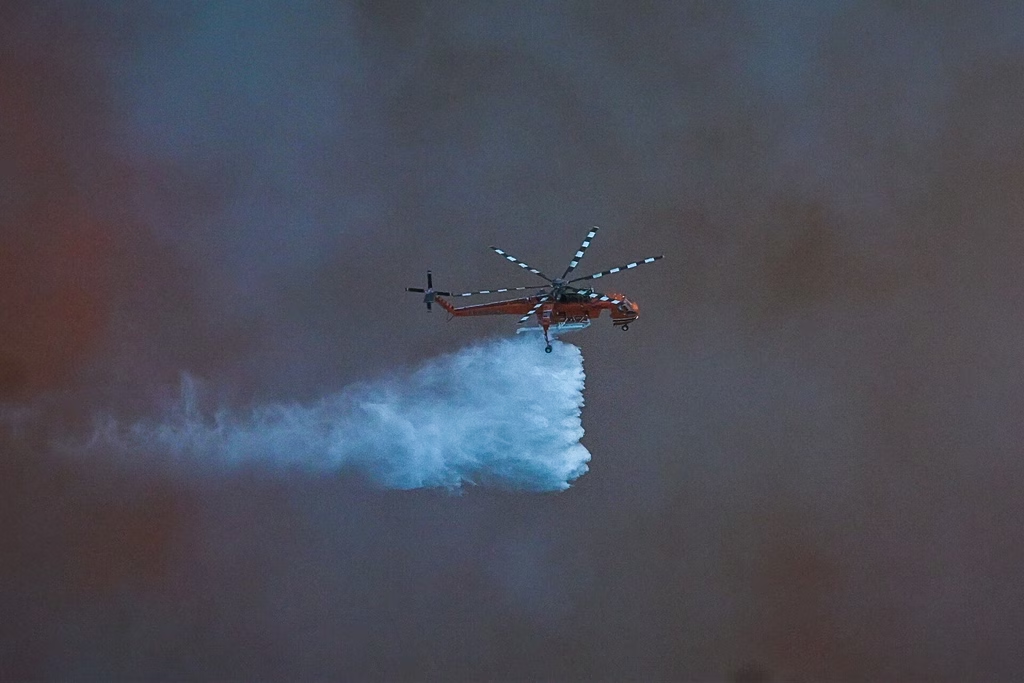
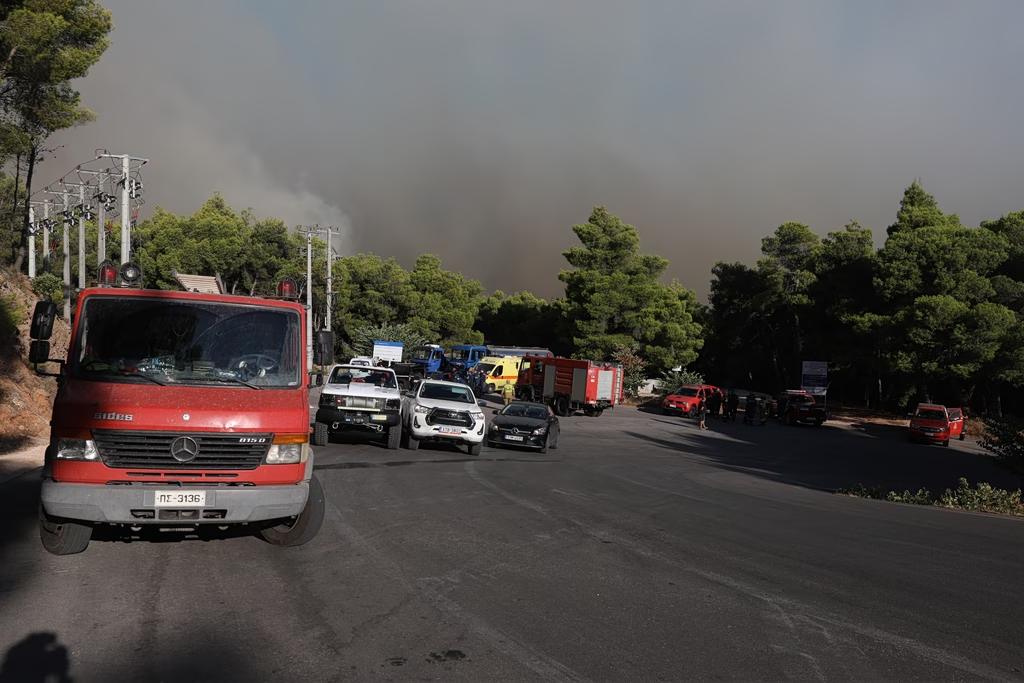
Wildfire in Porto Germeno (ΤΑΤΙΑΝΑ ΜΠΟΛΑΡΗ/EUROKINISSI)
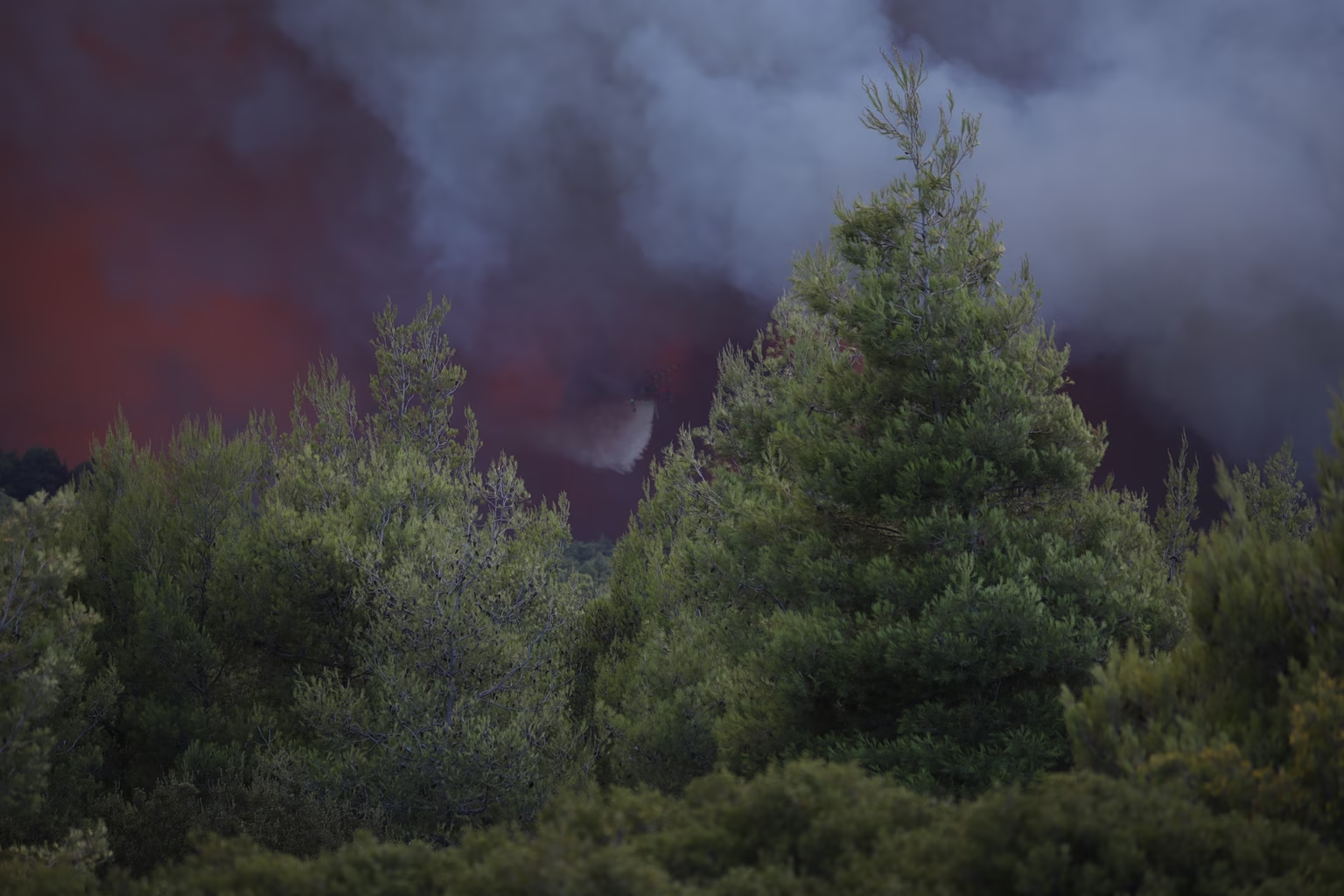
Despite the scale of the disaster, he said it is too early to classify the blaze as a “megafire.”
Too Early to Call It a Megafire
Giannaros explained that a wildfire can only be officially classified as a megafire after it has been contained and its burned area accurately measured.
“A wildfire is characterized as a megafire once it has been brought under control, its burned area has been measured, and it is found to exceed 100,000 stremmas,” he said, referring to the commonly accepted definition. One hundred thousand stremmas is equivalent to approximately 100 square kilometers (38.6 square miles).
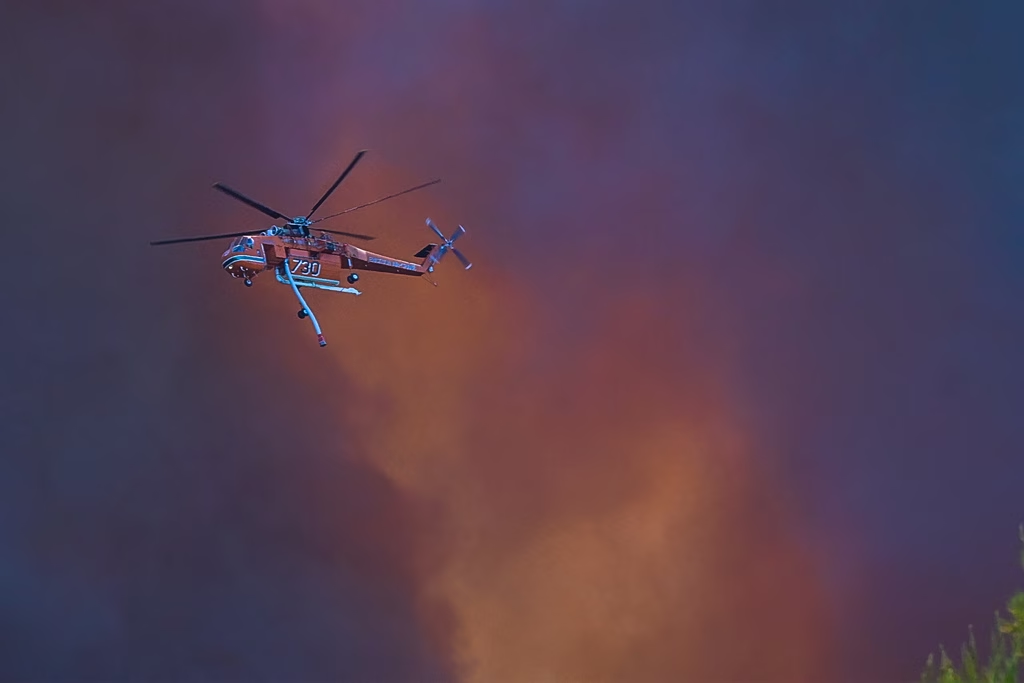
(ΤΑΤΙΑΝΑ ΜΠΟΛΑΡΗ/EUROKINISSI)
He said there is still no precise estimate of the burned area. However, preliminary analysis based on satellite-detected hot spots suggests the fire has already scorched at least 40,000 to 50,000 stremmas (40 to 50 square kilometers, or roughly 15 to 19 square miles), with the final figure likely to be higher after detailed satellite mapping determines the extent of unburned pockets within the fire perimeter.
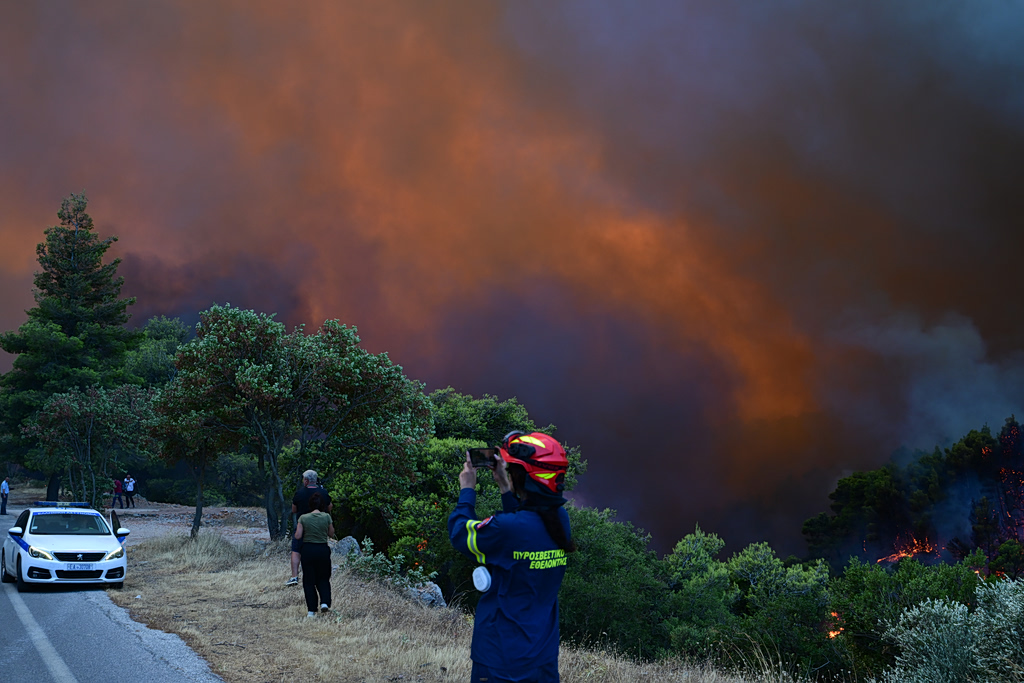
(ΤΑΤΙΑΝΑ ΜΠΟΛΑΡΗ/EUROKINISSI)
Powerful Winds Fuel New Fire Fronts
Giannaros highlighted the phenomenon known as “spotting,” in which burning embers are carried by strong winds and ignite new fires well ahead of the main blaze.
He said the wind conditions had developed exactly as forecast, with gusts reaching 90 to 100 km/h (56 to 62 mph). According to Giannaros, airborne embers landing ahead of the fire are accelerating the expansion of the fire’s perimeter.
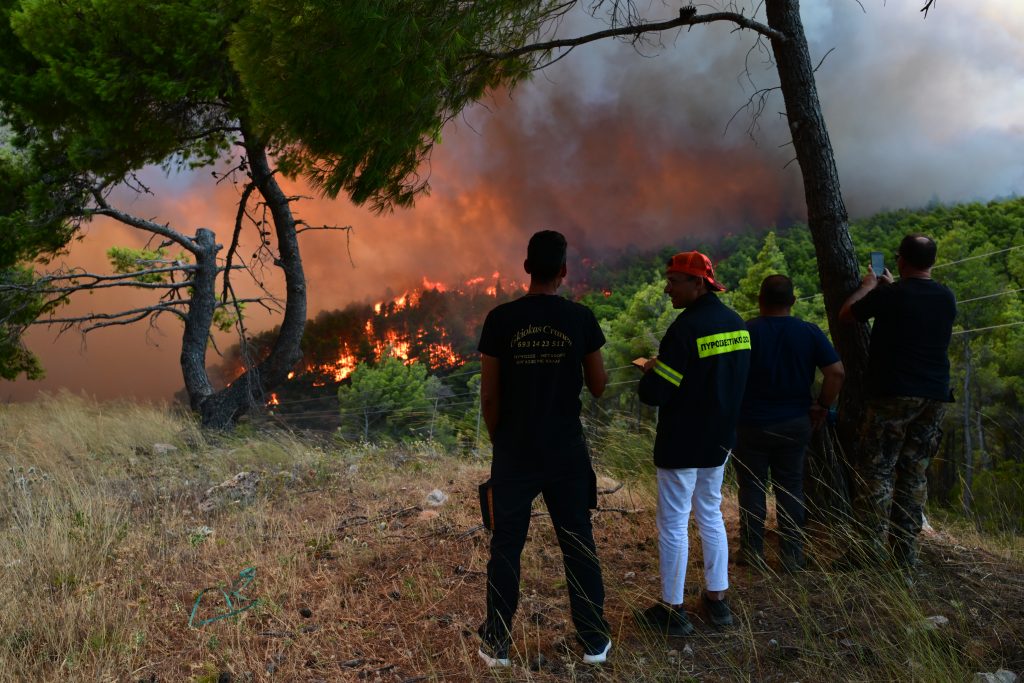
(ΤΑΤΙΑΝΑ ΜΠΟΛΑΡΗ/EUROKINISSI)
He added that after its rapid southward advance following its outbreak north of Agios Vasileios, the wildfire has increasingly been influenced by the area’s vegetation and topography, while strong winds continue to intensify its spread.
Even without officially qualifying as a megafire, he described it as “an extremely difficult wildfire.”
Heat and Winds Hamper Firefighting Efforts
Giannaros said the inability of firefighting aircraft to operate because of the severe winds has significantly complicated suppression efforts.
He explained that the intense heat generated by the fire preheats surrounding vegetation, making it ignite more easily. In dense pine forests, temperatures can reach hundreds of degrees Celsius, allowing the fire to spread more rapidly as nearby vegetation is heated before direct contact with the flames.
He said the highest priority remains protecting human life and nearby communities and expressed hope that forecast weakening winds later in the day would help firefighters gain better control of the blaze.
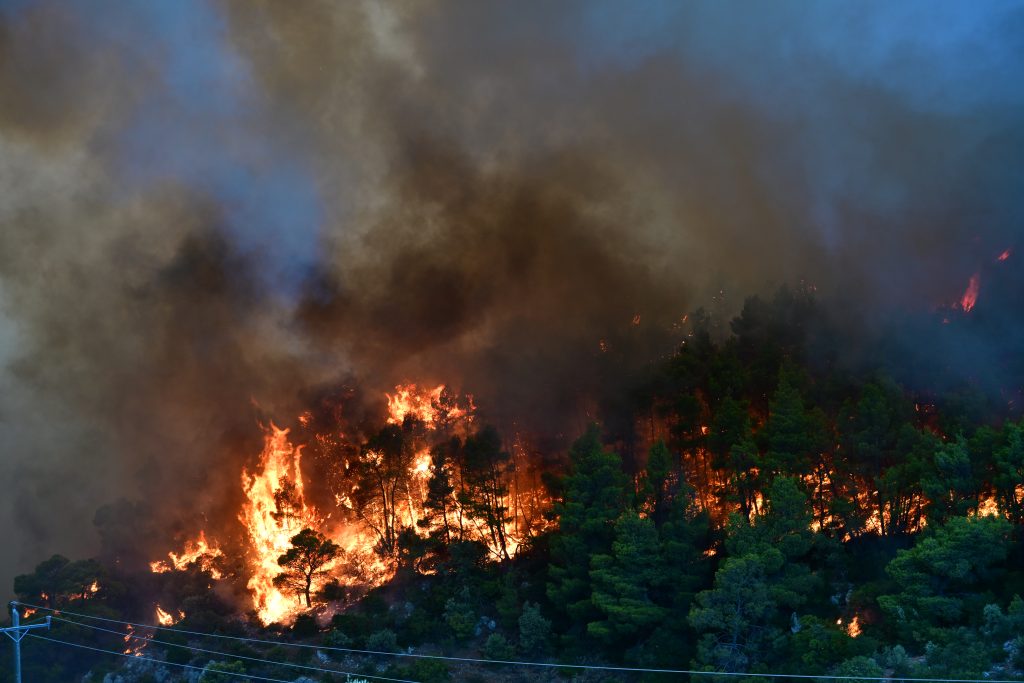
(ΤΑΤΙΑΝΑ ΜΠΟΛΑΡΗ/EUROKINISSI)
Residents Return to Devastation
As conditions allowed, residents of Porto Germeno and Psatha began returning to their properties to assess the damage.
Sultana Loukidou and her husband, Babis Rizogiannis, told Orange Press they had come back to see whether their home had survived.
After 35 years of work, they said they watched the savings of a lifetime threatened by the flames. Although their own house narrowly escaped, they described the surrounding area as devastated.
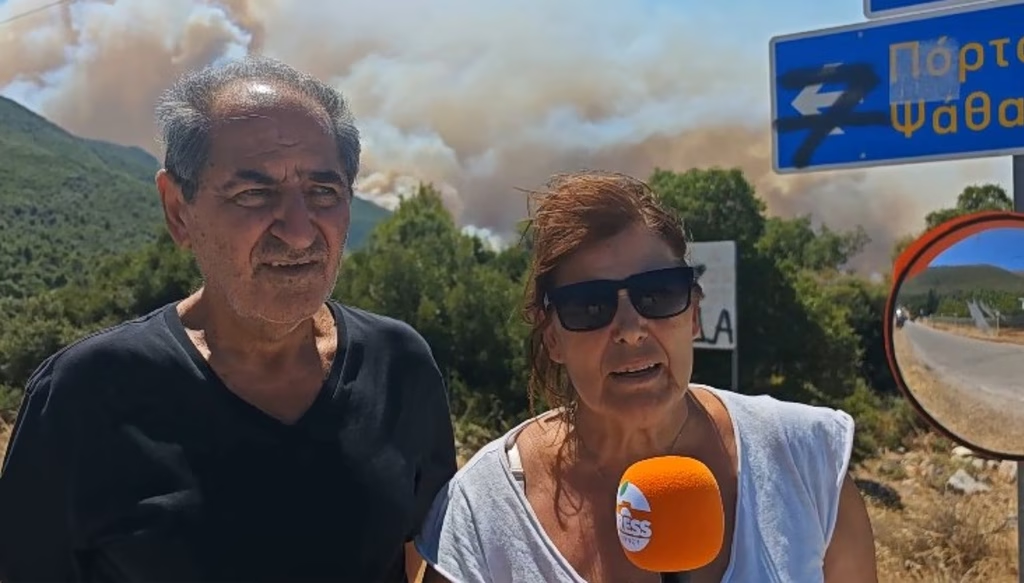
“Everything around us is burned. The work of ordinary people has been lost,” they said.
According to the couple, about 90% of the homes in the Aspras Spitia settlement have been destroyed.
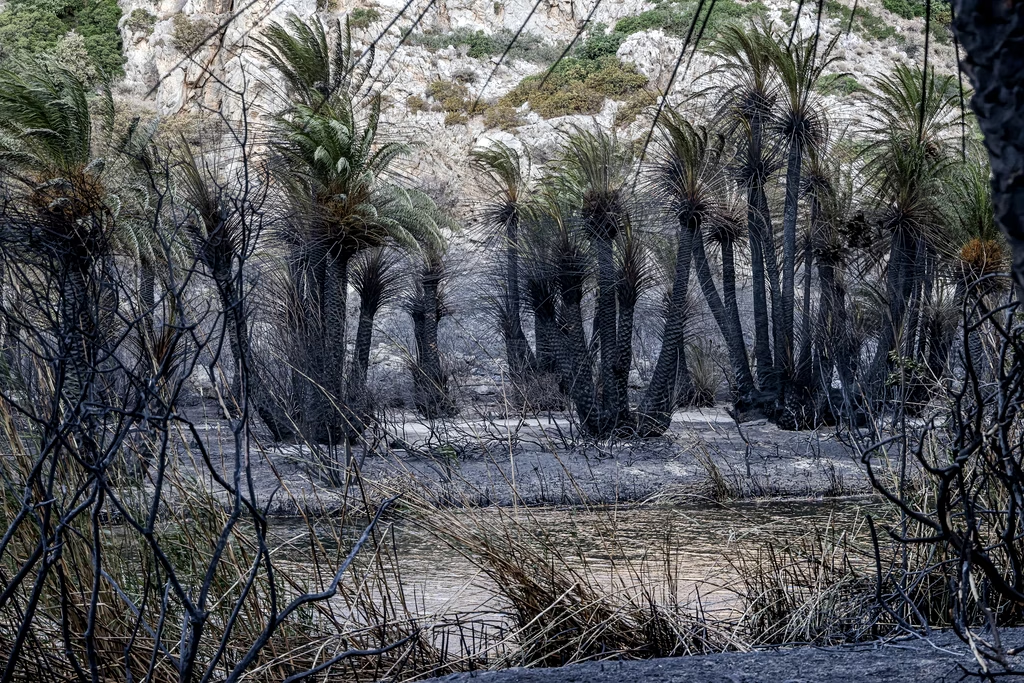
They described burned forests and olive groves surrounding the area and said the fire had reduced most of the settlement to ashes. They also noted that parts of the landscape that had escaped the major 2009 wildfire were destroyed this time.
‘The Firefighters Could Do Nothing’
The couple said firefighters were heavily deployed but faced impossible conditions because of strong winds and constant flare-ups.
“There are many firefighting crews, but the situation is impossible. They couldn’t do anything,” they said, describing repeated flare-ups near Agia Paraskevi.
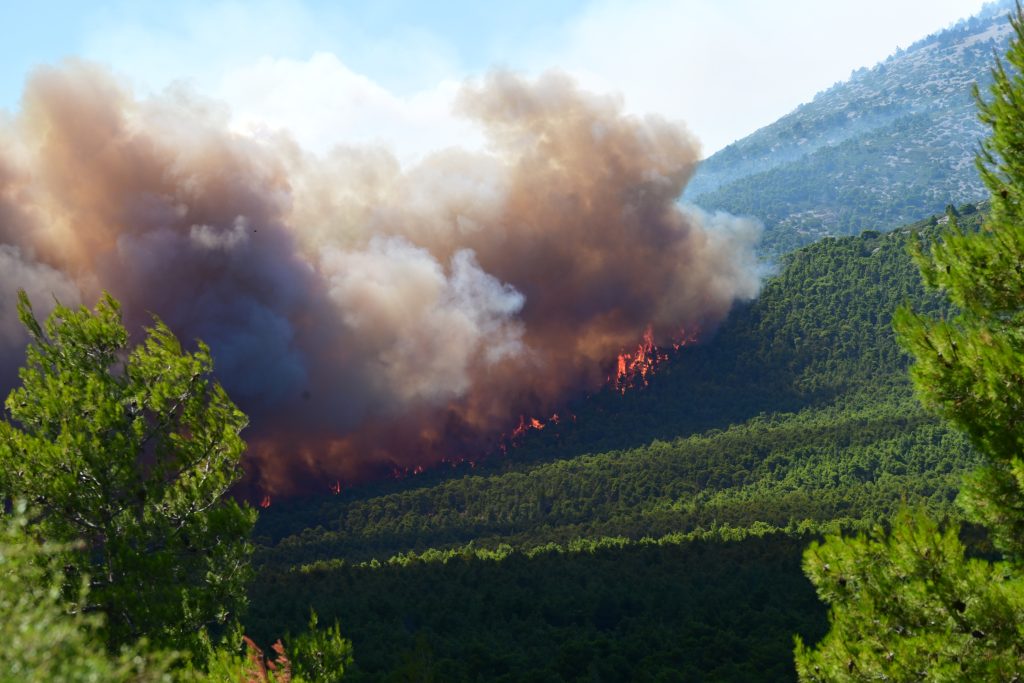
(ΤΑΤΙΑΝΑ ΜΠΟΛΑΡΗ/EUROKINISSI)
They added that they had extinguished spot fires themselves outside their home while waiting for winds to ease enough for aerial firefighting operations to resume.
“The whole of Porto Germeno has been destroyed,” they said. “One of Attica’s greatest natural lungs has been lost. It’s heartbreaking.”