 Μake us preferred on Google
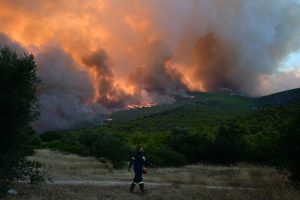
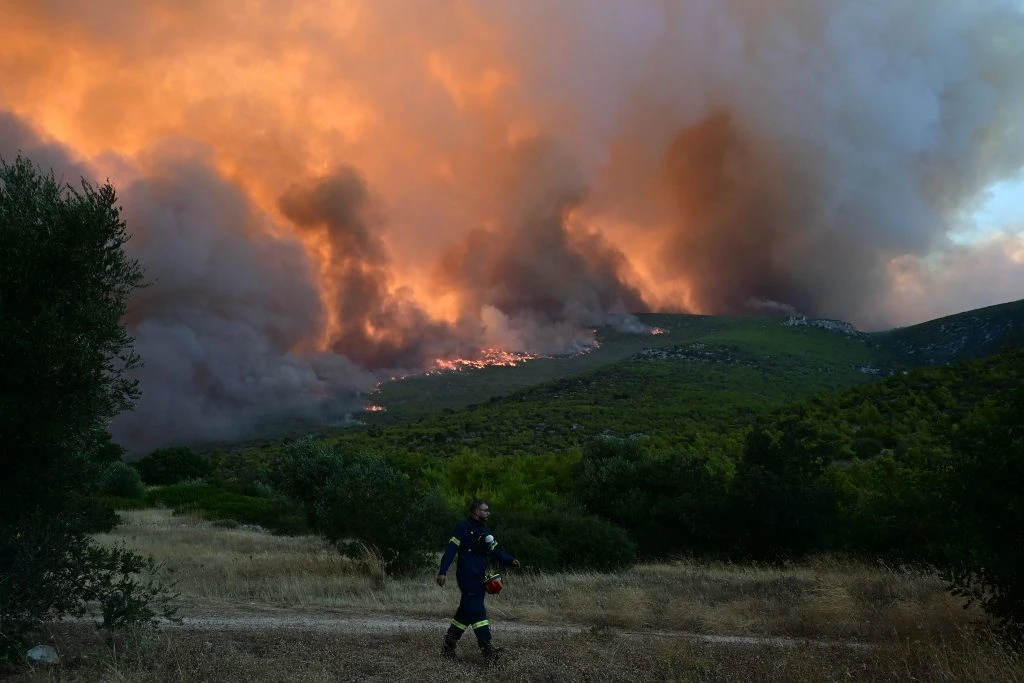
 The wildfire currently affecting West Attica has spread across areas that have been repeatedly hit by major fires in previous years, with satellite data showing strong similarities between the latest blaze and the devastating fires of the past.
Speaking to Greece’s public broadcaster ERT, Haris Kontoes, research director at the National Observatory of Athens’ BEYOND unit, said satellite monitoring systems have recorded repeated flare-ups and new fire fronts as the situation continues to evolve.
The BEYOND systems use satellite data updated every five minutes, allowing researchers to track rapid changes in the fire’s development.
“This fire that we have been experiencing in recent days is truly impressive,” Kontoes said, noting similarities with the 2021 wildfire in northeastern Attica, when a blaze that had appeared to be under control reignited.
Satellite maps show overlap with 2009 burned areas
Presenting maps from the BEYOND monitoring systems, Kontoes highlighted recurring fire patterns in the region.
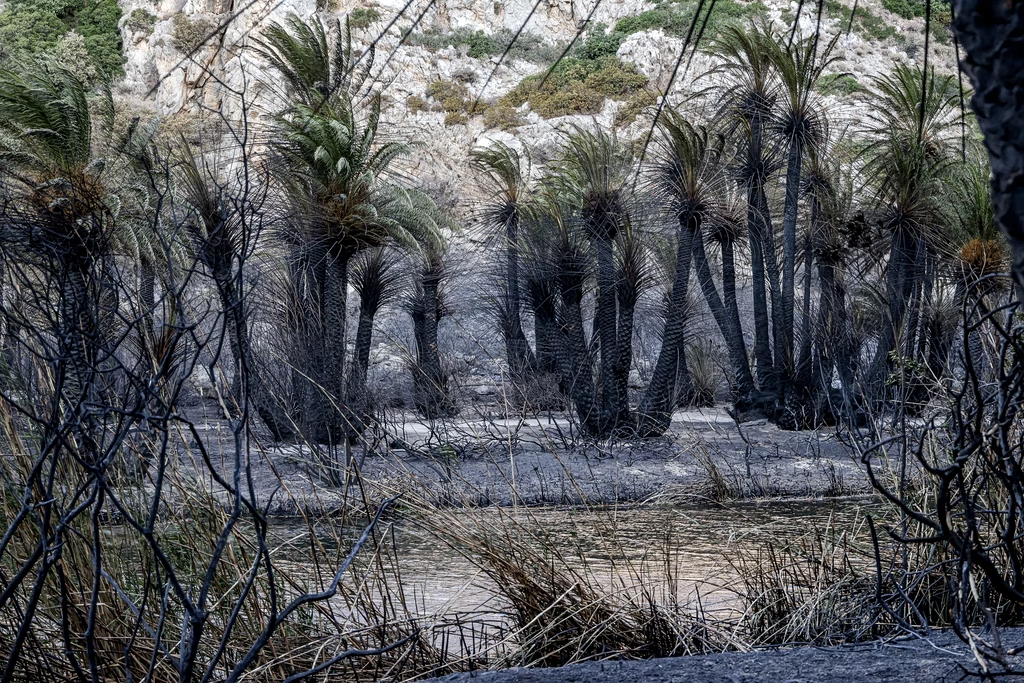
A comparison between burned areas from previous years and the current fire shows that the latest blaze overlaps significantly with the area destroyed in 2009.
“You can see the coincidence of the 2009 footprint with today’s red polygon. The largest part overlaps,” he said.
The fire moved eastward, passing through Porto Germeno, and was influenced by areas already burned in 2021.
“Where it had burned in 2021, there was no longer the same amount of fuel. So the fire seeks out whatever living forest remains,” Kontoes explained.
According to morning satellite data, the affected area has reached approximately 34594 acres (140,000 stremmas), although a final assessment will require further processing of the data.
Homes inside forests increase danger
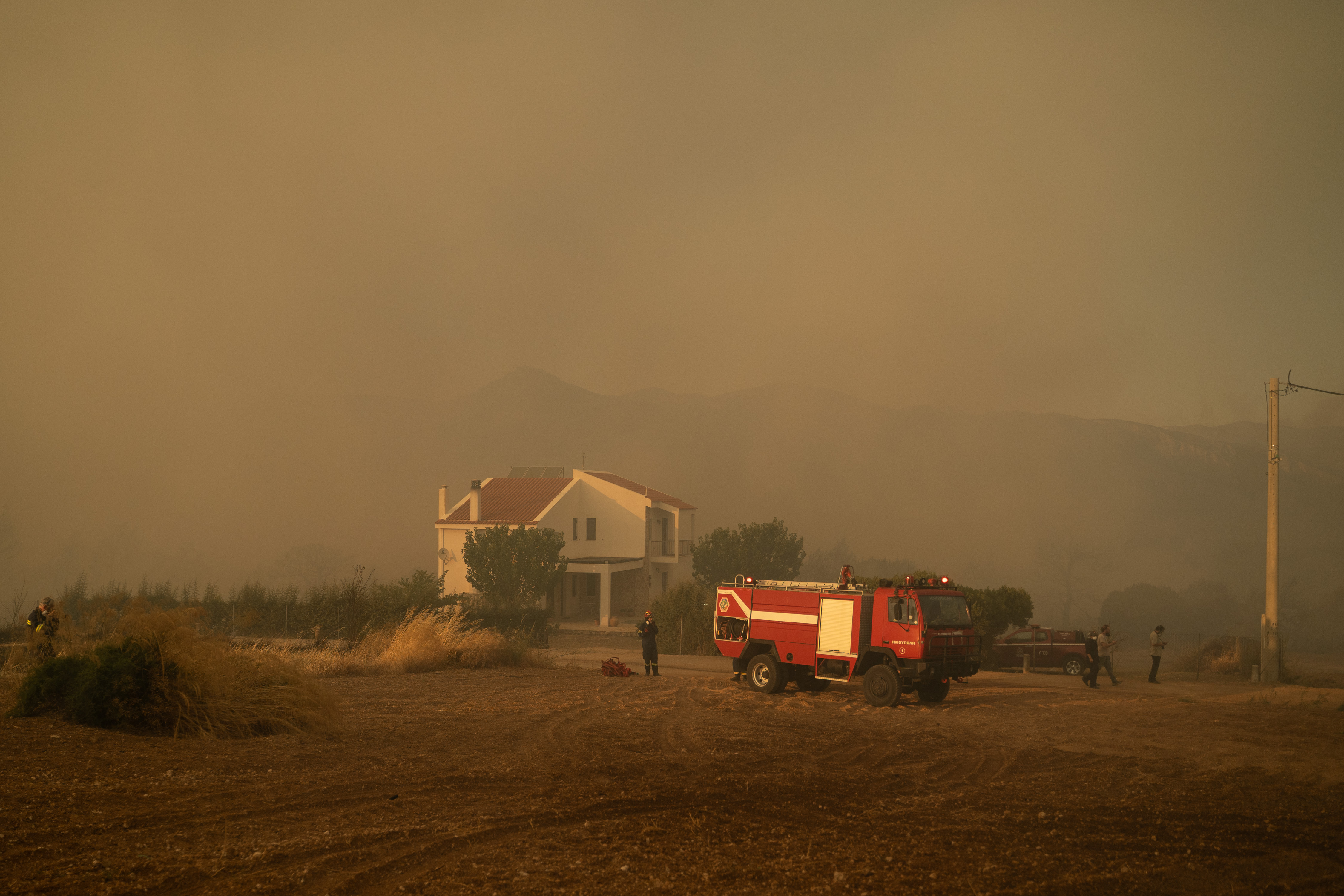
Experts have expressed particular concern over the large number of homes located within forested areas, increasing the vulnerability of the region.
Kontoes said many residences are located in areas classified as severely burned, noting that wildfire damage has different levels of intensity.
He described West Attica as a characteristic example of a broader national challenge, with many settlements built inside or next to forest areas.
“This is the classic problem of all of Attica, both east and west. Coastal settlements are built inside forests,” he said, also referring to the deadly 2018 wildfire in Mati, eastern Attica.
The absence of human casualties at that point was considered particularly significant, but the situation highlighted the ongoing risks created when homes are located in forest zones.
Climate crisis requires new approach
The BEYOND director stressed that wildfire management requires changes in how settlements are planned and how homes are protected.
“We have entered a new era, the era of the climate crisis, which unfortunately we are not taking into account as much as we should,” he said.
He noted that the increasing frequency and intensity of wildfires require a different approach, as longstanding problems remain unresolved, including older buildings, inadequate fire protection measures, uncleared plots of land, and difficult access for firefighting vehicles.
According to data from the National Observatory of Athens, 172,973 acres (700,000 stremmas) in Attica have burned within nine years.
“We know where the danger is, even at the level of individual homes. But we are not moving as quickly as we should,” Kontoes said.
He stressed that protection cannot rely solely on government action and requires the active involvement of residents, property owners, and local authorities.
“The person themselves, the owner, the resident, the municipality, or the community must become aware. We cannot wait until the fire reaches our home and someone else saves us,” he said.
A single major wildfire can change everything
Kontoes noted that while the number of wildfires has increased in recent years, many were contained in their early stages, limiting their impact.
“We have had a greater number of fires in recent years, but we dealt with them early. However, one event, one major wildfire, is enough to change the picture,” he concluded.