Purple jellyfish are once again appearing in Greek waters, raising concern among beachgoers and swimmers as sightings continue along several parts of the country’s coastline.
Reports have been particularly frequent in areas of Evia and Fthiotida, including Chalkida, Arkitsa and Drosia, as well as parts of the Pagasetic Gulf. However, sightings have also been reported from many other coastal areas across Greece.
An interactive map on iNaturalist collects and processes observations in real time, drawing on online reports as well as information shared by the social media group “Jellyfish in Greece.”
How to identify a purple jellyfish
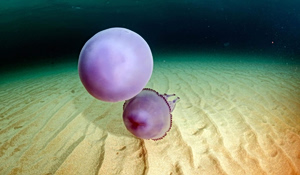
The purple jellyfish, also known as a mauve stinger, belongs to the species Pelagia noctiluca in the Pelagiidae family. The species is associated with the marine environment in which it lives and is also known for its bioluminescence.
It is found mainly in tropical and warm-temperate seas and has also been recorded in the Mediterranean.
The species can be distinguished by several characteristic features:
- Color: It can range from pink to purple or lilac.
- Bell: Its bell is dome-shaped, relatively thick and marked by distinctive small spots or bumps.
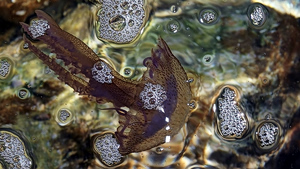
- Oral arms: It has four long, wavy oral arms that are particularly prominent.
- Tentacles: Eight long, thin tentacles extend around its perimeter.
- Appearance: It is more colorful and spotted than transparent jellyfish.
- Sting: Its sting can cause significant pain and irritation, so it should not be touched even when it is out of the water.
What to do if you are stung
If you are stung by a purple jellyfish, the affected area should be treated carefully and actions that could worsen the irritation should be avoided.
The recommended steps are:
- Carefully remove any tentacles remaining on the skin without touching them with bare hands.
- Rinse the affected area thoroughly with seawater. Freshwater is not recommended because it can activate stinging cells remaining on the skin.
- Do not rub the area with sand or other materials.
- Apply ice or a cold compress to help reduce pain and local symptoms.
- Topical preparations or antihistamines may be used to relieve irritation and itching, in accordance with appropriate medical guidance.
- If the reaction is severe, spreads or does not improve, seek immediate medical evaluation.
In cases of a severe reaction or intense symptoms, immediate medical attention should be sought at a health center or hospital.