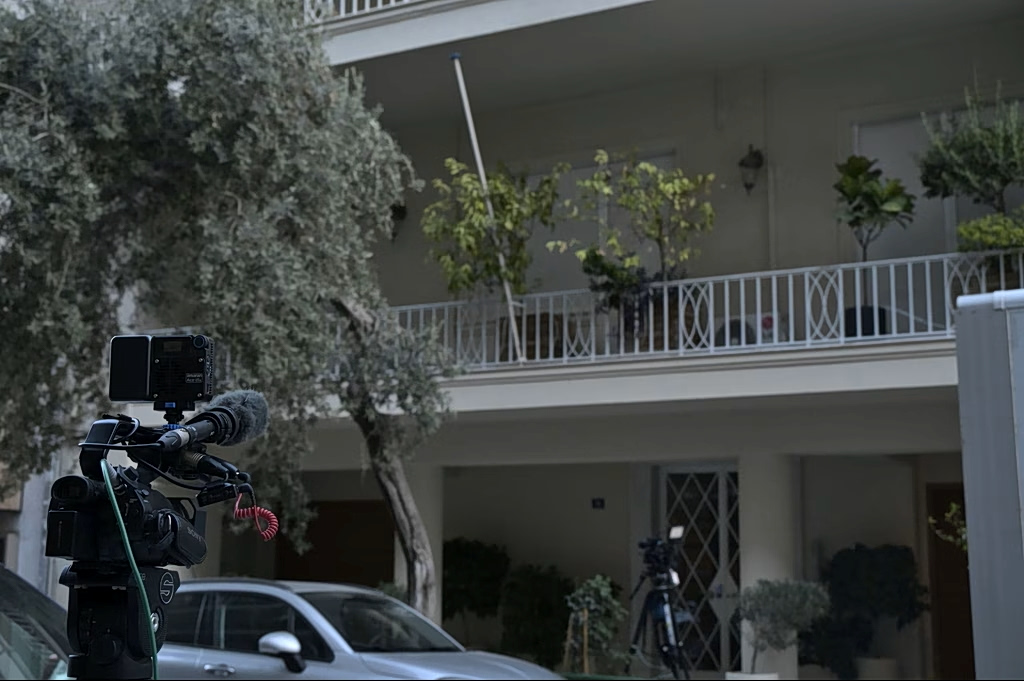
New official technical documents are raising questions over the extent to which modern safety systems are fully operational along the Athens-Thessaloniki railway corridor, particularly around Domokos.
Hellenic Railways says that, following repairs to damage caused by Storm Daniel, trains now operate along the entire Athens-Thessaloniki route with full signaling and remote traffic control, except at Domokos station. It says, however, that entry to and exit from the affected section are still covered by signaling and remote control.
A 88-page Specific Application Safety Case dated Aug. 31 presents a more complicated picture. It says the Domokos S-HMI, the system used by operators to monitor and manage signaling, has not been restored and will not return to service at this stage. Traffic management is therefore being conducted manually, with the document acknowledging operational effects compared with the situation before Daniel.
The document says Domokos station will remain out of operation until Phase B of the restoration project is completed, around spring 2027.
On the 40-kilometer Agnies-Domokos-Palaiopharsalos section, all signals are described as being in “dark status,” while entry signals to Domokos remain permanently red. Special safety procedures require traffic to be regulated through operational protocols, including “telephone blocking” for train movements toward Domokos.
The documents also raise questions over ETCS, the European train-control system. The Railway Regulatory Authority approved the Oinoi-Tithorea and Larissa-Platy sections on Sept. 2 without operating restrictions, but its decisions identified limitations in the existing ERTMS design, including its inability to account for temporary speed restrictions, detect broken rails because axle counters are used instead of track circuits, and automatically protect sections closed for maintenance.
The findings add to scrutiny of Greece’s railway safety infrastructure following the Feb. 28, 2023 Tempi collision, in which a passenger train and a freight train collided near Tempi, killing 57 people. The disaster prompted extensive questions over the state of the country’s railway safety systems and infrastructure.
Greece’s main rail corridor links Athens with Thessaloniki and runs through central Greece, including the Larissa and Domokos areas. The current documents indicate that while trains continue to operate under defined safety procedures, some sections still depend on manual measures rather than the fully automated configuration envisaged for the network.