 Μake us preferred on Google
 Prolonged drought and ever-rising temperatures are putting the Santorini vineyards to the test, threatening one of the country’s most important wine-producing areas and its globally acclaimed Assyrtiko. Local winemakers describe the conditions as unprecedented, as years of inadequate rainfall have pushed even historically significant vines to the end of their lives.
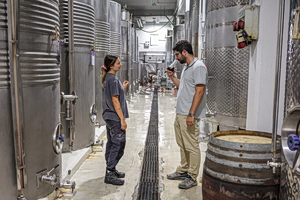
Giannis Boutaris amidst stainles stel fermentation tanks. Source: Reuters/Louisa Gouliamaki
A telling example is a roughly 90-year-old vine trained in the traditional “kouloura” basket weave method, which could no longer withstand the prolonged heat and lack of rain. This cultivation technique was designed to shield grapes from the fierce winds and scorching sun of a Cycladic summer, but it is no longer enough against the extremes of today’s climate.
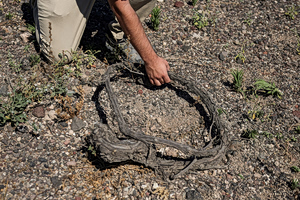
A circular grapevine root on a gravelly ground. Source: Reuters/Louisa Gouliamaki
“The lack of rain, combined with the abandonment of many plots over recent years, has caused these old vines to die,” says 26-year-old winemaker Giannis Boutaris, a sixth-generation vintner at Domaine Sigalas, which now belongs to the Kir-Yianni family.
Production in Free Fall
The impact on output is already stark. According to Ioanna Vamvakoury, president of the Santorini Winemakers’ Association, Assyrtiko production fell from roughly 2,500 tons in 2022 to just 500 tons last year, sending grape prices surging.
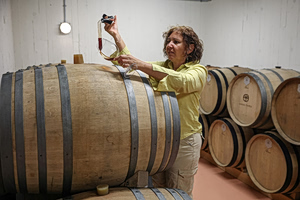
Ioanna Vamvakouri is using a wine thief to extract a small sample of wine from the barrel. Source: REUTERS/Louisa Gouliamaki
Winemakers are now paying producers up to 10 euros per kilogram, while in northern Greece, where conditions are milder, the going rate is around 80 cents per kilogram.
The drop in supply is also pushing up bottle prices, as wineries now compete in a market defined by high quality and very limited quantity.
The Fight for Water
Faced with water scarcity, producers are exploring new approaches. One of the most ambitious plans under consideration involves using treated wastewater from homes and hotels to irrigate the vineyards.
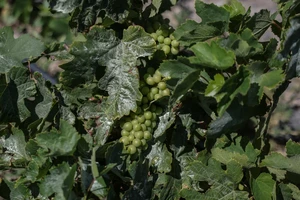
A close-up shot of unripe green grapes. Source: REUTERS/Louisa Gouliamaki
The pilot program, being developed in collaboration with scientists and local authorities, draws on practices already in use in wine regions such as California, and is considered a more sustainable and energy-efficient alternative to desalination.
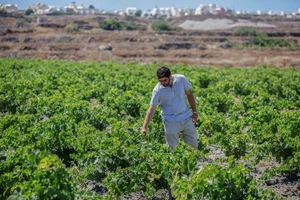
Giannis Boutaris inspecting grapes. Source: REUTERS/Louisa Gouliamaki
Santorini vineyards are also experimenting with new cultivation techniques, including planting vines in rows to allow for more efficient irrigation, underground drip systems that reduce evaporation losses, and technologies that capture atmospheric moisture and convert it into water using solar energy.
Tourism and Agriculture Competing for the Same Water
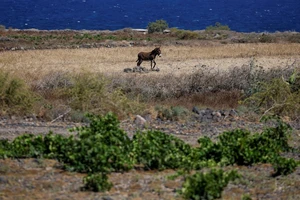
A donkey amid the sun-scorched earth of Santorini, with Asyrtika vines in the forefront. Source: REUTERS/Louisa Gouliamaki
The problem extends well beyond winemaking. During the summer months, when millions of visitors flood the island, farmers, hotels, and hospitality facilities find themselves competing for the same, increasingly scarce water resources.
This pressure has reignited the debate over natural resource management and the consequences of overtourism, with local authorities calling for stricter building regulations and better planning to secure the long-term survival of one of Greece’s most iconic wine-producing regions.