
 Μake us preferred on Google
 “Where’s Karoline? Where’s my superstar?”
It was last August, and President Trump was in the White House briefing room, his eyes searching for his beloved press secretary. After a few moments, Karoline Leavitt emerged from the press offices, taking her place at the president’s side.
“Is this the largest crowd that you’ve ever seen?” Trump asked her, gesturing to the horde of reporters who’d crowded in for his press conference.
“Yes,” Leavitt replied. “This is definitely the most packed briefing, and I think all of you would agree. I think it’s why we need to build a ballroom.”
The president smiled, beaming at her as if she’d just read his mind.
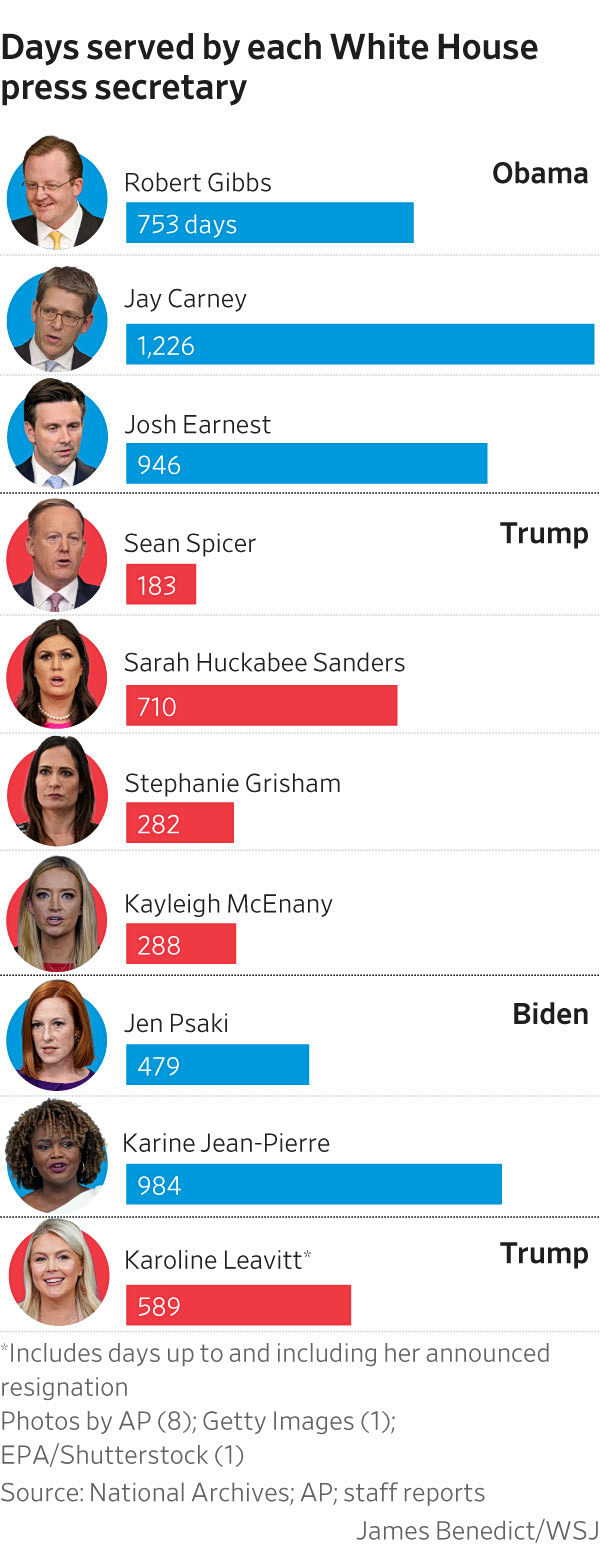
So it went between the president and Leavitt, the first press secretary of this administration, Trump’s second-longest serving and his fifth overall. She was his willing scene partner, unyielding loyalist and ardent defender, who spoke at times as if she and Trump shared some kind of telepathic connection.
She was just 27 when she took the job after racing up the ranks of Trumpworld, first as a White House intern during Trump 1.0 and later as a spokesperson for his third presidential campaign. But now, less than two years into her tenure, Leavitt is calling it quits.
“I have felt in my heart that I cannot be the best mom my two young children deserve while devoting the constant time, energy, and attention required of the White House Press Secretary,” Leavitt said on social media.
Trump said he understood and respected her decision, and that Leavitt would remain one of his top outside advisers.
Leavitt, the youngest press secretary in history and the first to be pregnant in the role, never anticipated leaving the White House early. But she made the decision to leave shortly after returning from maternity leave for her second child, Viviana, according to a person familiar with the matter. Her husband, New Hampshire businessman Nicholas Riccio, who is about 32 years her senior, was bearing the brunt of caring for their infant and 2-year-old toddler, Niko. Meanwhile, Leavitt juggled the demands of the press and the president, and felt it was time she gave her family more attention. Sometimes in the background of Leavitt’s calls with reporters, a baby could be heard cooing as she discussed a story.
The White House has also begun turning from offense to defense with the midterms just three months away, and Leavitt felt she would be more helpful from the outside. She wanted to leave on a high note, the person said, and before burning out.
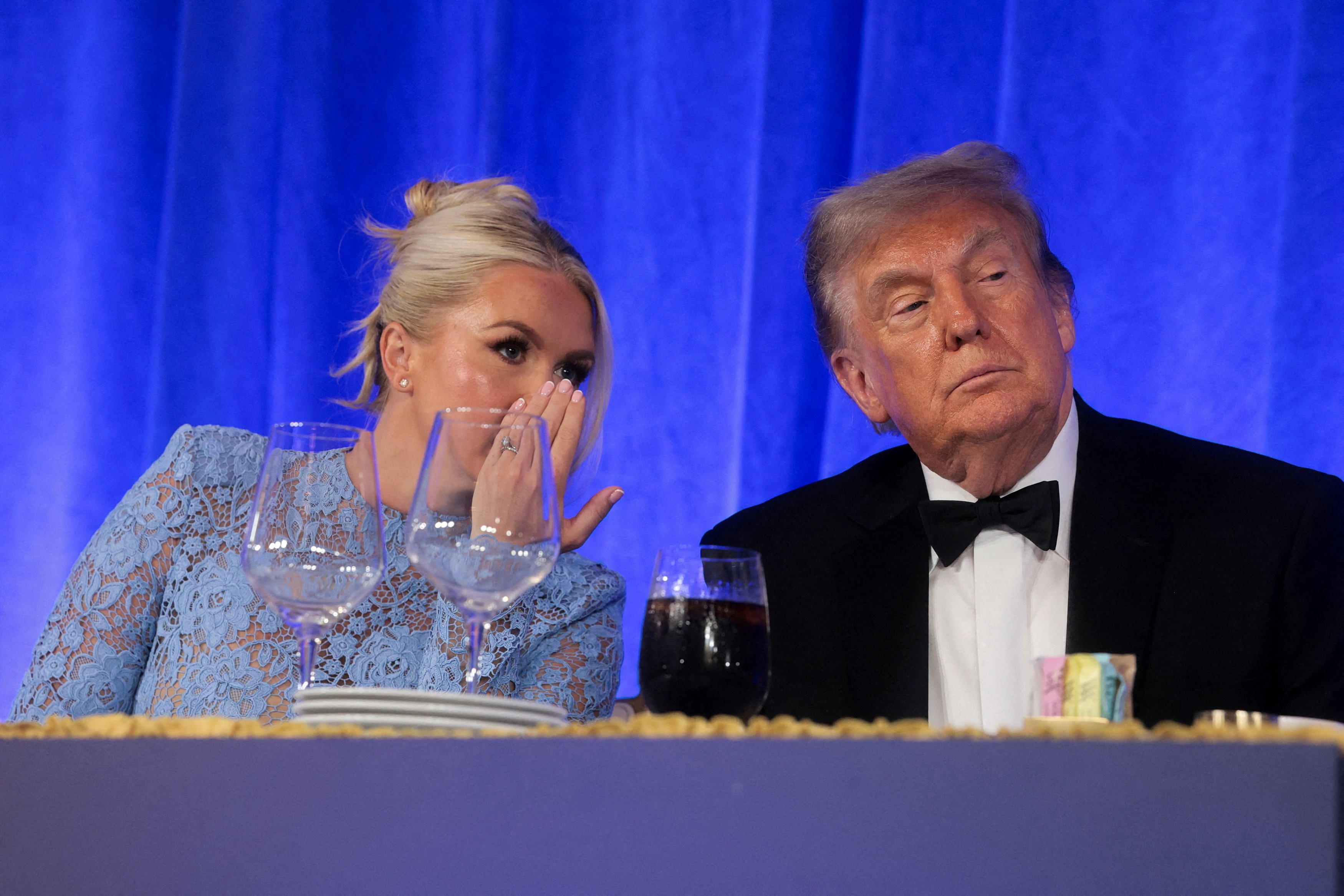
FILE PHOTO: White House Press Secretary Karoline Leavitt speaks to U.S. President Donald Trump at the White House Correspondents’ Association (WHCA) Dinner, which was rescheduled from April after it was interrupted when a man tried to force his way through security and fired a shotgun, at the Waldorf Astoria hotel in Washington, D.C., U.S., July 24, 2026. REUTERS/Jonathan Ernst/File Photo
While there is often turnover in an administration around the two-year mark, this has been a particularly challenging summer, administration officials said. The Iran war continues to drag on, weighing down poll numbers and morale inside the White House. The midterm elections, which are historically hard for the incumbent party, might wipe out 2024 GOP gains. Officials in the White House are bracing for potential investigations should Democrats win back control of the House.
In recent weeks, White House counsel David Warrington and deputy press secretary Abigail Jackson have also announced plans to depart.
She told few people about her decision to leave, only informing chief of staff Susie Wiles, who supported her decision , and her immediate team before the news was announced. In a one-on-one meeting with Trump earlier this week, she told him it was her time to go but she wouldn’t be going far, the person familiar with the matter said. She plans to stay on as an outside adviser to the president. The news of her departure never leaked to the press. Instead, it was announced by the president himself on social media.
Leavitt was known by her colleagues for putting in long hours. When she became pregnant with her first child during the 2024 presidential campaign, she eschewed a traditional maternity leave to keep working for Trump, even as her bosses encouraged her to take personal time.
“I told her to take a month,” Chris LaCivita, the campaign’s co-manager, recalled telling her as her due date neared. “She said ‘No, no, no—I’m in a hurry. I need 10 days.’” She was back to work after just a few days, returning on the day a would-be assassin opened fire at a Trump rally in Butler, Pa.
When she took a longer leave this summer, following the birth of her second child, a rotating cast of cabinet officials such as Secretary of State Marco Rubio and Treasury Secretary Scott Bessent held briefings instead. Trump kept asking aides when she would return. When Leavitt walked through the doors of the Oval Office to resume her duties, the president looked at her and said, half-jokingly, “thank God you’re back.”
Leavitt was a student of her predecessors, and sought their advice early and often in her tenure. From Kayleigh McEnany , Leavitt adopted a pre-briefing prayer; before she walked to the lectern, Leavitt would huddle her staff to ask God for confidence, articulation, and a good briefing on behalf of the president. From Sarah Huckabee Sanders, she learned the art of balancing public pugilism with private prudence. Leavitt had a reputation for being helpful to inquiring reporters: Replies to requests for comment often arrived with friendly exclamation points—even if she’d just berated some of them for a “stupid question” in the briefing room moments before.
When Leavitt steps down in two weeks, she’ll leave behind a press operation reimagined for the MAGA media landscape. Working with communications director Steven Cheung and former deputy chief of staff Taylor Budowich, she developed a house style that channeled Trump’s penchant for petty punishments and the vernacular of the terminally online. Leavitt and her team of mostly Gen Z press aides embraced “new media” outlets, the White House’s blanket term for TikTok stars, conservative women podcasters and major digital publications such as Axios. There was a special new media seat in the briefing room, and its occupant always got the first question.
The communications office wrestled control of the press pool away from the White House Correspondents’ Association and closed off access to senior press offices in the West Wing. But even as they sued the Associated Press and subpoenaed reporters from the New York Times and The Wall Street Journal, Trump and Leavitt showed up to both White House Correspondents’ Association dinners this year. After all, her boss was a loyal newspaper subscriber and broadcast viewer, and at times, their best source.
Budowich said that while the administration believed the media to be biased, Leavitt could “meet unfair media hostility with aggression, but also recognize there’s a relationship that must be managed and maintained.”
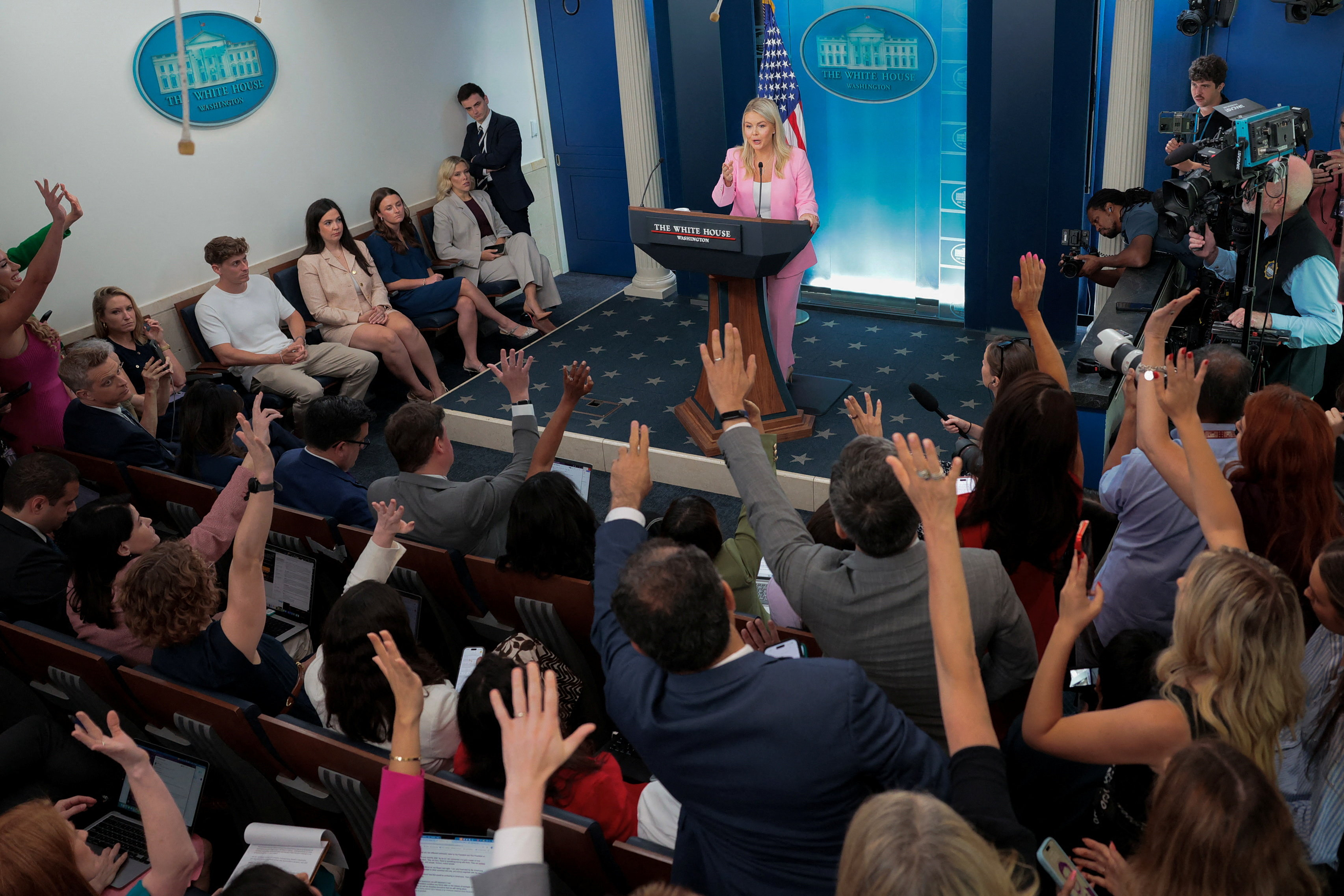
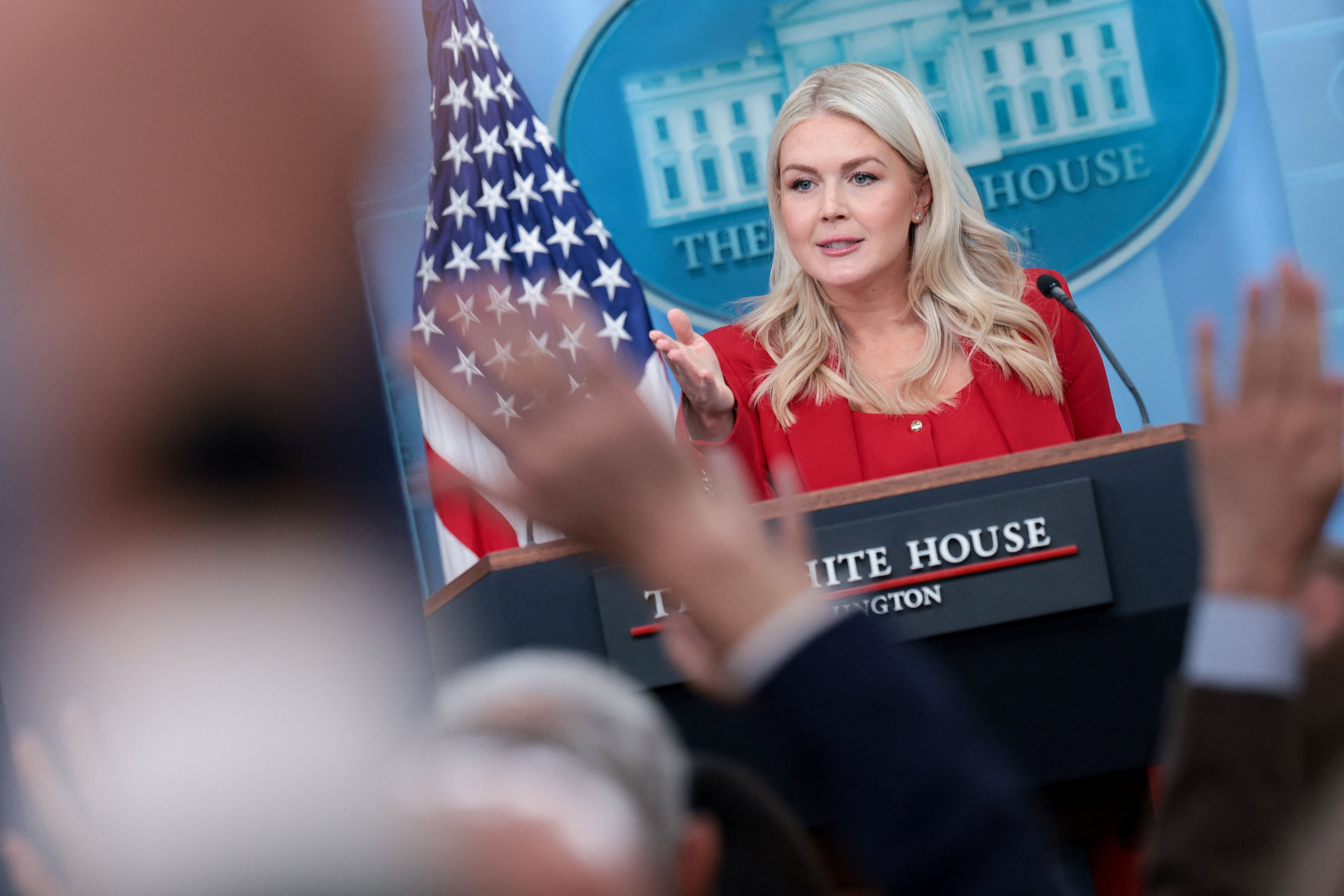
White House Press Secretary Karoline Leavitt delivers a press briefing in the James S. Brady Press Briefing Room at the White House in Washington, D.C., U.S., July 16, 2026. REUTERS/Evan Vucci
Trump put in more facetime with the media than Leavitt ever did, but when she appeared in the Brady Briefing Room, she was his enforcer. Leavitt somehow appeared to simultaneously grin and glare as she boasted of the administration’s accomplishments and steadfastly defended the president, even when he wasn’t telling the truth. At her first briefing, Leavitt asserted without evidence that “50 million taxpayer dollars that went out the door to fund condoms in Gaza,” a performance that drew comparisons to Sean Spicer’s assertions about Trump’s exaggerated inaugural crowd size. She was fact-checked for saying Trump’s “big, beautiful bill” wouldn’t add to the deficit and that tariffs were a tax cut for consumers.
After Trump posted a racist video depicting the Obamas as apes, Leavitt initially defended the president. “Please stop the fake outrage and report on something today that actually matters to the American public,” she said. The White House later deleted the post .
Spicer, Trump’s first press secretary, admitted he was “a bit jealous” of Leavitt, he told the Washington Post last year. Perhaps that’s because Leavitt had something no previous Trump spokesperson did: A political consciousness fomented exclusively during the GOP’s MAGA era. A decade ago, as a college student, Leavitt was already penning op-eds decrying the press as “frankly crooked”—“unjust, unfair, and sometimes just plain old false.” She was a native to a land foreign to her predecessors. It wasn’t merely that she spoke fluent Trump. It was her first language.
Back in college, before she’d tied her professional fate to the president, Leavitt dreamed of being a TV news anchor. For now, she will remain a top outside adviser to the president, but what’s next is unclear. There’s speculation that she might end up in conservative media—maybe hosting a show on Fox News, like McEnany. Or maybe she’ll try her hand at elected office again and redeem her 2022 loss for a New Hampshire congressional seat. No matter what, “I will always remain a vocal advocate for MAGA and the Republican Party,” she wrote in her departure announcement.
Write to Kara Voght at kara.voght@wsj.com and Meridith McGraw at Meridith.McGraw@WSJ.com