Intense storms continue to batter Epirus and the Ionian region, causing widespread damage, transport disruptions, and multiple rescue operations. Nearly 24 hours of continuous rainfall have left rivers swollen, roads submerged, and terrain highly unstable, with meteorologists warning that this is only the first of several incoming weather fronts.
By Wednesday afternoon, the region recorded up to 139 millimeters of rain, with the heaviest near Paramythia, Thesprotia, causing flood risks to rise sharply. Lightning activity has been extreme, with over 6,500 strikes recorded across Epirus and the Ionian Sea by 5:00 p.m. local time, according to Meteosat-12 satellite data.
Flooded Roads and Landslides
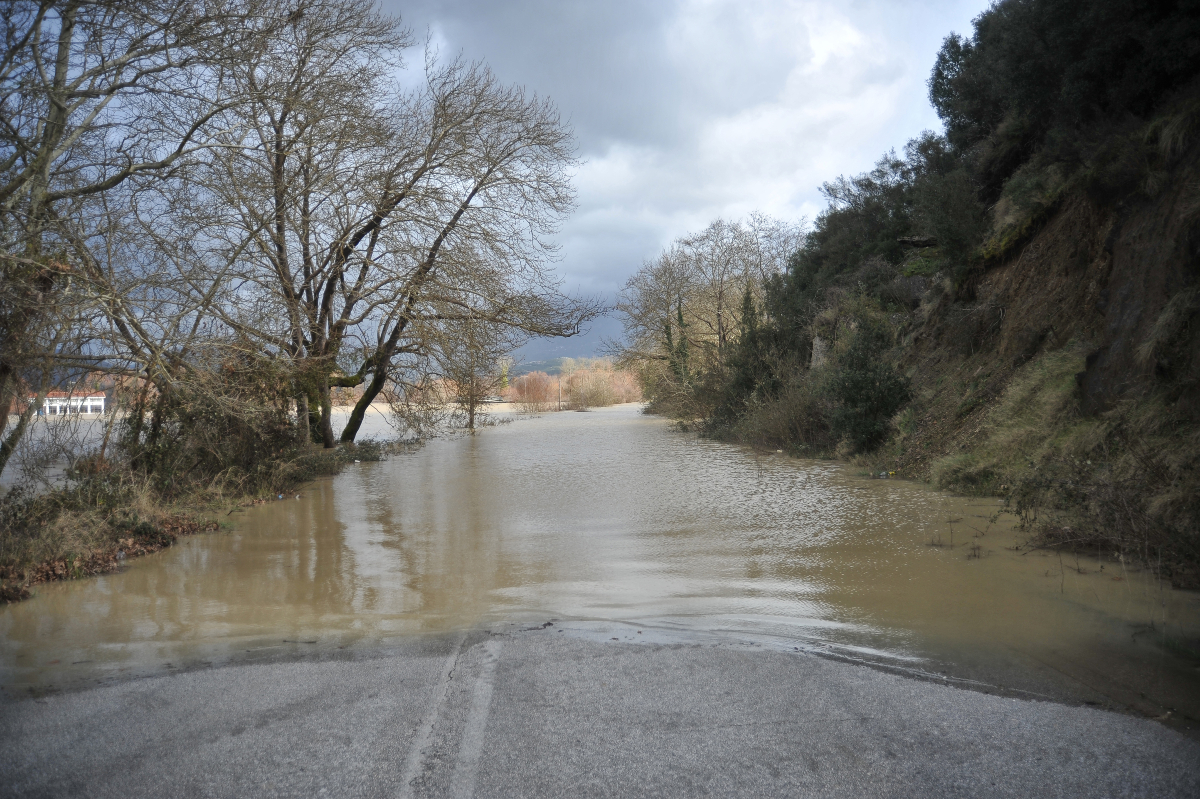
Rivers and streams across the region have overflowed, impacting the road network and local infrastructure. While major river flooding has not yet been reported, authorities stress that road conditions are hazardous, with sudden flooding and minor landslides affecting several areas.
In Ioannina, roads repeatedly turned into torrents, disrupting traffic and endangering both drivers and pedestrians. Meanwhile, in Igoumenitsa, key roads such as the national road linking Igoumenitsa and Plataria were closed after landslides and debris blocked the roadway. Another road, Igoumenitsa–Mavroudi, flooded near a public utility building, trapping vehicles as water levels rose rapidly. Municipal crews have deployed heavy machinery to clear roads and carry out temporary repairs.
NEWSLETTER TABLE TALK
Never miss a story.
Subscribe now.
The most important news & topics every week in your inbox.
Late Wednesday, a landslide in the Miliotades area of Zagori temporarily blocked traffic. Local authorities quickly intervened, removing rocks and debris and restoring access.
Mountain Villages See Intensive Rescue Efforts
Rescue operations have been crucial in remote areas. In the village of Kavalari, Zagori, a shepherd and his wife were stranded when a torrent blocked their escape route. Firefighters from the Miliotades Fire Station and the 5th EMAC unit evacuated the couple safely using specialized equipment after a difficult three-hour operation.
Earlier, in the mountain village of Melissourgoi, two shepherds were trapped when floodwaters made the road impassable. Firefighters from the Northern Tzoumerka station rescued them without injuries. Authorities described these operations as “particularly difficult and demanding,” highlighting the ongoing risk in remote, mountainous regions.
Severe Damage in Kastoria
Prolonged rainfall has also hit western Macedonia. In Kastoria, the Aliakmonas River overflowed, turning the historic River Party festival site in Nestori into a vast mud-covered area. The normally vibrant festival grounds, which host thousands of campers every summer, have been devastated, with authorities assessing damages and preparing for further severe weather.
Meteorologists Warn of Successive Storms
Experts caution that current conditions are only the beginning. Continuous rainfall on already saturated soils increases the risk of sudden floods, landslides, debris flows, and road subsidence. Authorities are urged to consider activating Greece’s elevated civil-protection alert levels, particularly in northwestern Greece, including Epirus, the northwestern Ionian islands, and parts of western Macedonia.
Forecasts suggest that heavy rain and thunderstorms may continue through November 27–28, with the potential for localised severe storms. Citizens are advised to avoid unnecessary travel, exercise caution on flood-prone roads, and follow instructions from local authorities and the Civil Protection service.
The combination of flooding, landslides, and infrastructure damage underscores the need for continued vigilance as the region faces a prolonged period of severe winter weather.