Until a few decades ago, pufferfish were unknown in Greek waters. Today, they have become one of the Mediterranean’s most notable invasive species, spreading across areas of the Aegean and Ionian seas and raising concerns among scientists, fishermen and environmental groups.
Pufferfish belong to the Tetraodontidae family and most species reached the Mediterranean through the Suez Canal, migrating from the Red Sea. Rising sea temperatures in recent years are believed to have helped their expansion, with six different species now recorded in Greek seas.
The Six Pufferfish Species Found in Greece
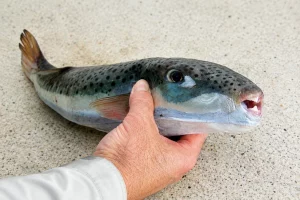
The best-known and most widespread species is Lagocephalus sceleratus, also known as the silver-cheeked pufferfish. It is considered the largest and most dangerous species because it contains high levels of tetrodotoxin, a powerful neurotoxin that can cause severe poisoning and even death if consumed.
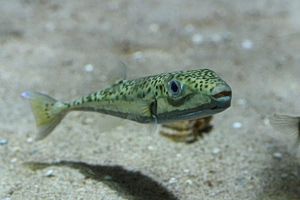
Other species recorded in Greek waters include:
- Lagocephalus suezensis
- Lagocephalus spadiceus
- Torquigener flavimaculosus
- Sphoeroides pachygaster
- Tylerius spinosissimus
These species are mainly found in the southern and eastern Aegean, but their presence is gradually expanding to other parts of Greece.
Why Pufferfish Are Considered Dangerous
The main concern is the toxicity of certain species. Tetrodotoxin cannot be destroyed through cooking or freezing, making the consumption of pufferfish extremely dangerous.
Authorities advise the public never to eat fish identified as pufferfish due to the risk of serious poisoning.
The species also create problems for the fishing industry. Their strong teeth can damage fishing nets, hooks and catches, increasing costs for professional fishermen. In several areas of Greece, fishermen report that damage caused by pufferfish has increased significantly in recent years.
Concerns Over Marine Ecosystems
Scientists are closely monitoring the spread of pufferfish because invasive species can negatively affect marine biodiversity.
Pufferfish compete with native species for food and shelter, while they can also prey on fish, crustaceans and mollusks that are important parts of local ecosystems.
Experts consider the continued growth of pufferfish populations one of the major environmental challenges facing the Mediterranean, with Greece at the forefront of monitoring and addressing the phenomenon.