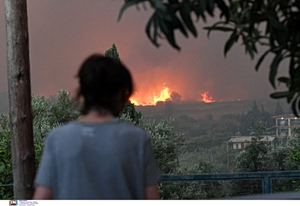
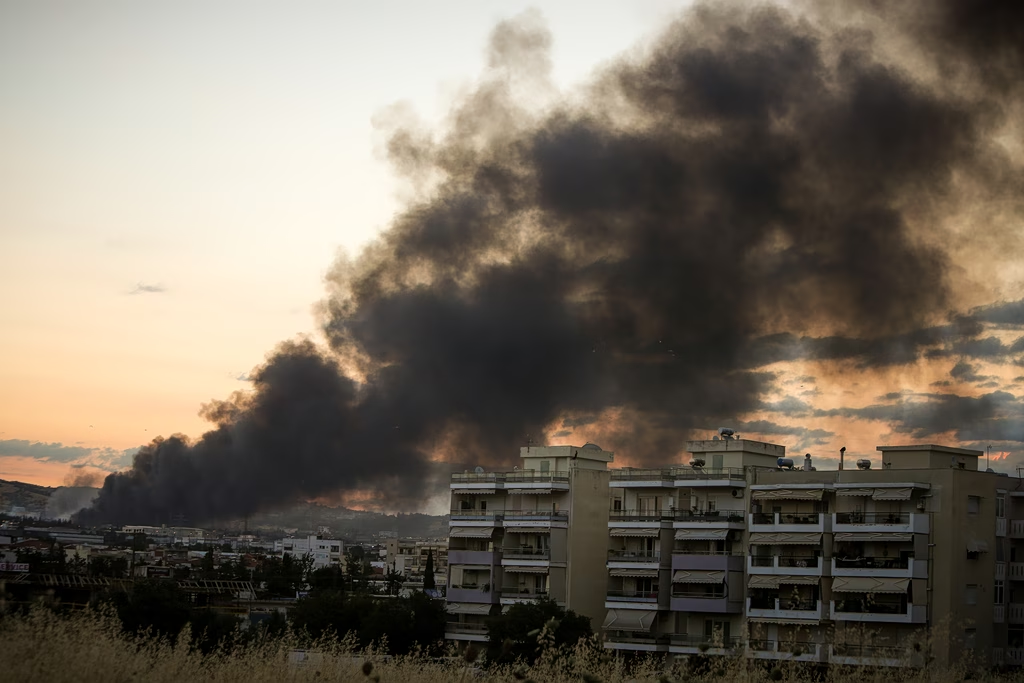
The large fire at a recycling plant in Oraiokastro has raised serious concern among scientists over the toxic smoke it is producing.
Nikos Thomaidis, a professor of Analytical Chemistry at the University of Athens, warned during an interview with ERTnews that burning plastics and other organic materials releases thousands of chemical compounds, many of which are highly toxic or even carcinogenic.
He explained that the smoke cloud contains polycyclic aromatic hydrocarbons, dioxins, volatile organic compounds, metals and other hazardous substances. He placed particular emphasis on PM2.5 particulates, describing them as inhalable and the most significant threat to human health from this kind of pollution.
According to the professor, vulnerable groups and people with respiratory conditions should avoid any exposure to the smoke altogether. He stressed that those with serious breathing problems, along with other at risk populations, should stay completely away from contact with such clouds.
Thomaidis advised people to remain indoors with windows closed and to use air conditioning correctly in order to limit exposure to the pollutants.
Guidance on using air conditioners
He clarified that air conditioning units should be set to recirculate indoor air only, rather than draw in air from outside. Otherwise, contaminated outdoor air could enter homes and increase residents’ exposure to pollutants.
The professor noted that the smoke is not confined to the Thessaloniki area but is being carried through the atmosphere. He said the cloud has already reached Attica, where particles have been detected, and added that pollutants are expected to spread across much of the Aegean, as well as central and southern Greece. He noted, however, that concentrations gradually decrease with distance from the fire’s source.
Early symptoms of exposure
Discussing the health effects, Thomaidis explained that the first signs of exposure to this kind of smoke are a strong odor and irritation. He said the smell serves as a warning to protect oneself, and that once irritation sets in, it signals a serious level of exposure has already occurred.
The article also references comments from Thanasis Vasilakopoulos, president of the National Public Health Organization (EODY), on the health effects of the toxic cloud and precautions people should take.