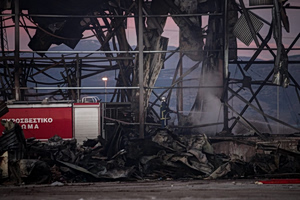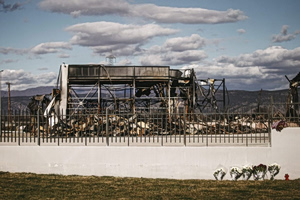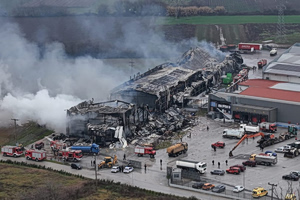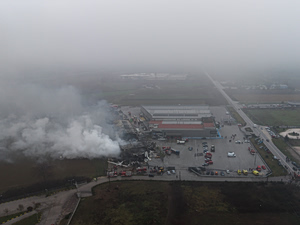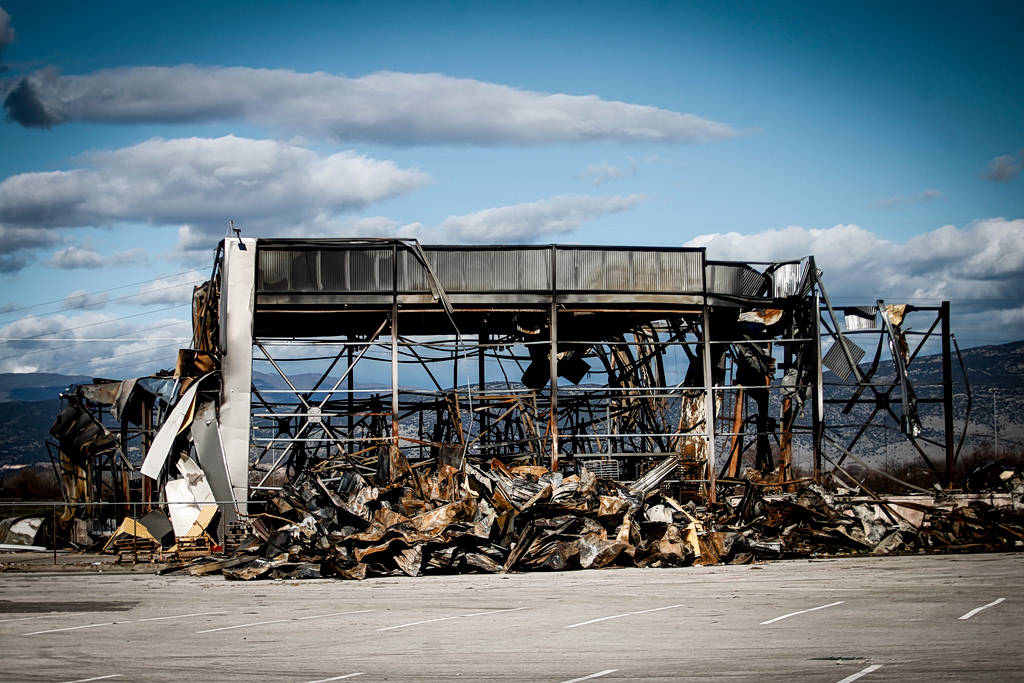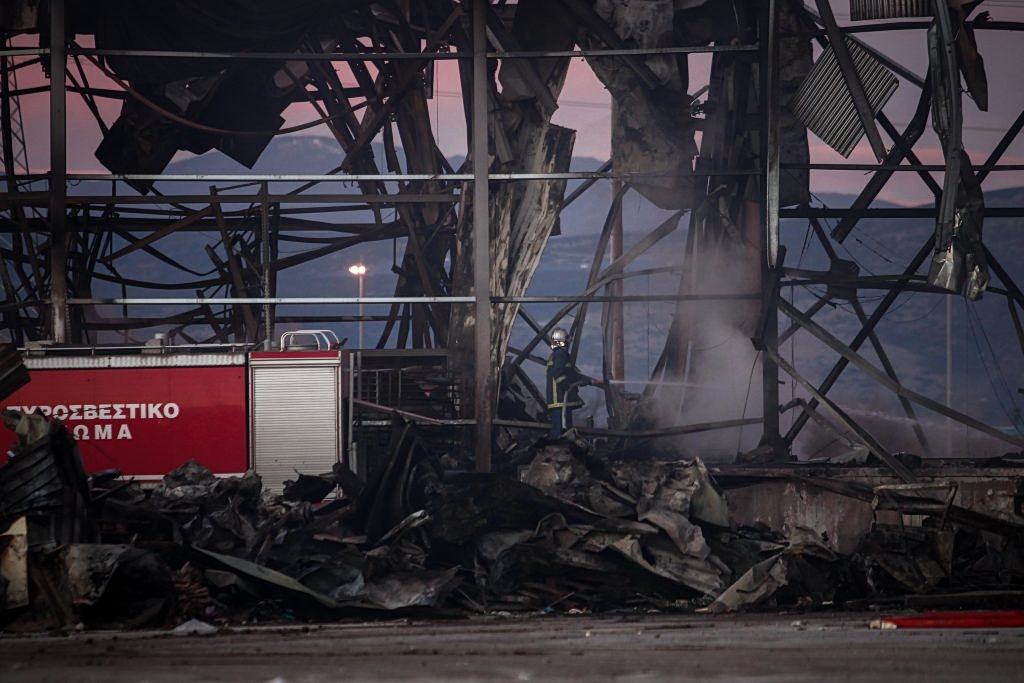
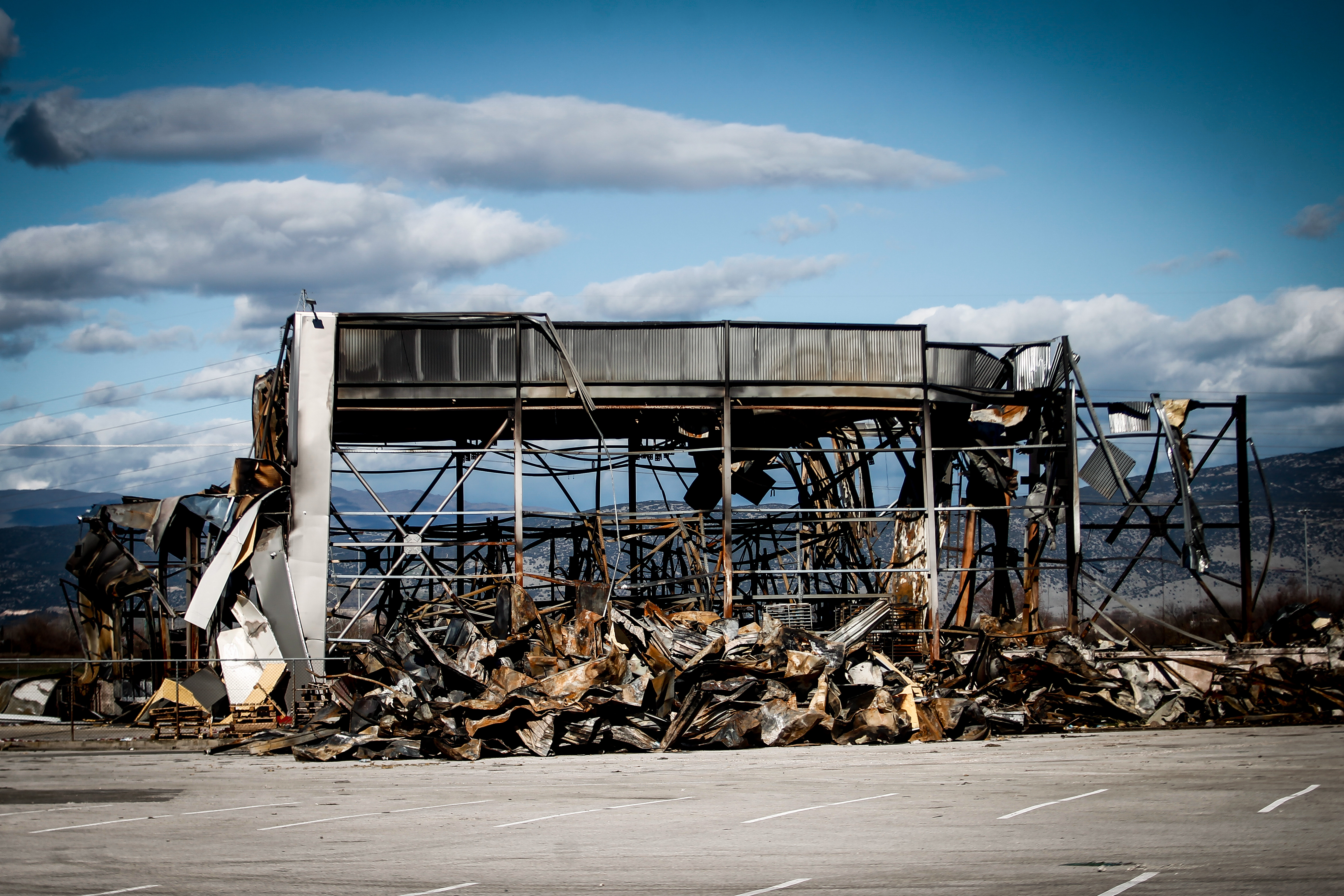
The owner of the Violanta cookie factory in central Greece has been remanded in custody in Trikala as prosecutors pursue upgraded felony charges in connection with the explosion that killed five women earlier this year.
The businessman is being held at the Trikala Police Directorate and is expected to appear before an investigating magistrate Tuesday morning. His arrest followed what authorities described as a surprise operation by Greece’s Arson Crimes Directorate (DAEE), after prosecutors elevated the case from negligent homicide to a felony charge that includes the possibility of intent.
New findings from investigators
According to the supplementary case file compiled by the DAEE, the explosion may have been the result of a long-standing propane leak that went unresolved for months.
Testimonies from workers and expert witnesses indicate that a strong smell of propane had been present at the facility since June. Despite warnings and a visit from a private technician, the problem was allegedly not repaired due to financial disagreements with the factory’s management, according to Greece’s public broadcaster ERT.
Investigators say a corroded underground pipe had been placed directly in soil, in violation of safety regulations. The leaked propane accumulated in the basement area and, once ignited by a spark from a water pump, triggered an explosion equivalent to approximately 185 kilograms of TNT. The blast killed five women instantly during the overnight production shift.
Initial reports had already pointed to accumulated gas as the likely cause. The new evidence strengthens that assessment and suggests that the risk may have been well-known before the fatal incident.
Allegations of safety lapses
The investigation is now expanding beyond the factory’s ownership to examine potential responsibilities of engineers and administrative staff.
Authorities have identified what they describe as serious inaccuracies in site plans, including the alleged concealment of two above-ground fuel tanks installed closer than the legally required 7.5 meters from the property boundary.
Photographs that emerged as part of the inquiry show propane detectors that were not connected to the electrical system. Their cables had reportedly been painted along the walls to create the appearance of being operational. Investigators also found pipeline joints connected with simple fittings rather than approved industrial methods.
The factory site remains sealed to prevent tampering with evidence as forensic examinations continue.
A broader reckoning
The case has prompted wider debate in Greece about oversight of industrial facilities.
Michail Chalaris, an Associate Professor at Democritus University of Thrace and a Retired Lt. General, speaking to the Greek public broadcaster, described the incident as a “case study” in how industrial plants operate in the country. He argued that inspection mechanisms often rely too heavily on paperwork rather than substantive, on-site controls, effectively leaving safety decisions to owners’ discretion.
Authorities say the full investigation is ongoing. For many in Greece, and especially in Trikala, accountability is seen as essential not only in legal terms but as a measure of respect for the five women who lost their lives.