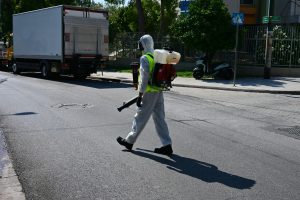
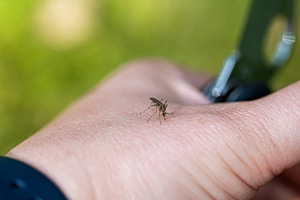
The Attica regional government has intensified efforts to curb the spread of West Nile virus, carrying out targeted nighttime mosquito spraying operations in eastern Attica.
The operations, conducted with specialized ultra-low-volume (ULV) equipment, were captured by a drone operated by the Orange Press Agency.
The nighttime interventions focused on the Alykes Artemidos wetland and scattered areas of standing water across the region. These locations are mosquito breeding grounds and attract birds, creating conditions that can contribute to the spread of the virus.
Why eastern Attica is seeing increased transmission
Epidemiologist Gkikas Magiorkinis, an associate professor, said the current surge in eastern Attica is linked to the area’s agricultural-type landscape, which attracts corvids such as crows, magpies and jackdaws that can carry the virus.
Scientific hypotheses have also linked shifts in bird populations to the effects of Storm Daniel in the Thessaly region.
Because infected mosquitoes do not travel long distances, the presence of birds close to populated areas may help explain increased virus circulation in locations including Spata, Markopoulo and Loutsa, according to Magiorkinis.
Spraying covers 10,000 acres
The spraying operations were carried out across an area of 2,471 acres, targeting adult mosquitoes directly in areas considered at risk.
The measures come as authorities intensify mosquito-control efforts amid increased West Nile virus activity in Greece.