Greek officials view the incident as tangible proof that the Russia–Ukraine conflict — and particularly the increasingly intense hybrid warfare surrounding it — is expanding hundreds of kilometers beyond the land frontlines and the Black Sea into the wider Eastern Mediterranean.
“There is no specific theater of war anymore,” the senior diplomatic source said, adding that “we are talking about an expansion of operations.”
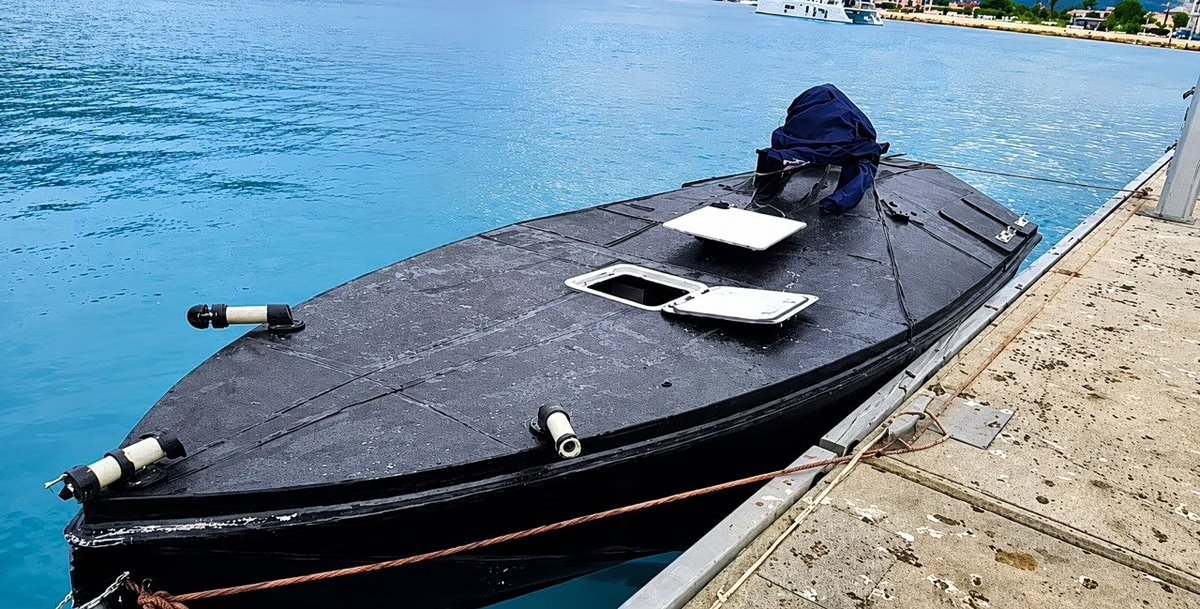
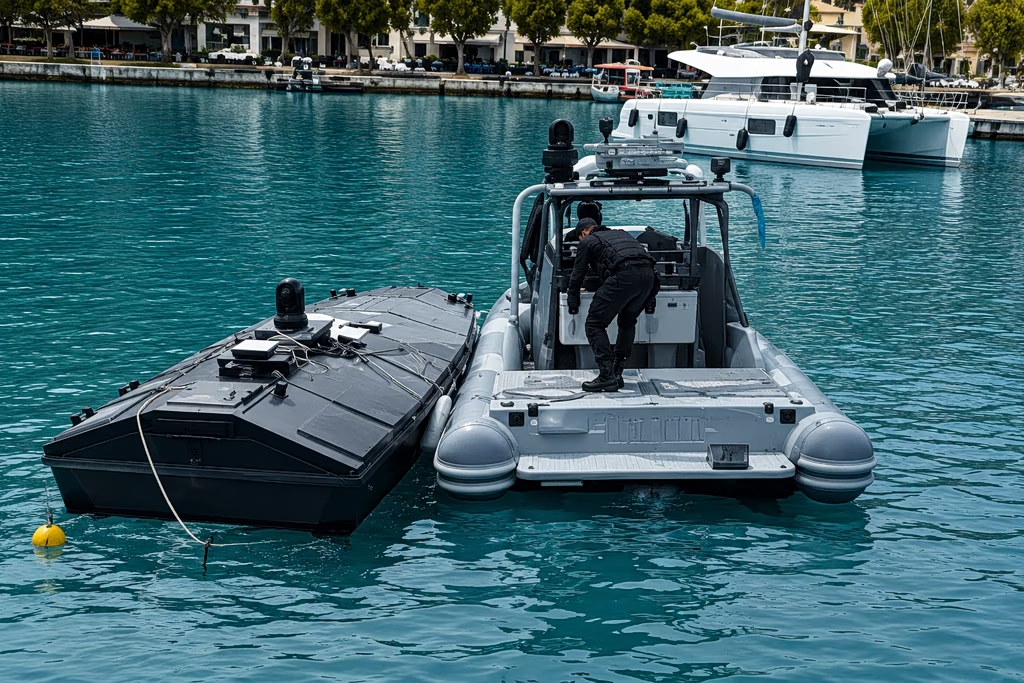
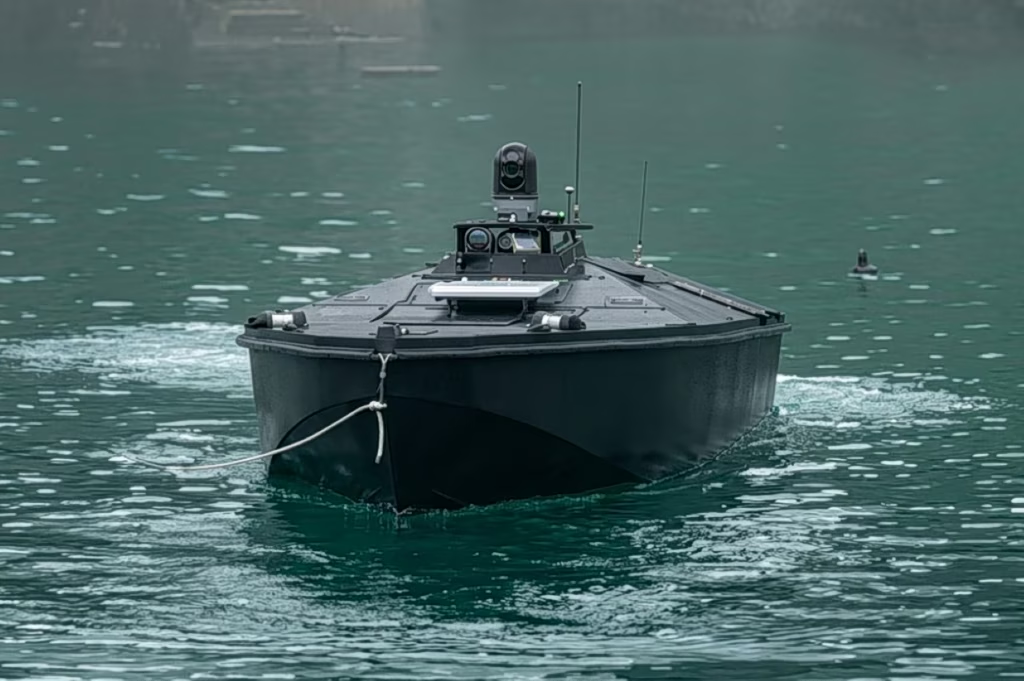
The unmanned surface vessel (USV), which was carrying a significant quantity of explosives, belongs to the same class of drones Ukraine has used in recent attacks against Russia’s so-called “shadow fleet.” At least two such attacks have already been recorded: one between Crete and Libya in 2025, and another this year off the coast of Malta.
The incident, which diplomatic sources in Athens describe as “serious,” is raising even more troubling questions. All indications suggest that a network for transporting and operating military equipment may be functioning within Greek territory.
At the same time, another critical question has emerged: do the relevant Greek authorities possess the infrastructure and expertise necessary to monitor and detect similar unmanned vessels along Greece’s vast coastline?
According to reliable sources, Kyiv has acknowledged ownership of the drone and appears to have provided initial explanations. At the same time, discussions have reportedly begun regarding the broader issue of unmanned vessel activity in the Mediterranean.
How the Drone Operates
- Deployment: The drone is launched either from a coastal area or from a “mother ship.”
- Navigation: It travels autonomously or via remote control using GPS, inertial navigation systems (INS), and satellite guidance.
- Target Identification: The operator identifies the target through live video feeds and reconnaissance intelligence.
- Approach: The drone moves toward the target at high speed while maintaining a low detection profile.
- Mission Execution: Once it reaches the target, the explosive payload is detonated with precision.
Athens, however, had already raised the issue with its European partners two months ago, warning of the possible transfer of the Russia–Ukraine conflict into the Eastern Mediterranean — a development that could negatively affect maritime security and freedom of navigation, while also casting uncertainty over ongoing energy projects in the region.
It is telling that in mid-March, after a Greek-owned tanker carrying Russian oil came under attack off Novorossiysk, Greek Foreign Minister Giorgos Gerapetritis demanded measures to protect shipping in the Black Sea during a meeting of the EU Foreign Affairs Council. At the time, all evidence indicated that the attack had been carried out by a Ukrainian drone.
According to converging information, Athens had already expressed strong concern to Kyiv. Regarding the Lefkada incident specifically, if it is confirmed that the USV is indeed of Ukrainian origin, the Greek government is expected to proceed with the appropriate diplomatic actions.
With the war’s land front effectively frozen and Ukraine lacking the ability to launch a major counteroffensive, Kyiv is escalating hybrid attacks against Russian targets, including not only tankers but also infrastructure and energy facilities.
These “black operations” are proving effective and are causing growing concern in Moscow. It is also clear that Ukraine has no intention of backing down. On the contrary, according to international analyses, such strikes are expected to continue for as long as the war lasts.
Beyond this, it has become evident that warfare is undergoing a rapid transformation. Low-cost weapons systems, such as the drones mass-produced by Ukraine, are now capable of threatening traditional military formations like large naval fleets, while also inflicting serious damage on energy infrastructure and commercial shipping routes, creating multi-layered economic consequences.
Control of the seas now depends on a wide range of factors, including emerging technologies and Artificial Intelligence. As a result, Greece’s political and military leadership is being called upon to respond to an entirely new strategic environment.