 Μake us preferred on Google
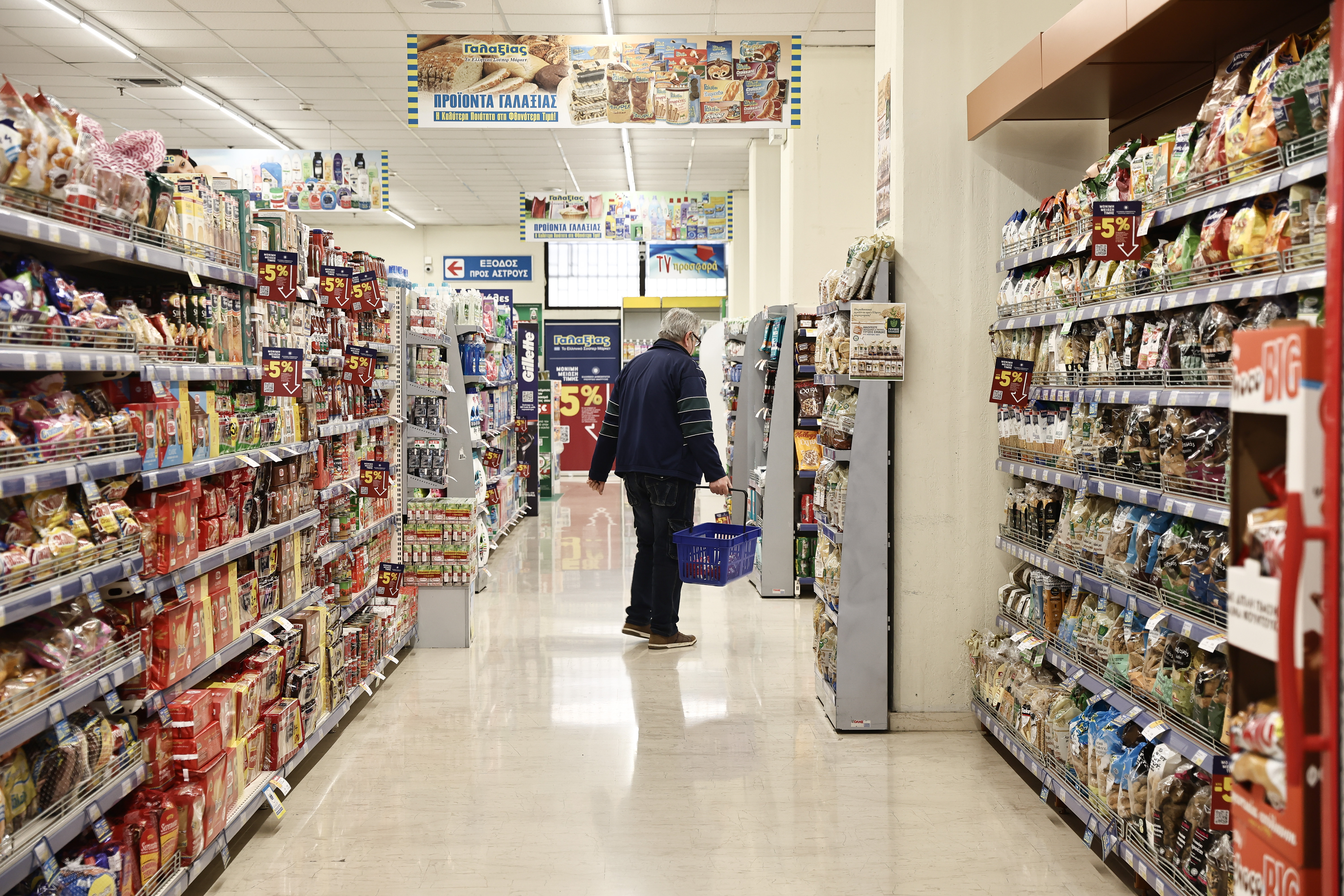
 The latest inflation figures from Eurostat, the European Union’s statistical authority, reveal a striking Greek exception inside the EU. While food prices are rising across Europe, in Greece the increases in basic groceries are significantly steeper than the EU average and in some cases moving in the opposite direction.
This is not about a few isolated items. It is a pattern that runs through the everyday “basket” of Greek households, hitting products that form the backbone of the national diet.
The Staples Pushing Prices Higher
The strongest pressure comes from meat, now the main driver of food inflation in Greece.
Across all meat products, prices in Greece have jumped by 13.2%, compared with just 5.0% across the European Union. The gap widens even further in specific categories:
- Beef prices are up 26.0% in Greece, versus 14.2% in the EU.
- Lamb and goat meat, staples of Greek cooking, have risen 12.3%, compared with 8.0% across Europe.
- Even pork, usually a more stable category, is up 5.0% in Greece, which is almost three times the EU increase of 1.7%.
Dairy products show an equally telling divergence between Greece and the rest of Europe.
Yogurt, a pillar of Greek cuisine and one of the country’s most internationally recognized foods, has risen by 11.5% in Greece. In the European Union as a whole, the increase is just 1.5%.
Fresh whole milk is also climbing faster in Greece, up 8.2%, compared with 4.9% in the EU.
The most striking contrast comes from butter. While prices across the European Union are falling by 6.2%, in Greece they are still rising by 5.3%.
Even in fruit, another staple of the Mediterranean diet, Greece stands out. Prices are up 9.0% in Greece, while the EU average increase is just 2.7%, with sharp fluctuations during the year.
Why Greece is different
The persistence of higher food inflation in Greece is not the result of a single cause. It reflects deeper structural weaknesses in the Greek market.
Low food self-sufficiency is one major factor. Greece depends heavily on imports for key products and raw materials, especially meat, animal feed and ingredients used in dairy production. When global prices go up, those hikes reach Greek store shelves faster and hit harder the consumers.
High production costs compound the problem. Energy, transportation, financing and the relatively small scale of Greek producers squeeze margins. As a result, producers and processors are less able to absorb cost increases and instead pass them on to consumers.
Limited competition in parts of the supply chain, ranging from processing to retail, also plays a role. In such an environment, price increases are passed on quickly, but price drops are not. This “price rigidity” means that when international costs fall, Greek prices often come down slowly or only partially.
Finally, taxation acts as a multiplier. Food in Greece is subject to a 13% value-added tax, while high indirect taxes on energy and transportation raise costs throughout the supply chain, amplifying every increase.