Looking at yourself in the mirror lately, you feel increasingly unhappy with your reflection, the fine lines you once brushed off without a second thought now appear like small grooves etched into your face. Maybe it’s time to try something a bit more interventionist—after all, your beloved anti-wrinkle creams no longer seem capable of miracles.
Completely inexperienced in the world of aesthetic treatments, you begin your research online, turning to the ever-reliable “Father Google,” who quickly leads you to countless related videos. As you scroll in search of solid information, past the well-known plastic surgeons and beauty influencers offering advice on the most suitable treatment for your age, you begin noticing something unsettling.
More and more videos feature representatives of Gen Z and even Gen Alpha: teenagers, but also children as young as eight, sometimes even younger, giving tips on the “right” skincare routine or suggesting which cosmetic procedures could give you the plump, magazine-worthy lips you keep seeing in fashion spreads.
The Rise of the “Beauty Babies”
It seems the power of social media is turning these tween and teen Generation Alpha influencers and “beauty babies” into a global phenomenon. As they dish out advice on the best daytime skincare routines, the use of serums, how to protect your skin from free radicals, what products to use to stop zits breaking out, even which retinols are best to include in a night routine, they are outpacing their adult counterparts, with millions of views on TikTok, Instagram and YouTube. Needless to say, the multinational beauty companies have noticed, and are gradually shifting towards products that cater to the needs of this new clientele.
Cute or Concerning?
One might say that the image of these “beauty babies” lathering on their night cream, more often than not with no front teeth, is cute—a sight for sore eyes. However, the trend has sparked debate on social media about whether minors should be exposed to such attention. What could the long-term psychological implications be, for the content creators themselves but also for their millions of followers? To take it a step further: are these the new role models for young children? What about social inclusion and diversity?
Living in a Mirror Controlled by Others
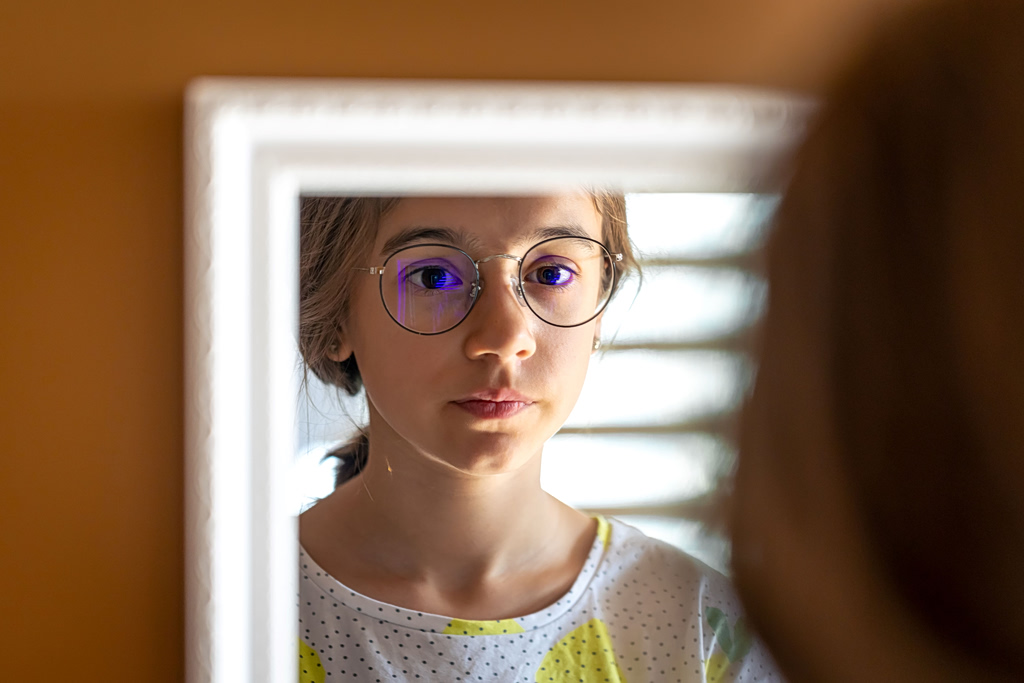
Renowned psychiatrist Professor Antonios Dakanalis told TO BHMA that exposure to social media—especially influencer content and beauty-related trends—greatly affects adolescents’ body image and self-esteem. “Teenagers today don’t simply look at themselves in the mirror, they live inside a mirror controlled by others. A mirror that doesn’t reflect their image, but constructs it,” he emphasized.
Premature Image-Adulthood
Early exposure to makeup and beauty trends—especially through child influencers—acts as a form of premature image-adulthood, the professor noted. At such a young age, makeup is not just colors on a face, it becomes a protocol for appearance: “To be seen, you must first be prepared.” And this is a burden no child is ready to bear, Dakanalis said.
A seven- or eight-year-old influencer turns the playfulness of beauty into a job. They are being trained in a mode of existence which revolves around appearance; where “how I look” precedes “who I am.”
The most worrying part is that kids exposed early to beauty trends learn to evaluate themselves externally before they develop internal criteria of worth. They are deprived of the chance to know who they are without adornment, filters, lighting.
When Childhood Becomes Performance
A child doesn’t need contouring; a child needs space to get messy, play, create, discover, Dakanalis advises parents. He warns that early beauty engagement shrinks spontaneity; it accelerates self-consciousness while transforming natural curiosity into a need to impress.
Although the situation with younger children can often be managed through parental guidance and oversight, this doesn’t hold true when it comes to teenagers and their relationship with beauty influencers on social media.
Teenagers and the Cult of Perfection
For teenagers, beauty influencers are more than just role models; they act as amplifiers of ideals and architects of imaginary bodies. Backing up his point, Dakanalis points to a popular filter that shrinks noses, an app that “perfects” skin, and an eight-second transformation video.
And on the exact same platforms, there alongside the digital ‘beautification,’ plastic surgeons and aestheticians advertise “quick” results, special offers, and painless procedures that promise transformation in minutes. The result? A landscape in which the natural face begins to look like a rough sketch and every flaw is treated as a “defect” requiring immediate repair.
Global Growth and the Greek Perspective
According to the American Society of Plastic and Reconstructive Surgeons, in 2020 alone nearly 230,000 cosmetic surgeries and 140,000 non-invasive cosmetic procedures were performed on teens aged 13–19. Recent data suggests that this number is climbing, and that this is largely due to the impact of social media.
In Greece, according to the well-known plastic surgeon George Aravanis, who spoke to TO BHMA International edition, the numbers do not indicate a rise in cosmetic procedures among minors under the age of 18. However, the doctor admits that teenagers are showing more interest in such surgery. “Young people under 18 who are experiencing some form of aesthetic disharmony usually come with their parents, discuss their concerns, and receive the opinion of a specialist plastic surgeon,” Aravanis noted.

George Aravanis, Plastic Surgeon explains that Greek teenagers are showing more interest in cosmetic surgery.
The most common procedures seek to ‘remedy’ a hooked nose, protruding ears, gynecomastia in boys, or underdeveloped breasts in girls.
Ethics, Exceptions, and Risks
Aravanis made it clear that, from both an ethical and medical standpoint, cosmetic procedures should generally be performed only when a child has entered adulthood. Still, there are exceptions, he explained. For example, a child with protruding ears may feel completely normal and at ease within the family environment, but come in for ridicule or teasing at school. “In such cases, there is a clear indication for surgery, even as early as the first grade of primary school,” he noted.
The plastic surgeon also warns of the possible physical and psychological risks of cosmetic procedures for adolescents. “From a purely medical perspective, performing surgery before the development of tissues and organs is complete is essentially futile. In many cases, a repeat procedure will be required later on,” he explained. A child’s nose, for instance, will show natural changes at ages 12, 15, and 18, indicating that any early corrective interventions may cause harm.
The doctor also raised the issue of the dangers involved when medical procedures—such as the application of injectables including Botox or hyaluronic fillers—are improperly performed by non-certified plastic surgeons and dermatologists. “Many scammers present themselves on social media as experts. This is truly frightening and extremely dangerous,” he emphasized.
Beyond the medical aspect, the psychological implications of cosmetic surgery during adolescence are also significant, Aravanis highlighted. “It is very dangerous for a teenager to form the belief that, whenever something about their body displeases them, they can simply change it,” he concluded. It is also impossible to predict where such a belief could lead.
Are Cosmetic Procedures Always Wrong for Minors?
So, is cosmetic surgery all ‘evil’ when it is performed on minors? Dakanalis said that cosmetic procedures in adolescents are neither “pure evil” nor a “magic solution.” He acknowledges that, in very specific circumstances, they can help a child. “Young people with socially-impairing physical characteristics such as severe dental deformities, protruding ears, major burn scars, abnormalities, or marks from medical conditions can benefit,” he said, adding that these procedures “can be therapeutic, reducing bullying, shame, or social withdrawal. Not because it ‘fixes’ their appearance, but because it breaks a cycle of emotional pain which was often present for years.”
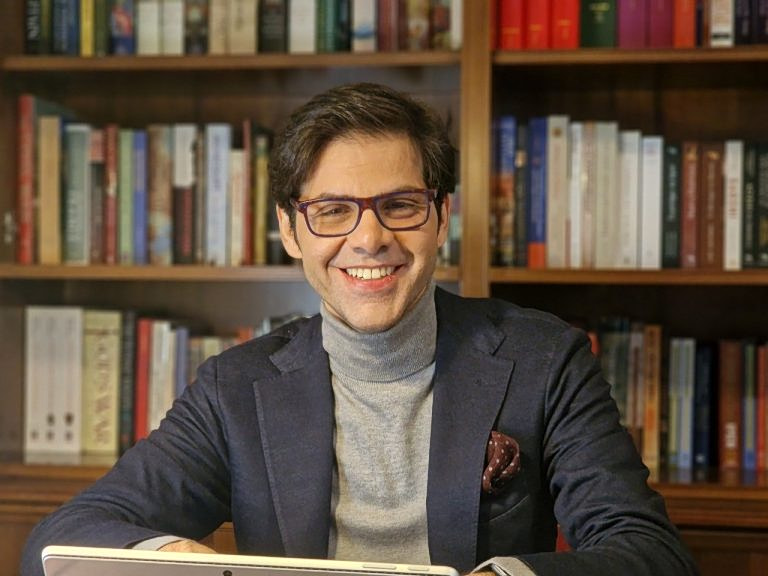
Antonios Dakanalis, Professor and Principal Investigator in Psychiatry and Psychotherapy at the University of Milan- Bicocca.
But unfortunately, he added, these cases are exceptions. “Most requests today don’t stem from actual dysfunctions, but from internal pressure—to fit in, to belong, to not fall behind,” Dakanalis concluded.