By the time Vuk was free to speak, it was already late in Belgrade. I had been waiting for him to finish one of the student meetings that have become the quiet machinery of Serbia’s most consequential political movement in years. He asked to be identified only by his first name and studies — Vuk, Computer Science Faculty — an instinct for anonymity that, I would discover, was almost doctrinal to what the students had built.
His WhatsApp profile photo shows a very young man in basketball shorts, caught mid-game. Yet at 19, Vuk spoke with measured language and disciplined argument, notably devoid of the self-promotion that so often accompanies political ambition.
As we spoke, I found myself reaching instinctively for categories. Was this populism? Civic nationalism? Communitarianism? Direct democracy? Something faintly reminiscent of Yugoslavia’s experiments in decentralised self-management? At moments it felt almost Tocquevillian: politics rooted in social equality, voluntary association and civic habit. Each description captured something; none captured the whole.
STUDENTI U BLOKADI (STUDENTS IN BLOKADE)
Studenti u blokadi — Students in Blockade — emerged from the wave of university protests that followed the November 1 2024 collapse of the Novi Sad railway-station canopy, which killed 16 people. Organized through decentralized faculty assemblies and deliberately resistant to central leadership, it developed around demands for accountability, transparency and institutional responsibility. Its electoral incarnation is formally distinct. In September 2026, the students established Studentska lista – Studenti pobeđuju — Student List – Students Win — to contest Serbia’s October 25th parliamentary election with 250 candidates, an attempt to translate the political culture forged in the blockades into representative politics.
A different kind of politics
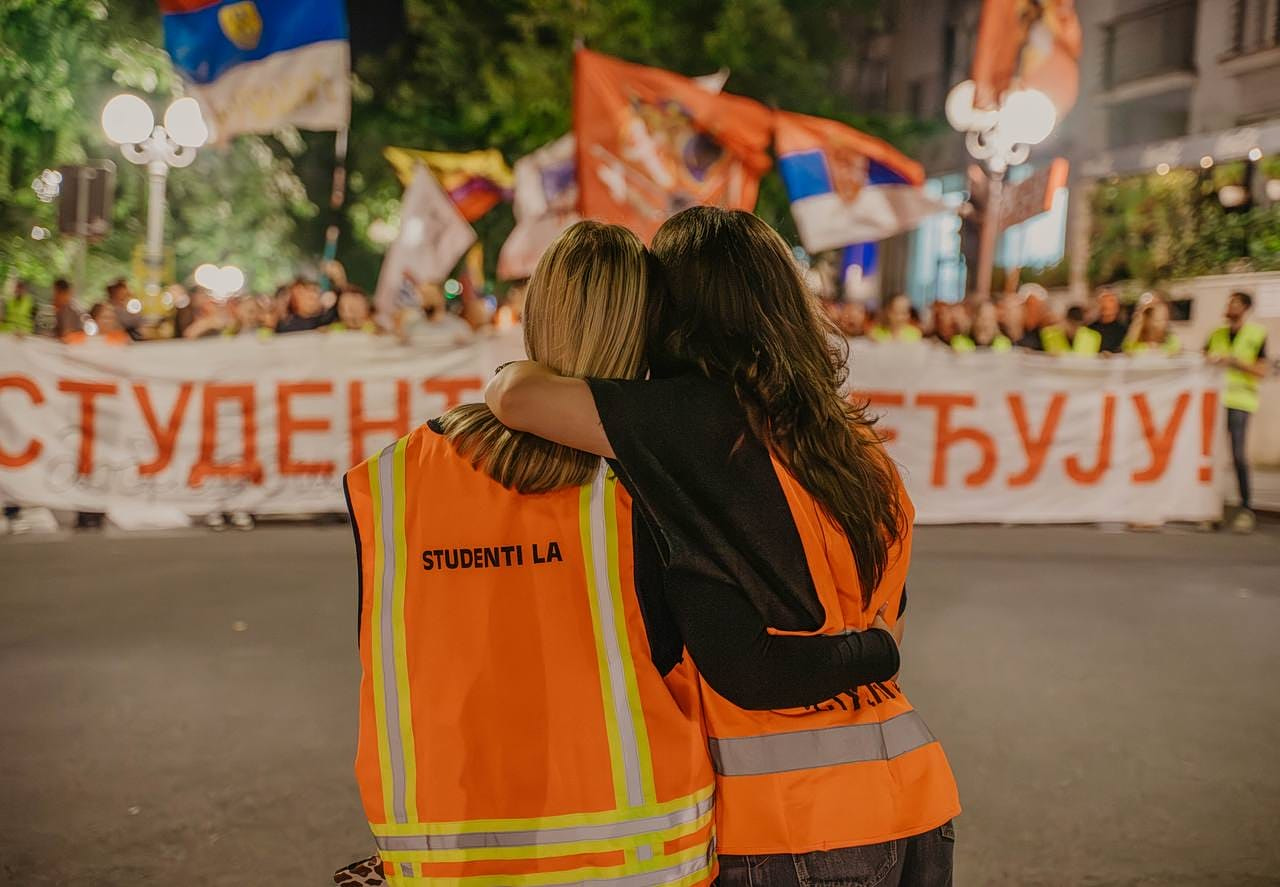
What Vuk described was politics without its usual architecture: university faculties organizing internally and negotiating with one another; decisions taking hours because legitimacy mattered almost as much as efficiency; families feeding and housing students as they crossed the country. There was something intensely communitarian in it, a vocabulary of obligation and reciprocity. “All for one” would be too romantic a description, but the sentiment was difficult to miss: any reference to an individual repeatedly disappeared into the collective. Researchers have described the students’ assemblies as egalitarian, non-hierarchical direct democracy, deliberately designed to prevent fixed leaders.
The campaign has reduced its argument to a stark question: “Serbia or mafia?” Yet the Serbia Vuk invoked was not a claim of ethnic superiority or exclusion. It was closer to a claim of civic possession: that institutions, streets, universities and ultimately the state belong to those who live under them. Its patriotism was rooted in belonging rather than nationalism, radical in its demand for accountability yet conventional in its faith that institutions should simply perform the functions assigned to them.
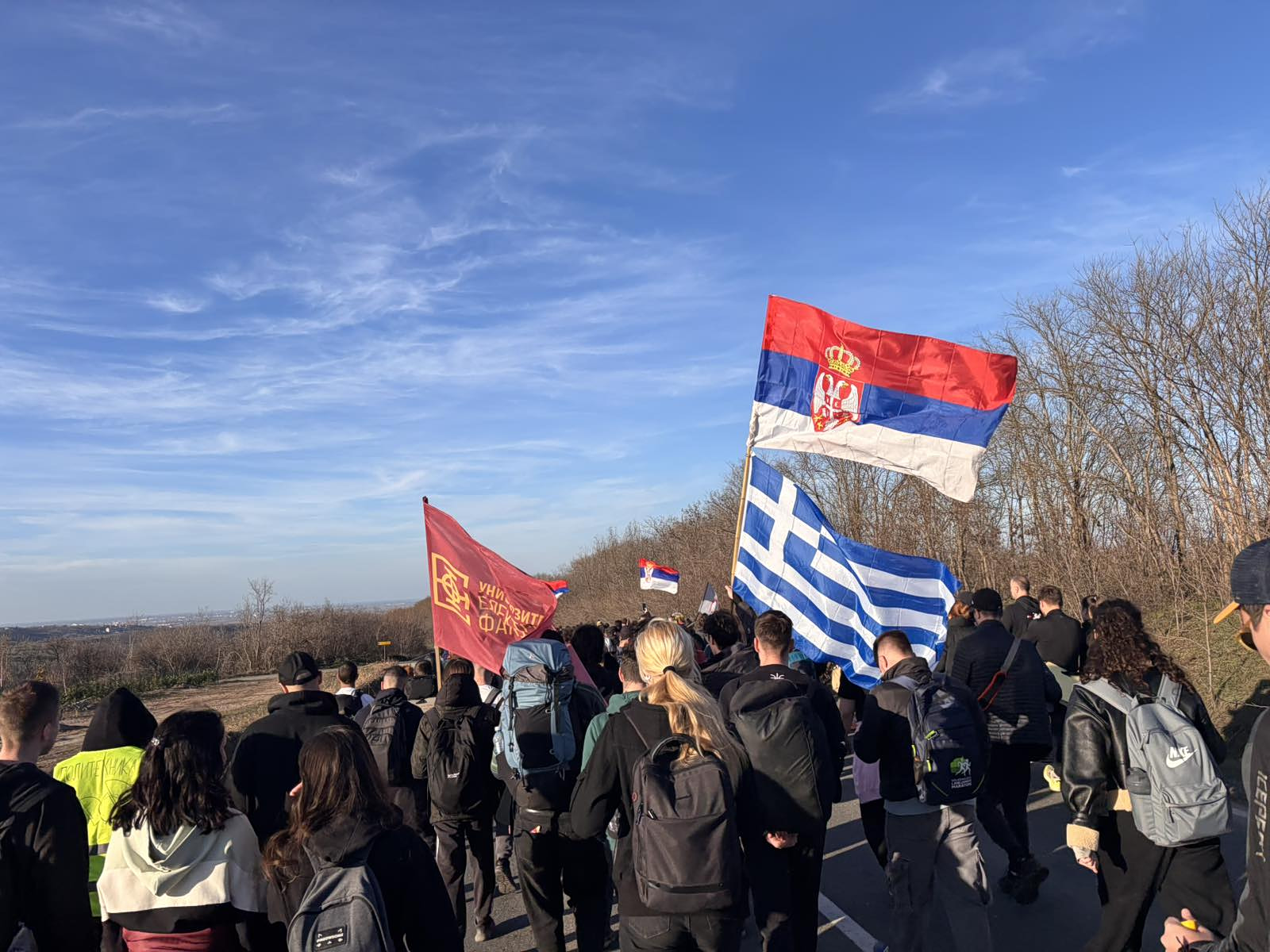
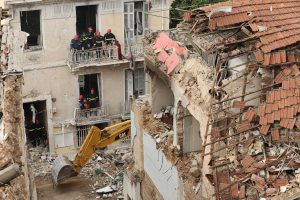
16 people died on November 1, 2024 from the Novi Sad railway station canopy collapse—echoing a similar pain to the Tempi railway disaster in Greece. STUDENTI U BLOKADI (STUDENTS IN BLOKADE)
The shadow of the Greek Tempi railway tragedy
Listening to Vuk, my mind wandered inevitably towards Greece: first to the Athens Polytechnic students’ uprising of 1973 against the Junta, then to the much more immediate memory of the tragic Tempi train crash. The two neighboring Orthodox societies have long recognized something of themselves in one another; in recent years, that affinity has acquired a darker dimension.
For Greeks, Novi Sad is unnervingly familiar. The railway station had recently undergone major works as part of Serbia’s flagship Belgrade-Budapest project, and the collapse quickly came to be read not only as an engineering failure but an institutional one. Protesters carried red handprints and the message “corruption kills”. The charge resonated in a country where the OECD and European Commission had already documented weaknesses in anti-corruption enforcement, public procurement and judicial independence. None of this proves corruption caused the collapse, but it helps explain why Novi Sad became evidence, for many, of a broader failure of governance.
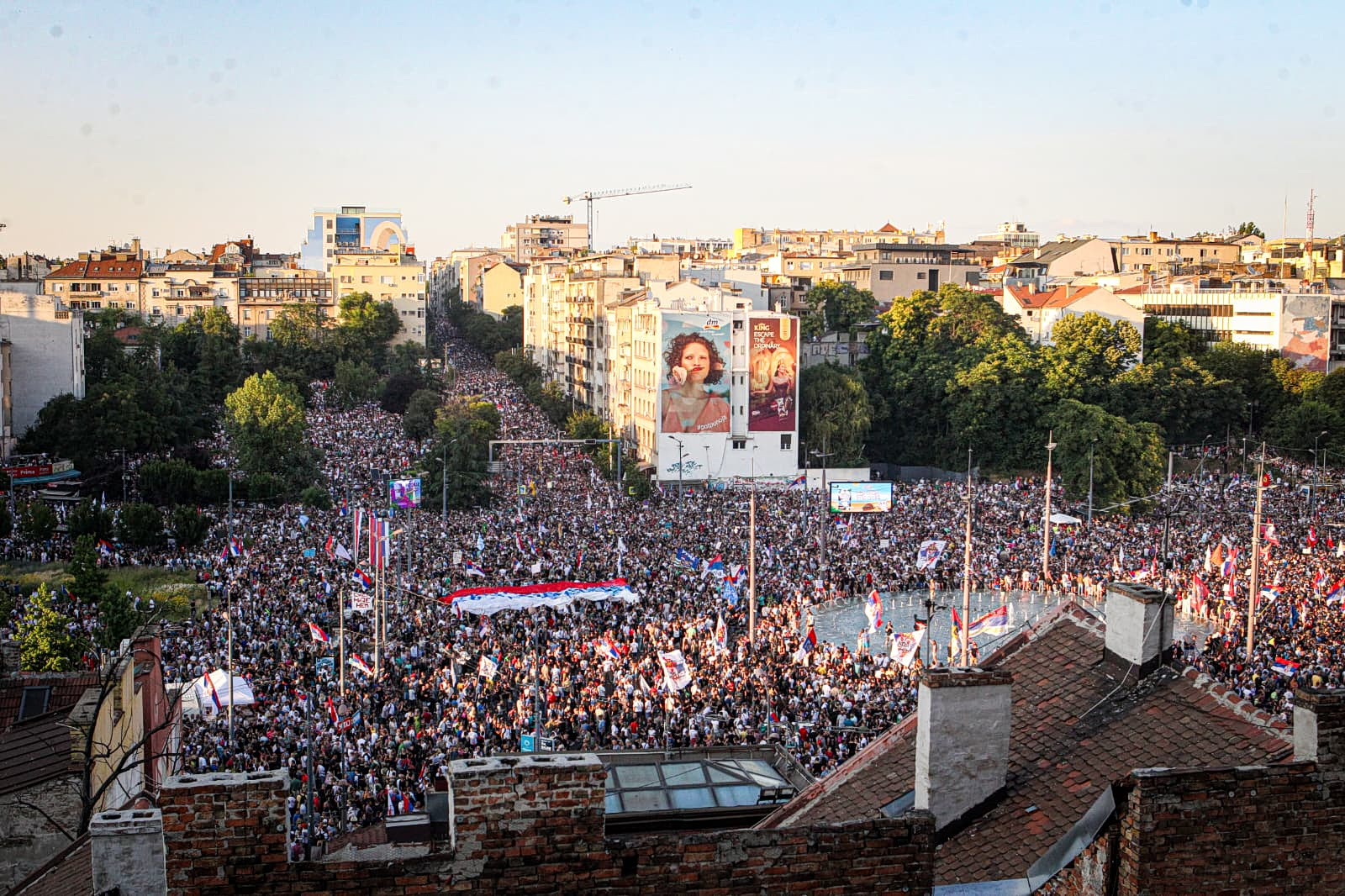
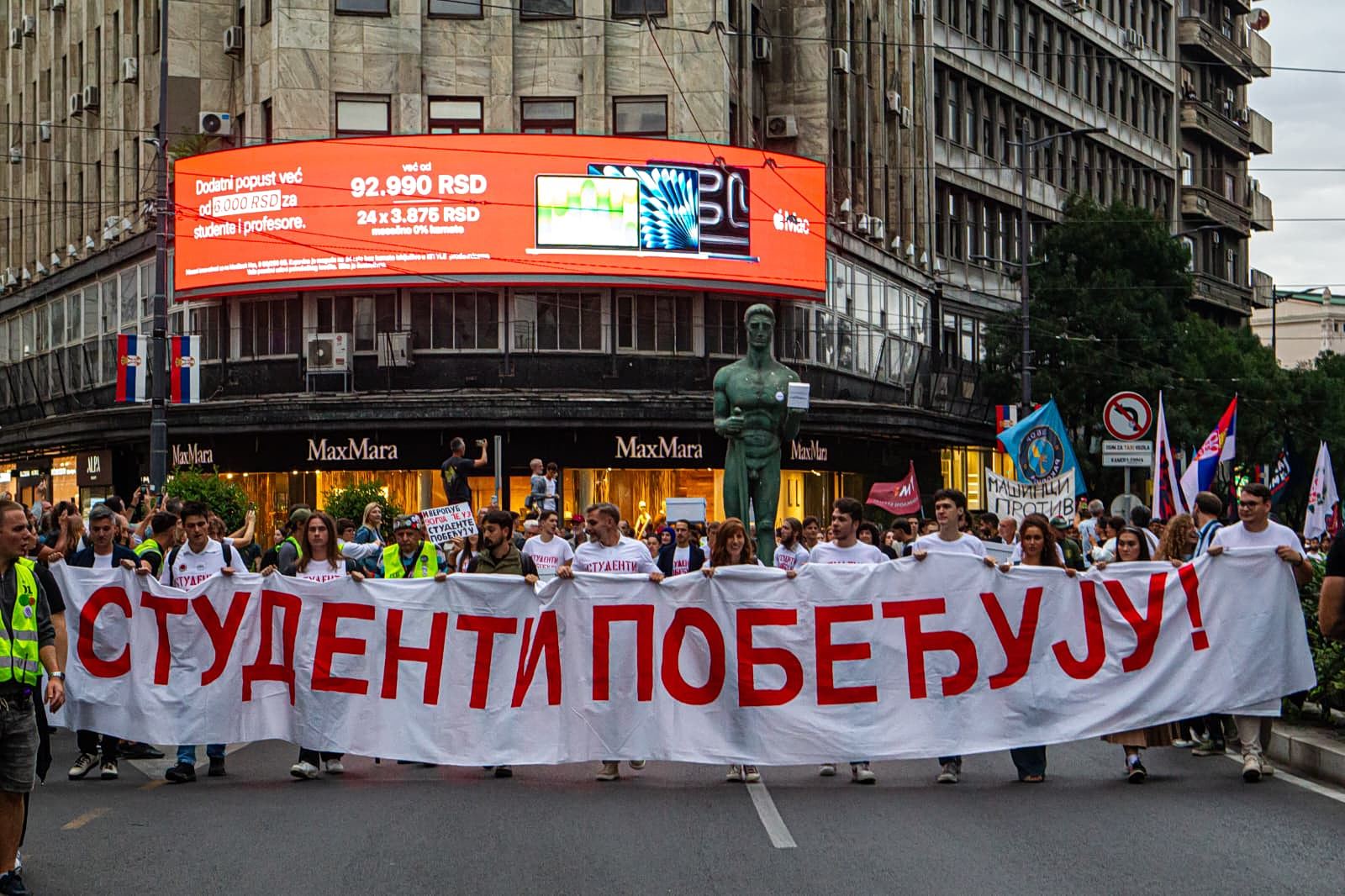
The major Vidovdan protest organized by Studenti blokadi on June 28, 2025. STUDENTI U BLOKADI (STUDENTS IN BLOKADE)
The parallel with Tempi is difficult to miss. 57 people were killed on February 28 2023, when a passenger train collided with a freight train in central Greece, exposing longstanding failures in railway safety and delays in modern signaling. In both countries, private grief became collective and transport disasters became arguments about the quality of the state itself. But this is where the Serbian story begins to diverge: what emerged from Novi Sad did not remain simply a protest. The students turned catastrophe into an organizational system — and, eventually, that system into an electoral proposition.
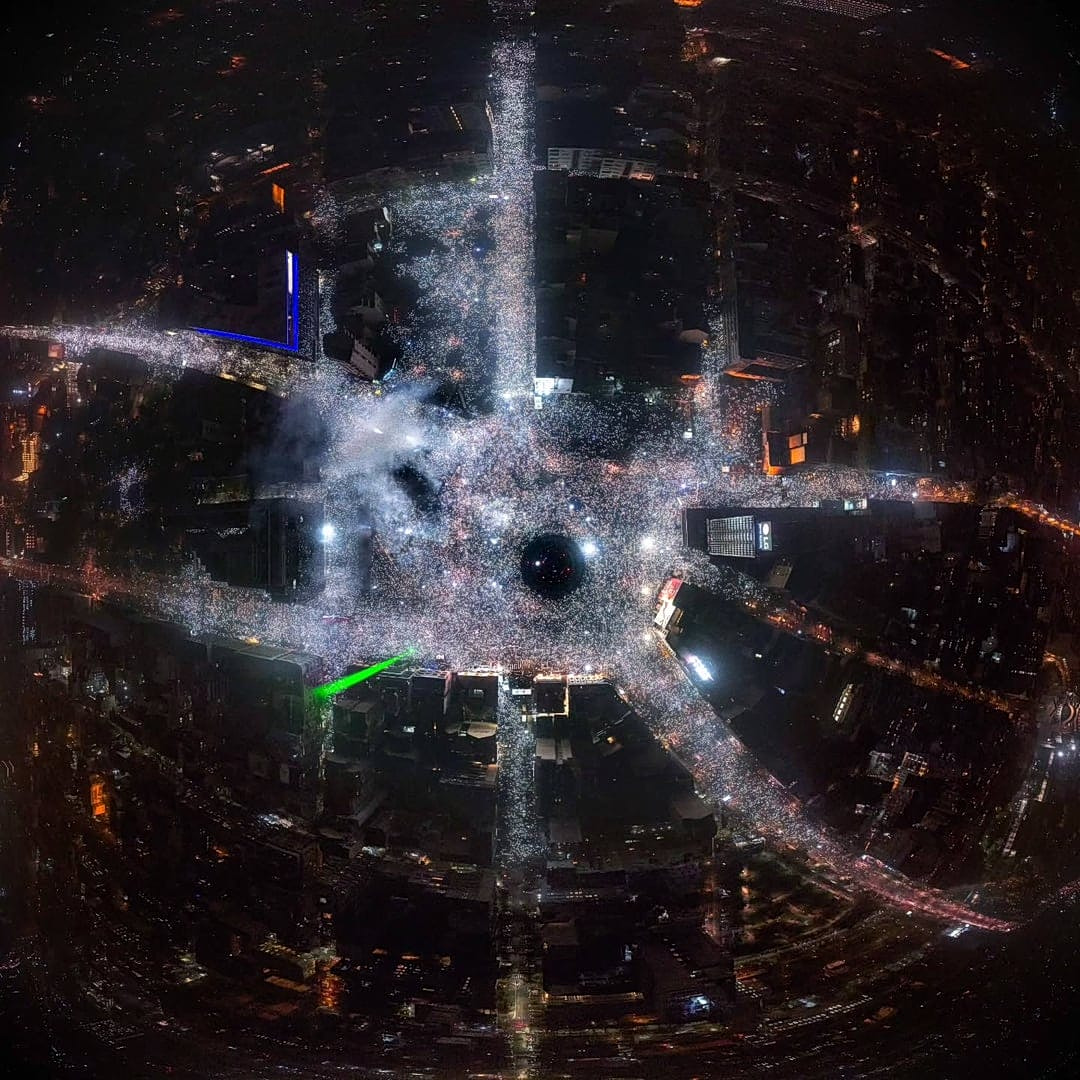
The largest student-led protest and blockade march in Serbian history on March 15, 2025. STUDENTI U BLOKADI (STUDENTS IN BLOKADE)
Organizing without leaders
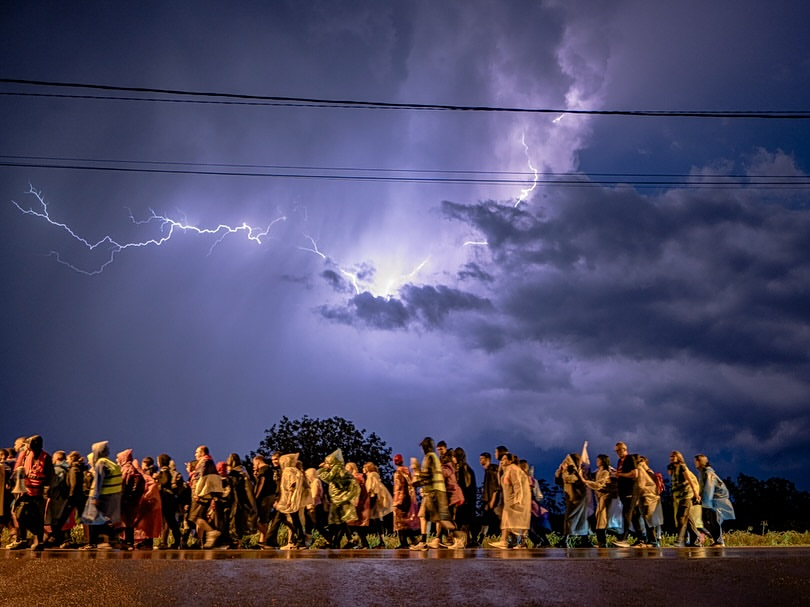
The movement began with students standing in silence for the Novi Sad victims. When one vigil outside Belgrade’s Faculty of Dramatic Arts was attacked by a group that included supporters and local officials of the ruling Serbian Progressive Party (SNS), commemoration quickly metamorphosed into organization. Students blockaded the faculty and the movement spread across Serbia’s universities, where open assemblies of formally equal participants coordinated through rotating delegates and working groups. It was, in political-science terms, a form of prefigurative politics: rather than merely demanding more accountable institutions, the students were attempting to practice the decentralized, participatory politics they wanted to see beyond the movement.
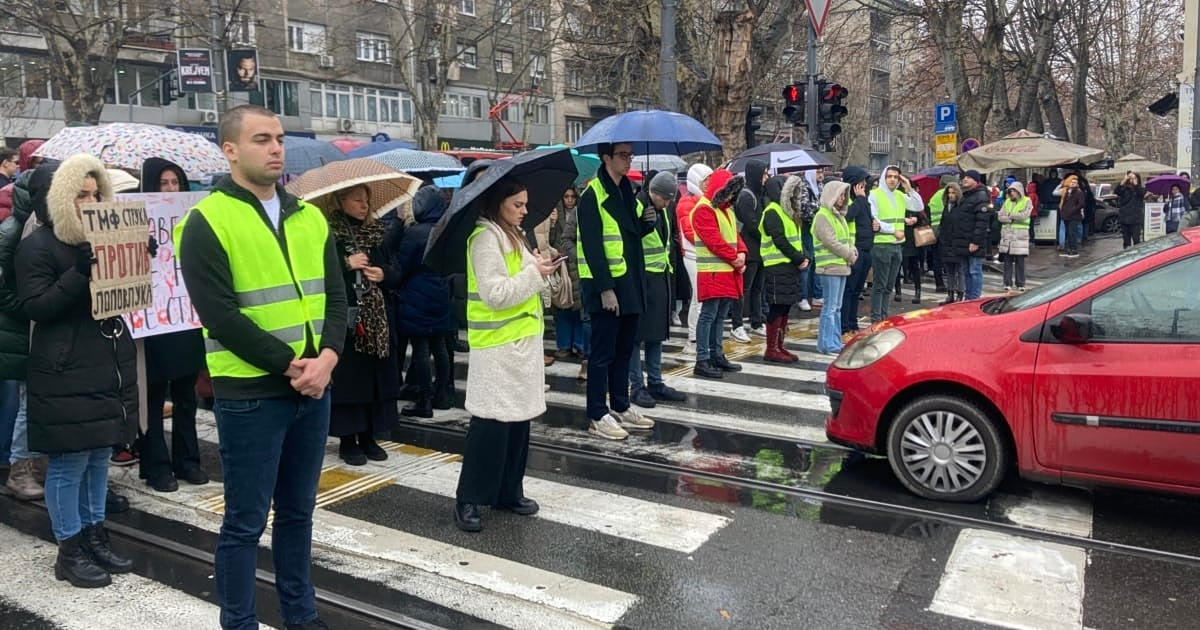
Students hold up traffic for 16 minutes of silence held for the 16 people who died on November 1, 2024 from the Novi Sad railway station canopy collapse. STUDENTI U BLOKADI (STUDENTS IN BLOKADE)
That idealism came with a practical division of labor. “There is a place and a job for everyone,” Vuk told me. Dramatic-arts students gravitated towards media and production, computer-science students built digital platforms, while mathematics and statistics students worked on analytics. The structure soon moved onto Serbia’s roads: in April 2025, 80 students rode roughly 1,300km to Strasbourg to take their concerns over democracy and the rule of law to European institutions.
Vuk believes that reach was possible because students occupied a space conventional opposition politics had failed to fill. “There had been dissatisfaction with President Aleksandar Vučić and his government for years,” he said, but many Serbians had disengaged from politics. Students felt different because “everyone knows students” — in their families, neighborhoods and streets. Their credibility derived from the fact that the movement had arisen organically from public anger and trust.
The more Vuk explained the movement, the clearer it became that “leaderlessness” was one of its most carefully defended choices. “Every student is equal to every other student. Not a single voice is louder than another,” he said. Elevating one person, he fears, can make a movement indistinguishable from the personality representing it. Moderators rotate and media representatives change. “How we managed to remain without a leader was maybe the biggest battle of our movement,” Vuk said.
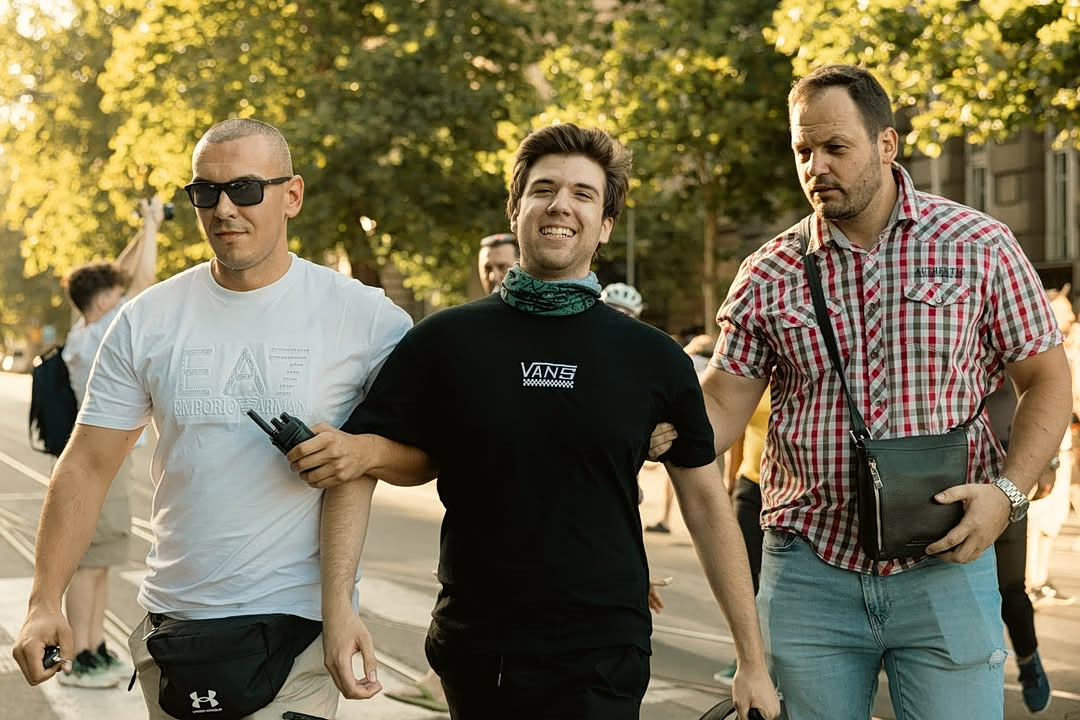
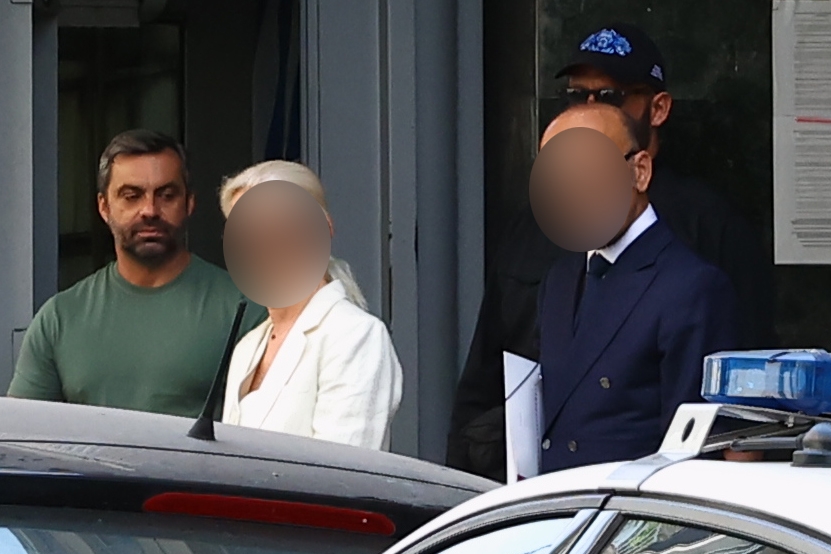
Student activist arrested by government police. STUDENTI U BLOKADI (STUDENTS IN BLOKADE)
The contrast with Greece is instructive. The Tempi movement was never reducible to one person, but Maria Karystianou, who lost her 19-year-old daughter in the crash, became its most recognizable public face and has since launched a party of her own. Serbia’s students have tried to prevent precisely such personification. The same instinct may explain their refusal to settle comfortably on the ideological spectrum. “Our battle isn’t about whether you are for the US, for Russia, for the EU, against the EU, for BRICS or any of those things,” Vuk said. “As students, we don’t think it’s the time to decide whether you are liberal, conservative, nationalist or leftist.”
For now, the objective is more elemental: creating “a better and freer Serbia” in which those arguments can eventually take place. Yet that breadth is also one of the movement’s vulnerabilities. Critics, particularly within Serbia’s pro-European opposition, argue that choices over Europe, Kosovo and the architecture of a future government cannot be postponed indefinitely. A movement can defer ideological conflict more easily than a government can.
Surveillance
For a movement built on trust and open deliberation, surveillance cuts particularly deep. “When something important is happening in a meeting, we hide our phones in a box outside the room,” Vuk told me. In August 2026, Apple warned Serbian students, activists and opposition figures that they had been targeted with spyware. At least 14 people were identified as targets, while the University of Toronto’s Citizen Lab forensically confirmed that one student activist’s iPhone had been infected with Pegasus, an advanced hacking tool, through a zero-click attack.
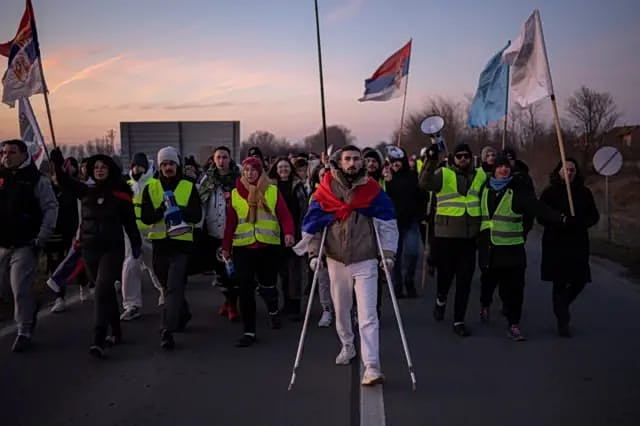
STUDENTI U BLOKADI (STUDENTS IN BLOKADE)
The students appealed to European and cybersecurity institutions, Vuk said, but received mostly acknowledgements of receipt rather than substantive help. The impact is as personal as it is political. “When you are 18 or 19 years old and you see police waiting outside your home, you start feeling that you’re living in a police state.” When I mentioned Orwell, he laughed; 1984, he said, is regularly referred to amongst the students since it no longer feels entirely absurd.
The students’ investigations suggest such spyware can cost hundreds of thousands of euros. “It’s a product that governments buy,” Vuk said. For Greeks, the parallel with Predator is immediate: journalists, politicians and other public figures were targeted with spyware marketed to state clients; four individuals linked to Intellexa, the commercial surveillance consortium behind such spyware, were convicted in 2026, while the broader investigation into possible state involvement remains archived and contested. The pressure in Serbia extends beyond privacy. Nine students arrested after the 2025 Vidovdan protest were charged with offences against the constitutional order; Belgrade’s Higher Court later excluded secret-surveillance material used in the case as unlawfully obtained, though prosecutors appealed. “If they are spying on us before the elections, what will happen after?” Vuk asked. “They will chase us through the streets. They will arrest all of us.”
From blockade to ballot
The leap from blockade to ballot came slowly. By May 2025, Studenti u blokadi had called for early elections and begun constructing a civic list. “We fought for people’s rights, and after we saw that we couldn’t achieve those things through protests, we realized that we needed to go to the elections,” Vuk told me. Faculties proposed and interviewed candidates, examining expertise, public records and political independence; the final slate contains 250 non-students from academia, medicine, law, engineering, culture and public life, many without conventional party careers.
Vuk’s language repeatedly returns to trust rather than ideology. “Expertise is not enough,” he told me. “The most important thing is still that you have good values, that you are someone we can trust, and are loyal — not loyal to us, loyal to the people of Serbia and to the Serbian country.” More than 100 university professors appear on the list, while, he says, “hundreds of experts” are already working on plans for medicine, education, the economy and other areas of government.
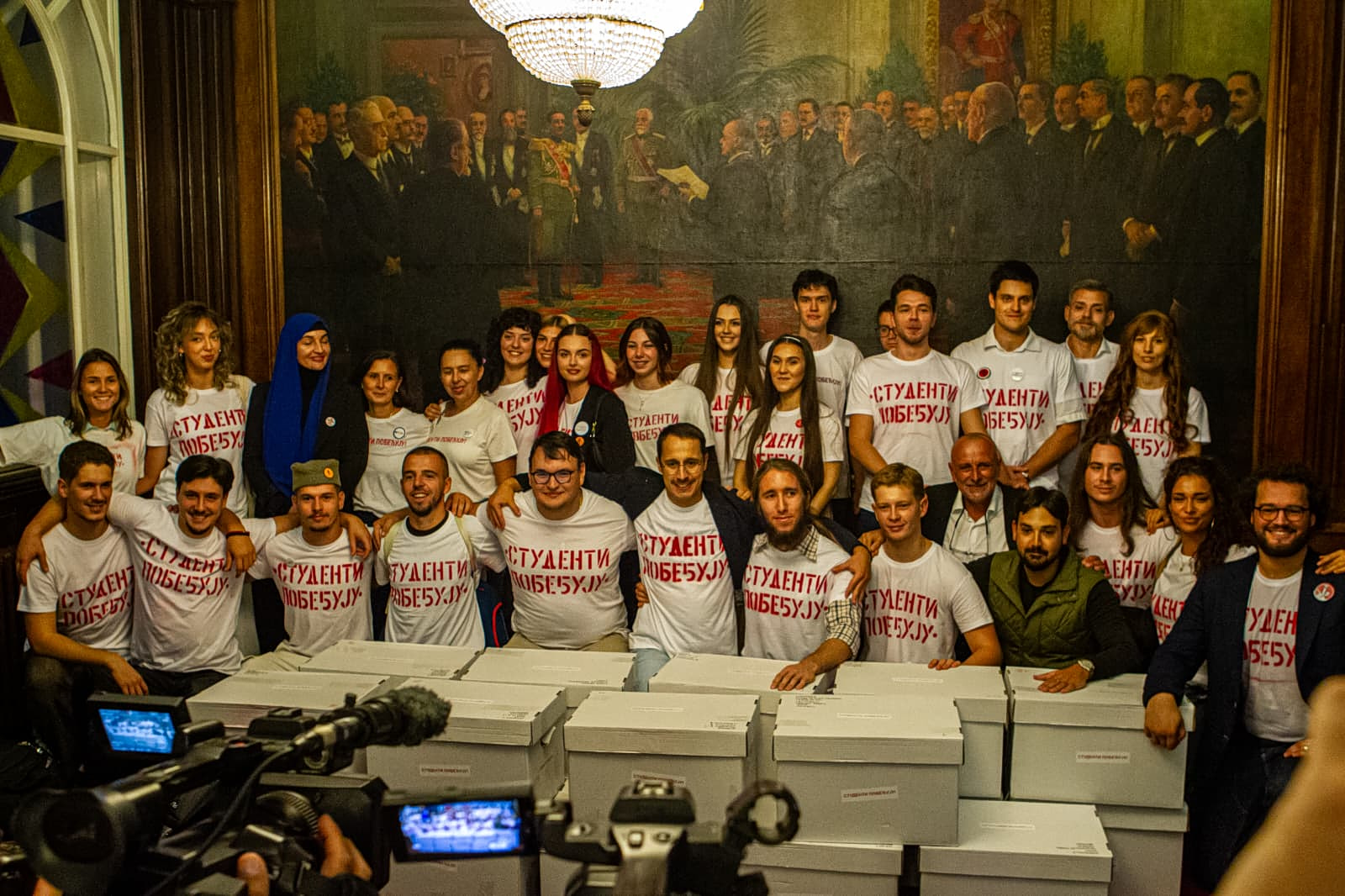
Student activists from the “Student List – Students Win” movement present their chosen 250 candidates for Serbia’s parliamentary elections to be held Oct 25, 2026 . Many of the students in the photo had been arrested during the mass demonstrations. STUDENTI U BLOKADI (STUDENTS IN BLOKADE)
I asked whether they had studied the fate of movements such as Spain’s Podemos and Italy’s Five Star, which rose on popular momentum and promises of participatory politics, then struggled to preserve that spirit once in parliament. Vuk said they had but regarded their own structure as different. “In the other movements we looked at, there was usually a smaller group of people making the important decisions, and there were leaders,” he said. Their defense against the same fate, he argues, is the diffusion of authority. “It’s a form of direct democracy.” That principle, he insists, is meant to survive the transition into government: if representatives depart from the movement’s values, “we will tell them. If they continue, we will go to the people.”
I interrupted him to ask what gives a group of students the moral authority to decide who is “good”, who is capable, and who should govern Serbia. “I don’t feel like we have moral authority,” he replied. Then his answer shifted from legitimacy to inheritance. “We are the future. We are supposed to live in this country for the next 50 years.”
Throughout our conversation, Vuk consistently referred to President Vučić’s elected government as “the regime” — the term the students themselves commonly use for the political system they oppose. For him, the choice is binary: “You’re choosing between a country governed by people with good values and expertise, and a country that we believe is controlled by corrupt and criminal interests.” Their goal, he said, is “to change the country for the future generation, so that our children and grandchildren can live in a better and freer Serbia.”
Protecting the vote
The movement’s campaign operations remain strikingly improvised. Vuk says funding comes largely from ordinary citizens and the diaspora, while even finding permanent headquarters space has been difficult. They are nevertheless aiming high. “We are aiming for a majority,” he told me.
Vučić, meanwhile, has said he will resign on September 27, months before the end of his second term, and campaign for the October 25 parliamentary election as the SNS candidate for prime minister — in his formulation, as an “ordinary citizen” rather than sitting head of state. For the students, however, winning votes is only half the task. They are training election integrity monitors and intend to place representatives across the country’s polling stations. “This time, we want to have people everywhere,” Vuk said.
By July, the movement said roughly 15,000 people were already in training.
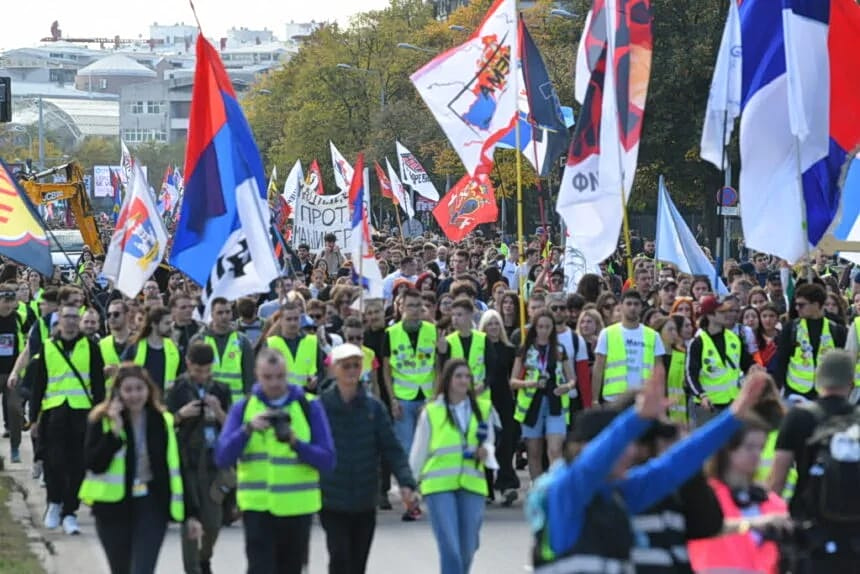
STUDENTI U BLOKADI (STUDENTS IN BLOKADE)
That concern is grounded in precedent. OSCE observers found Serbia’s 2023 parliamentary elections marred by pressure on voters, misuse of public resources, media bias and blurred boundaries between state and party. In 2024, CRTA, a Serbian election-monitoring NGO, filed criminal complaints alleging vote-buying and organized voting.
The victims’ families have largely remained outside the movement’s political orbit. Vuk said only one mother has openly backed the students, while most relatives have not publicly taken sides. He mentioned suspicions of pressure, but stressed these were unproven. Whatever their politics, he said, “we would still want justice for their relatives.”
Almost two years after the Novi Sad collapse, accountability remains unresolved. Serbia’s Court of Appeals has confirmed the indictment against 13 defendants, including former construction minister Goran Vesić, but the trial has yet to begin. Questions have also been raised over the completeness and authenticity of parts of the reconstruction record. More than three years after Tempi, 36 defendants are now on trial in Larissa, while the evidentiary record remains contested after the crash site was found not to have been properly preserved. In both cases, the pursuit of accountability now concerns not only the disaster, but the integrity of what happened to the evidence afterwards.
STUDENTI U BLOKADI (STUDENTS IN BLOKADE)
From protest to political order
For all its electoral ambition, the movement still defines its immediate purpose through the demands with which it began: publication of the Novi Sad documentation, accountability for those who attacked students, the release of arrested protesters and greater financial support for education.
That raises another question: if those demands are the threshold rather than the endpoint, what comes next?
The priorities, Vuk said, are “freedom of the media, an independent justice system and fair and transparent elections.” After a normal parliamentary term, the aim is not to perpetuate the movement indefinitely but to restore genuinely competitive politics. “Once the elections are genuinely free and fair, there should be normal political competition,” he said.
STUDENTI U BLOKADI (STUDENTS IN BLOKADE)
What is most striking is the inversion at the movement’s core: rather than beginning with ideology and deriving values from it, the students begin with values and defer ideology. Conventional parties offer a worldview and ask voters to endorse it; Serbia’s students begin with a more elemental proposition — functioning institutions, accountability and rules that can be trusted. Ideological competition is not rejected, but postponed until the democratic arena in which it takes place has first been repaired. Whether that suspension can survive the trade-offs of government is another question.
In their own terms, what they are attempting resembles a civic catharsis: a clearing-out not only of institutional dysfunction, but of the political fatalism that allows opacity, corruption and impunity to become accepted features of public life. When we finished our conversation, I began to wonder whether trying to identify what the movement resembled was less interesting than asking whether Serbia’s students had assembled something that did not yet have a name.