
 Μake us preferred on Google
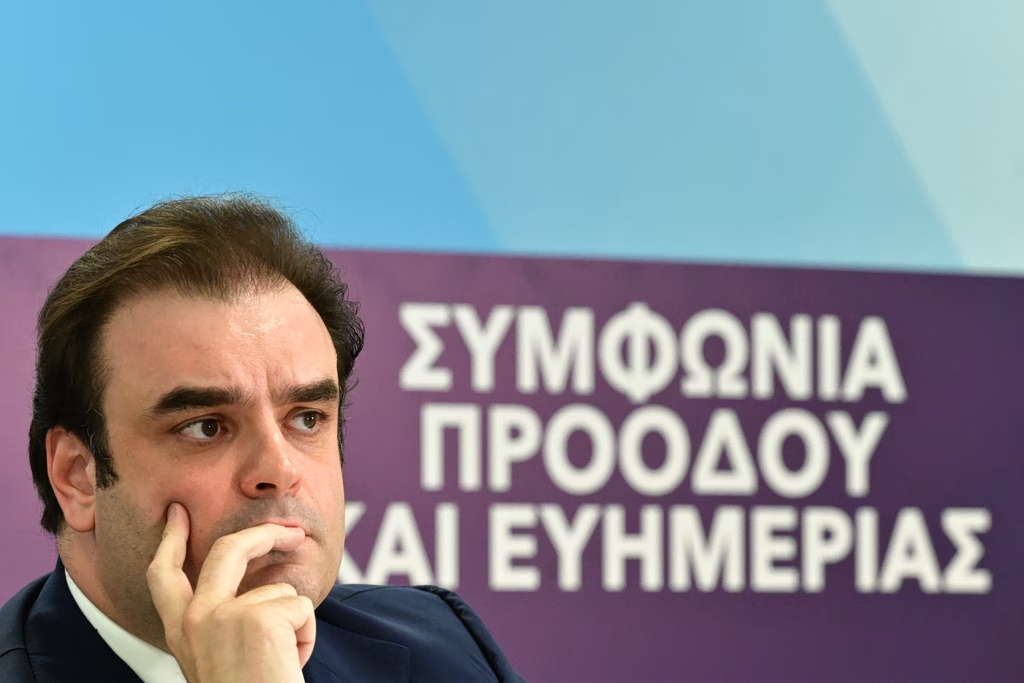
 There is something profoundly hopeful about the prospect of a child reaching adulthood with €60,000 in the bank. For parents, that sum begins to look like something tangible: a university education, perhaps the keys to a first home, a little breathing room as their child finds a place in the world. That was the appeal Kyriakos Mitsotakis reached for when he unveiled his government’s new child savings scheme at the Thessaloniki International Fair (TIF): families set money aside, the state matches it, and the two, left to compound, build a capital sum waiting on each child’s eighteenth birthday.
There is much to welcome in a government shaping policy with an eye towards the prospects of future generations of Greeks; the ambition deserves serious consideration, but the proposal rests on assumptions worth more scrutiny than its expected returns — that parents do have money left to save and whether rewarding their ability to save is the soundest way to widen the next generations’ opportunities.
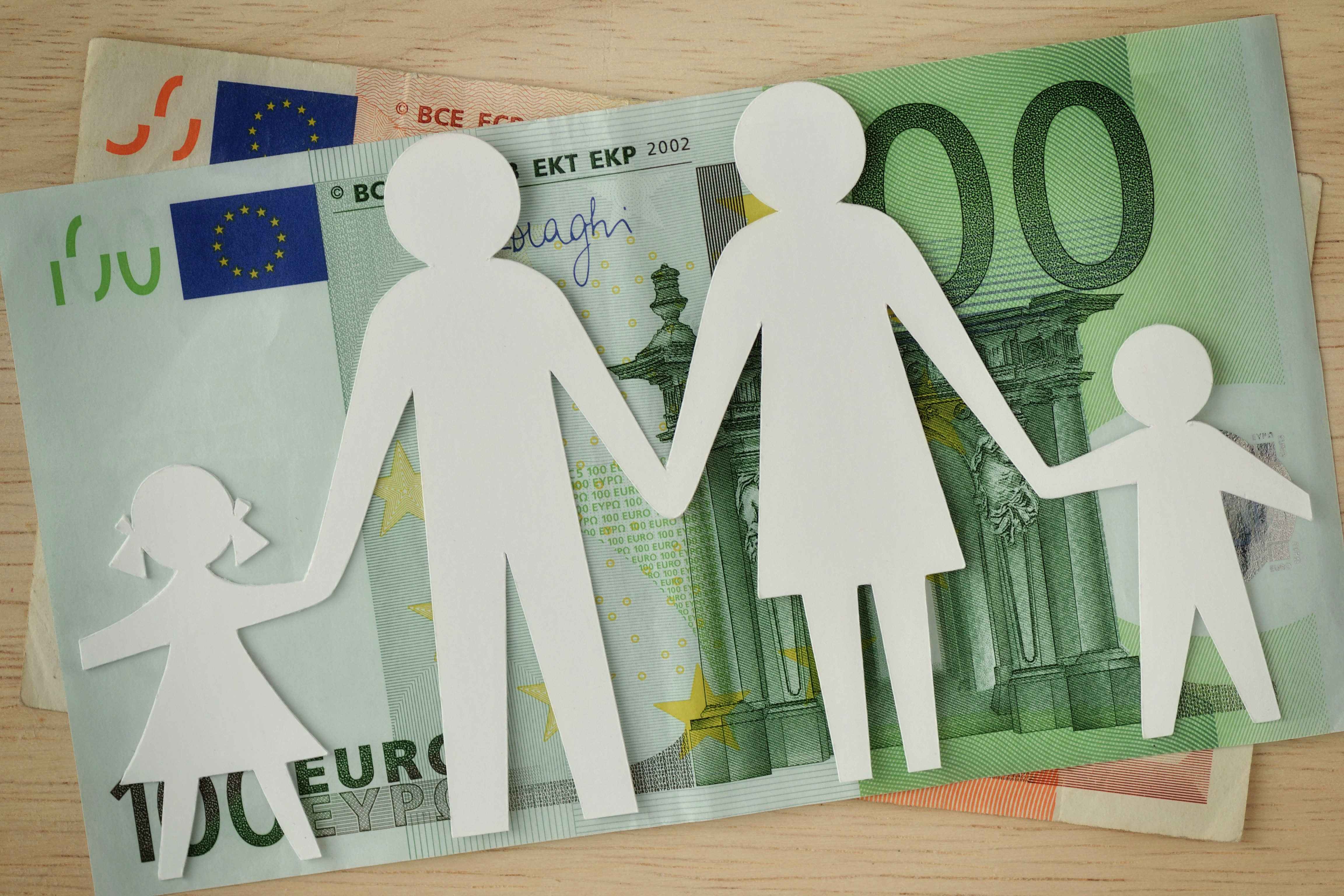
The government has loaded the account with vision: capital for adult life’s first steps — studies, a home, a first job, starting a family — alongside habits of saving and investment. It also fits the broader logic of the EU’s Savings and Investments Union agenda, which seeks to channel more household savings towards productive investment and European businesses.
The comforting language of a “piggy bank” makes the arrangement sound simpler than it is. The money will be invested — in approved mutual funds, equities, and government or corporate bonds on organized Greek and EU markets — meaning families, with or without financial literacy, choose risk, not a guaranteed rate.
The significance of any projected return depends on the terms on which it is calculated: factoring in management fees, how the money is invested, and how a market downturn might affect the sum available at eighteen. Israel’s experience offers a reminder that returns can fluctuate: its “Savings Plan for Every Child” program reported losses during some years, and recoveries in others.
How the scheme would work
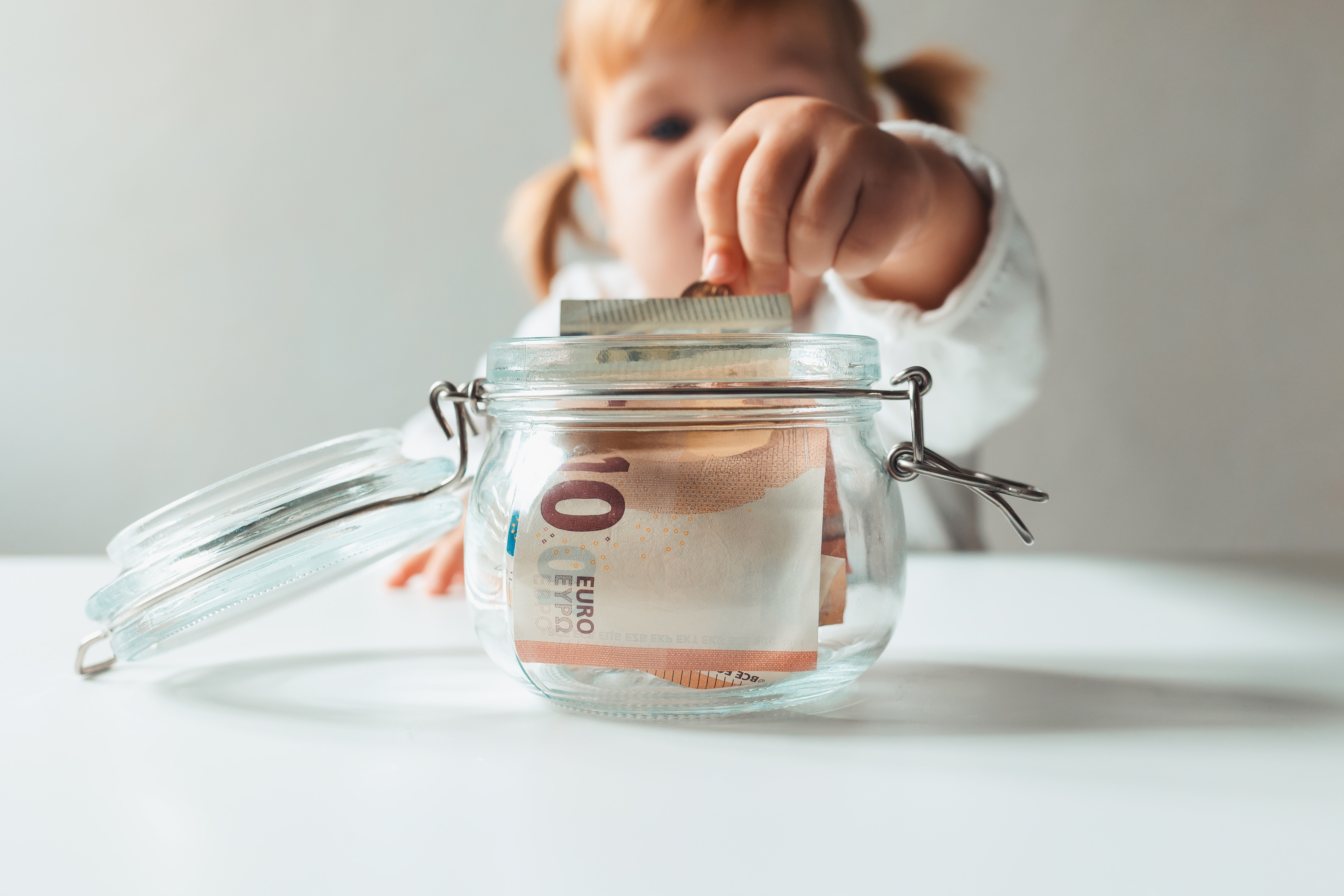
The mechanics, as announced: products become available from early 2027, initially for children born in 2025 and 2026. An account may be opened within two years of birth — one per child, with at least one parent a Greek tax resident — and parents may contribute up to €10,000 annually. The state matches up to €1,200 a year initially, rising 10% every five years, with no income or wealth criteria at all.
Investment income will be tax-exempt, and the money stays locked away until eighteen, with exceptions for death or serious childhood illness. Banks, insurers and investment firms will offer the accounts, with standardized cost disclosures and free transfers between providers. All genuinely welcome — but none of it touches who can actually afford to take part.
And the scale of the commitment makes that question impossible to set aside. Annual spending is projected to approach €500 million by 2040, assuming roughly one in three newborns take part — an annual bill, not the scheme’s lifetime cost, though it invites careful consideration of how it will be distributed.
When families cannot afford to save
For many households, the gap between eligibility and participation could be wide. The Small Enterprises’ Institute (GSEVEE) survey for 2025 found 62.1% of Greek households could not make their income last the month — running out, on average, after eighteen days. More than half could not cover an unexpected €500 expense, and 83.5% said they could not save at all, up from 81.6% the year before. Similarly, the Hellenic Statistical Authority’s (ELSTAT) data is revealing. In the first quarter of 2026, the household saving rate fell further into negative territory, reaching −3.3% of disposable income, compared with −1.8% a year earlier.

IME GSEVEE annual survey household income – living expenses 2025

Eurostat, Quarterly sector accounts – households
Although these figures concern households as a whole rather than new parents specifically, they expose a fundamental weakness in the policy’s design: access to state support depends on a capacity to save that many families simply do not have.
A year without contributions leaves the child’s account open but brings no matching payment from the state. A family facing hardship therefore receives less support for its child’s future precisely when its own resources are most strained.
The promise may be universal, yet the benefit remains conditional on the means to participate. Fintech investor Cathal Carroll, who has developed a policy proposal for state-funded investment accounts for every newborn in Ireland, speaking exclusively with TO BHMA International Edition, argues that “matching rewards families who can already save, making the policy regressive, every child should get an unconditional public deposit regardless, before you even get to matching. Greece’s design has no such floor”.
Making support reach every child
Canada offers one way to address this imbalance. Its “Registered Education Savings Plans” (RESPs) offered matching grants towards a child’s postsecondary education, but these did little for families unable to save in the first place. As a remedy, the government added the “Canada Learning Bond” in 2004, providing a lifetime total of up to CAD $2,000 for eligible low-income children without requiring parental contributions. Yet removing the need to save did not remove the need to apply: parents still had to open an account and claim the benefit. By 2025, only 43.9% of eligible children had received the grants. Recognizing that limited awareness and complicated procedures were leaving children without support, the government has announced automatic enrollment of eligible children from low- income families, effective 2028. Canada’s experience illustrates that reaching disadvantaged children requires addressing both their families’ financial constraints and the practical barriers to claiming help.
Israel built that lesson into its design from the start. Its “Savings for Every Child” program, launched in January 2017, enrolls children automatically and deposits a monthly sum from the state; parents can add to it, but if they do nothing, the public saving continues without them. By 2025 the program counted some 3.6 million active accounts, and many families added nothing beyond the state’s own deposit — yet those children kept accumulating savings regardless.

Having advised extensively on the Israeli policy, Professor Michael Sherraden, Co-Director of the Center for Social Development at Washington University, in an interview with TO BHMA International Edition, stated that “making government support conditional on saving will increase economic inequality; no version of “opt-in” enrollment will come anywhere near full inclusion, and the kids left out will be disproportionately the poorest children”.
There is a further question: what are these assets actually meant to achieve? Family formation appears among the Greek government’s envisaged uses, and a lump sum could help set up a household. The harder claim is that a benefit deferred across an entire childhood can meaningfully ease the pressures shaping whether people have children today. An OECD study of 26 countries between 2002 and 2019 found that spending on parental leave and early childhood care was more strongly associated with higher fertility than cash support.
Singapore, a pioneer in publicly funded savings accounts for children, has grappled with this same challenge. It introduced “Edusave” in 1993 with a strong emphasis on education and developing children’s skills. Yet its experience offers reason for caution about expecting financial support to encourage parenthood: fertility fell from 1.41 children per woman in 2001 to a record low of 0.87 in 2025. This decline does not establish whether individual policies worked, but it highlights an important distinction: helping children thrive and encouraging people to have them are entirely different policy goals.
The Greek proposal also seeks to change how families think about saving. Mitsotakis said the scheme would “encourage a culture of saving across our country”. Britain’s “Child Trust Fund” offers a cautionary example of how difficult that can be. Introduced in 2005, it provided every eligible child in the UK with a public endowment, yet a later study found only a small effect on saving, greater benefits for wealthier families and little evidence of a lasting change in saving habits.
At eighteen, whose choice?
What happens once the money becomes accessible matters as much as how it accumulates. Under the scheme as announced, the balance becomes an ordinary deposit account when the child turns eighteen, with no requirement that it be used for the specific purposes the government has identified as part of its broader policy objectives.

Young adults may reasonably want the freedom to decide how to use their savings. The argument for conditions concerns the purpose of the public contribution, rather than their maturity to decide how it should be spent: if taxpayers are helping finance education or economic independence, there is a case for linking that support to its intended use. Canada does this through educational assistance payments tied to postsecondary study and living costs, while allowing parents’ own contributions to be withdrawn separately. Singapore similarly restricts spending to approved childcare, education and healthcare expenses. “Since the public is providing a subsidy, it is appropriate for the public to identify targets for asset purchase; education, home ownership, and small business development, these options are associated with building a better life” adds Professor Sherraden.
Those choices also raise a broader question about public spending. Given the scheme’s substantial long-term cost, could some of the same funds achieve its social goals more effectively by building lasting services and infrastructure, rather than financing individual balances whose eventual use is unrestricted? More affordable childcare, working hours compatible with family life, accessible rental housing and stronger support for young people entering employment all deserve consideration alongside the savings subsidy. The government is already advancing childcare measures; the question is how to strike a balance that gives families meaningful support today while improving their children’s prospects tomorrow.
These are reasonable expectations of a policy that asks taxpayers to invest across generations. Its success should be measured by the opportunities it creates, especially for children who would otherwise have the fewest. Giving every child a stake in the future is a noble pursuit, but their access to public support should not depend on their parents’ ability to save.