 Μake us preferred on Google
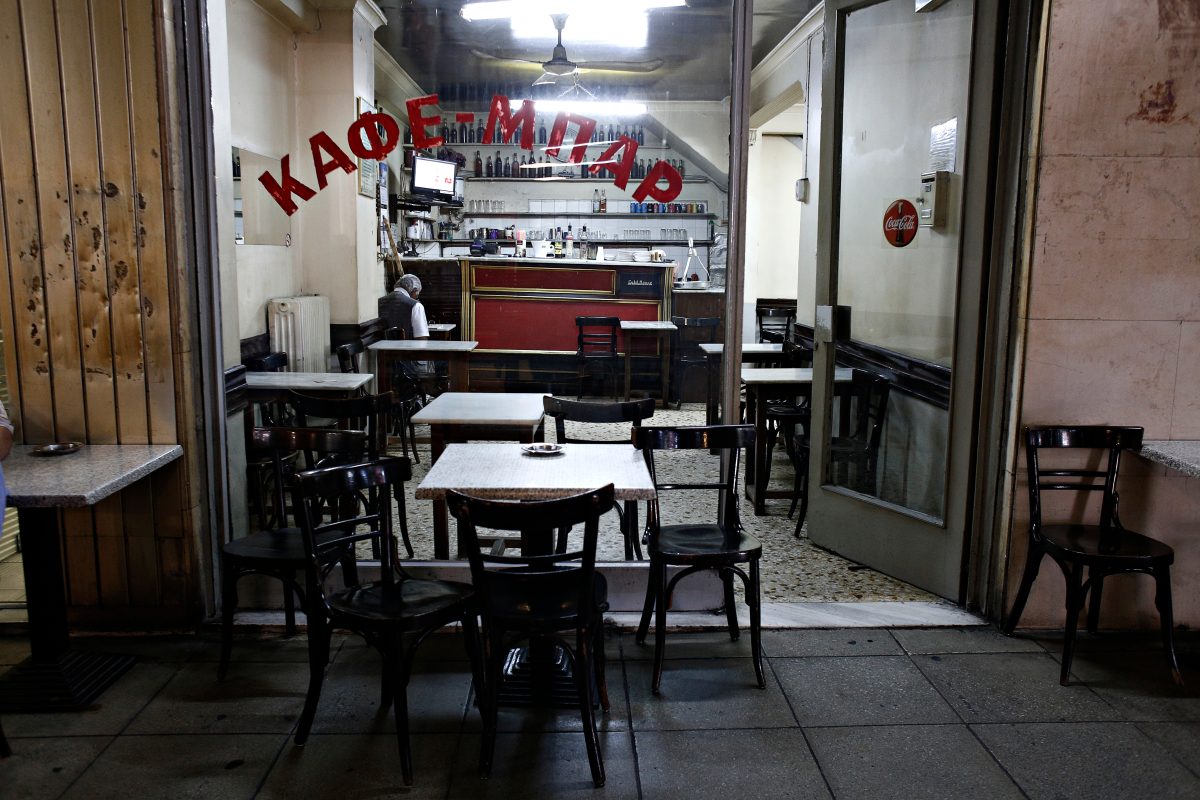
There are corners of the city that don’t require a street name nor a number to stand out. Instinctively, we locals know the way there – and their details make them familiar: The corner table that is slightly positioned to the side, the solitary regular who always sits in the same spot at every occasion, the quick-witted waiter, the conversations that begin with nothing and somehow end up encompassing everything.
These are the places where, even if you seek a table for one, you will rarely remain without company.
The patrons are more or less the same, even though the usual pastime has changed. There is no folded newspaper beside their coffee cup nowadays. Instead, a tablet usually is seen on the table or the patron’s hands.
Yet a small everyday understanding still holds true: the coffee, the conversation, the feeling that there is a place waiting for us. These are the city’s familiar hangouts (or as we say, stekia). Some have made history. Others remain invaluable landmarks for the locals who live near or far.
When these hangouts disappear, their loss rarely involves demolitions. A shutter rolls down indefinitely or temporarily, a sign changes or vanishes. The city beats to the same rhythm; properties are passed around, their use subject to change.
Mouria in the central Athens district of Exarchia – a café that has operated for 111 years, albeit in a different building after the original one was demolished – is not the only recent loss recorded in the urban landscape. Over the past decade, central Athens has bid farewell to Kentrikon, the historic downtown restaurant on Kolokotroni Street, which, since 1935, had been a meeting place for artists, journalists and politicians, as well as Aigaion on Panepistimiou Street, with its loukoumades (Greek honey doughnuts) that had satisfied Athenians’ “sweet-tooth” since 1926. In December 2023, the lights went out at the Ideal cinema, after 102 years of screenings, a convivial meeting place for the Greek capital’s cinephiles.
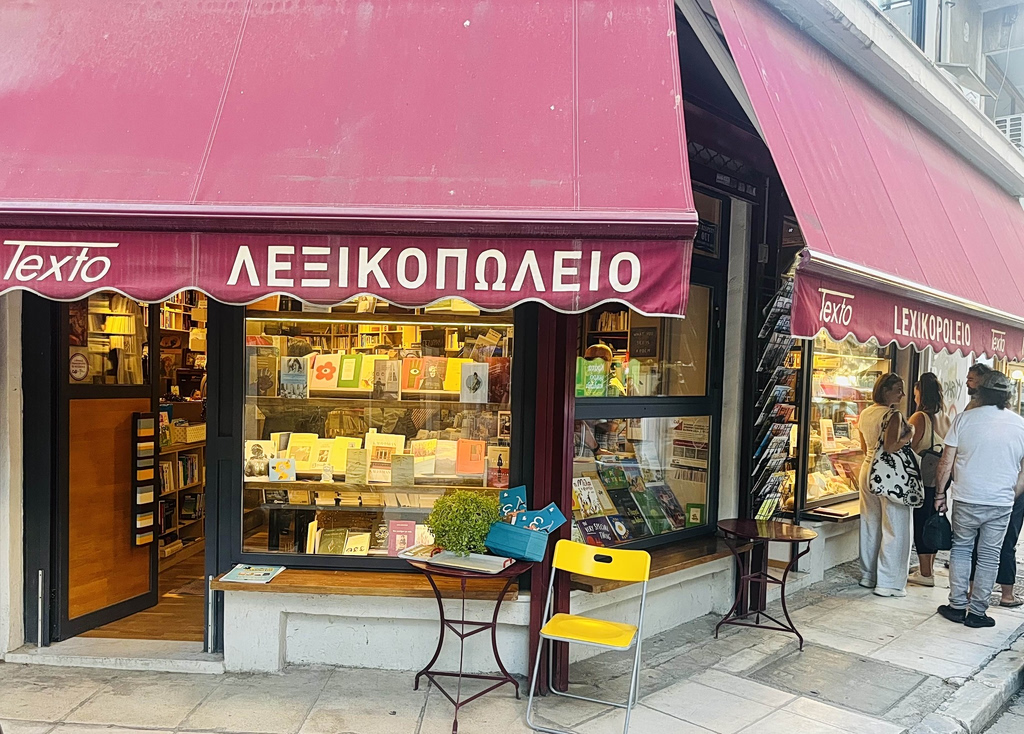
What the Lexikopoleio in Pagrati used to look like prior to its permanent closing.
‘A field of uncontrolled urban transformation’
The losses, however, are not limited to the many historic establishments that have disappeared. They also concern newer ones which, without having a century of history behind them, nevertheless had time to become “landmarks” of our everyday lives. Urban memory also resides in places that have not been designated historic monuments or listed buildings: a neighborhood café, a pastry shop, one of the few remaining bookshops. Within 15 years, Yasemi, on the narrow steps of Mniskleous Street, became an inseparable part of old quarter Plaka’s image, before closing its original premises in 2025. Another is Lexikopoleio, a den for Athens’ French-speaking community in the Pangrati district, which closed in 2026.
Different places, different eras, but one common denominator: a loss of neighborhood character. This part of urban transformation primarily concerns the market and the economic viability of businesses, but also affects overall urban planning.
Prof. Efthymia Sarantakou, an associate professor specializing in tourism spatial planning at the University of West Attica, places the issue in a broader context.
“The absence of adequate regulatory rules in the property market, combined with the penetration of international investment capital, has turned Athens into a field of uncontrolled urban transformation,” she says, pointing out that historic and traditional establishments are especially vulnerable, as they are called upon to compete with newer business models that offer greater financial returns.
Protection of their social function
Protection, therefore, must extend beyond the building itself to include its use, the continuity of its business and the social function of a place. Otherwise, there is a risk that only the façade will be preserved, while everything that made it part of a neighborhood’s identity will be lost forever. The Deputy Mayor of the Municipality of Athens, Maro Evaggelidou, also highlights this danger, focusing on the traditional commercial districts of the city center.
Clusters of specialized shops that developed over time – selling sewing supplies, stationery, traditional jewelry, packaging materials, spices and ironmongery – constitute, as she explains, a distinctive part of Athens’ cultural heritage. Comparable to modern business clusters, these commercial networks risk losing their character as they are displaced by new uses.
The objective is not to keep the city clinging to the past. After all, Athens’ commercial life has always been renewing itself. Shops opened, became established and, at some point, closed. The question is whether the city can evolve without flattening everything that makes it distinctive and recognizable.
The preparation of the Local Urban Plan (LUP) for Athens, which is currently under way, creates a critical opportunity, as it can lay the foundations for controlling land uses. However, according to Evaggelidou, its provisions risk remaining on paper unless they are accompanied by legally established implementation tools.
As an immediate intervention, she proposes suspending the issuance of building permits for new buildings and for changes of use in existing properties intended for activities that frequently displace traditional commercial uses. This is a proposal that the municipality has already submitted to the Ministry of Environment and Energy, but without receiving a response.
Financial incentives and modernization
The need for intervention is becoming more pressing as local government authorities watch the gentrification of the city center rapidly unfold without having any meaningful tools to control land uses. As the Deputy Mayor points out, the municipality cannot regulate the development of hotels and food-service establishments, unlike what happens in many cities abroad. Certain central neighborhoods are a partial exception, where special Presidential Decrees have imposed restrictions.
To help the “smaller fish” of the local economy survive, Sarantakou proposes the introduction of a special designation, “Historic Shop of Athens”, linked to financial and tax incentives, as well as business modernization and succession programs. She also recommends creating cultural and gastronomic maps for visitors to the city.
As she points out, tourism is not an enemy of urban memory. It can become a valuable advocate for its preservation, provided that part of the revenue is returned to the neighborhoods, for example, through a Municipal Commercial Heritage Fund that would support the preservation of historic businesses.
In the meantime, opportunities for intervention are being sought out within the existing institutional framework. One of these concerns the differentiation of municipal fees according to the use of properties, an option provided for by the new Code of Local Government, which could be used to support activities threatened by the commercial gentrification of neighborhoods.
As a more immediate measure, Evaggelidou favors restricting the allocation of public space for outdoor tables and chairs on selected streets, for urban-planning, architectural or sustainable-mobility reasons, as was done on Ermou Street, with the aim of preventing the uncontrolled expansion of food-service establishments.
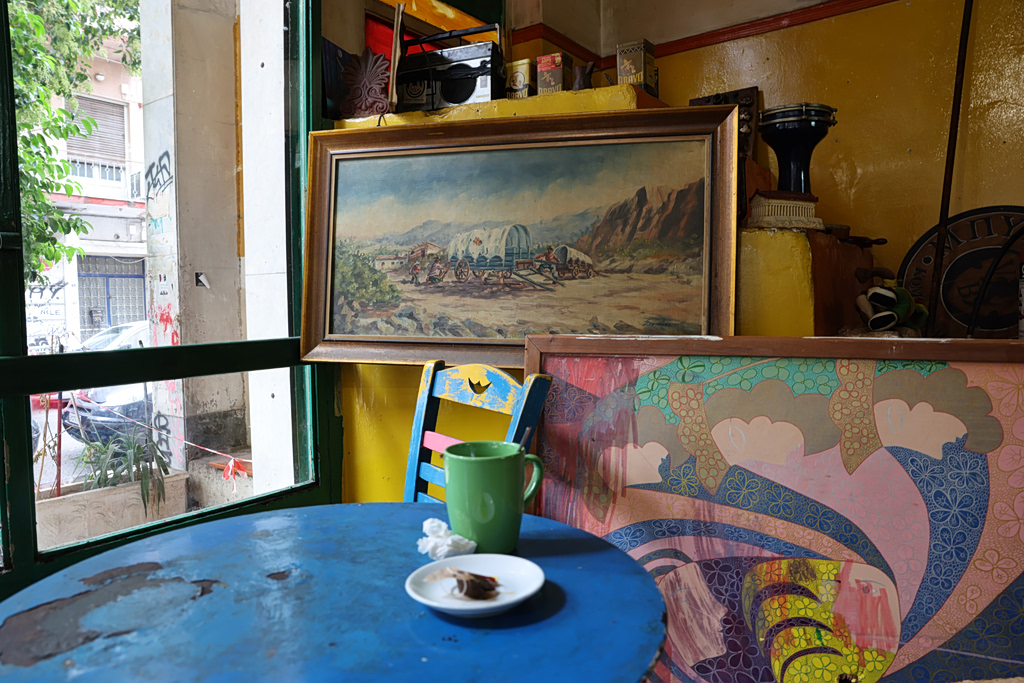
Artwork stacked behind one of the colorful tables of Mouria, an iconic coffee shop that remained open for over a century. PHOTO BY INTIME NEWS
‘Lessons’ from Europe
Some European cities have already moved on to organizing specific interventions, demonstrating – according to Sarantakou – that there are ways to protect commercial heritage and preserve historic shops.
In Paris, the municipality made use of its right to acquire certain commercial premises.
When a shop located within a protected zone is put up for sale, the municipal authority has the right of first refusal to purchase it at the price agreed upon with the seller. It then undertakes its renovation and leases it to independent retailers, crafts-people and booksellers at controlled, low rents. The relevant interventions have contributed to the preservation and development of more than 400 commercial establishments.
In Lisbon, the “Lojas com História” (Shops with History) program recognizes historic shops as living elements of cultural heritage, promotes them and provides financial support for eligible expenses.
Barcelona is another interesting European example. Since 2016, it has been implementing a special plan to protect its emblematic shops, offering financial incentives and subsidies. Ten years later, 141 of the 209 shops on the original list are still operating without any changes.