BREMEN, Germany — It’s just after 10 p.m., and a mesmerizing mountain song of Crete can be heard blending with some urban jazz. Further away, inside one the city’s top theaters, a bold bassist breathes new life into a traditional Greek island melody, giving it a modern jazz twist. This was all happening in the German city of Bremen, which last week hosted one of the most influential jazz trade fairs and talent showcases in the world: jazzahead! For four days, Greece was there in full force, staging shows, negotiating bookings, building networks, and seeking pathways to international circuits.
TO BHMA International Edition was on the ground in Bremen and spoke with musicians, producers, representatives from the country’s active export office, and festival organizers about how Greece is taking steps to export its music and shape a new cultural presence abroad.
Jazzahead! A Springboard
Now in its 20th year, jazzahead! has become one of the most important annual meeting points for the jazz industry, bringing together labels, managers, festival directors, bookers, journalists, artists, and export offices from around the world.
According to organizers, more than 3,000 professionals attended this year’s edition. Greece was one of 60 countries participating, marking its fourth consecutive official national presence. Before that, Greek artists and producers would attend independently.
“The idea is that we can learn from each other,” the festival’s artistic advisor, Götz Bühler, tells TO BHMA International Edition. “Jazzahead! is all about people and connection.” That matters because careers are often built here, he explains. Artists leave with festival invitations, booking agreements, media attention, and new touring opportunities.
For Bühler, himself a lifelong jazz enthusiast, the festival offers something even more important: reassurance. “It reminds artists that they are not alone; that there is an international community out there ready to listen, connect, and support what they do.”
“The festival turns 20 this year, and it would be great if culture ranked higher on political agendas,” he says. “In times of despair and chaos, we need these anchors. We need hope.”
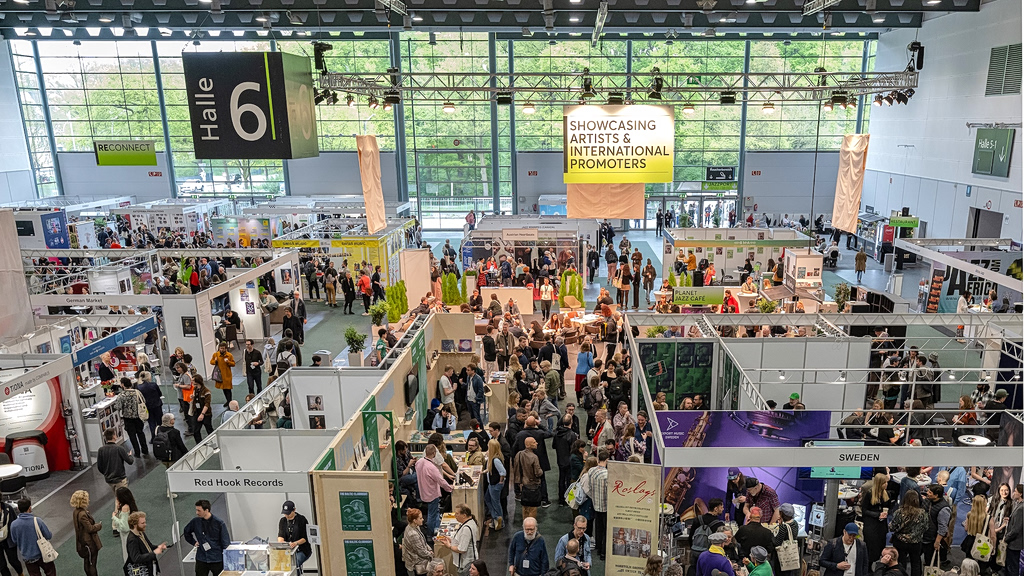
From above: jazzahead! One of the most influential jazz trade fairs and talent showcases the world. Photo: © M3B GmbH – Jan Rathke
Export Strategy a Must
Among the thousands of participants arriving from countries as far away as Chile and Chad, Greek jazz artists also came seeking stronger visibility and direct access to the international jazz marketplace.
Under the umbrella of the Greek Culture Ministry, which organized the country’s stand, Music from Greece, the country’s active export office, and the Jazz Solidarity Network, artists and jazz stakeholders came to Bremen with a clear message: Greek jazz is ready to move beyond national borders.
“It’s time we shifted from isolated artistic success to a fully organized and coordinated export strategy,” explains Angeliki Spyridaki, founder of Music from Greece. “That’s why Greece’s coordinated presence at major industry events like jazzahead! matters.”
For Spyridaki, the goal is not only to give Greek artists the international opportunities they deserve, but also to reshape how Greece is seen abroad.
“Music can have an immense impact as soft power, and as such, can be a very powerful tool.”
Creating Opportunities
The global live music market, which includes concerts, festivals, tours, and ticketing, is worth approximately $35 billion. It is a major source of revenue through ticket sales, sponsorships and brand partnerships, VIP experiences, hospitality, merchandise, and festival tourism.
“Creating opportunities in this market is extremely important for Greek artists,” explains Kosmas Anagnostopoulos, an engineer by profession and a jazz enthusiast who has been running the Jazz Solidarity Network (JSN) since 2023.
JSN is a community created to support Greek jazz artists, Anagnostopoulos explains. Its activities include fundraising, promotion, and creating opportunities for sales or festival and concert participation. The network is also behind several events, including the annual Aegina Jazz Festival.
“Greece’s presence here is crucial; the country’s artists gain international visibility, which is extremely hard to do.” He explains that for Greek musicians, geography creates an additional challenge. Touring from Athens can be far more expensive than traveling across Central Europe by road or rail. That cost difference can determine whether an emerging act gets booked or overlooked.
Anagnostopoulos adds that on top of that, there is no state financial support comparable to that which exists in other countries. “This makes it difficult for Greek artists to remain competitive, despite being highly skilled.”
The Talent is Already There
Few question whether Greece has the musicians. Among the most internationally recognized is Petros Klampanis, the Zakynthos-born bassist and composer whose lyrical style blends Mediterranean folk traditions with contemporary jazz. After moving from Greece to New York, he built an international career that has included performances at Carnegie Hall and Lincoln Center.
Also performing at jazzahead! this year was Maria Manousaki, a violinist and composer trained at the Berklee College of Music, whose work fuses Cretan musical tradition with jazz and world music. In addition to performing, Manousaki is behind several music festivals on Crete.
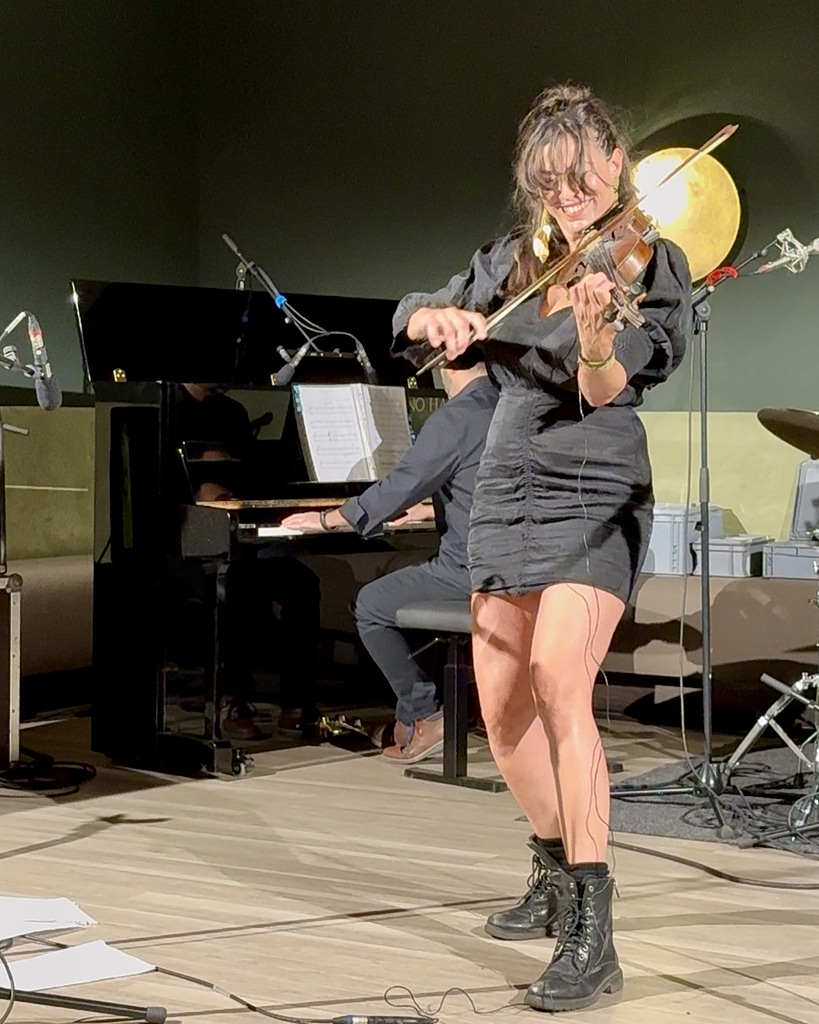
Violinist and composer Maria Manousaki brings an air of Crete to Bremen during this year’s jazzahead! Photo: Music From Greece
Other Greek artists attending this year’s jazzahead! included oud soloist Alekos Vretos, known for his distinctive mélange of Greek, Middle Eastern, and jazz sounds; Rotterdam-based pianist Yiorgos Bereris, who just released his latest album “Sea in Common”; and German-born Greek saxophonist Melina Paxinos.
The Missing Piece: Infrastructure
What Greece lacks, explains veteran producer and booker Thrassos Irinis, is not talent but systems.
“For the past 35 to 40 years, we have been struggling to build a jazz scene in Greece. Things have definitely improved: the standard of music education has risen, a new generation of exceptionally trained young jazz artists has emerged, and there is now a roster of musicians whose skills match those of their international peers and who can easily perform on global stages. Yet they still struggle to break through,” Irinis, artistic director of the iconic Half Note Jazz Club, one of Athens’ first venues dedicated to jazz, blues, and soul, tells TO BHMA International Edition.
Insufficient long-term public support, coupled with the absence of a coherent policy framework, leaves artists to fend for themselves, Irinis explains. At the same time, Greek musicians often underestimate how much personal investment is required to build a career abroad, he adds. A single successful showcase is never enough; continuity and consistency are what matter. Festivals, professional networks, funding mechanisms, and meaningful state involvement create sustainability, not fleeting visibility.
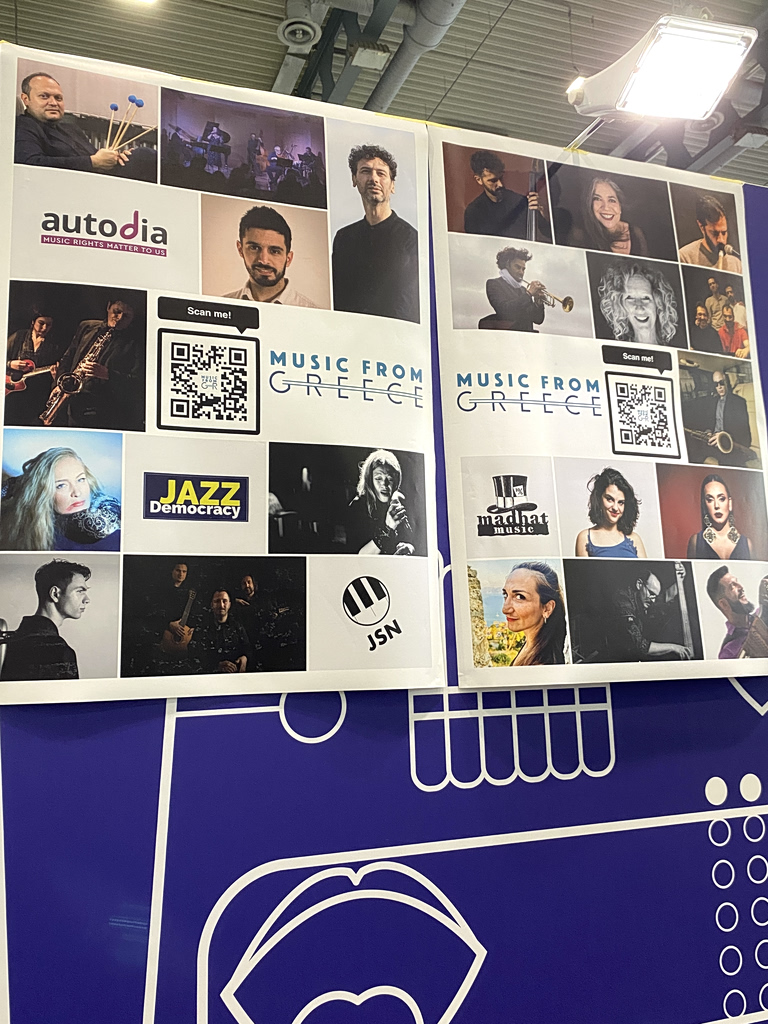
Greece was one of 60 countries participating this year, marking its fourth consecutive official national presence.
Photo: Maria Paravantes
Helen Kontos, who has spent more than three decades helping Greek artists such as Savina Yannatou reach international markets, says that building a career beyond Greece begins with a strong and distinctive artistic identity. Fragmented promotion, she argues, is not enough.
Artists, or their managers and booking agents (for those lucky enough to have them), must understand the practical steps involved in developing an international career. Attending trade fairs and showcase festivals such as jazzahead! offers valuable insights into how the industry operates. Building a strong professional network is equally important, she adds.
Speaking to stakeholders from Greece and abroad here at jazzahead!, one thing becomes crystal clear: if Greece wants to see its artists on international stages, sustained funding is essential.
More than Just Music
A musician, performer, cultural policy & development specialist, and head of Music from Greece, Spyridaki adds a new dimension to the discussion. For Spyridaki, music is much more than a form of entertainment; it can generate revenue and contribute to social cohesion.
“In a world that often feels divided, culture remains one of the most effective ways to bring people together; gently, yet powerfully enhancing intercultural dialogue, often with immediate results compared to policies, through interaction, mutual understanding and collaboration,” she tells TO BHMA International Edition.
Positioning Greek jazz and other forms of music and the arts within broader conversations gives Greece access to creative industries, strengthening the country’s position internationally.
“To do this, we need to include music export in the country’s cultural policy, build export structures, ensure consistent public funding, and formulate a long-term international export strategy rather than merely promoting” she says.
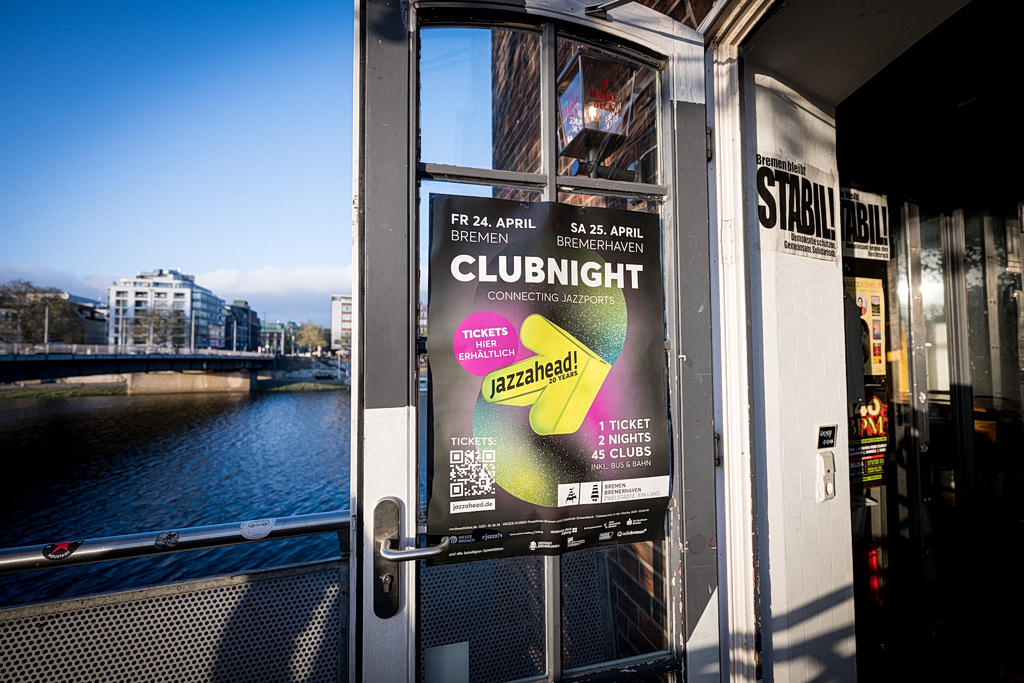
More than 3.000 industry professionals attended this year’s edition of jazzahead! Photo: © M3B GmbH – Jan Rathke
Germany’s Model: What Greece Can Learn
If Greece is searching for a model, it need only look around Bremen. Germany already has one firmly in place: a system that invests in its artists, supports its music sector, and provides strong infrastructure across every stage of development, including export support.
Through Initiative Musik, Germany’s Music Export office, artists and companies can access grants for recordings, tours, marketing, live venues, and international development. It is a prime example of how a state-backed strategy can turn local talent into global presence.
With the aim of broadening international awareness of German jazz, festival organizers, club promoters, and media representatives from abroad were invited last week to a special showcase event organized by Initiative Musik during jazzahead! There, we were introduced to eight promising German acts selected by an international committee.
“The idea behind the initiative is to build bridges for emerging German artists,” explains Neus López, Head of Export and Structural Funding at Initiative Musik, “giving them a better chance to build sustainable international careers and promoting German creation.”
This year’s selected acts were: Crutches, Sarah Decker – Expand, Re: Calamari, Abase, Richard Koch – Rays of Light, Sorvina, Bonsai, and Kristina Brodersen – KRISTINA 4.
For Greece, the lesson is straightforward: talent matters, but talent without infrastructure rarely scales.
Small Market, Big Step
Last Sunday, after four days of networking, conferences on everything from AI and music to radio programing, showcases, club nights, parties, and jam sessions, it felt rewarding to see Greece and its artists finally being included.
It’s time now to move from understanding the strategic importance of promoting Greek cultural creation to making it happen. The real test begins today, after the lights have gone out and the business cards are filed away.
Jazz may be a small market in Greece, but as a genre deeply rooted in expressive freedom, collaboration, and exchange, it has the power to open the way to something far bigger. The momentum is already there. We saw it in Bremen.
And how will we know Greece is getting it right? As Maria Manousaki put it, in words that seem to echo the hopes of many Greek artists at this year’s 20th jazzahead!: “We’ll know when people start calling you to book”.