 Μake us preferred on Google
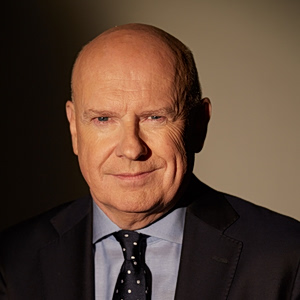
 In Europe, the new realities require a radical transformation on many levels, according to Loukas Tsoukalis, Professor at the Paris School of International Affairs at Sciences Po and Emeritus Professor of the University of Athens.
In an interview with TO BHMA International Edition, following his discussion on a panel with the Financial Times’ chief economics commentator, Martin Wolf, at the recent Delphi Forum, Tsoukalis underlines that EU member-states are realizing that they need to develop a European defense cooperation, and that they need to talk as a European Union vis-à-vis the Russians and the Americans, in other words to think and act geopolitically.
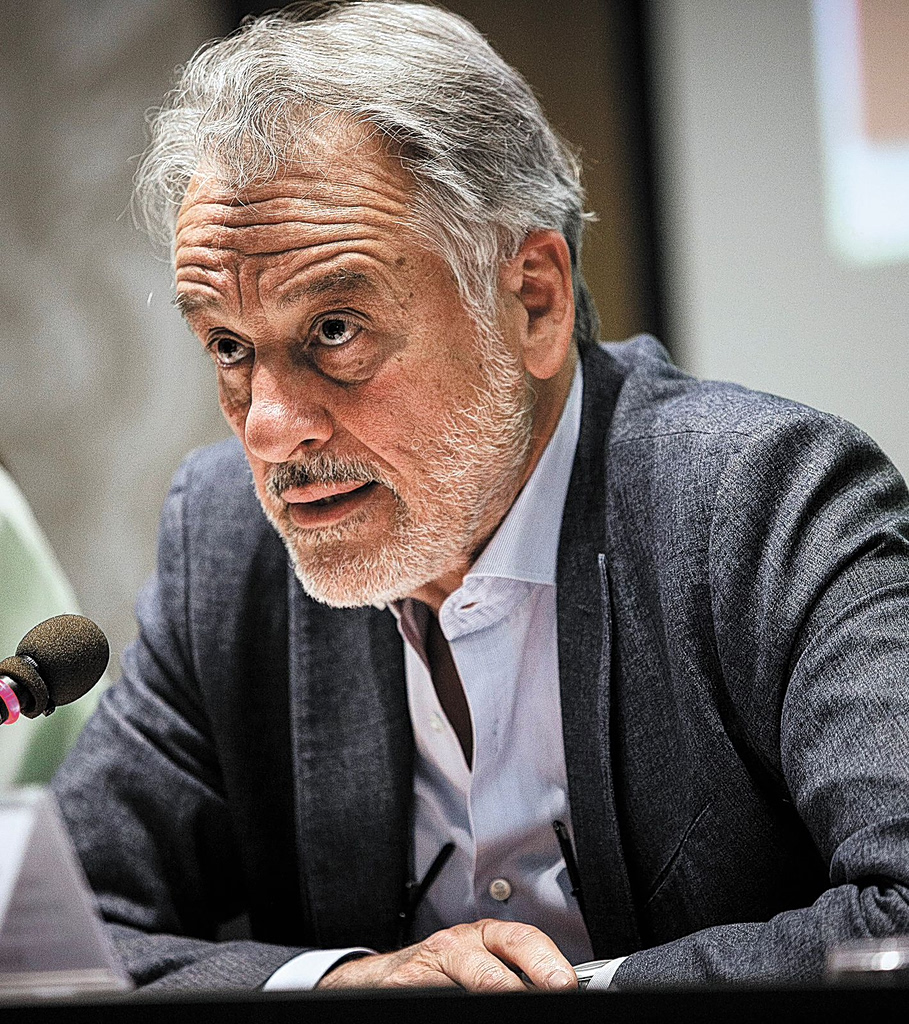
Loukas Tsoukalis, Professor at the Paris School of International Affairs at Sciences Po and Emeritus Professor of the University of Athens.
Moreover, he says that on the economic front the EU needs to couple trade liberalization with industrial policy at home, with coordinated investments and a much more integrated market, including a European capital market.
The subject of your panel at the Delphi Economic Forum was Economics Versus politics: Who Wins in a Trumpian world? Why economics versus politics?
It was me who proposed the title and Martin Wolf agreed. If you go back 20 or 30 years ago, we were told in times when neoliberalism was at its peak and there was only one superpower, namely the United States, that markets ruled and Politics would take a back seat, the state as well.
What we have been witnessing more recently is exactly the reversal of this, namely the state is making a huge comeback in terms not only of security, but also in terms of industrial policy. And politics takes supremacy over economics through, for example, the weaponization of international economic interdependence. The United States uses that a great deal, also the Chinese, and the Europeans are trying to defend themselves. So that’s what we meant by the title. And what we did try to do in our discussion with Martin Wolf was to explain how this came about, where there was a reversal, and exactly what we do today.
Do you think that Trump administration’s approach puts the state front-and- center in other countries as well?
President Trump is the global disruptor par excellence. But it is not only Trump. Liberal globalization and the markets’ rule had suffered even before he came back to power. From a US point of view, it allowed the emergence of a new superpower, namely China, which took advantage of this liberal economic order, but also because globalization created a large number of losers within developed countries, most notably in the United States. The difference between the US and Europe is that Europeans have a developed welfare state which alleviates the negative effects on losers from trade. Americans don’t, so the only thing they have in the United States is protectionism, and this is precisely what President Trump uses.
How effective is that?
Tariffs are meant to be beautiful. But the US Supreme Court may have a different point of view. Furthermore, tariffs do not exactly deliver the goods. President Trump proclaimed a world in which tariffs would bring back industrial production to the United States and give jobs to the workers. But there are so many things produced in China and Asia more generally that can no longer be produced in the US. Simply in terms of economic efficiency, there’s no way of doing that. Tariffs are a disruptor, but they’re not going to bring about a huge reversal in the international division of labor. There are limits to that.
Regarding the way Trump views the world— let’s take first of all the Euro-Atlantic relationship. He seems to have put the European Union in the trash bin. How do you see that developing so far? Do you think the EU is going to be able to consolidate and have an estimable geostrategic presence in a Trump world?
I would go even further. President Trump has launched a frontal attack on many of the things that Europe has for a long time stood for, including liberal democracy, individual rights, inclusive societies, the rights of minorities, climate policy, and last but not least, regional integration. He considers the EU almost as an alien organization. It is true, however, that every US president, with virtually no exception, has preferred dealing with individual European countries rather than Brussels.
President Trump has crossed all kinds of red lines, most notably with respect to Greenland. And he has been negotiating with Russia on Ukraine treating President Putin as a more serious interlocutor than his other European counterparts. Europeans are beginning, slowly and painfully, to adjust to this new reality.
It takes time. Some are adjusting faster than others. The French were the ones who from the very beginning took a more independent stance. They have a long tradition of that. Central and Eastern Europeans were the most reluctant. Now there is a growing sense of unity among Europeans but it takes time to abandon established ideas that you have held for decades.
What are the necessary adjustments that the Europeans must make, in your view?
Europeans have to add a defense dimension to what essentially used to be a peace project, which is European integration. Secondly, they have to couple trade liberalization with industrial policy at home, including more and coordinated investments in key sectors together with a capital markets union. Last but not least, Europeans, Brussels in particular, have to start to think geopolitically. It will take time. And one of the major problems we have today is that leadership in Europe is weak.
One month before the American elections I interviewed Trump’s former National Security Advisor John Bolton, and he remembered that in 2018 at a NATO summit, Trump was on the verge of taking the US out of NATO. And so he and General Kelly persuaded the President at the last minute not to go forward. What do you see as the future of NATO in the Trumpian era?
Europeans consider the US as an indispensable partner and will do all they can to keep the US as part of NATO. Of course, the higher the perceived security threat from Russia the more dependent are Europeans on US protection. At some point, they will need to talk with Russia not only via intermediaries.
At the same time, Trump is saying to the Europeans, “I don’t want to defend you anymore. Pay your bills and get lost.” He’s saying it very clearly.
Still, there are so many Americans who realize that NATO is not only useful for the Europeans, but also very useful for the Americans. We are in times of big transition. The combination of geopolitics, geoeconomics and a new technological revolution are creating an almighty change in the world. And it’s very difficult to predict what’s going to happen, even more so because you have the president of the still most powerful country in the world who has made unpredictability a key factor of his foreign policy.
In the United States, Trump has made a lot of headway in dismantling the rule of law, and we see that sort of spreading contagiously, I think, abroad to Europe and elsewhere. Is what he’s doing in the United States being seen as a model in certain European countries and affecting us in that way?
That’s one side of the story, namely President Trump supporting far-right parties in Europe. But European public opinion is becoming increasingly critical of President Trump and consequently the leaders of far right parties are also taking their distances. Take Giorgia Meloni in Italy, a former admirer of the US President. She has unequivocally condemned the attack on Iran and criticised in strong terms his treatment of the American Pope.
Trump’s actions have made it clear that he doesn’t believe there is international law. In a January interview with the New York Times he was asked what are the limits of his power and he replied ““Yeah, there is one thing. My own morality. My own mind. It’s the only thing that can stop me.”
He’s not the first US president who does not consider respect of international law as one of his priorities, for that matter, alas, together with leaders of other big powers. But President Trump does it without any camouflage.