The first weeks of Greece’s wildfire season have already turned into an early stress test for the country’s civil protection mechanism. Over the past several days, the number and intensity of fires have increased markedly, forcing authorities to mobilize hundreds of firefighters and dozens of aircraft while placing municipalities under a state of emergency.
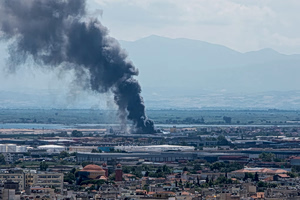
The most severe incidents occurred in Oinoi, northwest of Athens; Oreokastro, north of Thessaloniki; and Nea Kallikratia on the Chalkidiki peninsula. While all these fires posed significant challenges, the blaze in Oreokastro highlighted how rapidly wildfires can escalate into wider public safety emergencies. Houses and other buildings, including a recycling plant, were destroyed, while reports indicated that toxic smoke spread toward the city of Thessaloniki. Following the disaster, the municipalities of Oreokastro and Pavlos Melas were placed under a state of emergency.
Only days earlier, another major fire in Liti, which lies within the Municipality of Oreokastro, had claimed two lives, underlining the human cost of a season that is only just beginning. Government spokesman Pavlos Marinakis said on Monday that Greece had recorded 96 wildfires in the previous 48 hours, exceeding the average of roughly 30 fires per day that Minister for Climate Crisis and Civil Protection Evangelos Tournas cited only recently.
The latest incidents follow a gradual increase in wildfire activity since mid-June. Fires broke out in Karystos on southern Evia, in Corinth, near Athens International Airport in Spata, in Akrefnio to the west of Chalkida, in the agricultural area of Elaionas near Thebes, in Peraia outside of Thessaloniki, and in Aspropyrgos to the west of Athens. Although most of those incidents were contained before they could develop into major disasters, they demonstrated how quickly simultaneous outbreaks can stretch operational resources.
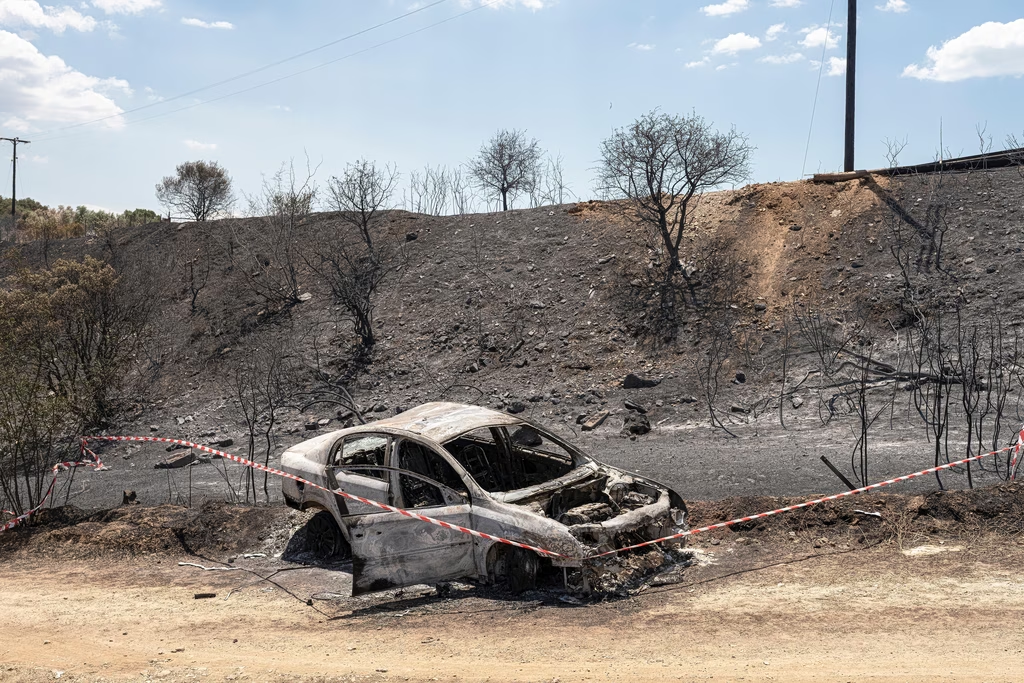
Burnt area in the Filothei area of Oraiokastro,Thessaloniki, Greece on July 6, 2026. / Καμένη έκταση στην περιοχή Φιλοθέη Ωραιοκάστρου, 6 Ιουλίου 2026.
Greece is preparing for another difficult summer
Authorities have spent the past several years attempting to strengthen Greece’s wildfire response after a series of devastating seasons. According to the European Copernicus Earth Observation Program, Greece recorded an average of more than 50,000 hectares of burned land annually between 2006 and 2025, placing it among Europe’s most fire-affected countries behind only Portugal, Spain and Italy.
The 2025 season ranked among the five worst since Copernicus records began in 2006. Eighteen individual fires exceeded 500 hectares, with the largest occurring on the island of Chios, where almost 8,000 hectares burned – approximately 15 percent of the island’s total surface area. Large fires also struck Keratea in Attica, Arta, Zakynthos, and the Feneos region of Corinth. Fresh figures published by the National Observatory of Athens’ Meteo service illustrate how severely Attica has been affected in recent years. Between 2017 and 2025, thirteen major wildfires burned more than 70,000 hectares across the region, destroying 38 percent of Attica’s forests.
This year’s preparations have therefore focused not only on expanding firefighting capacity, but also on improving surveillance and prevention. Since early July, Greece has added 600 newly recruited firefighters, who have already been deployed according to operational needs across the country. According to Tournas, the Greek firefighting force has increased from roughly 13,000 personnel in 2021 to nearly 19,000 today. A few years ago, Greece introduced specialist wildfire units named “Forest Commandos”; according to government figures, these have grown from a handful to just over 20 units manned by almost 1,500 personnel.
The aerial fleet has also expanded. Greece now operates around 30 state-owned firefighting aircraft alongside more than 50 leased for the duration of the season. Three newly-acquired helicopters entered service in mid-June and are expected to support aerial surveillance, coordination and rescue operations.
Perhaps the most technologically ambitious addition arrived in early May, when Greece launched four thermal satellites under its National Microsatellite Program. According to the European Space Agency, the satellites constitute the world’s first national satellite capability specifically designed for wildfire detection and monitoring. The system is intended to provide near-real-time surveillance of wildfires while delivering highly accurate temperature measurements over seas, inland waters, coastal zones and different land-use categories, supporting both civil protection and climate monitoring.
On the ground, authorities have continued to expand their surveillance network. The number of operational drones has increased from 80 to over 100 nationwide, with over 30 operating in Attica alone. “They provide us with imagery day and night and enable early warning so that we can intervene immediately,” Tournas said recently.
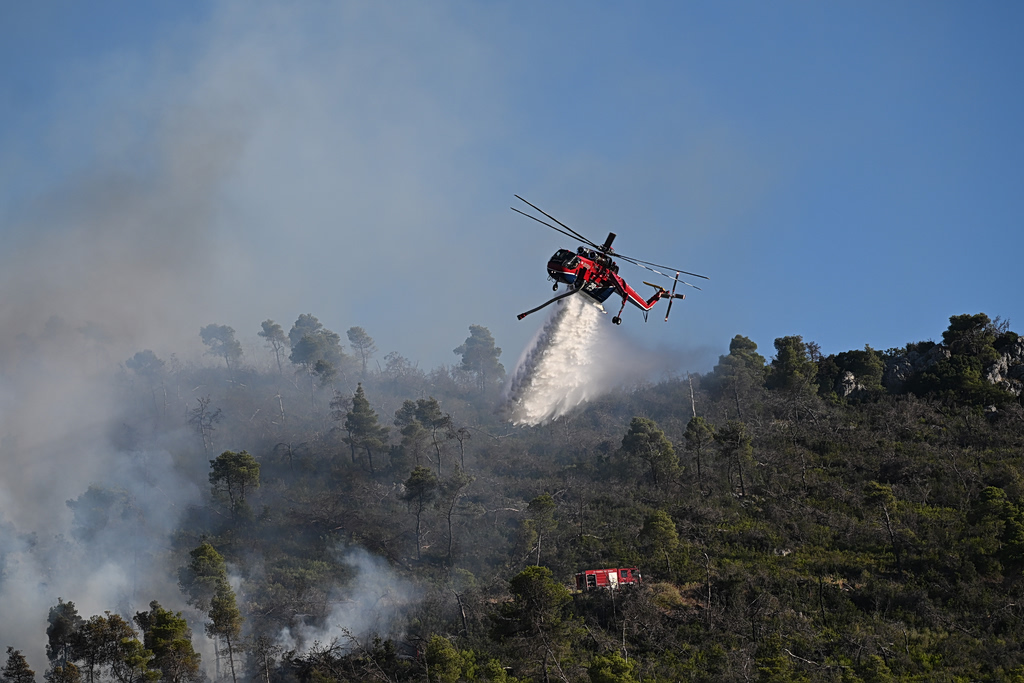
Wildfire in the area of Oinoi, Attica. Oinoi, Attica, Greece, July 5, 2026. / Πυρκαγιά στην περιοχή της Οινόης Αττικής. Οινόη Αττικής, Ελλάδα, 5 Ιουλίου 2026.
European support and a broader strategy
The European Union intends to step up its support for its member states’ efforts to combat forest fires. Between mid-July and the end of August, nearly 250 firefighters from several European countries will be stationed across Greece. Four amphibious firefighting aircraft will also be provided, while the wider European reserve includes 27 firefighting aircraft and 21 certified emergency response teams ready for cross-border deployment.
The additional resources form part of a broader European effort to address increasingly destructive wildfire seasons across southern Europe, where climate change has both lengthened fire seasons and increased the frequency of extreme weather. Domestically, the government continues to implement its multi-year “AIGIS” program, which aims to modernize Greece’s civil protection system through investments in new firefighting vehicles, aircraft, helicopters, drones and emergency management infrastructure.
Yet Greek authorities repeatedly stress that stronger firefighting capacity alone cannot prevent catastrophic seasons. Tournas stressed that prevention remains the first line of defense. According to his estimates, about 85 percent of Greece’s wildfires are caused by negligence, prompting the government to extend this year’s property-clearing deadline until June 22. Last year, around 730,000 cleaned properties were registered. “No matter how much the mechanism is strengthened, no matter how powerful it becomes – if we are not careful, if we do not work on prevention, which is everyone’s responsibility, then no mechanism can respond equally effectively to every incident,” the Minister for Climate Crisis and Civil Protection said a few days ago.
Wildfire expert warns of risks
Whether these expanded resources will prove sufficient during an especially demanding summer remains an open question, however. For many researchers, the answer depends less on the size of Greece’s firefighting fleet than on how the country’s strategy performs once weather conditions become truly extreme.
Wildfire scientist Dr. Gavriil Xanthopoulos, Research Director at the Institute of Mediterranean Forest Ecosystems of the Hellenic Agricultural Organization DIMITRA, believes that Greece is well prepared, but his assessment is more nuanced. He acknowledges that the government has significantly strengthened its operational capacity in the wake of recent catastrophic fires, but he also argues that the effectiveness of the country’s wildfire strategy will ultimately be determined not by the number of aircraft or firefighters alone, but by weather conditions, fuel management, and the ability to cope with multiple simultaneous emergencies.
“Every improvement in the country’s preparedness for combating forest fires raises the threshold at which the mechanism ‘fails’, meaning the point at which the difficulties – whether caused by extreme fire behavior or the occurrence of simultaneous difficult fires that expand beyond the original fire front – exceed its capabilities,” Xanthopoulos tells To Vima. History shows that greater preparedness does not eliminate the risk of catastrophic seasons, however. “This has happened repeatedly in the past, leading to very good results during relatively ‘easy’ years (for example 2002, 2003, 2004, 2005 and 2006), followed by a catastrophic year such as 2007.”
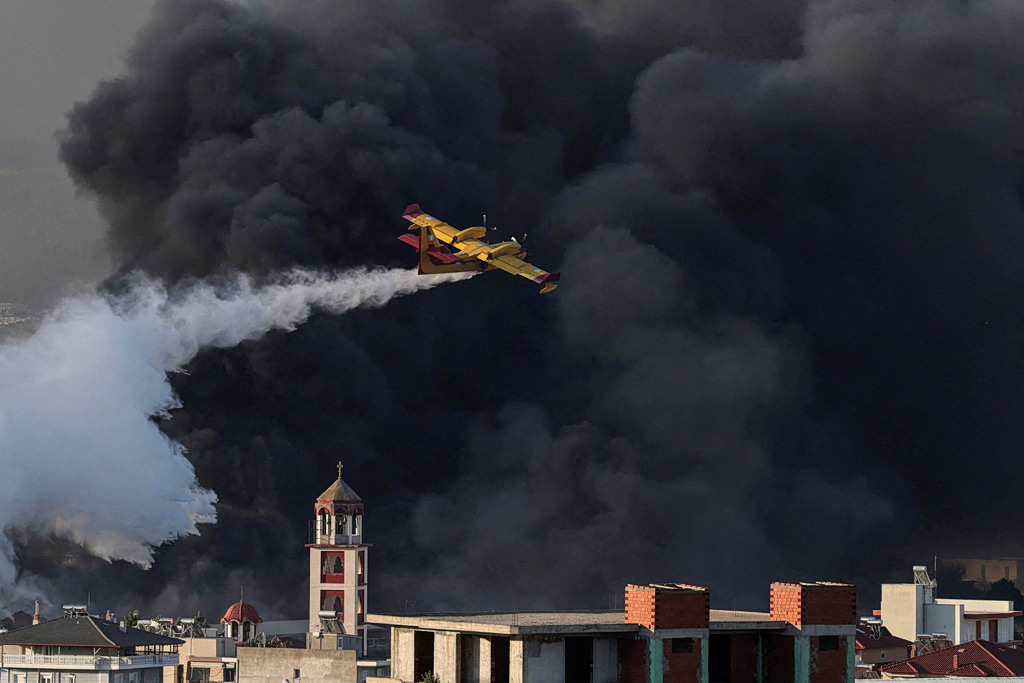
A Canadair firefighting plane drops water at a burning recycling factory in Oreokastro, on the outskirts of Thessaloniki, Greece, July 5, 2026. REUTERS/Alexandros Avramidis
The scientist argues that one of the most underestimated long-term challenges is what fire researchers describe as the “Fire Paradox”: the fact that successful fire suppression leads to an accumulation of combustible material, and therefore greater fire potential, when it is not accompanied by appropriate forest management.” For that reason, Xanthopoulos believes Greece’s prevention policies, such as the ANTINERO program, can contribute to a positive development. The program includes forest thinning, the removal of dead vegetation, and firebreaks. According to the government, Greece has invested 660 million euros in wildfire prevention over the past five years, including more than 80 million euros this year in peri-urban forests.
More aircraft – but also structural weaknesses
Despite acknowledging the progress, Xanthopoulos warns that there are still important structural weaknesses within Greece’s firefighting system, “mainly because they rely heavily on the use of numerous aircraft.” In his view, the constant deployment of aerial resources creates operational problems later in the season. “The continuous use of aircraft, even on fires that could easily be extinguished without them, is a burden, wastes resources and leads to firefighter negligence. During a difficult fire season, this burden results in fatigue, mechanical failures and possibly accidents. Firefighters are suddenly confronted by challenges to which they are not accustomed, due to the reliance on aircraft during suppression operations.”
Xanthopoulos also cautions that shortcomings in public awareness could become a serious vulnerability if Greece experiences an exceptionally difficult season. “Significant deficiencies in preventive work with the population could, I fear, play a negative role, should this year’s wildfire season become difficult.”
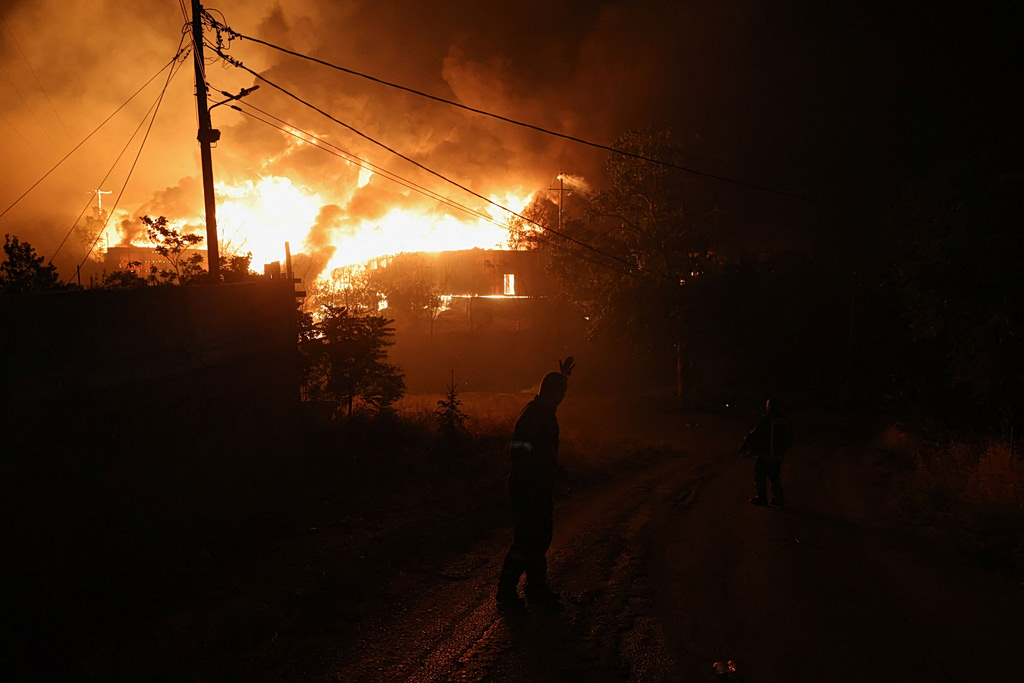
Smoke and flames rise at a burning factory, after a wildfire broke out near Oreokastro, on the outskirts of Thessaloniki, Greece, July 5, 2026. REUTERS/Alexandros Avramidis
Weather remains a decisive factor
Meteorological conditions may ultimately determine whether Greece experiences another catastrophic summer. Spring rainfalls have produced a relative abundance of herbaceous biomass – mainly grasses – which, given drought conditions and strong winds, can help fires spread rapidly, especially across agricultural land and grazing areas. As temperatures climb toward 40 degrees Celsius in several regions and seasonal winds gradually strengthen, this vegetation could quickly become highly combustible.
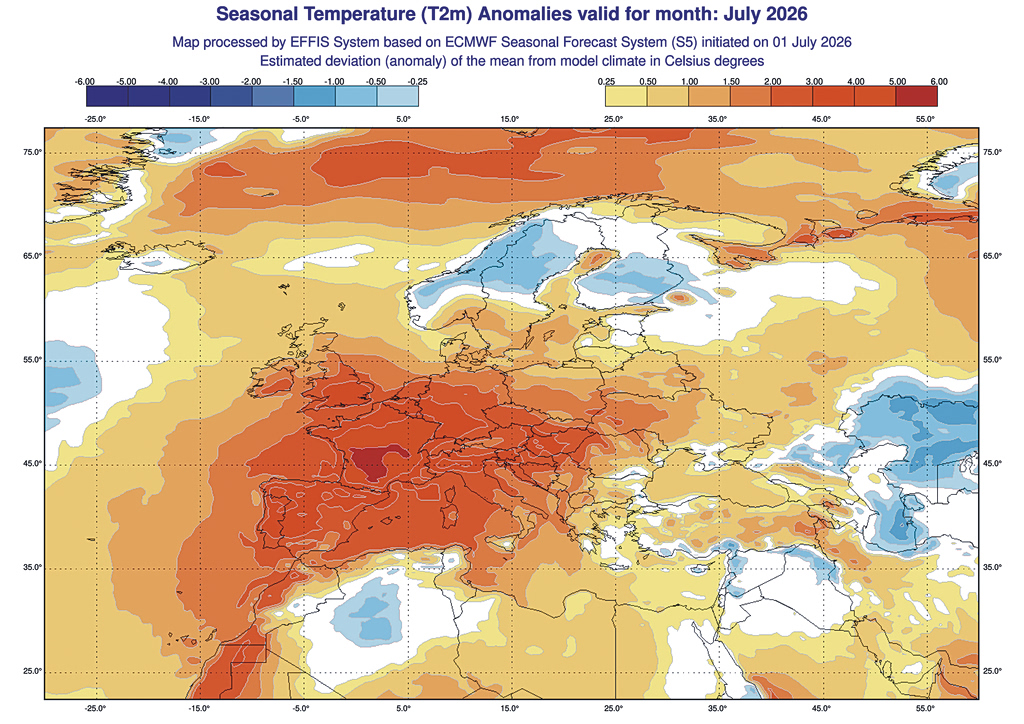
Meanwhile the World Meteorological Organization (WMO) warned in early July that El Niño conditions are expected to intensify in the coming months, increasing the likelihood of heatwaves, droughts and extreme weather events worldwide. “El Niño conditions are already underway […]. This will intensify the chances of drought and heavy rainfall and the risk of heatwaves on land and marine heatwaves in many regions of the world,” WMO Secretary-General Celeste Saulo announced. The Greek meteorological service Meteo likewise expects above-average temperatures across southern Europe, including Greece, in July.
Historically, according to Minister Tournas, Greece enters its most dangerous wildfire period in the second half of July, when prolonged heat, drought and the seasonal meltemi winds often combine to create a perfect storm of conditions.
Multiple fires remain the greatest challenge
Asked whether any specific region faces an exceptionally high wildfire risk, Xanthopoulos is cautious. “There are no indications suggesting particularly elevated fire danger in any specific area. However, it should be emphasized that in remote parts of the country where there are insufficient aircraft available for a large-scale initial attack, it is relatively likely that a fire will, under difficult conditions, develop into a major wildfire. I cite as examples Kythira in August 2017, which caught fire again in 2025, as well as numerous fires on Chios, Rhodes and elsewhere.”
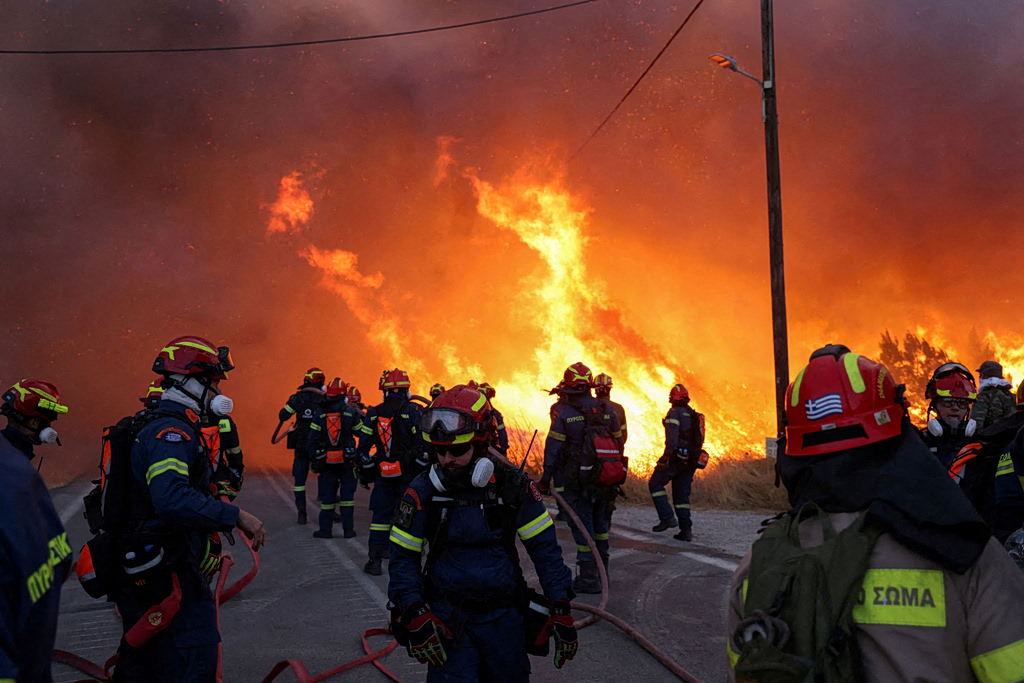
Firemen work to extinguish a wildfire, fanned by strong winds, which led to evacuation messages near the village of Karyes on Chios island, Greece, June 22, 2025. REUTERS/Kostas Anagnostou TPX IMAGES OF THE DAY
The Ministry for Climate Crisis and Civil Protection does, however, identify a broad corridor stretching from Thrace and eastern Thessaly through Evia, eastern Boeotia, Attica, the eastern Peloponnese and the eastern Aegean islands, which is particularly exposed to strong winds capable of driving rapid fire spread.
For Tournas, the objective is not simply to extinguish fires quickly, but primarily to prevent the number of simultaneous incidents from overwhelming the available resources. “When more than a certain number of incidents are ongoing at the same time, there is an enormous fragmentation of forces. And no mechanism, however well structured and organized, can effectively respond to such fragmentation,” he warned.
A fire season whose outcome remains uncertain
Xanthopoulos also identified several developments that could change the picture rapidly. “A negative development could occur if there are several consecutive days of intense and prolonged heat; if a strong, dry, cold front prevents the effective suppression of existing fires in July or August; if the 112 emergency number continues to be used ‘blindly’ to evacuate populations even when this is unnecessary; or if a technical failure leads to the failure of the initial attack on a difficult fire, or an accident involving aircraft, ground units or civilians impacts on the entire system and causes temporary paralysis.”
Whatever transpires, Greece has invested heavily in new equipment, surveillance systems and specialized units, substantially improving its capacity to respond to an average fire season. Whether those investments can withstand an extreme summer will become clear in the coming weeks, though their ultimate success will also hinge on the public acting responsibly.