 Μake us preferred on Google
KAMPALA, Uganda— Pavel Prigozhin was still learning the family guns-for-hire business when his father’s private jet exploded 28,000 feet over Russia.
Yevgeny Prigozhin ’s very public death, following his very public falling-out with President Vladimir Putin , left his son, Pavel, in charge of the world’s most notorious mercenary force . At age 25, he inherited Wagner Group, an empire of gunfighters, gold smugglers, opioid dealers, brewers and vodka distillers.
Once seen as a pampered playboy, he turned out to be a natural.
Pavel Prigozhin, now 28, not only salvaged but expanded operations in Wagner’s African stronghold, the Central African Republic, according to former Wagner associates, government officials, business people and researchers in Bangui, the capital city.
The Prigozhin family business, including both legitimate and criminal enterprises, generates more than $400 million a year, according to estimates by the Global Initiative Against Transnational Organized Crime, a Geneva-based think tank.
From a base in Bangui, Pavel Prigozhin and 500 or so mercenaries under his command have seized control of gold mines, according to the Global Initiative. They provide personal security to the president, Faustin-Archange Touadéra , and battle insurgent groups, making Prigozhin and his men indispensable.
Prigozhin has taken over his father’s arms trade, selling weaponry to rebel groups in Sudan and Libya, said researchers and regional military officials. Prigozhin and Wagner didn’t respond to a request for comment.
Wagner also makes and markets a vodka called Wa Wa Wa, or Fire and Fire, and a beer called Africa Ti L’Or, or Africa is Gold, and it controls much of the local market in tramadol, a prescription opioid.
“Wagner went from a powerful special-forces group to a disowned network which seems to be falling into organized crime,” said Lou Osborn, an investigator with the Switzerland-based nonprofit Inpact, which tracks Wagner’s activities in Africa. “I guess Pavel was authorized to keep operating, meaning he brokered an agreement with the Kremlin or was made nonthreatening.”
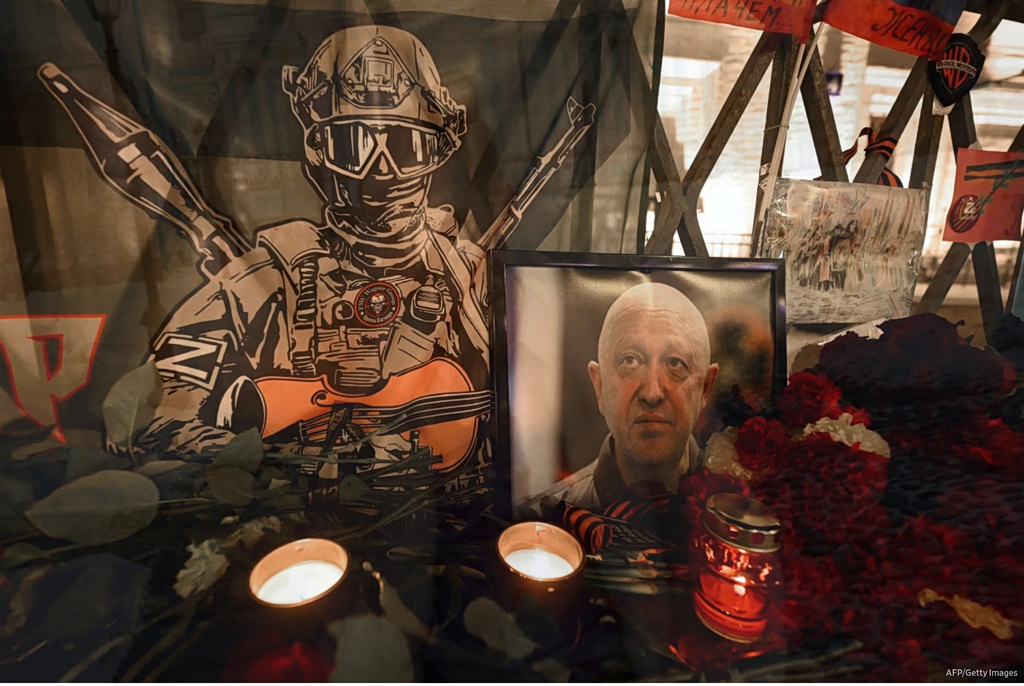
A portrait of Yevgeny Prigozhin at a makeshift memorial in Moscow on Aug. 24, 2023. NATALIA KOLESNIKOVA/Afp/Getty Images
Prigozhin’s success fulfilled the ambitions of his father, who spent years grooming him for the job. On social media, Prigozhin in his younger years posed aboard private jets or naked on the deck of his family’s superyacht, according to the Anti-Corruption Foundation, a nonprofit associated with Alexei Navalny , a Kremlin opposition figure who died in a Russian prison.
When Prigozhin turned 20, his father put him in charge of luxury villas and apartment buildings owned by the family holding company, researchers said. Yevgeny Prigozhin saw Pavel, who has two sisters, as his successor to head the family’s multibillion-dollar business interests, according to All Eyes on Wagner, a nonprofit investigative group, funded by OpenFacto, a French organization promoting information transparency.
Yevgeny Prigozhin massaged his son’s public persona to better suit a future mercenary boss. Photos posted to social media depicted Pavel Prigozhin as a Russian patriot—fighting in Syria’s civil war, where he was awarded Wagner’s Black Cross for bravery, and serving as an intelligence officer and drone operator in Ukraine.
“My son is already taking part in the special military operation,” Yevgeny Prigozhin boasted online six months into the 2022 Russian invasion of Ukraine.
He named his son as principal heir in his will, according to All Eyes on Wagner, which published it from a court filing, and Prigozhin took charge of Wagner after his father’s death.
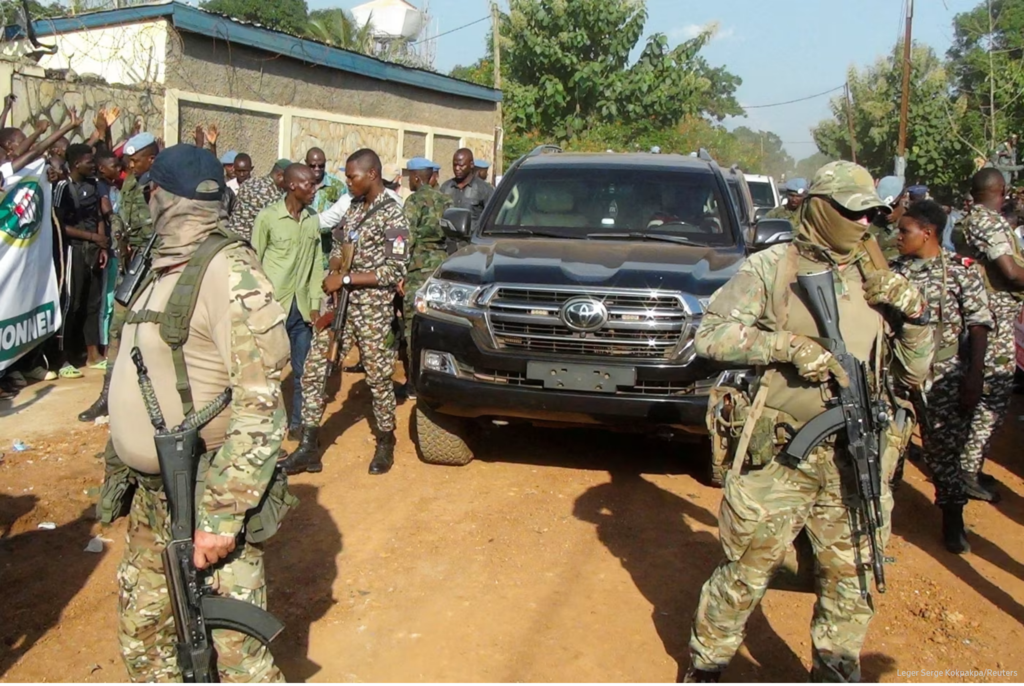
Pavel Prigozhin now travels regularly to Bangui from his home in St. Petersburg. He stays at the luxury Ledger Plaza, which is Wagner’s de facto headquarters when he is in the country. Masked fighters, armed with AK-47 rifles, guard the hotel’s perimeter and require even high-ranking government officials and diplomats to pass security checks before allowing them to meet with Prigozhin, said researchers and Central African officials.
With the government’s acquiescence, Prigozhin expanded production at the country’s largest gold mine, previously seized by his father, to the tune of $250 million a year, according to the Global Initiative.
“When it comes to operations in the Central African Republic, Pavel has followed in his father’s footsteps with ease,” said Nathalia Dukhan, a senior researcher with Global Initiative.
Central African Republic officials didn’t respond to a request for comment.
Retreat
Yevgeny Prigozhin, known as “Putin’s Chef” for having catered Kremlin events, leveraged high-level contacts to serve his grand ambitions for Wagner, the international mercenary force named for 19th-century German composer Richard Wagner. Fighters call themselves “musicians.”
He deployed fighters to protect the military junta in the West African country of Mali for $10 million a month, according to the Pentagon-funded Africa Center for Strategic Studies. His men secured oil wells in rebel-controlled areas of Libya. He provided surface-to-air missiles to Sudan’s Rapid Support Forces in exchange for gold bars.
Yevgeny Prigozhin at one point had as many as 5,000 men under his command in Africa, spanning six countries. The Central African Republic, about the size of Texas, was one of his most-successful ventures: selling minerals from seized mines with the proceeds split between Wagner and the government.
Wagner mercenaries, in turn, command army units that battle rebel groups seeking to dislodge Touadéra’s government in attacks on troops and civilians.
Wagner also took a significant role in the invasion of Ukraine and recruited prisoners to man the front lines when Russian military ranks were depleted.
In 2023, Yevgeny Prigozhin made the mistake of challenging Putin and Russian military leaders over their strategy in the war against Ukraine.
His mercenaries entered the Russian city of Rostov-on-Don, a strategic hub in the war, threatening to march on Moscow in what turned out to be a short-lived insurrection. In a video, backed by masked gunmen, he called Putin’s top military leaders geriatric clowns. “Our men die because you treat them like meat,” he said. “No ammo, no plans.”
He quickly halted the march, agreeing to a deal that spared him and his fighters. Two months later, Yevgeny Prigozhin’s plane went down, killing him, his top military commander and eight others.
After his death, the Kremlin seized control of Wagner’s enterprises in Russia and created the Africa Corps to fold Wagner operations into the Russian Ministry of Defense. Unlike Wagner, which functioned as a semiprivate military company serving the Kremlin’s geopolitical interests, Africa Corps reports directly to Russian defense officials and military intelligence.
Pavel Prigozhin took quick steps to secure the Central African Republic from Putin’s reach. He flew to Bangui to meet with Wagner’s local frontman, Dmitry Sytii , Yevgeny Prigozhin’s former confidant, and Denis Suprunov, Wagner’s local military commander, said researchers and security officials. Prigozhin huddled with senior government officials in hotels, restaurants and offices.
Touadéra, the president, sent a diplomatic message to Moscow, asking the Kremlin not to replace Wagner fighters with Russian military in his country, said diplomats and researchers. Touadéra helped Prigozhin cement his position, integrating Wagner mercenaries into local police, the army and intelligence units.
“Bangui fought harder than any other capital to maintain the regime-protection-for-minerals arrangement precisely because it had worked so well,” said Justyna Gudzowska, executive director of the Sentry, a Washington-based investigative group,
Prigozhin summoned top Wagner and government officials to his Bangui hotel in April to plan how best to maintain the flow of gold to overseas markets, according to government officials and former Wagner associates. The minister of mines, Rufin Benam Beltoungou, and Wagner officials discussed ways to avoid international scrutiny, bypassing gold markets in the United Arab Emirates, government officials said.
Beltoungou and the Central African Republic mines ministry didn’t respond to a request for comment.
After hours of discussions, Beltoungou, a close Wagner ally, agreed to help Prigozhin move gold to international markets by issuing documents identifying it as government property, the officials said.
Over the past three months, these gold shipments have gone to Belarus, a close ally of the Kremlin, according to officials and local researchers.
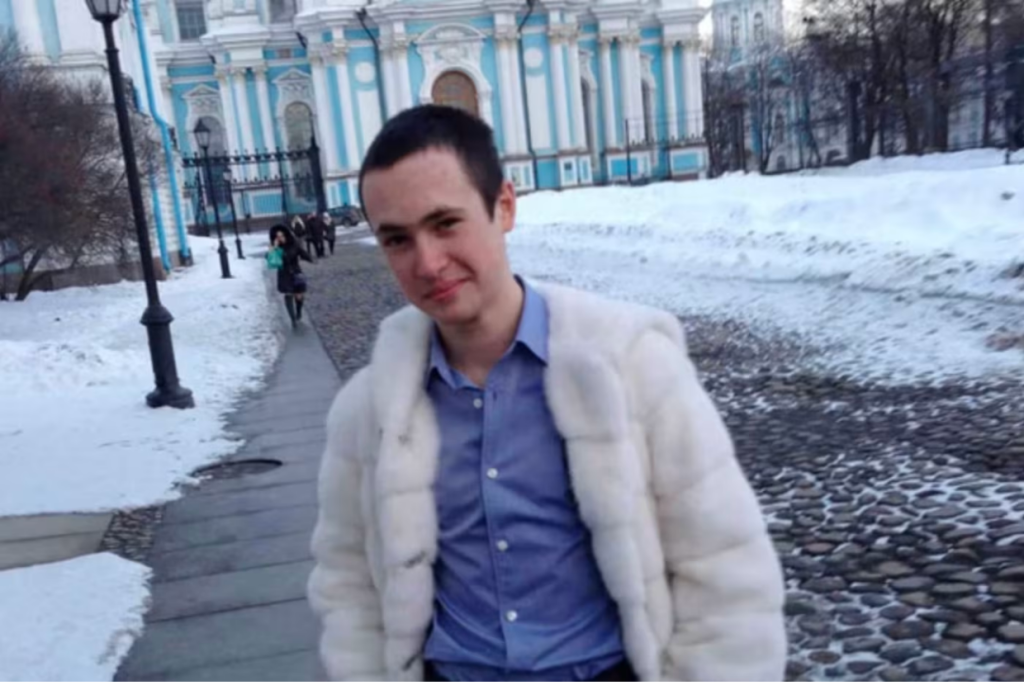
Undated photo of Pavel Prigozhin at the Smolny Cathedral in St. Petersburg, Russia.
Drug deal
Sytii, now Prigozhin’s second-in-command, runs Wagner-funded radio stations that broadcast anti-Western propaganda designed to bolster Touadéra. The president won a third term in December in an election that international monitors said was neither free nor fair. Critics refer to Touadéra as “President Wagner” because of the group’s alleged influence.
On the streets of Bangui, Wagner-sponsored billboards glorify Russia as the partner-of-choice for African countries, according to residents and local researchers, part of a campaign to stay in Putin’s good graces. On Wagner-sponsored radio stations, commentators praise Russia’s influence while blasting Western countries.
Under Prigozhin, Wagner has swelled its ranks with captured Central African rebels, men who switched allegiances and are widely known as “Black Russians.”
Wagner has also added drug-dealing to its portfolio. Bangui residents shared photos and videos of masked Wagner fighters, accompanied by local police, detaining people allegedly selling drugs outside of Wagner’s network.
One day this summer, masked Wagner fighters in local police uniforms arrived at a Bangui street known for the sale of opioids, including tramadol. They entered a shop belonging to Mahamat Abderman, who previously ran their distribution network but had since gone into business for himself, according to witness accounts.
Abderman bolted out a rear door, and two men chased him. He ran a short distance then tripped and fell. The fighters beat him, and his relatives say he hasn’t been seen since. “We don’t know whether he is alive or dead,” one relative said.
Pro-government militias aligned with Wagner are responsible for extrajudicial killings, kidnappings and targeted attacks on wildcat miners encroaching on Wagner gold concessions, according to local activists.
In April, while Prigozhin stayed at the hotel in Bangui, Wagner fighters in Russian helicopters conducted aerial surveillance of wildcat gold-mining operations near the South Sudan border. Local researchers say he has his eye on fresh gold reserves.