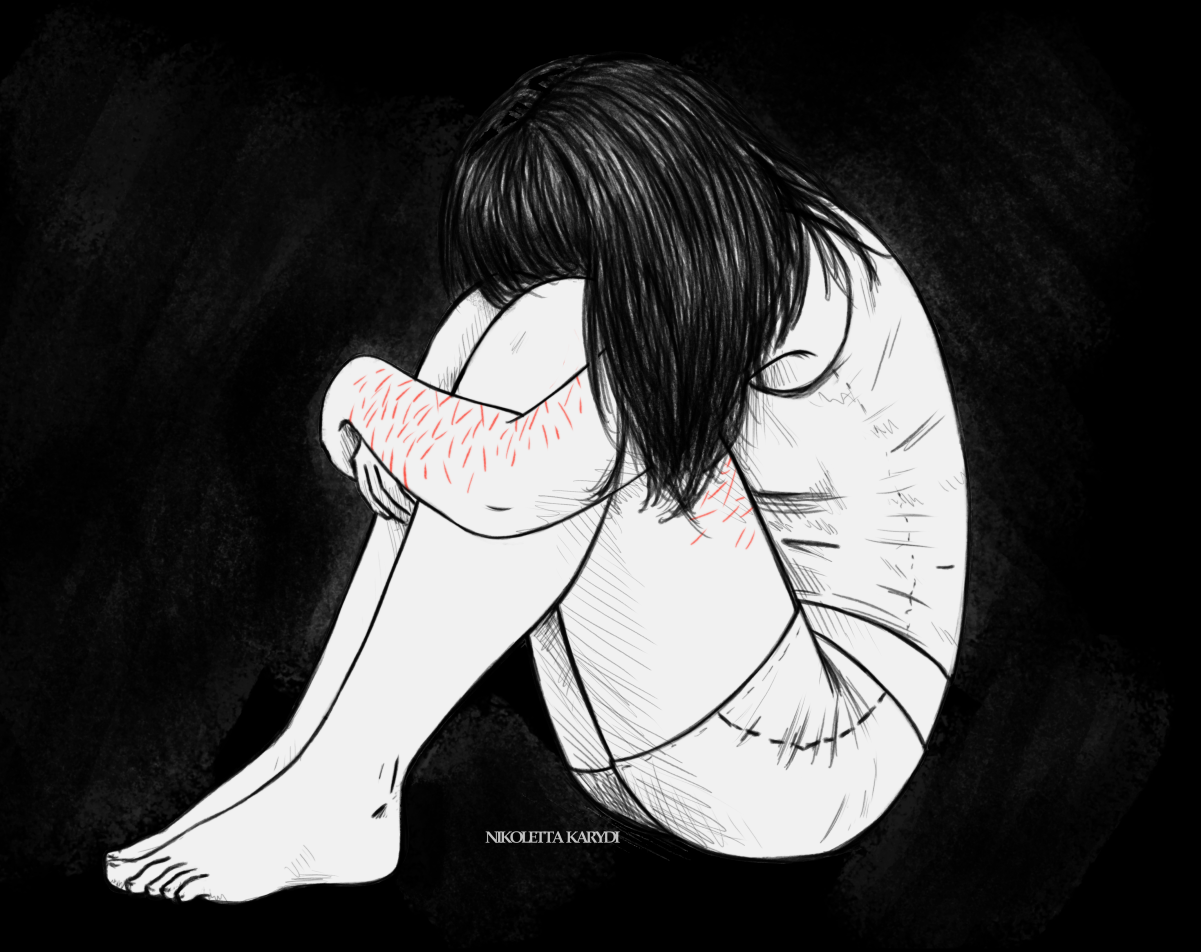
“I cut myself to punish my body,” says Elena T., a young university undergraduate from Athens. The phenomenon known as self-injury (SI), or non-suicidal self-injury (NSSI), refers to the intentional destruction of body tissue without suicidal intent. Self-injurious behavior among young people has been increasing alarmingly in recent years.
Hidden pain: why young people self-harm
Renowned Greek psychiatrist Professor Antonios Dakanalis notes that, internationally, 14–25% of adolescents and young adults up to the age of 24 are estimated to have self-harmed at least once. In Greece, the rate rises to around 25% among adolescents, positioning the country at the upper end of the global spectrum. “Of particular concern is the overrepresentation of girls aged 13–15, among whom 33.5% have self-harmed,” Dakanalis says.
Clinical practice and research indicate that self-harming behaviors are prevalent among adolescents, including those under the age of 13, the professor notes. These behaviors may involve cutting their skin, burning themselves, pulling out their hair, or injuring their bodies with sharp objects—actions that are usually intentional and repeated, but initially occur without the intention of suicide.
Inflicting pain on oneself often represents a dysfunctional way of coping with intense emotions such as anxiety, anger, or emotional pain, suggests Dakanalis. Elena, who shares her self-traumatizing experience, says that a mixture of deep emotional pain and anger is what led her to “punish her body.”
Triggers beneath the surface: family, trauma, and pressure
“It all started when I was 17 and I was diagnosed with an autoimmune disorder, a form of Crohn’s disease,” she recalls. “When the doctor explained how the condition would affect my whole life, and the sacrifices I would need to make to keep it under control, my emotional stress was so severe, I dug my nails into my palms so hard they cut into my skin. For some reason, the pain provided relief,” she explains.
The professor suggests that when a young person experiences intense psychological distress such as insecurity, anger, guilt, emptiness, or deep disappointment—emotions they cannot always express in words—they may resort to self-harm to release or regulate emotional pain.
“Physical pain can provide temporary relief or a feeling of being in control. In some cases, the behavior may even develop addictive characteristics, because it offers short-term emotional relief,” he explains.
The causes of self-harm are multifactorial. They are associated with anxiety, depressive symptoms, low self-esteem, difficulty managing intense emotions, or traumatic experiences such as abuse or the loss of a significant other.
Experiences such as bullying, social rejection, and family conflict can also significantly increase vulnerability.
Anastasios G., a young architect who has long been battling his self-injurious behavior, attributes his “addiction,” as he calls it, to his overbearing family.
Silence and stigma: barriers to seeking help
“Although I was a straight-A student all through school, I could never seem to live up to my father’s high expectations of what a ‘perfect son’ should be like,” he says. “I became obsessed with his approval, but only ever saw disappointment in his eyes,” he adds.
The professor points out that self-harm does not occur only in families with serious dysfunction; it can appear in any family and even in children who otherwise seem to function normally. Anastasios says that to the outside world “I was a perfectly normal kid,” but “when I locked the door of my room, I would silently use a small penknife or some other sharp object to scratch the inner part of my arms and punish myself for not being ‘perfect’.”
The digital environment also appears to play a role in intensifying the problem. Many young people encounter self-harm content on social media, where images or narratives can sometimes act as imitation triggers or contribute to the normalization of the behavior, Dakanalis explains.
But to what extent do young people who self-harm seek help from professionals, and how accessible are mental health services in Greece?
Elena admits that she didn’t seek professional help or psychotherapy until she found the courage to confess what was going on to a friend. Significantly, she only did so when the cutting marks on her arms were accidentally revealed. “I tried very hard to cover them up, even using make-up, especially during the warmer months when we wear lighter clothing,” she says.
A system under strain: gaps in mental health support
Self-harming behavior is not a diagnosis in itself, but a symptom of deeper psychological distress, the professor explains, adding that evaluation by a mental health professional is essential to identify underlying difficulties and design an appropriate therapeutic intervention.
“However, many young people who self-harm do not seek help, generally because they feel ashamed or frightened or have difficulty expressing their emotions,” notes the psychiatrist.
Elena has yet to reveal to her parents that the therapy they are paying for covers more than just her autoimmune condition. Beyond managing her physical health, the sessions also help her address the harm she inflicts on her own body. “I don’t think my parents would understand why it started; my mother would definitely collapse,” she says.
For his part, Anastasios says he didn’t visit a psychotherapist until he was able to pay for the sessions on his own. “The thought of turning to my parents was out of the question, given that I consider them part of the problem. What’s more, my condition is ‘taboo’ in their social circle,” he stresses.
Unfortunately, according to the professor, Greece lacks the necessary services, funding, and prevention initiatives to address this phenomenon.
Breaking the cycle: early intervention and awareness
Research indicates that most young people try to cope with their pain alone. Public child and adolescent mental health services remain inaccessible for many due to a shortage of specialized professionals, geographical disparities, and limited funding. As a result, treatment in Greece is largely confined to the costly private sector, says Dakanalis.
Services such as 24-hour helplines (1018, 1056, etc.) providing individuals with anonymous and free counseling and guidance are available. However, these services can only ever play a supportive role; they cannot replace systematic therapy.
Early recognition and supportive interventions are crucial, stresses the professor. Families and schools can play a crucial role in the former, but parents and teachers need to be trained to spot physical signs such as frequent cuts and wounds or the use of bandages or band-aids to hide injuries. Behavioral changes like withdrawal from socializing, spending more time alone, or a worsening school performance can also serve as alarm bells. Emotional shifts and general signs of psychological distress such as sudden mood changes or frequent outbursts of anger, sadness, or anxiety should never be ignored, notes Dakanalis.
Early intervention can reduce the risk of self-harm and strengthen psychological resilience. The professor emphasizes that measures such as introducing psycho-education programs in schools can help strengthen resilience and reduce the stigma surrounding mental health.
The challenge is significant, but with systematic effort and proper support, public policy and services can become effective tools for prevention and support, Dakanalis concludes.