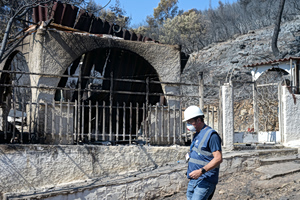
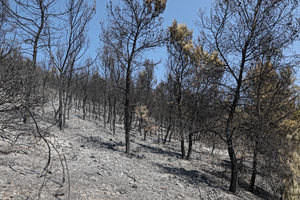
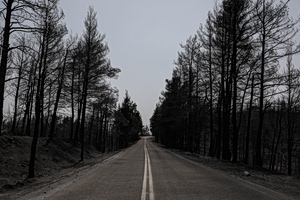
Tuesday marked the third day that Sofia Bleka had been on Salamina, working in the areas affected by the recent devastating wildfires that claimed the lives of two elderly residents. In both Peristeria and Selinia, residents are taking stock of the wounds left behind by the flames. Some of those wounds, however, are “invisible” and cannot be measured in material terms.
Bleka, a social worker with the Hellenic Red Cross, specializes in psychological first aid. She knows better than most that beyond the physical destruction caused by a wildfire, the days that follow can leave people with psychological or social trauma that, in some cases, can take a long time to heal.
“The important thing is that these people do not feel alone,” she tells TA NEA, a few hours after returning from the field.
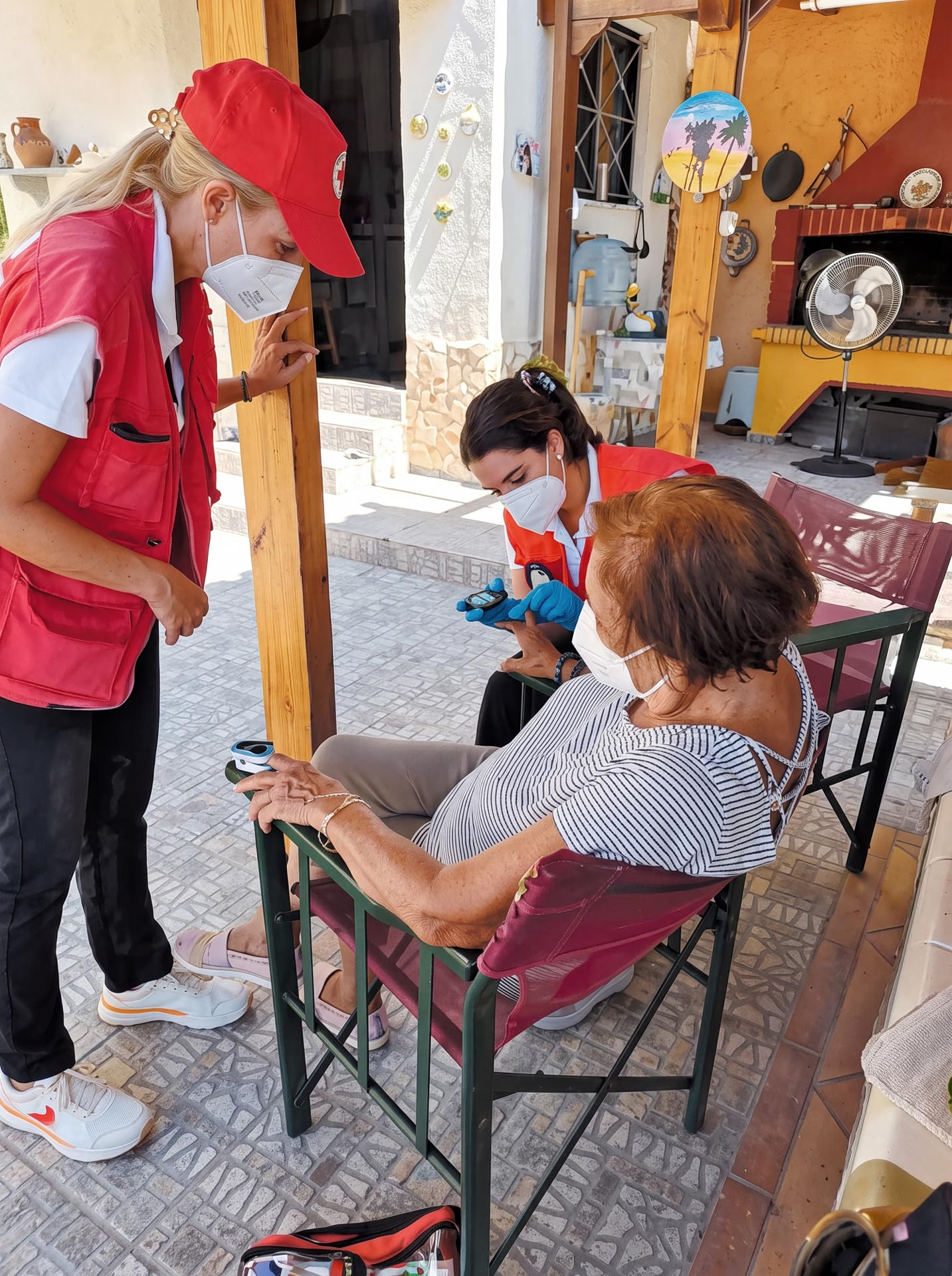
After a natural disaster, both those directly affected and those who witnessed the destruction can experience intense stress, insecurity and uncertainty about the future.
“These people are trying to process what happened and organize their next steps and their daily lives. In the aftermath, it is important for them to regain a sense of security, to feel that they can get back on their feet. We are there beside them, whatever they may need.”
The Resilience of Those Affected
For those working on the front lines, what stands out is the resilience of the people affected, something the Red Cross social worker says was particularly evident on Salamina.
“Today, they opened their homes to us and told us that no one had embraced them the way we did. It is that directness, that simple question: ‘How can we help?’”
Such a difficult situation also brings a local community together, fostering solidarity. As Bleka describes it, there are certainly moments when people break down, but what ultimately remains is a sense of fulfillment and acceptance.
In Peristeria in particular, where the elderly couple lost their lives, Red Cross workers could see how deeply the loss of life had affected residents.
“Residents were putting any material losses of their own ‘second’ to the loss of their fellow residents’ lives, most of whom they knew as members of the local community,” she says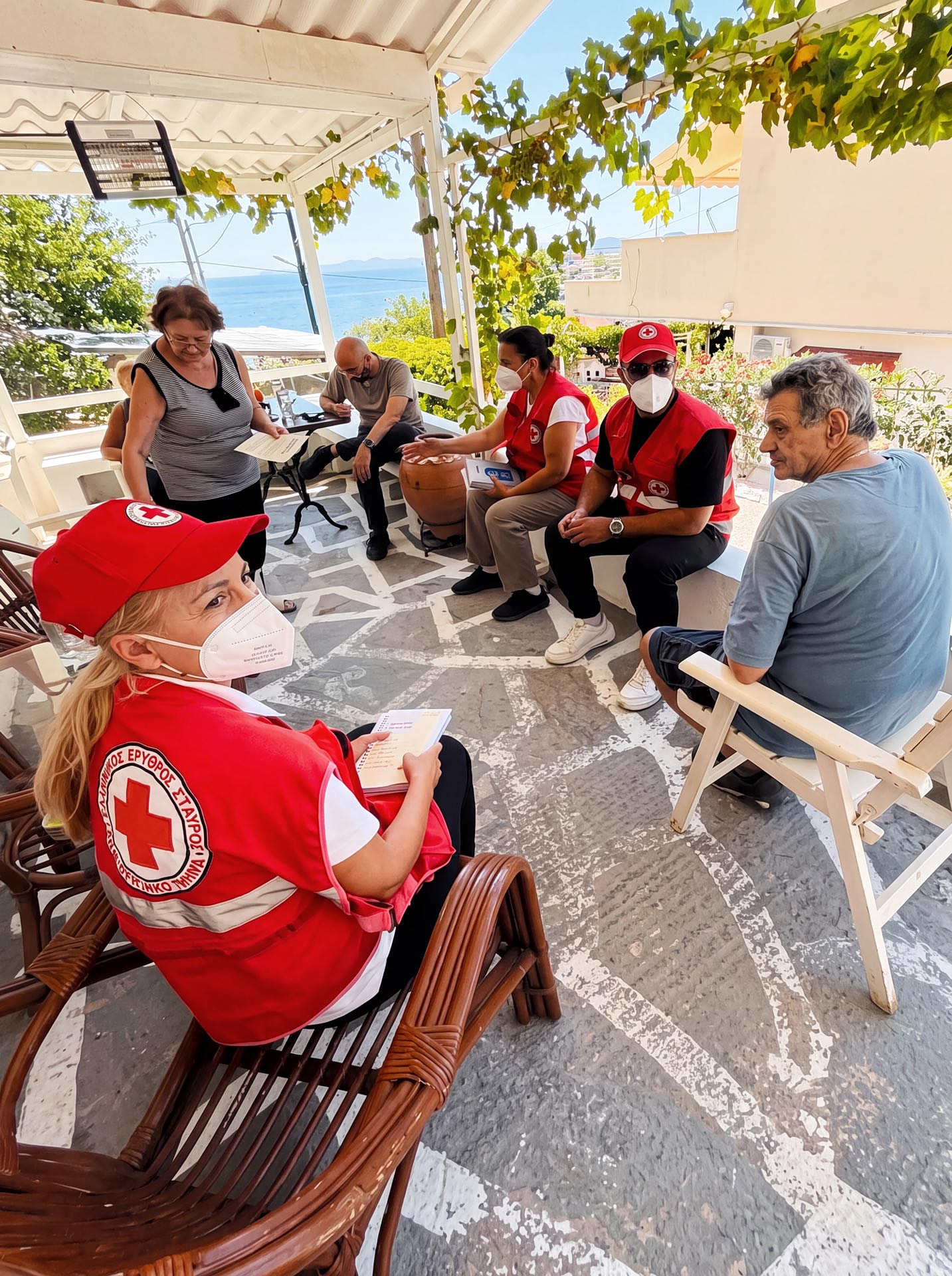
One of the main tools used by the Hellenic Red Cross psychosocial support team is what is known as psychological first aid. As Bleka, who is both a social worker and trainer, explains, the program is designed to provide immediate emotional support and guide those affected on what they can do to regain a sense of control.
“It is by no means psychotherapy. It is the first, immediate human contact that helps people cope with the shock,” she stresses.
She adds that, often, people simply need to recount what happened to them — either so that someone will listen or so that they themselves can hear and process their own experience.
The Response Team and the Thread Connecting Tragedies
Bleka has been working in the field with the Red Cross for roughly three years, since its social and psychological support team began taking a more active role in disaster response. Beyond Salamina, she has worked in fire-stricken areas including Porto Germeno, Rethymno and elsewhere.
The Hellenic Red Cross team consists of about six psychologists and social workers, along with a driver. It works closely with the social services of local municipalities to provide as much assistance as possible to people affected by each natural disaster.
From her experience so far, Bleka says there is an invisible thread connecting these different tragedies: loss.
“Whether it is the loss of a person, a home, or even something as simple as a wallet, the fundamental emotion is the same. No one should be left alone in such a situation.”
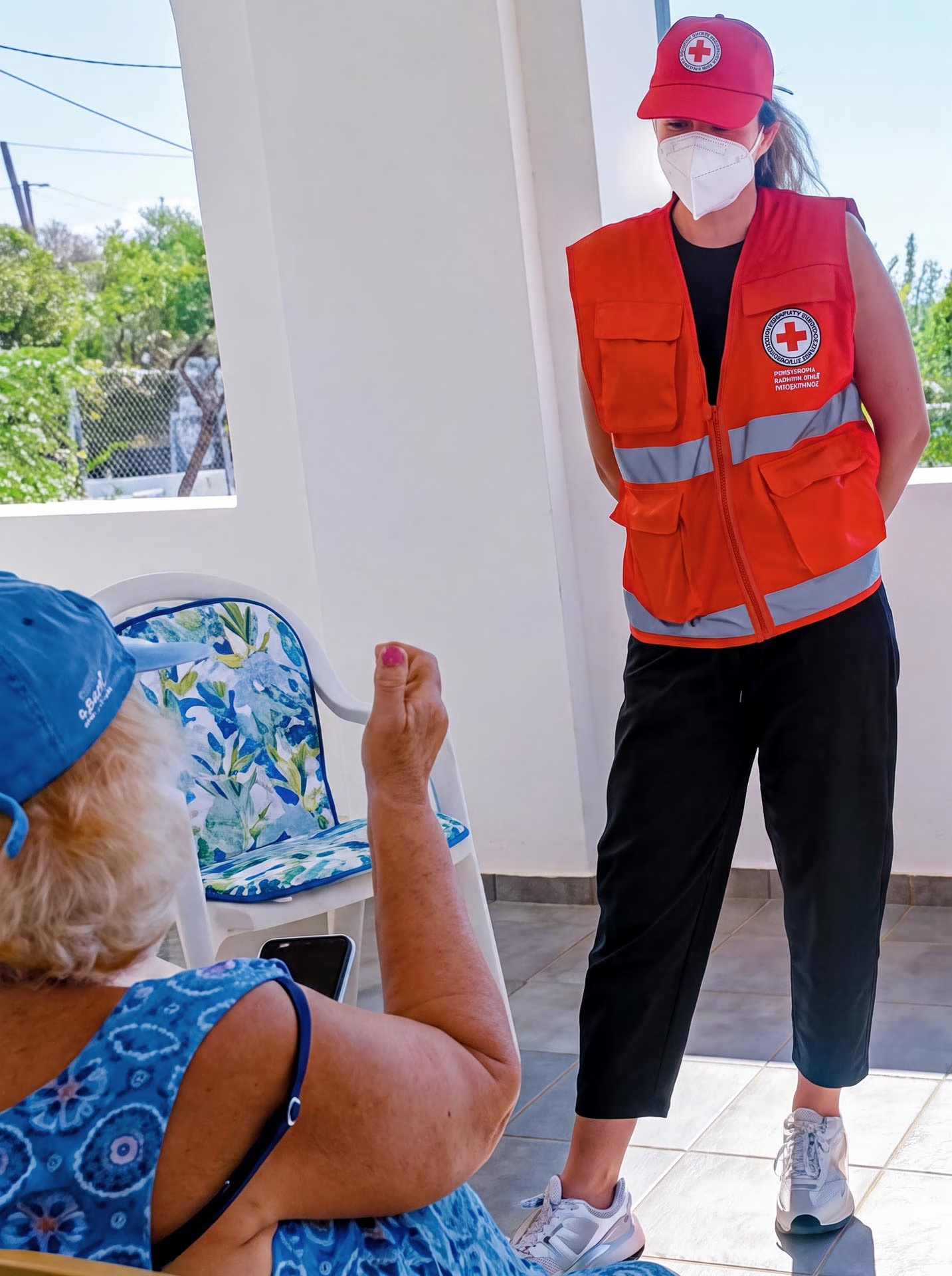
What Bleka wants to emphasize is that beyond the material destruction caused by a wildfire, there are psychological wounds that can persist — particularly among children and older people.
“Older people are a group who, if their home is destroyed, for example, will find it much more difficult to believe that there is hope for the next day.”
For children, it can be even more difficult because a traumatic experience may follow them, leaving an “imprint”, for the rest of their lives.
“They may never find themselves in the same situation again, but the event has been etched into their memory. Any other news story — even if it does not directly concern them, could bring that memory back and make them relive everything they experienced.”
In essence, it is a wound that remains open.