 Μake us preferred on Google
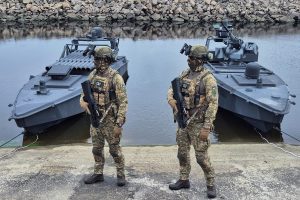
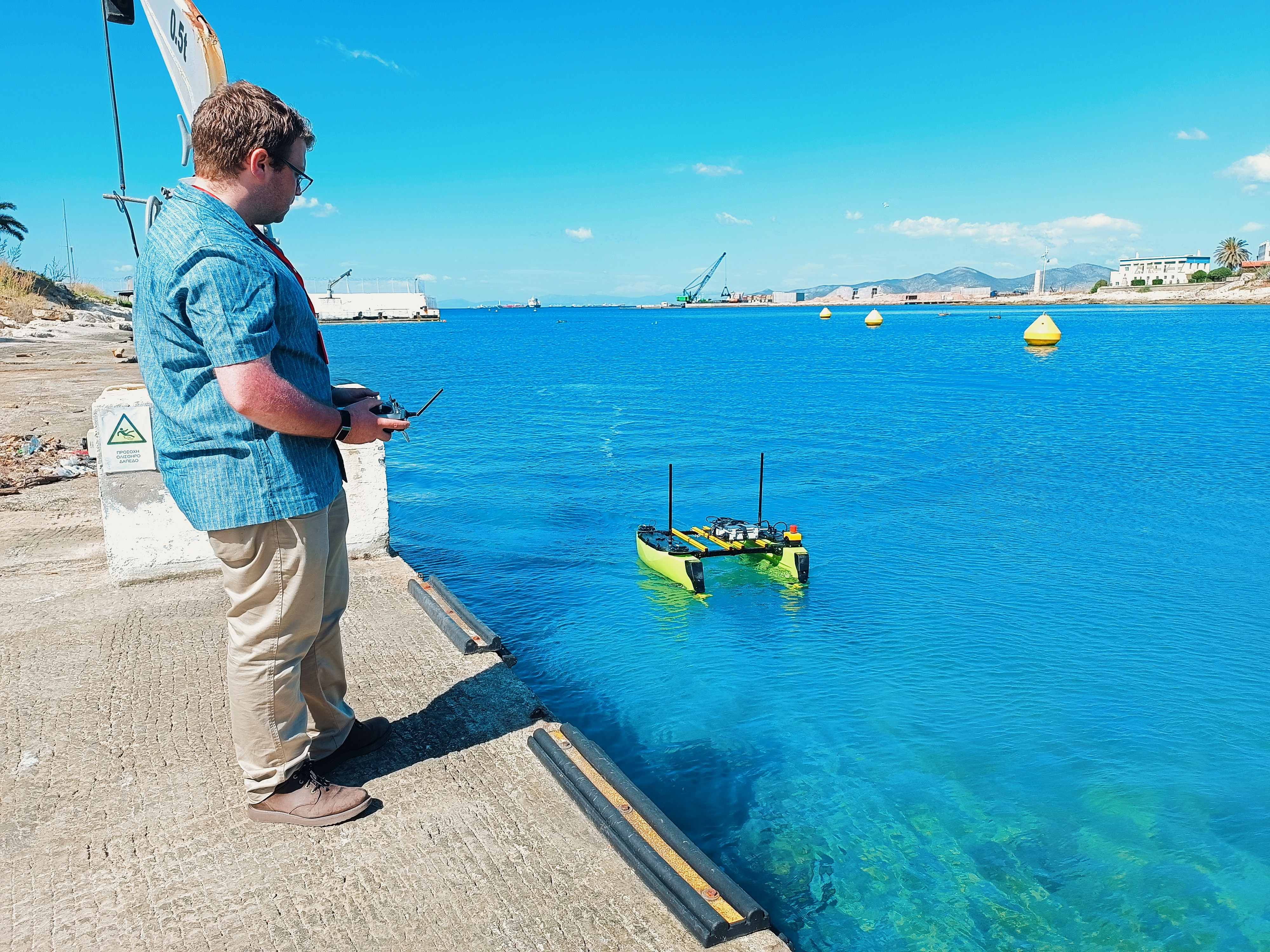
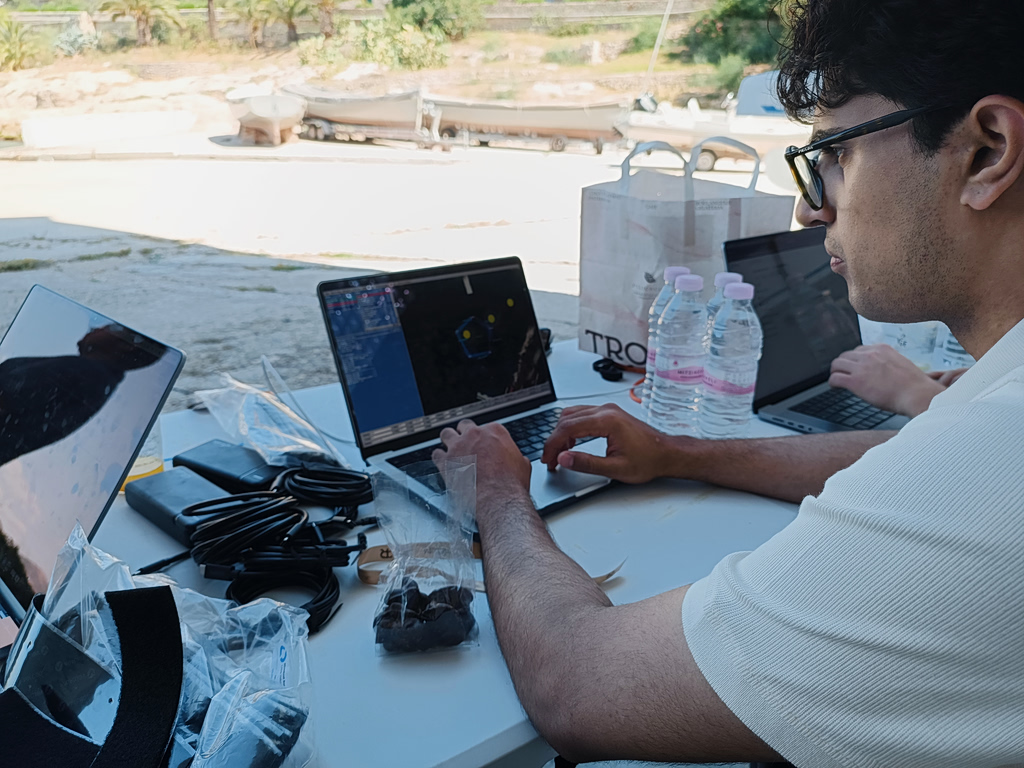
 Karan, Jeremy, and Ray, three PhD students from MIT (the renowned Massachusetts Institute of Technology), are watching on their screens the circular movement of marine robots in the small harbor in front of them. The robots operate autonomously, yet with a single command the trio can take control. Although they usually carry out their tests in the murky waters of the Charles River, which separates Cambridge, Massachusetts, from downtown Boston, in recent days they have been doing so in the crystal-clear waters of Greece. And they are not alone.
Michael Triantafyllou, director of MIT Sea Grant (the Institute’s research and educational program that combines ocean sciences with advanced technology), has been at the Hellenic Naval Academy in Piraeus for the past few weeks, delivering two specialized courses on autonomous marine robots, together with his colleagues David Barrett, Andrew Bennett, and Michael Benjamin. The latter, as he walks down to the small harbor to meet the students, explains to To Vima how these robots, which at that moment are sailing across the wind-rippled sea, can also assist in rescuing swimmers. “If an engineer designs a good system, these small vessels can do anything,” Karan adds a few minutes later.
American knowledge in Greek hands
Michael Triantafyllou and his collaborators aim to transfer the knowledge of this leading American institution into Greek hands. In the pioneering MIT Sea Grant program in Boston, which focuses on the ocean, the design of autonomous marine robots is part of everyday work. Triantafyllou wants this to become the case in Greece as well. “I had various Greek visitors at MIT, where we build different submarines, autonomous small vessels, we design for large ships, and we conduct testing for various companies. Everyone asked us to bring this technology to Greece because it does not exist,” Triantafyllou tells To Vima.
Thus, after a year and a half of discussions and with the valuable support of the Ministry of National Defense and the Hellenic Centre for Defense Innovation (ELKAK), the distinguished professor arrived in Greece with his colleagues to share their knowledge with company executives and personnel from the Navy, Air Force, and Army. The main goal, however, is to foster startups in Greece focused on marine autonomous robots.
“What we are doing now is two courses that we have condensed,” says Triantafyllou. “We mainly have engineers who already know how to program. And to them we show how robots are made, how you build them, how you design their behavior. Of course, we also focus on autonomy. The course does not resemble a lecture; it is interactive. The trainees test whatever they build at sea.” A few meters away, Michael Benjamin was teaching in the packed hall of the Naval Academy before heading back down with the trainees to the harbor.
Karan, who continues watching the autonomous robots on his screen, stresses that his role as a PhD candidate is to help members of the Navy, as well as civilians, understand maritime autonomy and what it can achieve. In the first phase, participants learned how to design and build a marine robot from scratch, giving it specific behaviors. In the second phase, the emphasis shifts to pure autonomy. Although the word “robot” may evoke a humanoid machine, in the “language” of the sea it refers to a vessel, an autonomous ship, or a submarine.
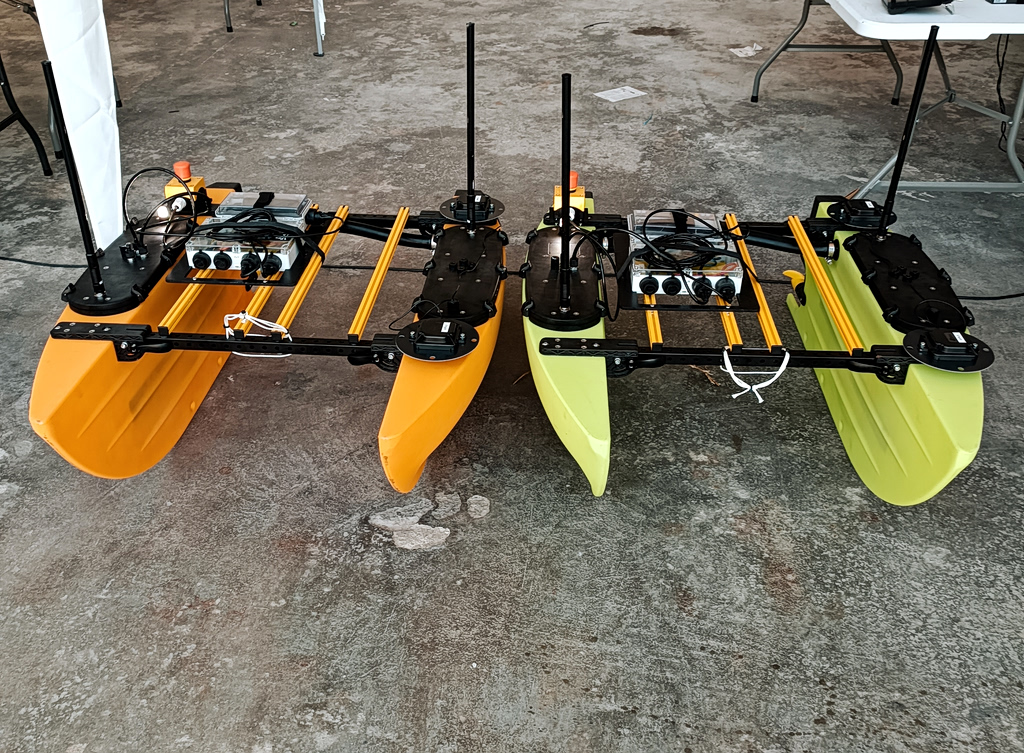
The applications of the technology shared by Triantafyllou at the Naval Academy through the Triton Labs program, which began in early June and will conclude at the end of the month, are numerous: from mapping and locating objects lost on the seabed to inspecting severed underwater cables. At the same time, the Armed Forces gain personnel trained in modern technologies, while everything built remains at the Academy. “This is really important for us, because we can work with these machines,” says Naval Academy professor Andreas Tsigkopoulos to To Vima.
As for company executives attending the courses, the knowledge they acquire can be used in various ways. “One of them is cleaning ships with small autonomous underwater vehicles that will clean hulls while they are in port, saving time and huge maintenance costs,” Triantafyllou notes. “It also opens the way for electrification and autonomy in shipping. Many Greek ferries operating short, fixed routes could become electric, dramatically reducing emissions.” Even in tourism, devices such as the now-popular electric boards that reach relatively high speeds over the sea are a very good starting point for Greek islands and recreation.
Opportunity for the creation of new companies
The real goal of these courses is not to confine the technology exclusively within military laboratories, but to serve as a trigger for the creation of new companies. “Countries such as Australia, Israel, England, and even Croatia have already developed strong industries based on this model—why shouldn’t we do the same?” wonders the MIT professor shortly before joining Michael Benjamin in the Naval Academy classroom. “Large companies cannot focus heavily on these technologies, but that is precisely where all the progress lies, and where small and flexible startups can dominate.”
Of course, challenges remain significant, mainly regarding infrastructure. To support the electrification of ships, major changes in ports are required. At present, the port of Piraeus does not have the electrical capacity to supply even one cruise ship, let alone dozens of ferries every morning. The first and most critical step, however, is building the foundation. Greece has capable scientists and an electronics industry that can be oriented toward the maritime sector, and the MIT Sea Grant courses in Greece point the way. “Instead of wondering whether we should trust Chinese, American, or Australian technology, it is time to prove that we can build it ourselves,” Triantafyllou adds. For now, Ray, one of the three MIT PhD candidates in the country, releases a small vessel into the sea. “Did you know that only 20 % of the ocean has been mapped? With these little robots, we can increase that percentage,” he says.