My name is Lars Schuster. I am 18 years old and I am a student in a German high school. I have my whole life ahead of me, with a host of opportunities to seize and adventures to experience. However, I am also a little scared about what might lie ahead for me, my family, my Europe, and the world at large.
In other words, I am pessimistic about the future. And the same is true for many other young people—and not without reason.
There are a whole host of crises ongoing right now. There has been war in Europe since 24 February 2022, when one country attacked another for the first time since World War II.
Millions of people have been forced to flee their homelands as a result, and countless homes and civilian lives have fallen victim to Russia’s brutal war in Ukraine. European defense structures have also been left in ruins, including the Helsinki Accords, which stipulate that countries must respect each others’ borders. This crucial treaty has now been dismantled, and Russia has already expressed claims in relation to the Baltic countries and to Poland.
We are also facing another major geopolitical crisis: his name is Donald Trump. Under Trump, the United States is being transformed from a democracy into an authoritarian regime. And it, too, is making territorial claims on other countries on the basis of bizarre historical “links” that don’t actually exist. Moreover, America is now applying a tariff policy that makes it an unreliable partner at best and, at worst, a serious threat to Europe’s economies.
Extreme, anti-democratic/anti-European, far-right, pro-Russian parties and political movements are also on the rise in Europe. Even in Germany, the far-right AfD party continues to go from strength to strength, coming in second in February’s state elections.
The AfD chairwoman, Alice Weidel, has called Adolf Hitler a “socialist, communist guy” in a now (im)famous interview with Elon Musk. In Austria, the FPÖ—a party similar to the AfD, but even more extreme—actually came first in the most recent national elections. The rise of these parties is perhaps the most terrifying thing of all for me.
But what gives me the most reason to be pessimistic is the looming climate crisis, which will have truly devastating consequences if it is not resolved soon. There has been so much climate-related destruction already: from the forest fires in Greece and Spain to the deadly flooding in Germany’s Aar Valley. The climate crisis and the related biodiversity crisis carry with them the threat of extinction—for Europe, for the European Union, but also for humankind as a whole.
And their impacts will exacerbate all the other crises we talked about. This is just a short and highly personal list of the crises and challenges that are making many young Europeans feel so pessimistic and discouraged about the future. There is no real goal or guarantee that things will work themselves out—quite the opposite, in fact. A lot gets done simply because it has to be.
And I’d like to pose a question at this point: Doesn’t the belief that everything’s going to be all right lie the very heart of what it means to be young? The conviction that tomorrow’s world will be better than today’s, that there will be more opportunities, and that life will be better for future generations? Great expectations for the future, not doom and gloom. But I feel most people are convinced that the opposite is true, not just the youth. Isn’t that what we all want? To look forward to a better future, for ourselves and especially for our children; for the generations to come? Isn’t that what we were promised?
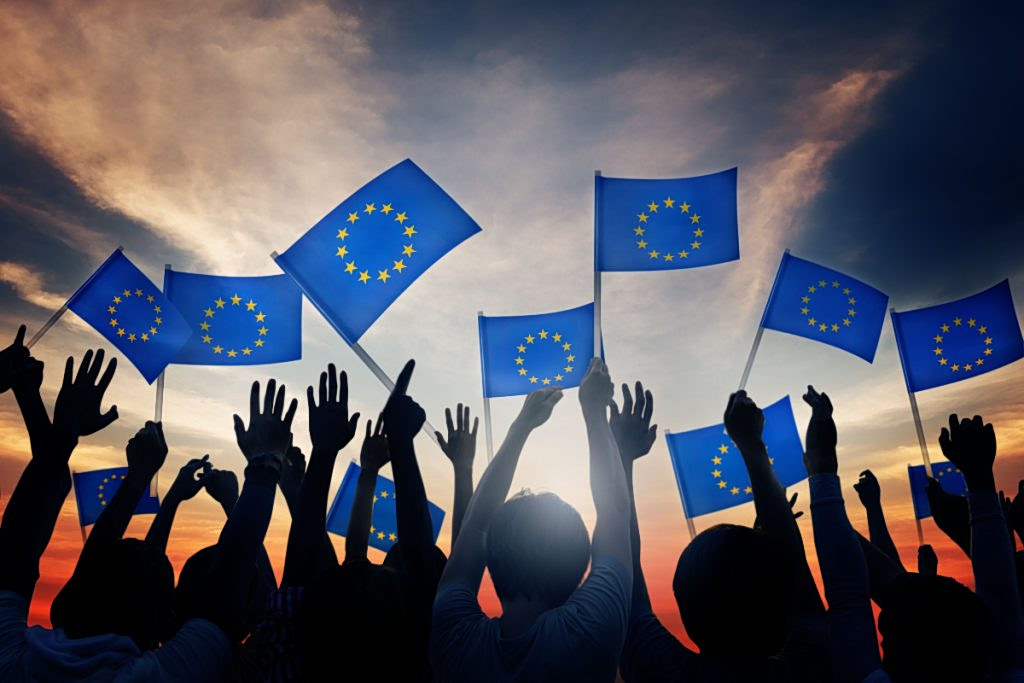
That’s why I support the “European dream”, as an ethos in which all Europeans can believe as one.
An ethos that views the European Union as a guarantor of peace in Europe, but also as a global pillar of democracy, the rule of law, and human rights. A dream that’s closely bound up with nature. An ethos that recognizes the complex history of European cultures and communities, and their cooperation. An ideal rooted in a culture that embraces everyone and sees them for what they really are: fellow human beings and our equals, regardless of their cultural, social or sexual identity.
A Europe connected not only by roads and borders, but also culturally, on a human level.
There are many ways in which the European Union can achieve this. For example, with an Erasmus-style program for cultural exchanges. I was fortunate enough to participate in the Erasmus+ program last summer, and the experience gave me a fresh perspective on what Europe means to me. The problem with Erasmus+ is that it is only for education, while Europe needs an Erasmus+ for culture, too.
States also need to acknowledge past mistakes: the German government and German society need to acknowledge the errors made during the financial crisis, for instance. Which brings me to my final point: we need a movement within the EU for the “European Dream”. As most EU states—with the exception of Hungary—are democratic, citizens have the power to push their governments into working toward this vision: an ethos all Europeans can hope for.
This article was originally published in the insert “The European BHMA” published with “TO BHMA on Sunday” on 11 May 2025.