

 Μake us preferred on Google
 In recent years, Greece has become a destination of choice for people from around the world looking for a new place to call home. Coming from diverse cultural backgrounds, these individuals face the challenge of navigating the process of integrating into their new country of residence. Unfortunately, this process can be long and present its fair share of obstacles, as Heather and Carol admit as they share their experiences.
According to the Berry model, integration occurs when an individual comes into contact with a new culture and adopts certain aspects of the new culture, while still maintaining strong ties to their culture of origin. Researchers also argue that situational determinants—such as traveling with family, familiarity with the host language, and environmental factors—impact the degree of integration or assimilation. It is commonly believed that if you master the language of your host country, you will de facto achieve integration and societal acceptance. However, while language is certainly a crucial factor, being accepted and truly becoming part of a community requires the newcomer to understand new cultural norms and behaviors that are unfamiliar and may sometimes seem odd.
Carol R., an IT programmer who moved to the seaside town of Nafplio with her partner and their child two years ago from Wales, says that a year prior to their move she took an online language course to learn Greek. “I think that when you decide to move abroad, the first thing you have to do is learn the language for practical purposes. Being able to communicate with the locals was very helpful in finding accommodation and setting up our home,” she says. “But language is not enough,” she adds.

Heather Rice-Skorpideas founder of Gateway to Greek workshops.
Heather Rice-Skorpideas, an American woman who married into a Greek family after meeting her husband while vacationing in Greece, also stresses the importance of language as a tool in her life. “It became a way to connect with my husband, with his family, and with the environment I was now living in,” she notes.
However, when an individual seeks more meaningful interaction with a new cultural group in order to acquire some of its traits—or even to fully identify with it—language, though crucial, cannot guarantee success. In some cases, it can even become a barrier. “There were many moments where language felt like a barrier,” Heather admits. She describes how certain situations and experiences caused her great anxiety. “I could follow the conversation, but it often felt as if I was being attacked or controlled, which triggered a strong reaction,” she says.
She recalls a specific incident while walking with her child in a stroller and her dog at her side, when a stranger said, “You shouldn’t have a dog with your child.” “To me, it felt abrupt and intrusive, as if someone was stepping into a decision that wasn’t theirs to make. I reacted defensively, and within seconds the situation escalated,” she says.
“What made it difficult was that I couldn’t explain it as a language problem. I knew the words. What I hadn’t yet understood—and what no language course had prepared me for—was that the rules of behavior I had grown up with didn’t apply in the same way here. I had assumed that learning the language would resolve these situations, but in some ways, it made them more confusing,” Heather points out.
Heather later realized that the barrier was not in the language itself, but in the gap between what people meant and what she understood. “The meaning had simply been carried differently than I was used to,” she notes.
Such misunderstandings, however, do not stem solely from language; they are also rooted in cultural differences in behavior, expectations, and social etiquette.
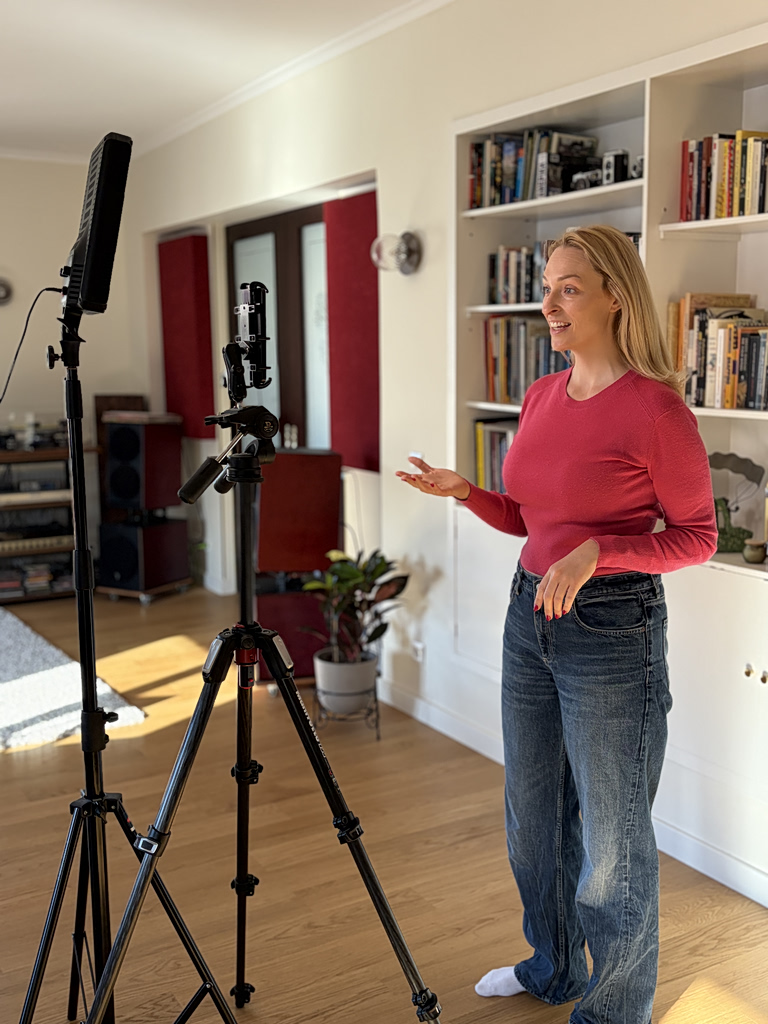
Heather is helping people with the process of integration through her workshops.
Carol, too, notes that she faced challenges in her efforts to integrate into the local community of Nafplio—not because she didn’t understand the language or because people were unwilling to include her family in social activities, but because she struggled to grasp the Greek way of thinking. “It took me some time to realize, for example, that when Greeks say they expect you to be somewhere at 8 p.m., they often mean 8:30 or even 9:00,” she says candidly. “For me, it has to do with deeply rooted cultural differences, which are not evident straight away but surface during your everyday interactions with the locals,” she adds.
Heather believes that Greece’s long tradition of valuing brevity and directness in social discourse—hence the term “laconic,” associated with the Spartans—reflects the idea that less is more.
But how can individuals become more aware of these hidden cultural nuances? Heather stresses that people must first acknowledge the existence of cultural differences and realize that understanding the language does not necessarily mean understanding the interaction.
“What helped me over time was shifting my focus away from the words and starting to pay attention to patterns. When the same type of interaction happens again and again, it becomes clear that it’s not about the individual—it’s about the system you’re both operating in,” she explains. Although this small shift may not solve everything, she adds, it does create the space you need to interpret things more accurately.
Heather soon realized through her social media interactions that this was a widespread issue—not only among non-Greeks, but among Greeks as well. “Both sides were experiencing the same situations, but interpreting them completely differently, often walking away feeling frustrated without understanding why,” she notes. This inspired her to start offering online workshops—Gateway to Greek— focused on integration into Greek society.

Heather: “Greek became a way to connect with my husband, with his family and the environment I was now living in.”
What has become clear to her, she says, is that this issue had not been addressed before, nor explained in a clear and practical way that offers people guidance on “how to handle it in the moment.”
The response to the workshops was immediate, with participants engaging in a meaningful way with the material, Heather says enthusiastically. “People tend to recognize themselves in the examples very quickly. There’s often a moment when something that has felt confusing for a long time suddenly makes sense. I’ve had participants say things like, ‘I thought I was failing all the time,’” she explains. In one case, someone described how comments about their child felt like constant criticism, as if they weren’t parenting well enough. What shifted for them was realizing that those same comments were often meant as care and concern, not judgment. “That change in interpretation completely altered how they experienced those interactions,” Heather emphasizes.
According to Heather, it is equally important to realize that this dynamic goes both ways. Greek participants—and Greeks living abroad—often experience English communication as vague or hard to trust, even when it is meant to be polite. What one side sees as considerate can come across as a lack of clarity or commitment to the other.
Recognizing this brings a sense of relief. People begin to see that these misunderstandings aren’t random or personal, but shaped by underlying patterns. At the same time, they gain a clearer view of the other perspective, making interactions feel less frustrating and more understandable—and ultimately changing how conversations unfold.