 Μake us preferred on Google
 In Greece, debates over specialized island tourism often swing between two easy extremes: a blanket “no to everything” and an uncritical “yes to everything.” Both are convenient—and both fall short. Effective spatial planning is not driven by slogans, but by data, local conditions, institutional clarity, and a careful balance between protection and development.
This is even more crucial where a thermal natural resource is officially recognized. Such recognition is not a license for unchecked construction, but it does mean the resource cannot be ignored. It is a significant spatial factor that must be properly integrated into planning decisions.
This is not advocacy for any particular investment. It is a fundamental principle of modern spatial planning: each place must be approached on its own terms, not through one-size-fits-all rules. Islands are not blank canvases for generic solutions. They have defined limits, specific resilience thresholds, and distinct advantages. Sound development and urban planning must be grounded precisely in these characteristics.
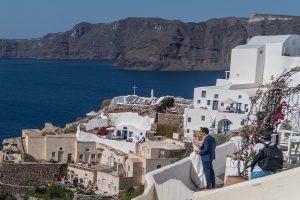
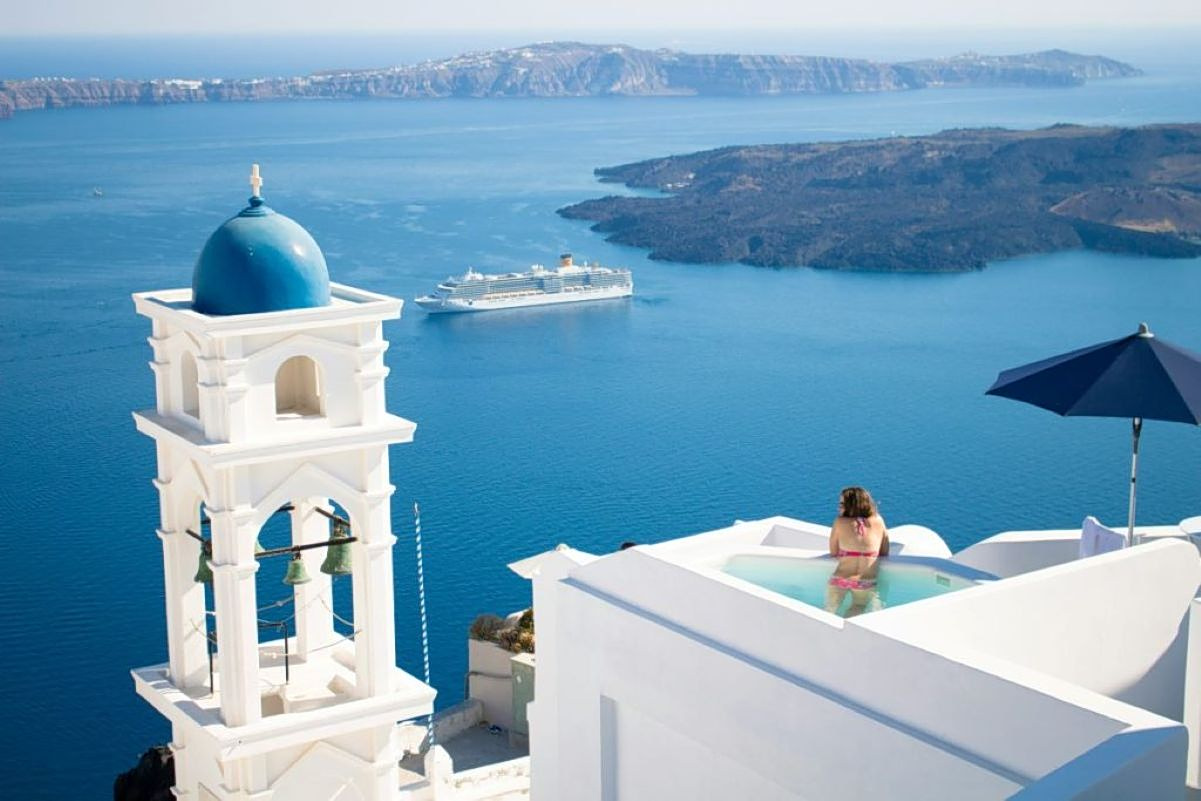
Nowhere is this more evident than in Santorini. This is not a destination still searching for its identity. It is a place already under significant strain from its dominant tourism model. The core issue is not a lack of visitors, but rather the prevalence of a model that places excessive pressure on the landscape, intensifies seasonality, and steadily pushes the island toward its carrying capacity limits.
This is why the discussion around thermalism and wellness tourism matters. It is not just another “sun and sea” offering. It represents a form of activity that can operate more gently and in a more controlled manner, extend the tourist season, and generate higher value per visitor. In an already saturated destination, that distinction is crucial. The goal is not to increase arrivals, but to gradually reshape the model itself.
The real question, then, is not whether to permit “one more tourism investment,” but under what conditions such development can be considered scientifically and spatially compatible with both the thermal resource and the island as a whole. A credible answer lies in establishing a specialized framework for mild thermal and wellness use: low building intensity, clearly defined limits, strict standards for water, waste, and energy management, strong landscape protection, and full respect for the area’s geological formations.
This is the critical point. True protection does not come from indiscriminate prohibition. It comes from allowing only what respects the place and improves its development model rather than depleting it. On an island like Santorini, a formally recognized thermal resource is not an obstacle to conceal. It is an element of natural capital that—under strict conditions—can support a more mature balance between preservation and development. That is not a concession. It is responsible planning.