 Μake us preferred on Google
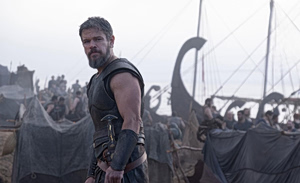
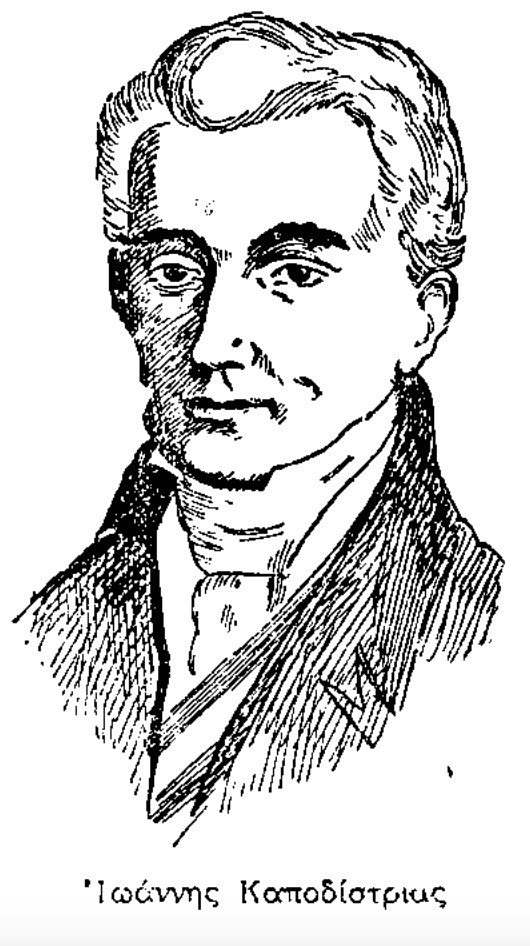
 On Christmas Day, the new film by Giannis Smaragdis, Kapodistrias, premieres, bringing again into focus the story of Greece’s first governor, Ioannis Kapodistrias, who struggled like few others to create a modern and independent Greek state.
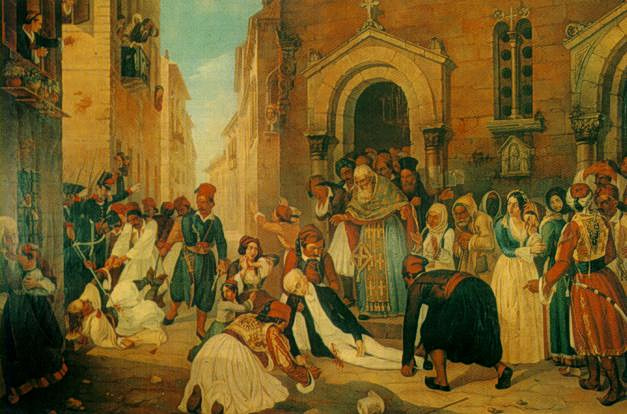
Unfortunately, Kapodistrias met a tragic end on September 27, 1831, in Nafplio, assassinated by Konstantinos and Georgios Mavromichalis.
Written by Kostas Kairofylas in Eleftheron Vima, September 25, 1931:
“On the evening of September 26, 1831, Kapodistrias sat to write to his friend and great philhellene, Eynard. His soul was undoubtedly filled with momentary despair, yet his letter is full of patriotic courage and reveals the true Kapodistrias:
‘Neither the fear of intrigues nor what is written in newspapers will make me stray from the path I have carved. Let them write, let them say what they will, but in the end, people are judged not by what is written or said against them, but by the testimony of their own actions. Strengthened by this conviction, I have lived in the world with these principles until now and have managed well. It is therefore impossible at this moment to change my path. I will do my duty, let whatever happen!’”
“Early the next morning, as was his habit, he went to attend service at the Church of Saint Spyridon. Outside, the two Mavromichalis, Konstantinos and Georgios, waited. They rushed him; one struck him in the head with a pistol, while the other stabbed him in the abdomen. He fell dead without uttering a word.
The homeland lost its re-creator, its most eminent child, its great governor.
The Mavromichalis were the hands that carried out the crime. Others were the moral, the true murderers—those who envied his work, undermined his patriotic efforts out of ego or base personal interest. Perhaps the Mavromichalis, who paid for the crime with their lives, were the less guilty. At least they had an excuse: the imprisonment of their father, which Kapodistrias’ enemies exploited to push them toward the crime. Kapodistrias was assassinated by foreign diplomacy, some local notables, and educated men. The people adored him and bear no blame for this crime.”
Kolokotronis’ Reaction
In Spyros Mellas’ account of Kolokotronis’ life, based on the memoirs of the Elder of Morea and published in Eleftheron Vima in 1931, we find interesting information about the aftermath of the assassination and Kolokotronis’ stance.
“Kolokotronis was in Tripolitsa when Kapodistrias was assassinated. He wept sincerely for his friend. The Senate, in an emergency session, decided to appoint a government of three members:
‘From Augustinos, the governor’s brother, from Kolokotronis, and from Kolettis. Augustinos declared that if the Elder did not accept, he would not either. They sent a messenger to Kolokotronis to inform him. The Elder hesitated.
‘I did not know,’ he writes in his autobiography, ‘where to go, what to do, nor what was happening in Nafplio.’*
He went to the prefect Karoris and sent orders for the troops to gather. It was Sunday evening. He kept the news secret from the people. On Monday morning, he received further news with details.*
But now the people knew. Citizens were like the dead. They abandoned their shops, workshops, and businesses, wandering the streets as if mad.
Kolokotronis, after writing to all provinces of Morea that the prefects should stay in their posts and the people remain calm because a new government had been appointed, instructed the notables of Tripolitsa to post town criers to read his letters to the people.
Then he gathered the citizens in the school and spoke to them for an hour. After telling them to protect order as if it were their own eyes, he told them a parable about donkeys:
‘Once, donkeys, thinking they could escape work, decided to kill the saddler so that people would have no saddles to carry. They did so. Then the people called the saddler and ordered him to make saddles. The poor donkeys worked again as before, but now had wounds on their backs because the saddler, inexperienced, made the saddles crooked. Then the donkeys remembered the saddler, but it was too late.’
This pessimistic parable of the Elder explains his stance throughout Kapodistrias’ time. He overlooked mistakes because he feared worse. He preferred to be informed of minor issues rather than face opposition.
He left one hundred cavalrymen in Tripolitsa to maintain order and, with another 150, went to Nafplio. The people sought to open the castle gates to greet him.
Men, women, and children ran to welcome him. Most men were armed. Some cried, some shouted, some kissed his horse, others complained.
‘Quiet!’ he said to all. They took him to his lodging. He came out to say a few words:
‘Greeks! Go to your homes. Have no fear, and God’s power will manage everything.’
He went to Augustinos’ house to comfort him. ‘I share your burden and that of the nation,’ said the governor’s brother. ‘Do what you think best.’
He returned to his lodging and summoned the garrison commander Almeida. ‘Send town criers so everyone remains calm at home and take out the arms. And swear allegiance to the new government until we see where matters will lead.’”
Absolute Monarchy
However, events did not unfold as Kolokotronis wished, as new civil conflicts erupted among the Greeks. Eventually, under the guidance of the three protecting powers, power in Greece was given to Otto, the second son of the future king of Bavaria.
As Nikos Svoronos notes (Overview of Modern Greek History, Themelio, Athens 1976, pp. 73, 79): “The anarchy that followed (the assassination of Ioannis Kapodistrias) allowed the three ‘protecting’ powers to impose absolute monarchy.”