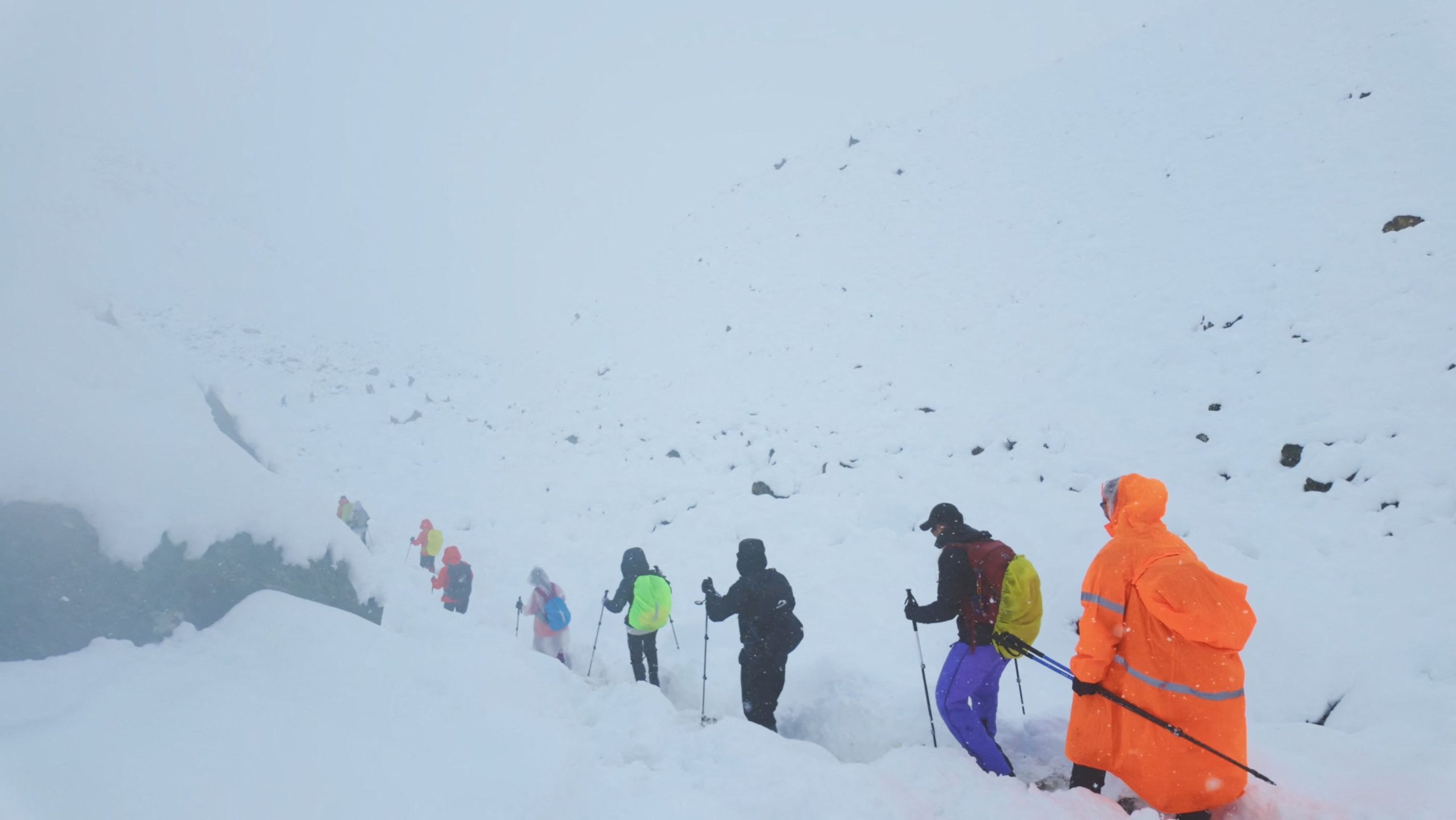
Hundreds of trekkers caught in a sudden Himalayan blizzard near the eastern face of Mount Everest have been led to safety after rescue teams battled through deep snow and freezing temperatures in Tibet, Chinese state media reported on Sunday.
As of Sunday afternoon, at least 350 trekkers had reached the small township of Qudang, while contact had been established with more than 200 others still making their way down under the guidance of rescuers, according to China’s state broadcaster CCTV.
The trekkers were visiting the remote Karma Valley, a scenic route leading to the eastern Kangshung face of Everest, during China’s eight-day National Day holiday. Many were unprepared for the severe weather that struck without warning late Friday.
“It was so wet and cold in the mountains, and hypothermia was a real risk,” said trekker Chen Geshuang, part of an 18-member team that made it safely to Qudang. “The guide said he had never encountered such weather in October — it happened all too suddenly.”
Race to reach the stranded
Snowfall at altitudes of around 4,200 metres (13,800 feet) persisted through Saturday, accompanied by thunder and lightning that turned trails treacherous. Local authorities deployed hundreds of villagers and rescue personnel to clear snow-blocked paths and reach those still stranded.
Chen described an emotional return to the village after a night exposed to the storm. “We were greeted by villagers with sweet tea and warmth,” she said. “It felt like coming back to life.”
Wider Himalayan impact
The state-backed Jimu News outlet earlier reported that nearly 1,000 people had initially been trapped by the storm. It was unclear if all local guides and porters had been accounted for, or whether trekkers near Everest’s north face — also in Tibet — were affected.
Authorities have suspended ticket sales and entry to the entire Everest Scenic Area since Saturday evening, local tourism officials said.
The blizzard in Tibet coincided with severe weather further south in Nepal, where heavy rains have unleashed landslides and flash floods that have killed at least 47 people since Friday. Thirty-five of those deaths occurred in eastern Ilam district near the Indian border, while others were swept away by floodwaters or struck by lightning.
October typically marks one of the most stable and popular trekking periods in the Everest region, with clear post-monsoon skies. But this year’s sudden storm has underscored the growing unpredictability of Himalayan weather patterns — and the dangers they pose to trekkers at high altitude.