On Friday 17 July, as delegates gathered in central London for Labor’s special conference, the mood was one of both anticipation and upheaval.
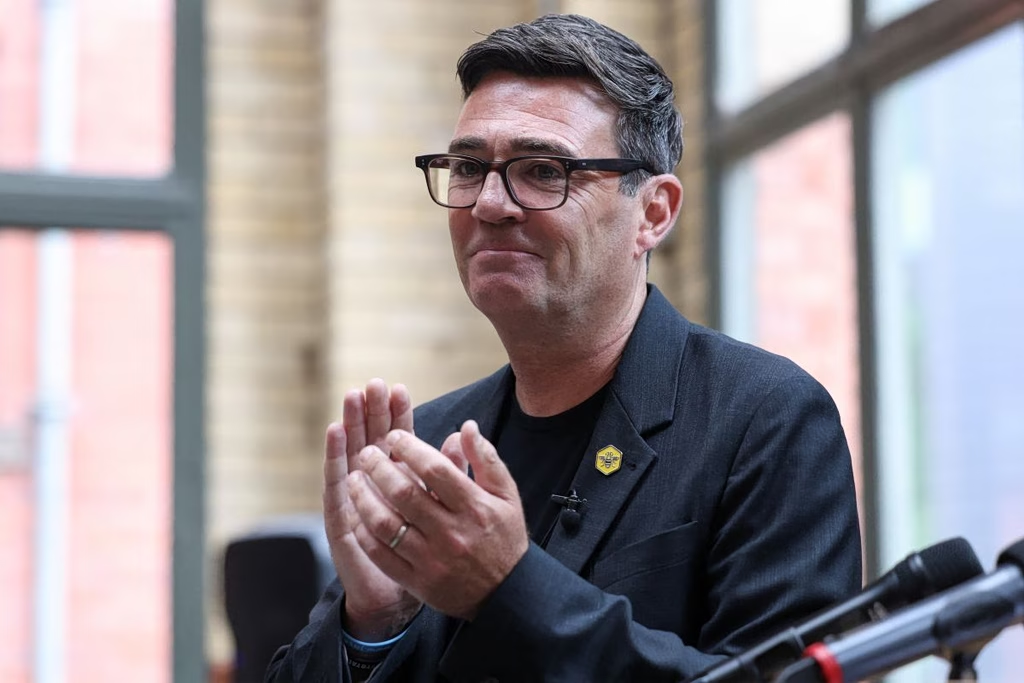
After weeks of political turmoil, Andy Burnham was confirmed as Labor leader and is now preparing to enter Downing Street on Monday as Prime Minister, inheriting a government struggling in the polls and a country wrestling with economic insecurity, regional inequality and a crisis of confidence in politics itself.
In his first speech as leader, Burnham pledged that his government would have the “courage to fix the big things that politics has neglected”, promising a new chapter in British politics built around devolution, reindustrialization and a return of power to local communities.
He told supporters that Labor must give people across Britain “the hope that we will make this country the best it can be”, arguing that the country had taken a series of wrong turns over the past four decades as political power became concentrated in Westminster and economic power shifted away from communities.
It is a message that has defined Burnham’s political life: the belief that Britain works best when power is dispersed rather than centralized, and that the fortunes of the North and the regions are inseparable from the future of the nation.
‘The beginning of a new era in politics’
Few people understand the significance of Burnham’s rise better than Rachael Maskell, Labor MP for York Central, who believes the transition could represent a generational shift in British politics.
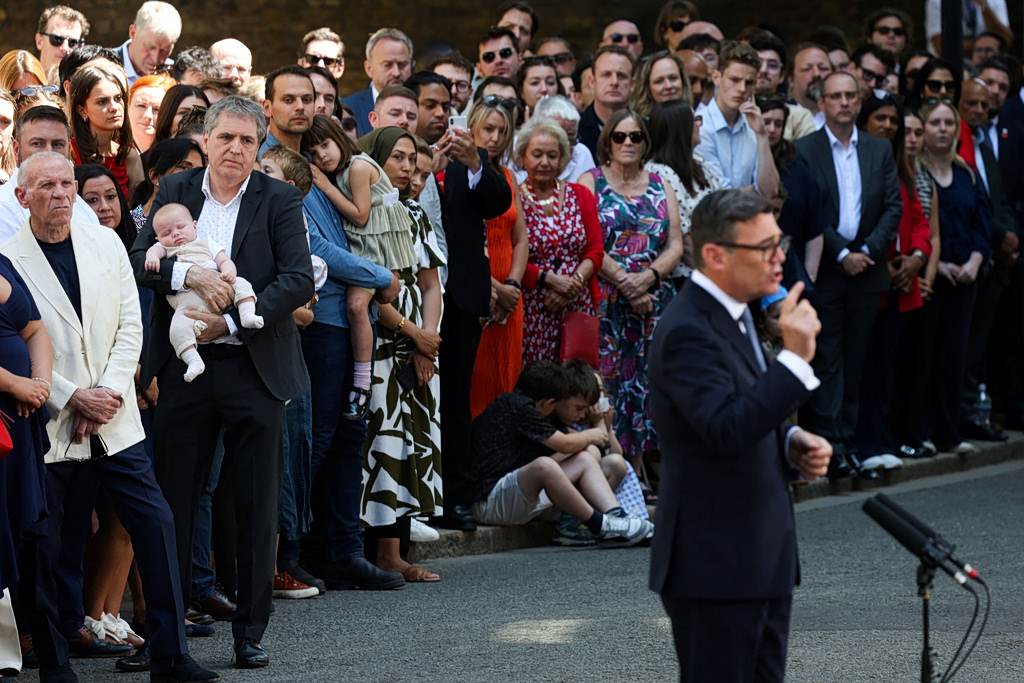
Supporters and lawmakers listen to Britain’s newly appointed Prime Minister Andy Burnham’s speech outside 10 Downing Street, after he took office, in London, Britain, July 20, 2026. REUTERS/Temilade Adelaja
“UK politics has been over-centralized for too long, so seeing devolution of decision making provides an opportunity to make decisions alongside agencies which need to deliver the change,” she told To Vima. “It is urgently needed and really welcome; however, we have to get the systems of accountability right, and ensure that it delivers for local people.”
Maskell argues that Burnham’s approach reflects lessons already learned in cities such as York, where local partnerships have driven change.
“We have been doing significant service and business transformation in York for some time and recognize the strength of this. While in York it looks slightly different, the approach and opportunity that Westminster can provide localities to develop an approach right for them is the right way forward.”
The challenge, she says, will be to turn rhetoric into policy.
“Andy Burnham will need to win the argument in Westminster as ever, and ensure that he appoints a chancellor who will have the capacity and vision to drive devolution in a way that works for the regions and nations.”
Her conclusion is striking: “This will be the biggest shift in politics that we have witnessed for more than a generation. It is the beginning of a new era in politics and an opportunity for everyone to be on board.”
The boy from Merseyside who made Manchester his political home
Burnham’s political appeal rests as much on biography as ideology.
Born in Merseyside to a telephone engineer father and a receptionist mother, he was raised between Liverpool and Manchester before studying at Cambridge.
He entered Parliament at the age of 31, served in Gordon Brown’s Cabinet, and twice sought the Labor leadership before leaving Westminster and returning north.
Many saw his departure from national politics as the end of his ambitions. Instead, it became the foundation of his comeback.
Elected Mayor of Greater Manchester in 2017, Burnham turned local government into a national platform.
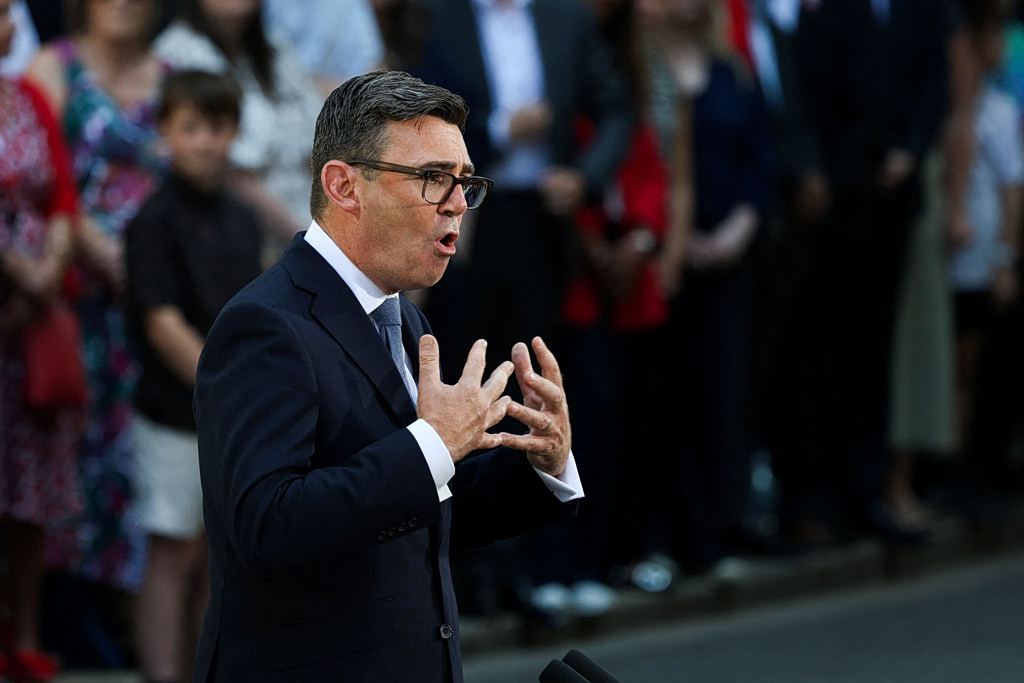
Britain’s newly appointed Prime Minister Andy Burnham delivers a speech outside 10 Downing Street after taking office, in London, Britain, July 20, 2026. REUTERS/Temilade Adelaja
He championed public transport reform, expanded social housing and pushed for greater powers over education, housing and economic development.
For Patrick Diamond, Professor of Public Policy at Queen Mary University of London, Burnham’s popularity stems from the perception that he has consistently stood up for his region.
“Andy Burnham remained so popular as Manchester mayor because people think he has stood up for the interests of his region, fighting central government for more money and powers,” Diamond told To Vima.
“Also, he has delivered real gains – better bus services, more social housing, improvements in the physical fabric of the city center to attract inward investment and jobs.”
Diamond is careful not to overstate Burnham’s personal role in Manchester’s success.
“Manchester is an improved city but as much because of the actions of other local politicians and public servants.
“The renaissance of Manchester has been a thirty-year process of stable political leadership and sustained investment.”
Still, he argues, there are lessons for the country as a whole.
“The model of bringing the public and private sectors together to solve common challenges is a good one, as is encouraging collaboration across public services. The UK and England are among the most centralized states in the western world. Creating more local and regional leaders who can give an identity to places and attract investment through devolution and decentralization has to be good for the whole country.”
For Diamond, the implications are profound: “This does represent the biggest shift in governing approach since New Labor given the emphasis on decentralization and the break with neo-liberalism – shifting away from markets back towards public control.”
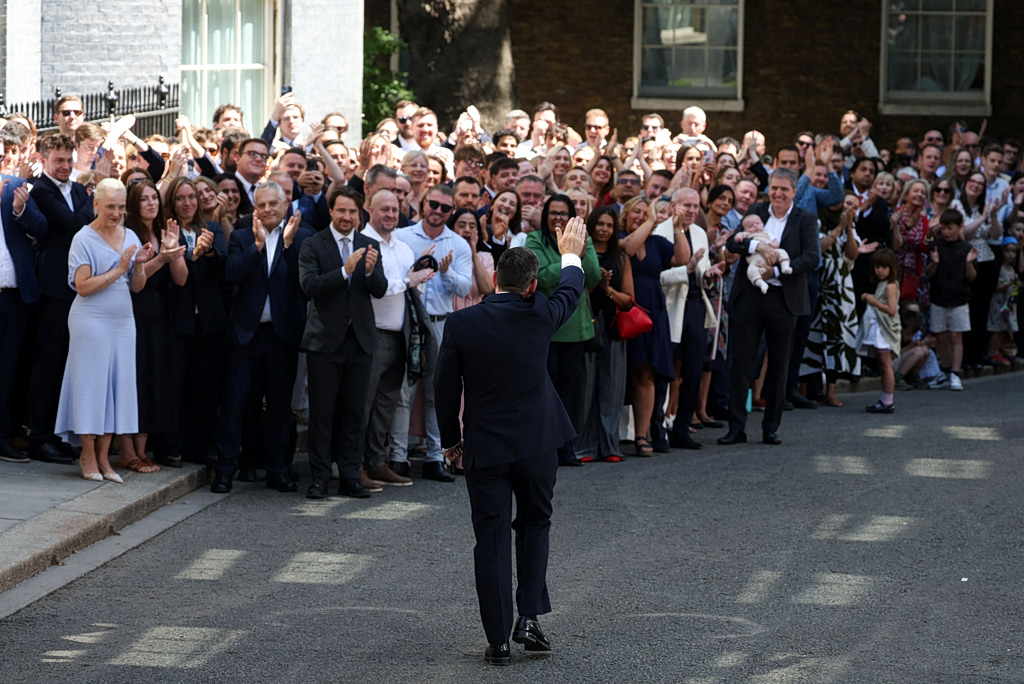
Britain’s newly appointed Prime Minister Andy Burnham gestures to lawmakers and supporters after delivering a speech outside 10 Downing Street after taking office, in London, Britain, July 20, 2026. REUTERS/Temilade Adelaja
‘The further from Whitehall, the more it applies’
The phrase that may best capture the Burnham era comes from Sir Paul Collier, Professor of Economics and Public Policy at Oxford University’s Blavatnik School of Government.
Asked how much of the “Manchester model” could realistically be applied across England, Collier’s answer was concise: “Not all of it, but pretty well everywhere outside the South-East. The further from Whitehall, the more it applies.”
Collier believes Burnham’s rise marks a genuine departure from the established order of British politics. Asked whether Burnham becoming Prime Minister represents a shift away from Westminster politics, he simply replied: “Yes.”
He also believes Burnham’s leadership is more likely to strengthen than weaken the Union. “Probably strengthen it – Starmer was hugely unpopular while Burnham isn’t.”
Could this become the biggest change in Labor’s governing philosophy since New Labor?
Again, Collier’s answer was emphatic: “Yes, that seems likely, though Burnham aims to build a broad church that represents many of Labor’s factions other than the hard left.”
The Hillsborough moment
Long before he became Prime Minister, Burnham experienced the moment that many believe explains his politics.
In 2009, as culture secretary, he travelled to Liverpool to speak at a memorial service for the Hillsborough disaster, in which 97 football supporters lost their lives in Britain’s deadliest sporting tragedy.
Initially, the crowd was hostile. As Burnham began to speak, chants for justice rang out across the gathering. He abandoned his prepared remarks. Fighting back tears, he stood and listened.
For Charlotte Wildman, Professor of Modern British History at the University of Manchester, that moment was transformative.
“Burnham represents a symbolic shift in that his policy emphasizes strong regional power and devolution,” she told To Vima.
“The criticism of the ‘Westminster bubble’ is very powerful and a fruitful method of explaining why and how some voters feel left behind by the main political parties.”
She believes Burnham’s style of politics has broader appeal.
“His communication style focuses on uniting voters across class lines in ways that are not dissimilar to Tony Blair or even Boris Johnson.”
Wildman expects Burnham to bring not only policy changes but also a new story about Britain.
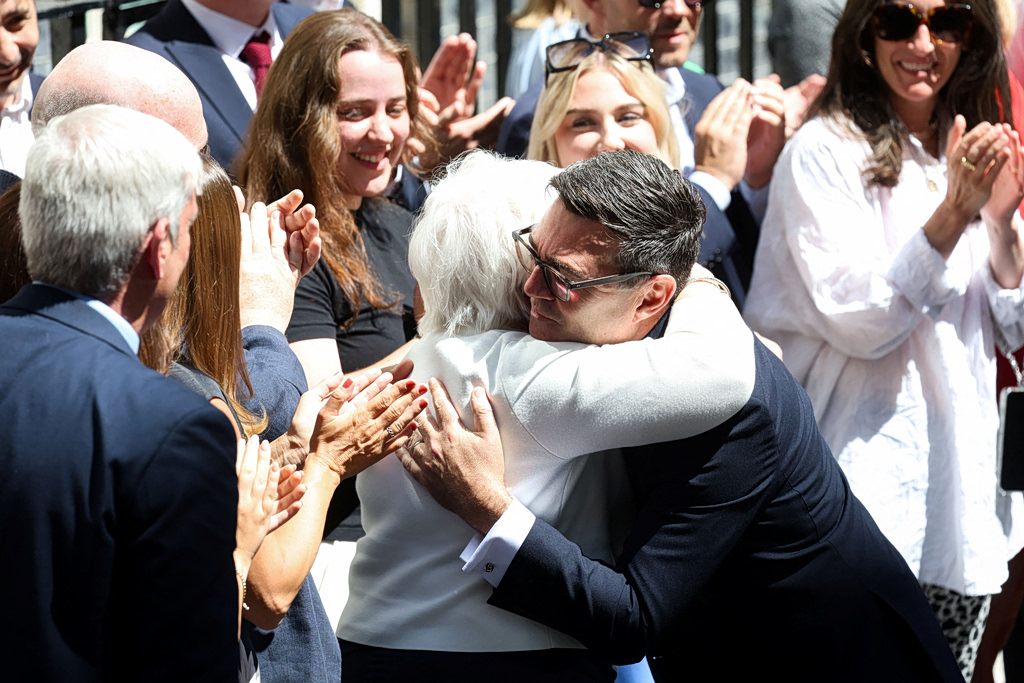
Britain’s newly appointed Prime Minister Andy Burnham hugs his mom, Eileen Burnham, after delivering a speech outside 10 Downing Street after taking office, in London, Britain, July 20, 2026. REUTERS/Temilade Adelaja
“There is a chance that some of the methods to encourage urban regeneration and private development will be adopted further. I also suspect that one of the key changes will be a change in narrative – from ‘Broken Britain’ to a more positive, optimistic vision for Britain. Burnham did this very effectively and persuasively for Manchester and this shift could change how Britons feel in ways that are very powerful.”
For Richard Whittle, Professor of AI and Public Policy at Salford Business School, Burnham’s arrival in Downing Street represents a symbolic break with Westminster politics, but not yet a structural one.
Unlike Boris Johnson, whose time as Mayor of London became a stepping stone back to Westminster, Burnham spent a decade governing from outside the political centre, building consensus through partnerships rather than ministerial authority. “Number Ten is a centralizing machine,” Whittle told To Vima. “The key test will be whether he changes the machine or the machine changes him.” He argues that while the “Manchester model” cannot simply be replicated across England, its underlying principles-greater fiscal autonomy, long-term funding settlements and genuine local decision-making-could reshape the country’s governance.
Whether Burnham delivers the most significant transformation in Labor’s governing philosophy since New Labor, however, will depend less on rhetoric than on whether his first Budget genuinely devolves financial power from Whitehall to England’s regions.
The tests begin on Monday
The symbolism of Burnham’s rise is powerful. The realities of governing may prove more difficult.
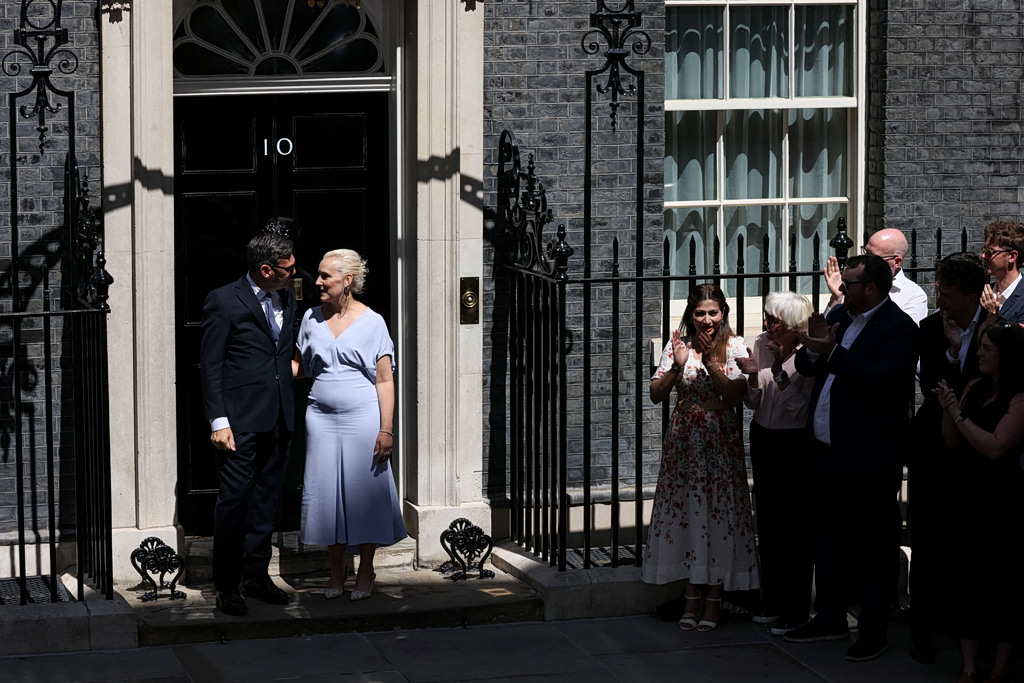
Britain’s newly appointed Prime Minister Andy Burnham stands outside 10 Downing Street with his wife Marie-France van Heel after taking office, in London, Britain, July 20, 2026. REUTERS/Jack Taylor
The economy remains fragile, household budgets are under pressure and expectations among Labor voters are high. Burnham has promised support on the cost of living while insisting that he will not be “indisciplined” with the public finances.
Jonathan Portes, Professor of Economics and Public Policy at King’s College London, cautions against viewing Burnham as a complete break with the past.
“Burnham was a Cabinet Minister under New Labor, so hardly a radical break,” Portes told To Vima.
“The ‘Manchester model’ – using government leverage and money to bring in private sector investment – might work for other large and medium-sized cities, but in itself is unlikely to be sufficient.”
He adds that devolution will only work if local authorities are given real fiscal power. “Local areas need financial power as well as responsibility – something the Treasury has long resisted.”
Portes also argues that a successful Burnham administration could have wider political consequences by reducing support for Reform UK and the broader populist right.
Matt Reed, Head of Research at the University of Gloucestershire, agrees that Burnham’s leadership could reshape the country, even if change will come from the center first.
“Yes and no,” Reed says when asked whether Burnham represents a move away from Westminster.
“Yes, as he clearly wants to signal a shift from the dominance of London. No, as he has to work from Westminster to make that happen – but if he is successful it will be a consequential shift in UK governance.”
For Reed, there are no immediate constitutional obstacles because Labor commands a substantial parliamentary majority. The real challenge, he says, is the pace of reform and internal Labor politics.
That may ultimately define Burnham’s premiership.
He enters Downing Street with broad goodwill, a compelling personal story and a political philosophy shaped by the North of England.
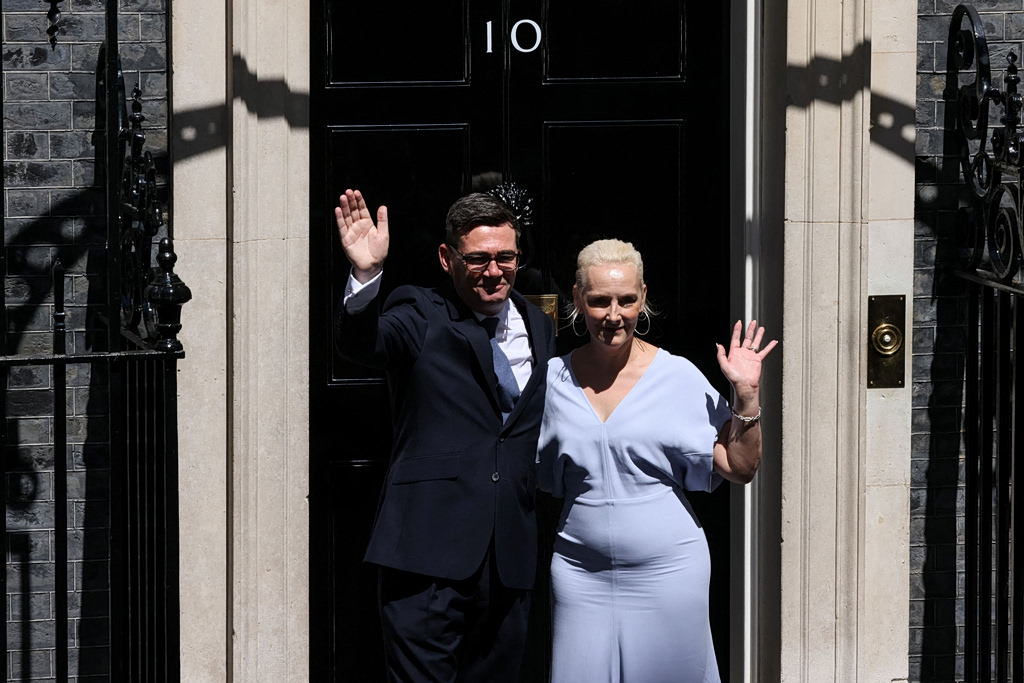
Britain’s newly appointed Prime Minister Andy Burnham waves outside 10 Downing Street with his wife Marie-France van Heel after taking office, in London, Britain, July 20, 2026. REUTERS/Jack Taylor
Yet he also inherits a divided electorate, a strained economy and the growing challenge posed by Nigel Farage and Reform UK.
On Friday, Burnham promised hope, courage and a new path for Britain. By Monday, those promises will meet the realities of power.
Whether the former mayor can transform the Manchester model into a governing model for Britain may determine not only the future of Labor, but the future of the Union itself.