 Μake us preferred on Google
 LONDON— Nigel Farage has never held a position in the British government. As leader of the anti-immigration party Reform UK, he oversees just eight lawmakers in Parliament. Among voters, he has one of the lowest favorability ratings of any politician.
Yet when his upstart party, in May local elections, handed the ruling Labour Party its worst drubbing in the postwar period, it turned Prime Minister Keir Starmer’s own party against him .
A decade after Farage helped orchestrate Brexit, the 62-year-old former commodities trader was positioned to again disrupt the country’s political order.
“If Starmer goes,” he told an aide as the election results rolled in, “that’s the third prime minister I got rid of.”
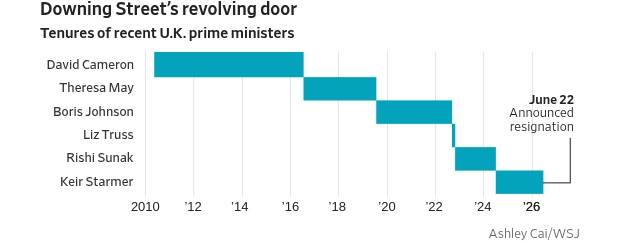
Starmer resigned Monday. His likely successor, ex-Manchester Mayor Andy Burnham , will be the sixth new face at 10 Downing Street in seven years—a revolving door that started a decade ago with the Brexit-induced departures of former Conservative prime ministers David Cameron in 2016 and Theresa May in 2019, and has only sped up, including the seven-week tenure of Liz Truss in 2022.
It’s a remarkable turn of events for a country that has long prided itself on political stability. Between 1945 and 2016, Britain had just 13 prime ministers and power flipped between Labour and the Conservatives.
Now, prime ministers change on average every 14 months, and there are five or six major political parties in England, plus nationalist parties in power in Scotland, Wales and Northern Ireland. Reform has spent the past year leading polls at just under 30%, the first time since World War I that any party other than the Tories and Labour has led for so long.
Britain’s merry-go-round of leaders has turned the country into a political laughingstock—the new Italy of Europe—and spooked investors, pushing up government borrowing costs and curbing foreign investment. It has also hampered the government’s ability to deliver key long-term changes in policy, undermining voter trust.
Starmer was elected just two years ago with a promise to end the drama. While never especially popular, the prime minister has seen his ratings crater and Labour’s voter base splinter to a range of parties, including Reform on the right and the eco-populist Greens on the left.
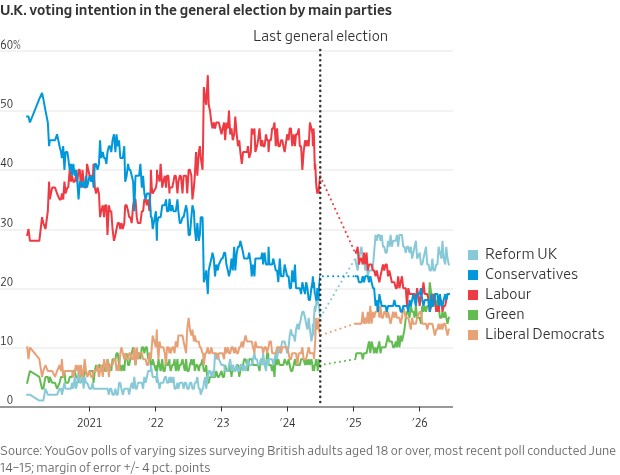
“It’s unprecedented to have extremist parties so strong and the center parties so weak,” says Vernon Bogdanor , a politics professor who has written about British politics since the 1970s. “It’s difficult to see it going away quickly.”
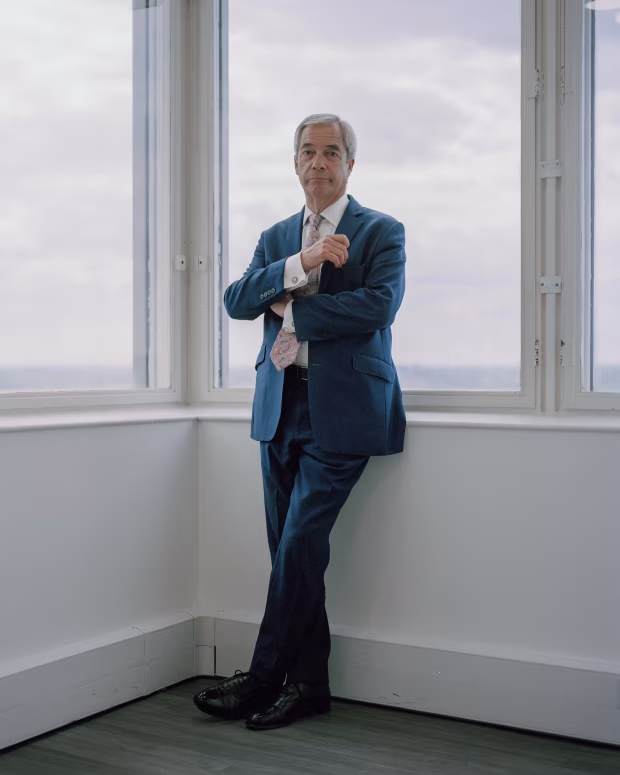
The cigarette-smoking Farage has helped catalyze the upheaval. He has tapped into shifting tides in British politics that look set to prevent any single party from getting too big, making politics inherently more unpredictable.
Farage himself will struggle to get more than 30% of voters, pollsters say, and supporters of other parties might band together to stop him from winning national elections. The recent rise of a new nativist party backed by Elon Musk , called Restore Britain, has siphoned off some support.
But the fragmentation, and a winner-take-all voting system, has given Farage a shot at pulling off what was once unthinkable: an unpopular populist taking power in Britain.
New fault lines
Politics in the U.K. has in the past decade gone from predictable and patrician to utterly maverick, thanks to a historically poor run of economic growth, a surge in immigration, a once-in-a-generation shift in political attitudes—and the blundering response of its two traditional parties.
The 2008 financial crisis ended a long period of heady growth, and the self-inflicted austerity that followed only worsened the downturn. Brexit caused more years of uncertainty and weak investment. Then came the Covid-19 pandemic and Russia’s invasion of Ukraine, which caused inflation to spike . Adding insult to injury were a series of political scandals, including raucous drinks parties in Downing Street during pandemic lockdowns.
The upshot: A typical food shop that cost £100 in 2020 costs around £140 today, or $188. Real wages, meanwhile, have broadly flatlined. With an aging population raising costs for everything from welfare to healthcare, the tax burden is at its highest level since World War II.
Immigration skyrocketed under the Tories , even after many Brits voted for Brexit in part to limit the flow of people into the country. One of Labour’s first moves on coming to power after 14 years of Conservative rule was to raise taxes—despite a pre-election pledge it wouldn’t—hurting the economy more. Public services have yet to noticeably improve, with seven million people on waiting lists for routine healthcare.
“People are fed up,” says Ros Connors , who heads a local community radio station in Basildon, in eastern England, and gets an earful from listeners about everything from the cost of living to immigration.
But the fracturing of the British political system also has to do with new fault lines. For decades, politics in the U.K. was largely dictated by class: The working class tended to back Labour and the aspirational middle class and wealthy usually voted Tory.
That left-right distinction began to collapse more than a decade ago, when new divisions emerged on globalization, immigration and social issues, echoing the upheaval that gave rise to Donald Trump in the U.S. and populist leaders across much of Western Europe . Like them, Farage has inserted himself into the gap.

The ‘somewheres’
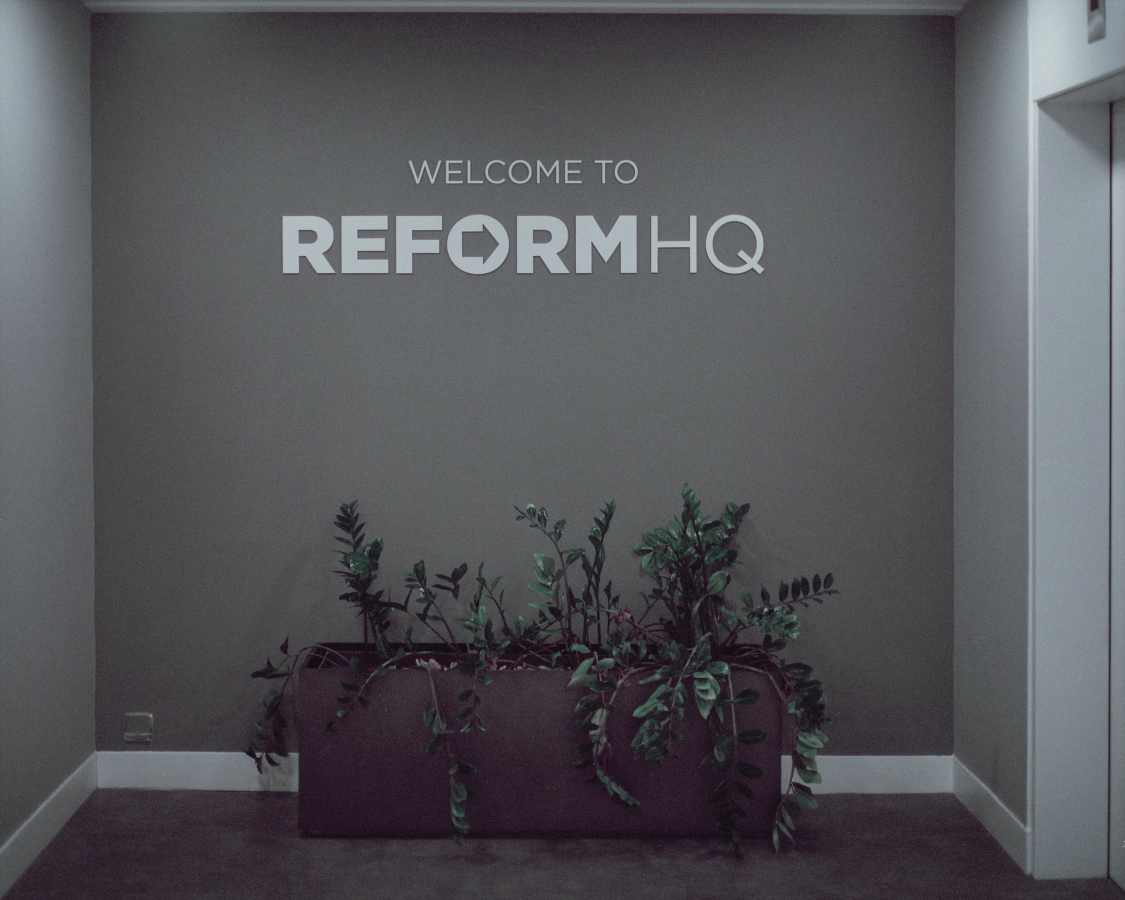
The atrium in Reform UK’s London headquarters has the words “Family, Community, Country” emblazoned on the wall over a large map of Britain. Inside a glass office, James Orr, a Cambridge theologian who heads the party’s policy team, explains that Reform aims to redefine politics.
“If you’re still looking at us through the prism of left and right, you’re going to be mystified,” he says.
Orr refers to British author David Goodhart’s analysis of how Britain is now split between the “anywheres,” college-educated urbanites who largely benefited from globalization, and the “somewheres,” people who live near where they were born, are often working class and feel alienated by the rapid social changes brought on by trade, technology and mass migration.
“Somewhere” voters have become disconnected from traditional politicians on questions like immigration, climate change and foreign policy, Orr argues.
Reform is pitching a mishmash of policies—plucked from the left and the right—to win them over.
These include a pledge to deport some 600,000 people it says entered Britain illegally and curb legal immigration by levying a fee on employers who hire workers from abroad. While it pledges to trim taxes for the wealthiest, it also backs guaranteed increases to the state pension and keeping the state-run health service.
Orr, who speaks with a crisp posh accent and grew up in Belgium, says he went to lunch recently in London with a top lawyer who quizzed him about Iran, Ukraine and Trump. “I said ‘I’ve not read a word about what’s happening in Iran. In the last nine weeks, I’ve had other things on my mind…. I am a lot more worried about Kent than I am about Kyiv.’”
Since Covid-19 there has been a dramatic shift in the way Brits view their own country, according to British Social Attitudes, an annual survey by the National Centre for Social Research that has tracked public opinion since the 1980s. In 2022, around half of people believed that migrants were good for the economy and enriched cultural life. Last year, following a record influx of migrants, that fell to a third.
After a glut of pandemic government spending, which sent the tax burden soaring, almost 20% of voters now want the government to cut tax and spending, the highest-ever share recorded by the BSA, and up from 6% five years ago. Trust in government to “almost always do the right thing,” meanwhile, has halved to 12%.
Britain is now deeply cleaved between liberals, who are heavily represented in big cities, and social conservatives in suburbs, towns and rural areas, the poll concluded. Unlike the traditional left-right split, where parties win by pitching to the middle ground, these new groups have “significantly different expectations and perceptions,” leaving a smaller middle ground.
Burnham, who seems likely to take power in mid-July, is framing his own Labour agenda to meet shifting attitudes, saying the party has “lost that ability to speak to that working-class ambition” of the postwar generation and needed to champion “those people, those places that have felt neglected for the past 25 years.”
He is pitching a “politics of place” that focuses on giving local authorities more tax money and autonomy to fix problems.
Pub-crawl to power
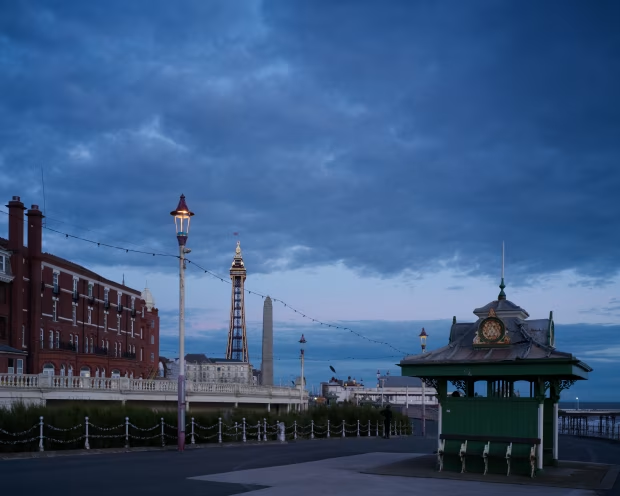
Blackpool, on the coast of northwest England, is a window into shifting political allegiances. The town, famed for its sprawling seaside resort, is one of Britain’s most deprived urban areas. It has the lowest life expectancy in the country. It overwhelmingly backed Brexit. It voted Tory under Boris Johnson. Then it voted Labour in the last election. Few expect it to do the same at the next.
For the past five years, both Tory and Labour governments have used a picturesque seafront hotel—the faded Metropole—to house hundreds of asylum seekers as they waited for their claims to be processed. The asylum seekers are now being moved out of the hotel, but the episode galvanized voters, leading to sporadic protests, joined on occasion by Farage himself.
Peter Flynn, a 54-year-old local electrician, likens Reform’s rise to the peasants’ revolt in 1381, when a group of disaffected rebels stormed the Tower of London. “That’s what’s happening right now,” he said. “The general people, normal people, are actually getting off their bottoms and doing something.”.
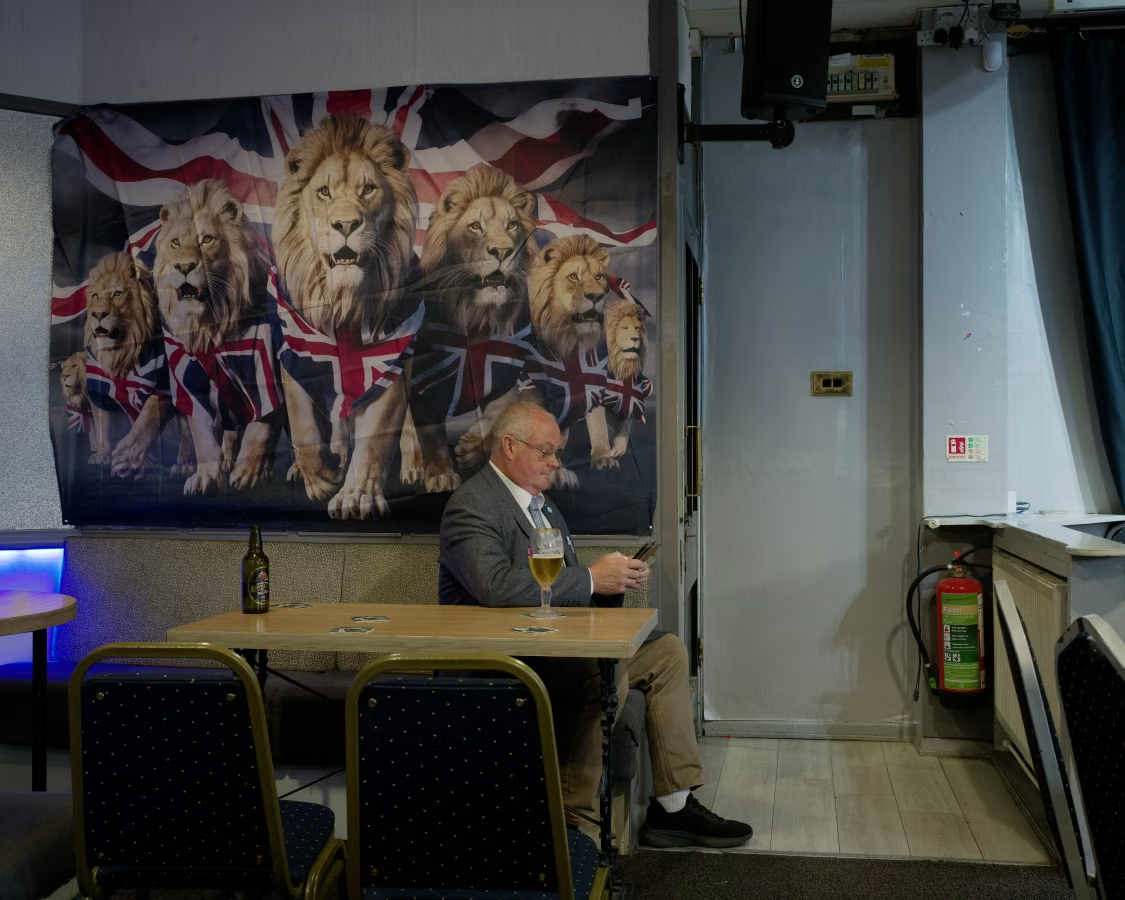
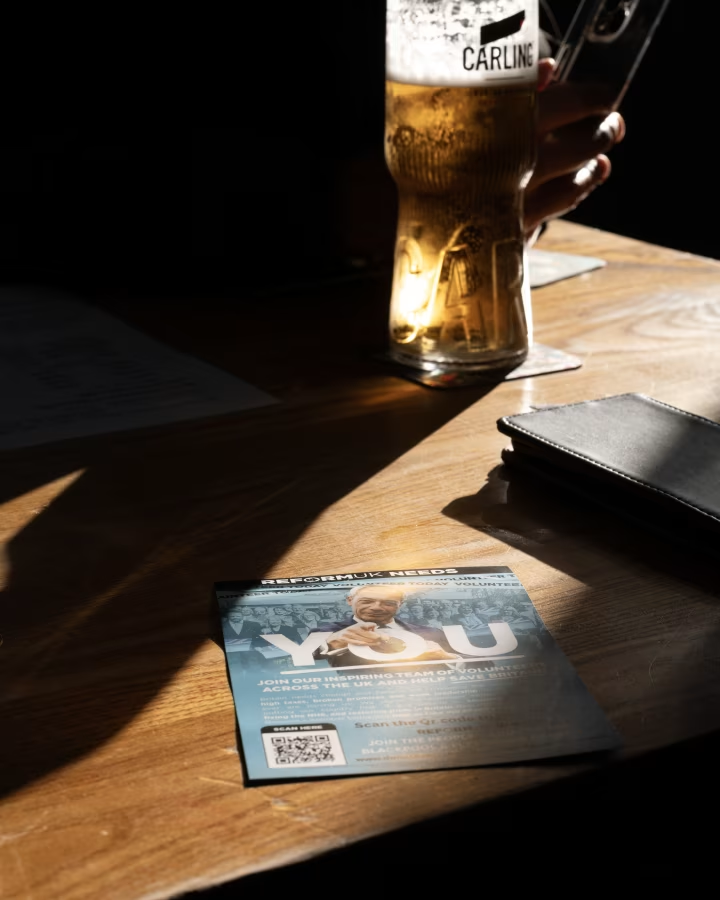
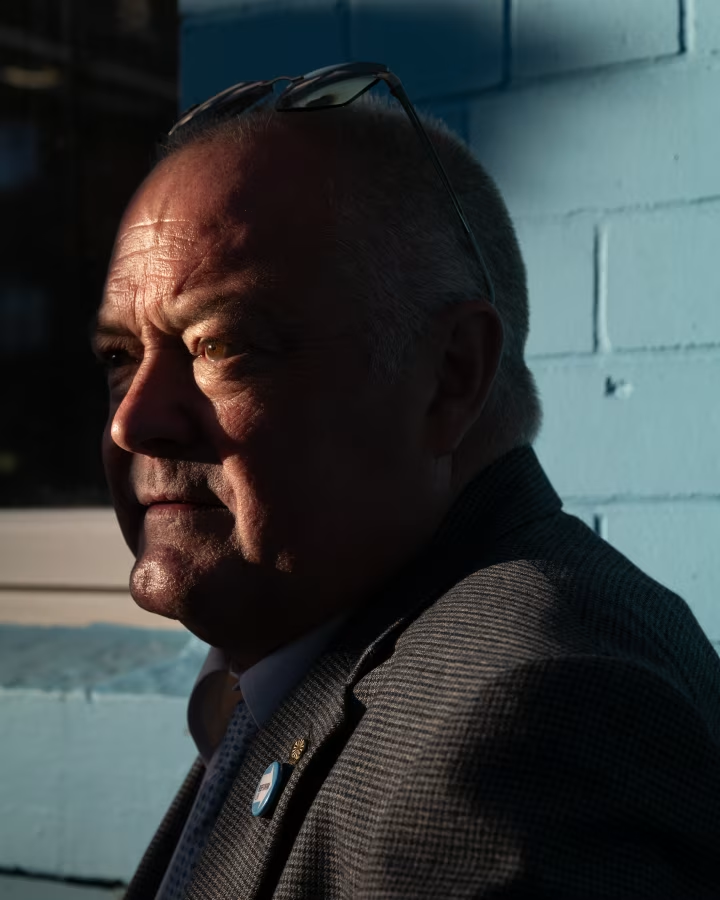
Flynn is more active than most. He and a business partner bought the Talbot, a Conservative party social club, and last year gave it a makeover. The two-story brick building was repainted in Reform teal, a large picture of lions wearing Union Jack flags hung on one wall. Management added a new beer called “Remainer Tears,” a nod to those who voted to stay in the European Union, and flyers with Farage’s image saying “Reform Needs You.”
Today it’s the country’s first official Reform pub. There are plans to open another in Kent on the south coast.
Flynn said it was time for Brits to stop blindly voting for the two main parties. “What’s the point of a politician standing on a soap box explaining his situation if all you’re going to do is vote Labour, Labour, Labour, or Conservative, Conservative, Conservative” like your parents did, the former Tory voter said as he sipped a pint.
Unlike London, Blackpool didn’t thrive under globalization. In the 1970s, cheap foreign travel decimated its tourism industry. Bed-and-breakfast hotels turned into cheap boardinghouses, attracting Britain’s sickest and poorest. After the 2008 financial crisis, central government funding was slashed. In real terms, by 2024 Blackpool had about £1,400 less per person to spend on its population than a decade ago.
After Johnson’s election as prime minister in 2019, the town got a considerable pot of cash to spend as part of a general effort to “level up” left-behind parts of the country. The problem is this takes time to trickle down.
Blackpool council is halfway through a £2 billion program to regenerate the town and has taken direct control of a number of tourist attractions, including the local waxworks museum. In the meantime, Blackpool is stuck in a whirlpool, where cheap accommodation draws in people down on their luck, who in turn place huge strain on local government services.
Lynn Williams, the Labour leader of Blackpool Council, says the damaging austerity-era budget cuts were followed by the economic own-goal of Brexit. “And who owns that?” she asked, pointing the finger at Farage.
“Why people are struggling and feel they’ve got no hope is absolutely a consequence of all of those years,” she said.
What isn’t to blame in Blackpool, Williams added, are asylum seekers, who usually leave the city soon after their cases have been heard. They also don’t claim subsidized social housing, contrary to what many locals think, she said.
Williams believes Labour’s best hope to regain voter confidence is replacing Starmer with Burnham. Starmer’s tenure has been hampered by a wooden speaking style and numerous policy U-turns, including a badly communicated plan to trim welfare spending by means-testing a winter heating subsidy for the elderly. Burnham, who is from the north of England, could make the case for Labour with a bit more vigor.
Last week, the former mayor won a special district election to enter Parliament in order to challenge Starmer. His comfortable win, in a district where Reform won recent local elections, burnished his credentials as the right man to take on Farage.
In the Talbot, several patrons said they liked Farage’s straight-talking style and felt the asylum system was unfair on taxpaying Brits.
The government has cut legal immigration sharply over the past two years, but levels are still high by historical standards and tens of thousands of asylum seekers continue to cross the English Channel on dinghies each year—helping drive more voters to Reform.
Farage, however, remains a controversial figure.
Drinking ciders in the corner of the Talbot was a ladies’ darts team from a neighboring pub. Farage, said Sharon Wells, 66, “is a d—head.”
The women, most of whom work for the local government in Blackpool, said they won’t be voting for him, in part because he is too divisive. According to YouGov, 65% of voters have an unfavorable opinion of Farage, a figure just slightly lower than that of Starmer.
A new ‘Basildon Man’
Basildon, a town just east of London in Essex, is getting a taste of what life could be like with Reform in charge. For years, “Basildon Man” was political shorthand for the median swing voter. These Brits, who toiled to get ahead in life, left Labour in the 1980s for the more aspirational Tories under Margaret Thatcher, flipped back for Tony Blair and continued to largely mirror national results in the ensuing years.
During the May local elections, Reform took control of Essex County Council, taking it out of Tory hands for the first time in 25 years.
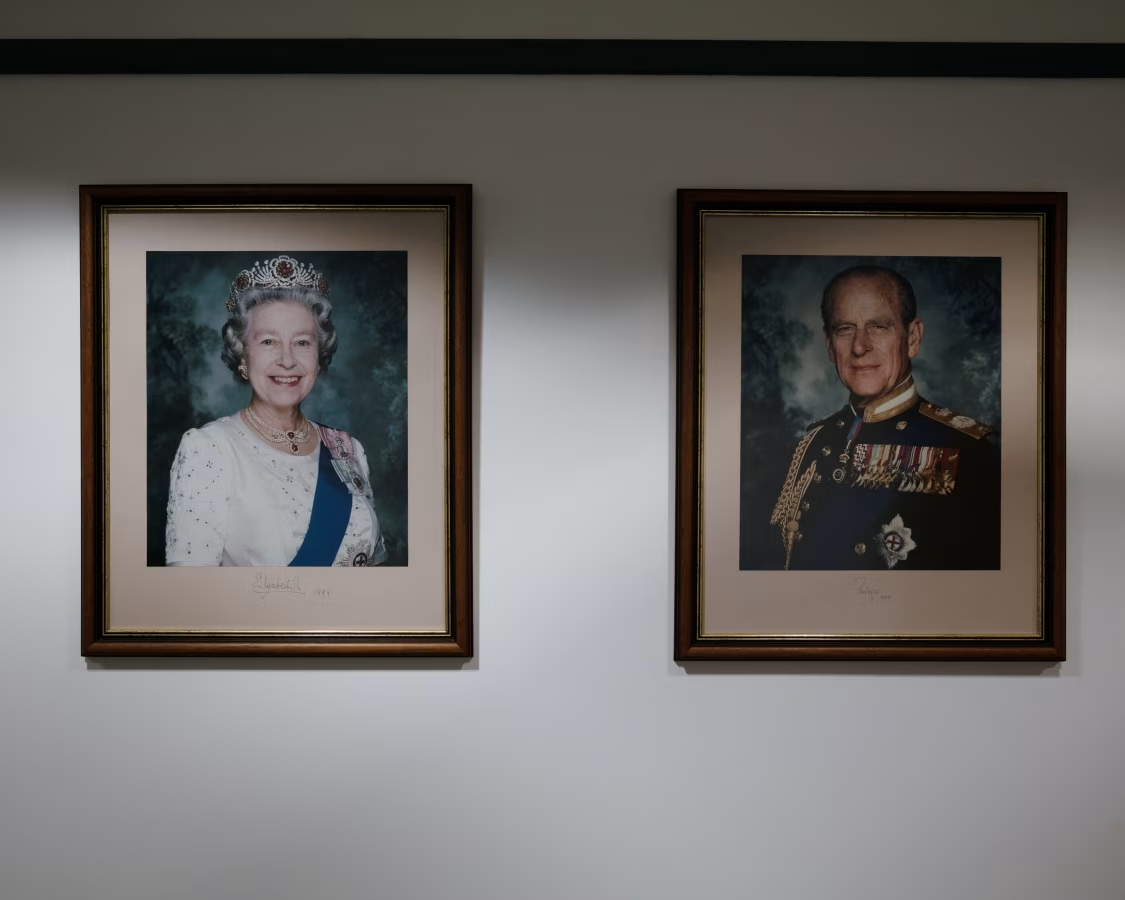
A Ukrainian flag that had fluttered in front of the council building has been taken down and replaced with a Union Jack. The Lord’s Prayer will be said at the start of council meetings and “God Save the King” sung at their conclusion. Public libraries have been instructed not to promote events such as gay pride and Black History Month.
Reform is reviewing planned council expenditure on climate policies including home insulation and electric-vehicle charging points. It’s promised to cut wasteful local government spending to help ensure residents’ council tax doesn’t rise more.
Andy Barnes, a Conservative who used to lead the Basildon council, is skeptical that Reform will find much to trim, given previous budget cuts and the pressures of providing care for an aging population.
“It feels to me like Reform is something that the electorate needs to get out of their system,” said Barnes. He wouldn’t be surprised if the party plays a role in the next government when national elections are held in 2029.
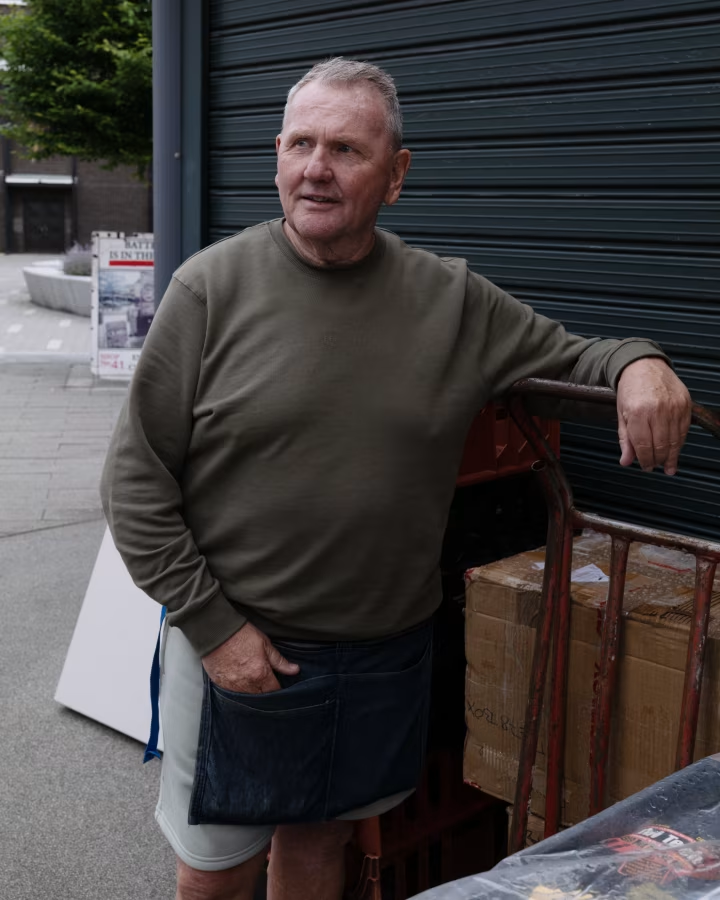
Outside the Basildon council office, Tony Hall, a 70-year-old stall owner, said he was ready to give Farage a go. “We have been invaded…. A whole way of life has changed,” he said.
When he recently went to his local pub, the Beehive, Hall said, he no longer recognized most of the patrons.
“It has all changed too fast.”
Write to Max Colchester at Max.Colchester@wsj.com and David Luhnow at david.luhnow@wsj.com