 Μake us preferred on Google
 Turkish President Recep Tayyip Erdogan intensified his rhetoric against Israel on Wednesday, accusing it of threatening regional stability and warning that Ankara would respond forcefully to any infringement of Turkish or Turkish Cypriot interests in the Eastern Mediterranean, drawing a sharp response from Israeli Prime Minister Benjamin Netanyahu.
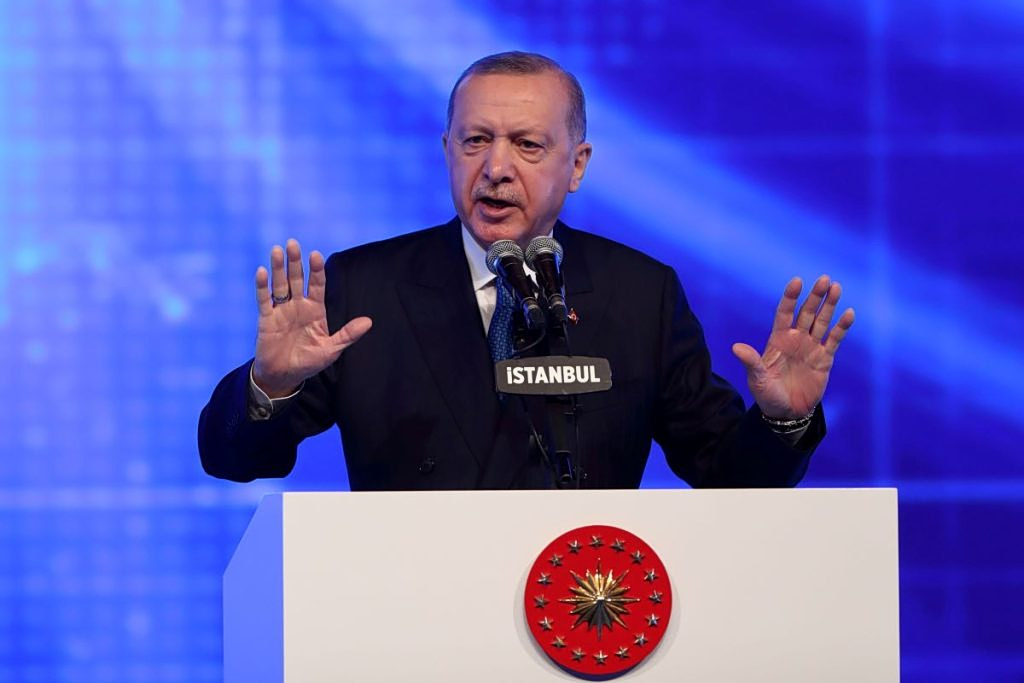
Addressing lawmakers from his ruling Justice and Development Party (AK Party) in Ankara, Erdogan said Israeli military actions in Syria and Lebanon had reached a point where they also threatened Turkey’s security. He argued that the security of Damascus and Beirut was inseparable from Turkey’s own security and warned against any attempt to impose new realities in the region.
Erdogan also accused Israel of seeking to destabilize the Mediterranean and Cyprus, saying unnamed regional actors had aligned themselves with Israel and were pursuing “pipe dreams” in the eastern Mediterranean. Without identifying specific countries, he warned that Turkey’s response would be “clear and very strong” if the rights of Turkey or Turkish Cypriots were violated. He reiterated that Ankara would defend its interests in the Eastern Mediterranean and around Cyprus “to the end.”
The remarks come amid growing Turkish concern over Israel’s expanding regional role following conflicts involving Iran, Syria, Lebanon and Gaza, as well as Ankara’s increasingly vocal opposition to Israeli policies. Over the past year, Turkish officials have repeatedly linked developments in Syria and the eastern Mediterranean, arguing that regional security arrangements should not exclude Turkey and warning against initiatives they view as aimed at containing Turkish influence. At the same time, cooperation among Greece, Israel and Cyprus in defense, energy and maritime security has continued to deepen, developments closely watched in Ankara.
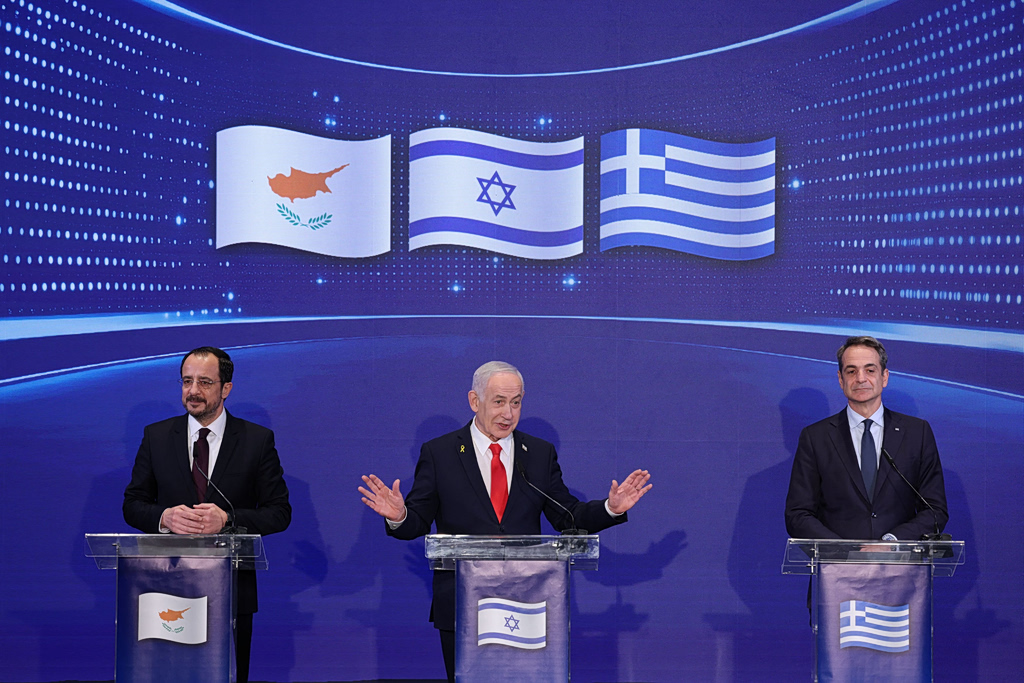
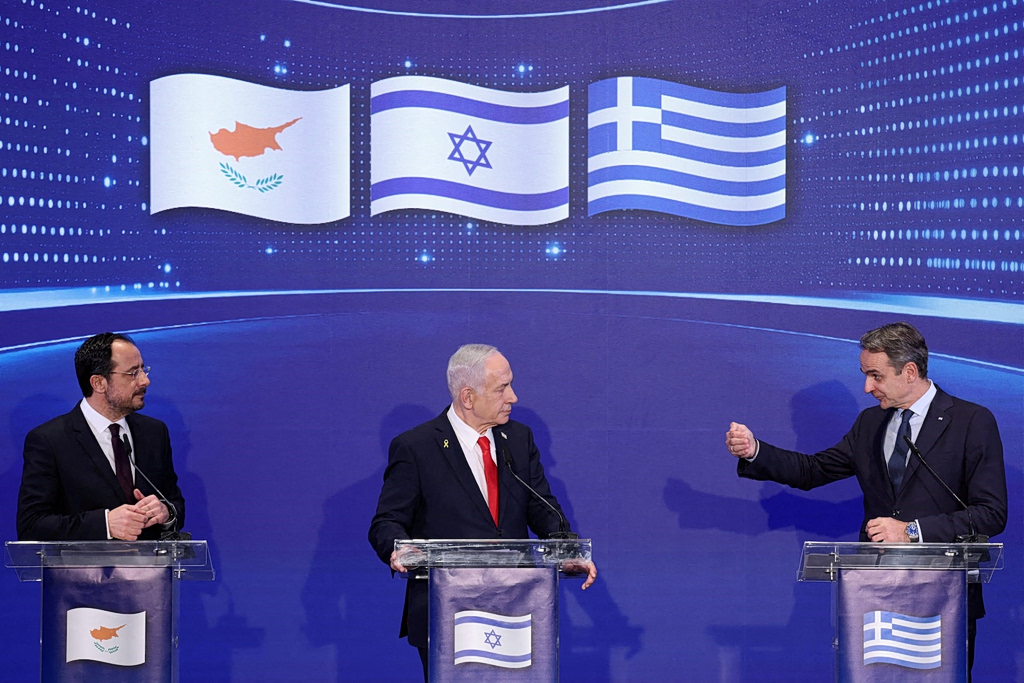
Israeli Prime Minister Benjamin Netanyahu, Cypriot President Nikos Christodoulides and Greek Prime Minister Kyriakos Mitsotakis hold a joint press conference after a trilateral meeting at the Citadel of David Hotel, in Jerusalem, December 22, 2025. ABIR SULTAN/Pool via REUTERS
Hours later, Netanyahu responded with unusually personal criticism of the Turkish leader. In a statement issued by his office, the Israeli prime minister described Erdogan as an “antisemitic tyrant,” accused him of supporting Hamas, repressing domestic opponents and persecuting Kurdish populations, and rejected his criticism of Israel’s conduct in the region.
“Erdogan is the last person who can preach morality to the State of Israel,” Netanyahu said, adding that Israel would continue operations against Iran and allied groups that it considers threats to regional security. He also defended the Israeli military, describing it as acting against forces seeking to destabilize the Middle East.
The exchange underscores the deepening confrontation between two of the region’s most powerful states. Once close security partners, Turkey and Israel have seen relations deteriorate sharply over the Gaza war, competing regional ambitions and growing friction over Syria and the Eastern Mediterranean. Despite intermittent diplomatic contacts, officials on both sides have increasingly portrayed the other as a source of regional instability, raising concerns that strategic competition between Ankara and Jerusalem could become a defining feature of the post-Iran conflict landscape.