 Μake us preferred on Google
 Not a bank transfer. Not a signed pact. Not a hidden photograph.
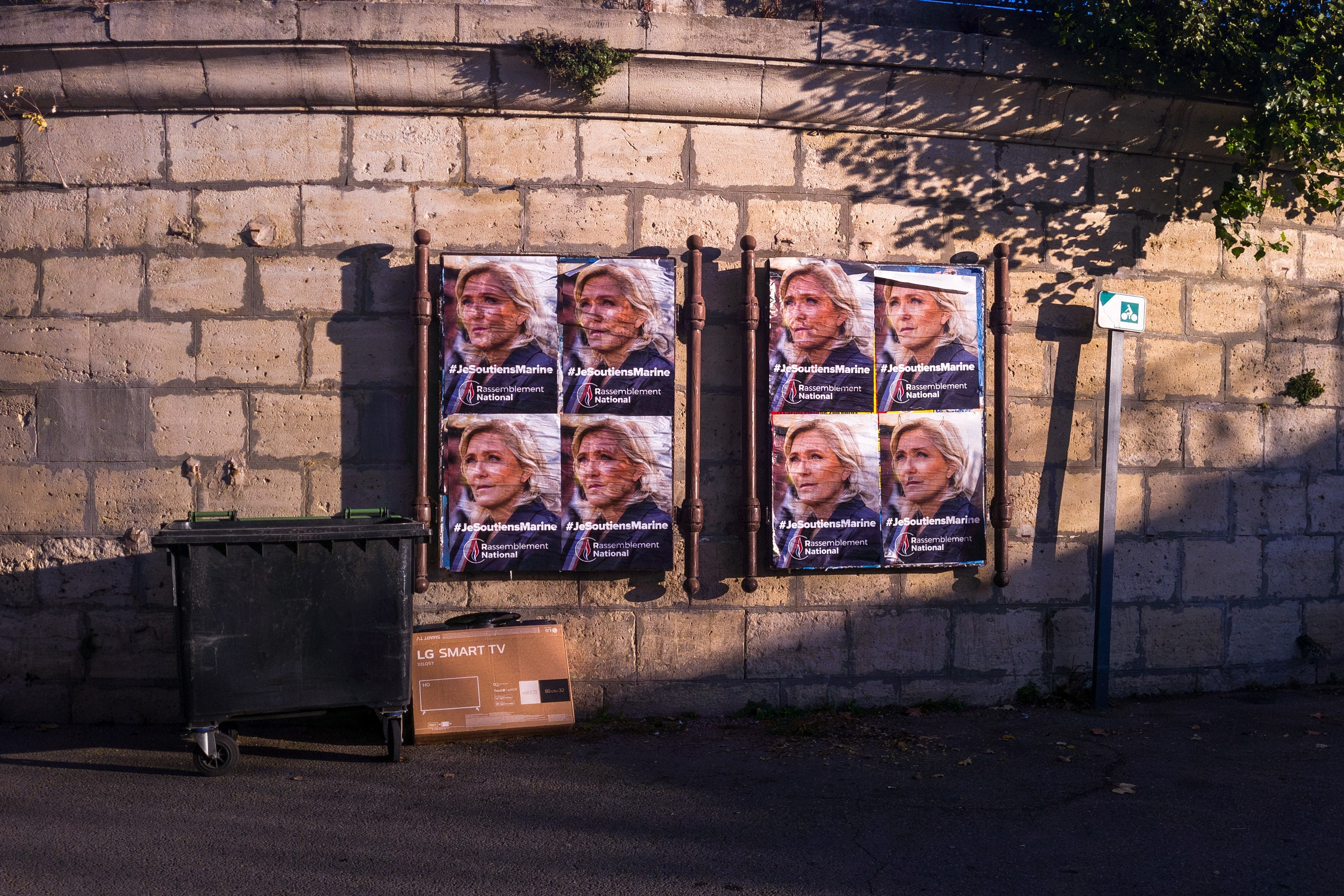
No Turkish loan to Le Pen or the National Rally is on the public record, not that any such evidence can be disclosed. This alliance needs no paper trail. Its currency is consequence: Le Pen denounces Turkey while attacking the system built to restrain it.
She gives Greeks and Cypriots every right word: Turkey outside Europe, Erdogan’s authoritarian drift, Turkey’s occupation of Cyprus, Turkey’s geography, siding with Paris against Ankara in 2020, and European sanctions during Turkey’s migrant pressure on Greece.
Borders, sovereignty, Christianity, resistance to political Islam – she knows the music. The trap is that she would break the orchestra.
Strategy begins where applause ends.
The test is not denunciation but constraint. Erdogan needs no affection from Paris. He needs European paralysis, NATO ambiguity, EU renationalization and a performative France unable to marshal power with Athens and Nicosia.
That is Le Pen’s offer: anti-Turkish in rhetoric, anti-system in consequence – not a weapon against Erdogan, an opening for him.
Le Pen diagnoses Europe’s weakness accurately. The danger is her prescription: not repair, but institutionalized fracture.
She does not seek European capacity to defend the external border, enforce European law, protect member states or act in the Eastern Mediterranean. She wants veto nationalism, not strategic sovereignty. Her call for France to leave NATO’s integrated military command while remaining formally inside the alliance sounds Gaullist in Paris. In Athens, Nicosia and the Eastern Mediterranean, it is dilution.
The France that irritates Athens and Nicosia is often the France that matters.
Macron can be theatrical, moralizing and difficult, but his France treated the Eastern Mediterranean as a strategic theatre, not a slogan: a firmer European line in 2020 against Turkish violations of Greek and Cypriot maritime space; a 2021 defence agreement with Greece, including a mutual assistance clause; Rafale fighters and Belharra-class frigates; and, in 2026, Macron standing in Athens with Kyriakos Mitsotakis to reaffirm Article 42(7) of the Treaty on European Union, the EU’s mutual assistance clause.
For Greece, this is not rhetoric. This is architecture: a frigate in the right sea, a fighter aircraft in the right airspace, a treaty clause that turns a threat against one member state into a European question, and a French president willing to spend political capital in the Mediterranean.
Greece does not need a France that merely dislikes Turkey. Greece needs a France that can deter Turkey.
Le Pen and Erdogan feed each other without affection. Erdogan pressures Europe; Le Pen gains an exhibit. Le Pen weakens Europe; Erdogan gains space.
He is not her ally. He is her evidence of European failure.
The pattern already exists in Le Pen’s Russian file. She need not take orders from Moscow. The record is clear.
In 2014, the National Front received a nine million euro loan from the First Czech Russian Bank. In 2017, Putin received Le Pen at the Kremlin during the French presidential campaign. She questioned the illegality of Russia’s annexation of Crimea and later argued for renewed NATO-Russia rapprochement after a peace agreement in Ukraine. The National Rally eventually repaid the Russian-linked loan.
Repayment does not erase the meaning of the debt years.
Viktor Orban gave the mechanism form.
Le Pen’s 2022 campaign benefited from a €10.7 million loan from Hungary’s MKB Bank, whose shareholders included businessmen close to Orban. He then built Patriots for Europe into a common anti-Brussels force: Le Pen’s National Rally, Fidesz, Salvini’s League, Wilders’ PVV, Austria’s Freedom Party, Spain’s Vox and others, with Greece’s Voice of Reason in the same political orbit.
Le Pen later travelled to Budapest to support Orban, calling him a friend and a visionary. He no longer governs Hungary, but his architecture survives: national-populist parties weakening European capacity from within.
On 8 February 2025, that architecture took the stage in Madrid. Le Pen, Orban, Salvini, Wilders and Europe’s nationalist leaders turned anti-Brussels anger into strategic language.
The words on Turkey and Cyprus were true. That was the danger.
Athens should not mistake a stage for a map. The map is the Aegean, Cyprus, the Eastern Mediterranean and NATO. Cyprus needs European law, French power and allied discipline. The useful France turns those instruments into policy.
For Erdogan, Le Pen’s ecosystem is better than praise. Parts of that ecosystem already meet Erdogan’s Turkey in the open: Orban through energy, diplomacy and the Organization of Turkic States; Salvini’s camp through migration bargaining, strongman politics and anti-Brussels defiance. Their interests are explicit: weaker Brussels, renationalized Europe, looser Atlantic discipline, sovereign bargaining space. Erdogan wants that Europe from the outside. Le Pen wants it from the inside. The arithmetic is simple: Patriots for Europe need not be pro-Turkish to serve Ankara. Hollowing Europe from within is enough.
Le Pen is more dangerous because she comes from France.
France is a nuclear power, a permanent member of the UN Security Council, the EU’s central military actor after Brexit, a Mediterranean power, a treaty-maker with Greece, and one of the few European states able to bring ships, aircraft, intelligence, diplomacy and law to bear at once.
A Eurosceptic government in a small country can obstruct. A Le Pen presidency would deform Europe’s strategic balance. Erdogan would need only one result: France as a nationalist amplifier.
Israel repeats the error in miniature: its hard right sees in Le Pen anti-Islamism, anti-Palestinian statehood, sovereignty and contempt for Europe’s liberal establishment; Jerusalem has reopened once-closed channels, with Ambassador Joshua Zarka meeting her this April despite the antisemitic legacy of Jean-Marie Le Pen’s National Front, once a party of Holocaust trivialization and open provocation.
Macron resentment is real: tone, Palestinian recognition after October 7, settlements, settler violence. Some of it is deserved. Macron turns foreign policy into presidential theatre when Paris is blocked at home. But resentment is not strategy.
Israel’s only exit from permanent war remains a demilitarized Palestinian state through a reformed Palestinian Authority, Hamas excluded, Arab normalization advanced, Israeli security guaranteed and Gaza removed from jihadist rule, under a French-Saudi framework tied to Hamas disarmament, PA reform and security arrangements.
Le Pen flatters Israel’s wound. She does the same to Greece and Cyprus.
That is the method: convert resentment into geopolitical fracture.
Putin needed her to weaken the Atlantic consensus; Orban, to normalize obstruction; Trump, to cheapen Europe into something easier to split, pressure, manage and ignore.
Erdogan extracts something sharper: a France that condemns Turkey in French while hollowing the Europe that restrains Turkey. He can survive French criticism. He profits from European fracture. That is the Turkish dividend. Le Pen would give him both.
Shay Gal works with governments and international institutions on strategy, risk and security decisions in high-stakes environments.