Greece will participate in four of the European Union’s first five European Defense Projects of Common Interest (EDPCIs), covering drones and counter-drone systems, maritime and seabed defense, space capabilities and integrated air and missile defense, as the bloc moves to strengthen joint defense production and procurement.
The EU Council approved the five projects on Monday under the European Defense Industry Programme (EDIP), creating a framework for member states to jointly develop major defense capabilities. The European Commission has allocated 325 million euros through EDIP to launch and implement the projects.
The initiative comes as European countries seek to close defense-capability gaps, increase production and reduce dependence on non-European suppliers.
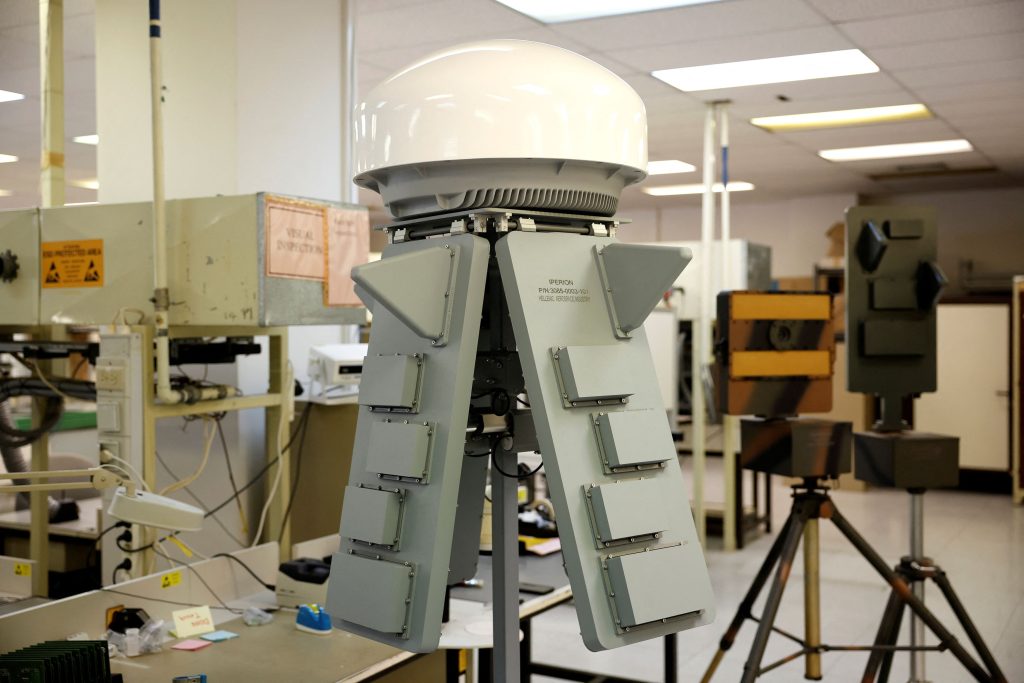
Anti-drone system Iperion is seen at the Hellenic Aerospace Industry (HAI), in Tanagra, north of Athens, Greece, July 3, 2025. REUTERS/Louiza Vradi
Greece’s four programs
The Greek side will participate in four of the five projects, including the DronE and Counter Drone European Resolve (DECODER) program, which will support the joint development, scaling and procurement of drones and counter-drone systems, as well as the expansion of European production capacity and a network of drone technology hubs.
Greece is among 26 EU member states participating in the project, alongside Norway and Ukraine.
Athens will also participate in Integrated Maritime and Seabed Defense (IMSD), a 17-country project aimed at improving maritime-domain awareness and developing interoperable capabilities for naval, underwater and seabed security.
The project focuses on protecting critical infrastructure, including ports, offshore installations, undersea cables and pipelines. It will also support the development and procurement of naval platforms, underwater and unmanned systems, and intelligence, surveillance and reconnaissance capabilities.
Greece is also participating in SPACE, a 16-country program covering space-based early warning, satellite communications, intelligence, surveillance and reconnaissance, space-domain awareness, positioning and navigation, navigation warfare and responsive space systems.
The program also envisages examining a multi-mission satellite constellation and strengthening Europe’s ability to respond rapidly if space-based infrastructure is damaged or destroyed.
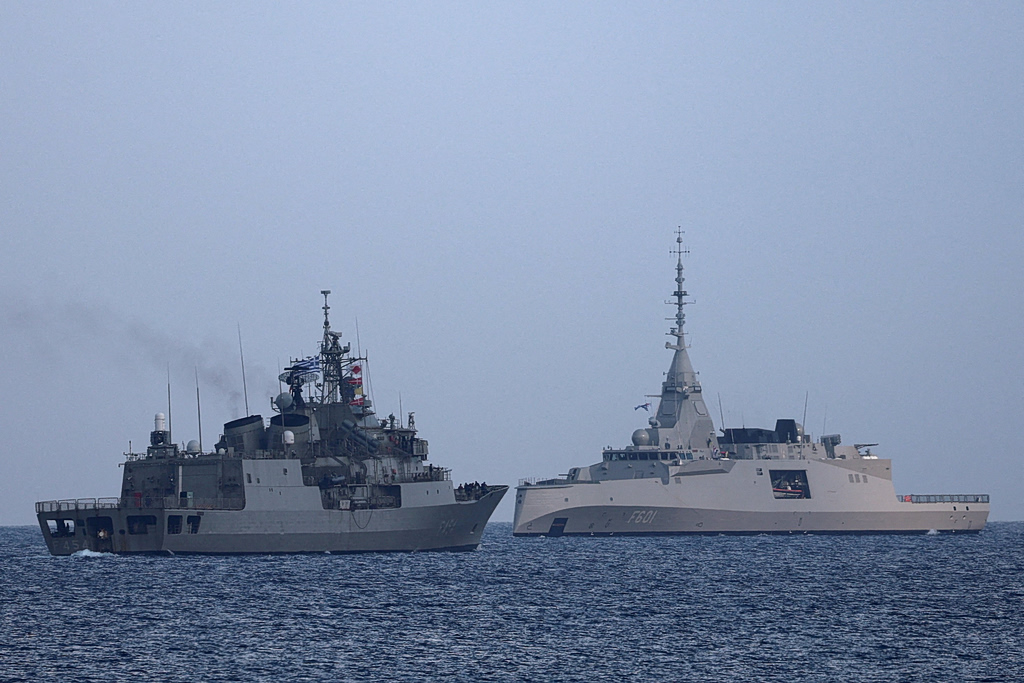
Greek frigates “Kimon”, right, and “Psara” near the port of Limassol, as the conflict in the Middle East intensifies, Cyprus, March 4, 2026. REUTERS/Yiannis Kourtoglou
The fourth project involving Greece is the EU Federated Integrated Air and Missile Defense including Early Warning (EU-FIAMD).
The program aims to create a federated European system of integrated air and missile defense, including early-warning capabilities and greater coordination between national systems through common command-and-control arrangements.
The initiative is particularly relevant to Greece’s efforts to strengthen its air and missile defense architecture as Athens has been pursuing a multilayered system while also expanding cooperation with European and other partners on defense procurement and technology.
No participation in Eastern Flank Watch
The county will not participate in the fifth project, called Eastern Flank Watch (EFW).
The 15-country initiative is focused specifically on the EU’s eastern border and covers ground, air and maritime threats, as well as drones and counter-drone systems, military mobility, command and control, intelligence, surveillance and reconnaissance, counter-mobility and air and missile defense.
The five projects were selected from nine proposals submitted by member states following a European Commission call launched in February. The Commission proposed the five projects in July after assessing their objectives, maturity and potential contribution to European defense capabilities.
The Council’s approval allows the projects to receive initial EU funding through EDIP and creates the basis for possible additional support through the European Competitiveness Fund.