Greek Defense Minister Nikos Dendias on Tuesday warned that Europe’s security architecture is under growing strain from war, geopolitical revisionism, cyber threats, energy instability and migration pressures, arguing that the continent must move from “strategic ambiguity” to collective preparedness and defense cooperation.
Speaking at the Europa-Forum Wachau 2026 in the Austrian city of Krems, Dendias said Europe could no longer treat peace as guaranteed or defense as a secondary policy issue. He argued that modern security threats had exposed the fragility of assumptions that shaped Europe after the Cold War, while stressing that Greece faces these challenges directly because of its geographic position at the crossroads of Europe, the Middle East and Africa.
Dendias said Greece views security threats through a “360-degree” lens alongside Austria and Moldova, while thanking Vienna for supporting Athens during the 2020 migrant crisis at the Evros border, which he described as an attempt to weaponize migration pressure against both Greece and the European Union.
The Greek minister said Europe must turn strategic solidarity into a permanent reflex rather than an emergency mechanism, warning that no European state can confront modern hybrid threats alone. He also stressed that defense and technology are now inseparable, with future conflicts determined by speed, artificial intelligence, resilient networks and drone capabilities rather than traditional military mass.
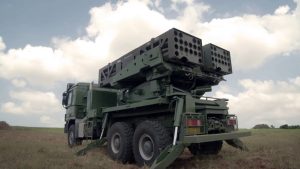
Referring to Greece’s “Agenda 2030” defense overhaul, Dendias said Athens was restructuring its defense architecture through domestic innovation and industrial production rather than relying solely on procurement programs. He highlighted Greece’s domestically developed “Centaur” anti-drone system and said the country aims to sharply expand domestic drone production in coming years.
Dendias also raised concerns over the European Union’s SAFE defense financing instrument, saying its implementation contained structural weaknesses and warning against interpretations that could indirectly support defense industries in countries that threaten EU member states. He stressed that SAFE funding consists of loans rather than “free money” and called for reforms to a future “SAFE 2” framework to reduce fiscal and bureaucratic constraints on defense investment.
The minister reiterated that Greece spends more than 3% of its GDP on defense, among the highest rates in NATO and the EU, arguing that military spending should be viewed as an investment in technological capacity, industrial expertise and economic resilience.
The Mitsotakis government has repeatedly touted its efforts over the past seven years to modernize the Greek armed forces through the Agenda 2030 program, with particular emphasis on drone warfare, greater domestic defense production and Athens’ efforts to position itself as a regional security pillar amid continued instability in the eastern Mediterranean and the war in Ukraine.
Following the forum, Dendias met Austrian Defense Minister Klaudia Tanner to discuss expanding bilateral cooperation in defense innovation, the defense industry and broader regional security developments.