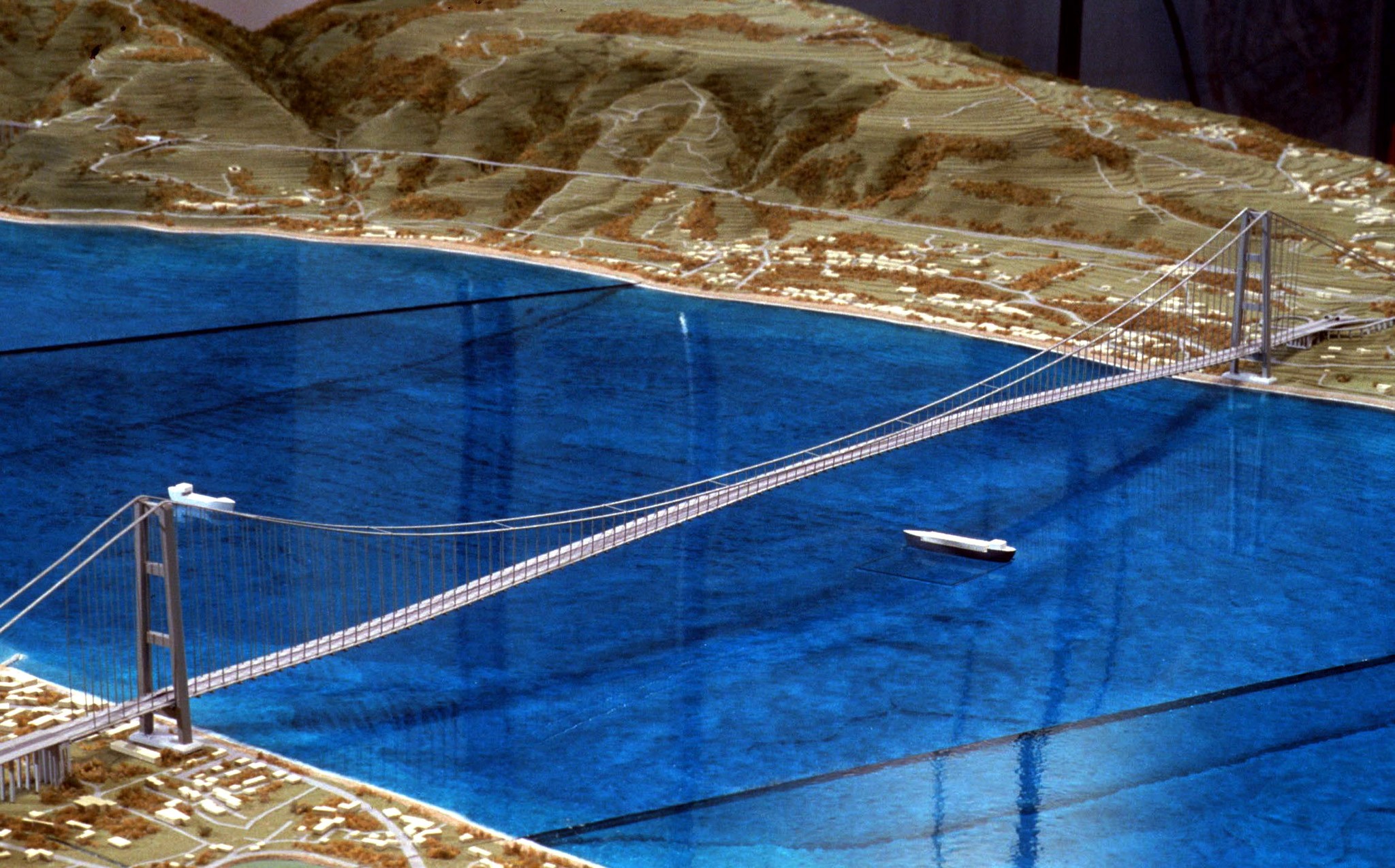
The Italian government, led by Prime Minister Giorgia Meloni, has given the green light to a long-debated infrastructure project: the construction of a road and rail bridge connecting Sicily to mainland Italy across the Strait of Messina. The €13 billion initiative, which has been discussed for decades, is now being positioned as a matter of national security and will be included in Italy’s NATO-related spending.
A Strategic Shift
Although originally proposed in the 1970s as a tool for economic development in one of Italy’s poorest regions, the Messina Bridge is now being reframed as a strategic military asset. According to the government’s official report, the bridge will facilitate military mobility due to the presence of NATO bases in southern Italy. It is also seen as contributing to Italy’s goal of allocating 5% of its GDP to NATO defence spending, in line with targets advocated by figures such as Donald Trump.
In April, the government report stated: “The Messina Strait Bridge is a fundamental piece of infrastructure for military mobility, given the presence of important NATO bases in southern Italy. It is therefore a project of high public interest.” The bridge, stretching 3.3 kilometres, would allow for rapid movement of Italian and allied military forces, especially as the Mediterranean becomes increasingly sensitive from a geopolitical standpoint.
Prime Minister Meloni has echoed this sentiment publicly, warning of hybrid threats and increased Russian activity in the Mediterranean. “We see Russia projecting more and more power in the region,” she said. “There are many hostile actors operating on the southern flank of the Alliance.”
Expert Doubts
Despite these claims, experts remain sceptical. Many defence analysts question whether the bridge truly serves a pressing military purpose, especially when current security concerns are concentrated in Eastern Europe due to the war in Ukraine. Critics argue that NATO-related infrastructure should prioritise troop mobility towards the eastern front, not the south.
Others suggest that presenting the project as a strategic necessity is a political move to justify funding. The bridge, they say, is less about NATO and more about fulfilling a long-standing national ambition.
A Historic and Political Obsession
The dream of a physical link between Sicily and the mainland dates back centuries. Roman chroniclers mentioned early attempts to cross the strait without ships, and during Italy’s unification in the 19th century, the idea resurfaced frequently.
Modern political efforts to build the bridge have repeatedly failed. In 2005, then-Prime Minister Silvio Berlusconi signed a €3.9 billion contract for the project, but it was shelved after his government collapsed. A later attempt in 2011 was also abandoned during the European debt crisis.
Local opposition has also been a factor. Residents have expressed concerns over the environmental and social impact of construction, which would require significant changes to the region.
Moving Ahead
This time, the Meloni government hopes to succeed where others have not. With the backing of Matteo Salvini, a key far-right political figure, the bridge is being fast-tracked. Framing the project within a NATO context may help secure international support, but questions remain about its true strategic value and long-term benefit.