Multiple diplomatic setbacks have dealt a blow to Turkey’s revisionist maritime agenda in the eastern Mediterranean, with Italy and Tunisia formally challenging Libya’s unilateral maritime claims at the United Nations, while at the same time Greece and Israel launched a joint aerial refueling exercise south of Crete, underscoring the resilience of their strategic partnership despite heightened regional tensions.
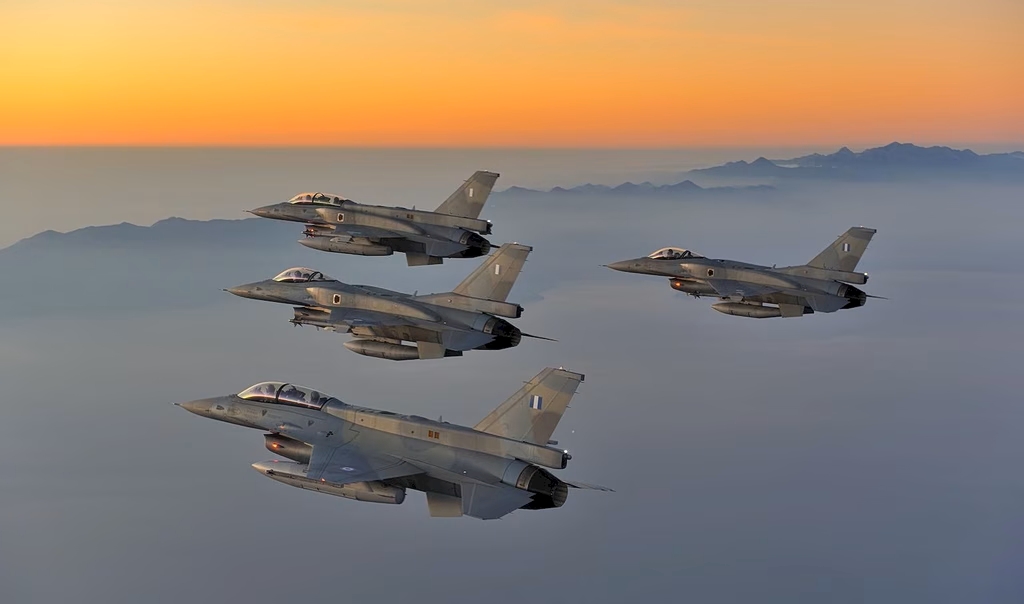
The military exercise, running from Monday through July 1 under a Greek-issued NOTAM, comes as Athens and Tel Aviv continue to deepen operational coordination in the eastern Mediterranean. The drills follow the recent visit by the chief of the Hellenic Navy General Staff to Israel’s naval base in Haifa and reflect ongoing efforts by both militaries to refine joint tactics and interoperability.
One or two Israeli aerial refueling tankers are expected to participate, allowing dozens of Greek fighter aircraft to conduct advanced in-flight refueling training.

The exercise coincides with a period of worsening relations between Turkey and Israel. Over the past two months, Israeli media have highlighted growing strategic rivalry over Syria, increasingly confrontational political rhetoric and mounting concerns in both countries over each other’s expanding regional influence. While military deconfliction mechanisms remain in place, the relationship has become markedly more adversarial, adding another layer of complexity to eastern Mediterranean security.
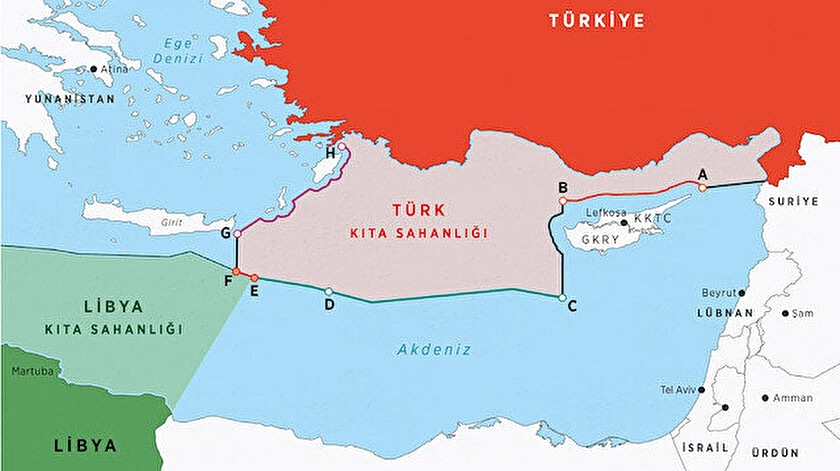
The controversial Turkey-Libya maritime deal as seen on a map. Athens, other regional countries and the EU consider the attempt at maritime delimitation as baseless and illegal.
On the diplomatic front, Tunisia’s formal challenge to Libya’s maritime claims has further isolated the Tripoli government in the Mediterranean, reinforcing Athens’ longstanding position that the controversial 2019 Turkey-Libya maritime memorandum lacks international legal support, according to Greek diplomatic assessments.
The latest development follows Libya’s decision to unilaterally define its maritime boundaries using a methodology that Greece argues ignores the United Nations Convention on the Law of the Sea (UNCLOS) and effectively extends the principles of the 2019 maritime accord with Turkey.
In a note verbale submitted to the United Nations on April 19, 2026, Tunisia contested Libya’s maritime claims along its western maritime frontier, joining Italy in formally rejecting Tripoli’s interpretation of maritime boundaries. Greek officials view the coordinated objections as evidence that the internationally recognized but provisional government in Tripoli has become increasingly isolated among its Mediterranean neighbors.
Athens has consistently argued that both Libya’s maritime methodology and the Turkey-Libya memorandum are illegal and without legal effect. Greek officials believe the positions adopted by Rome and Tunis strengthen two key arguments: first, that opposition to the Libyan claims extends well beyond Greece, reflecting a broader regional consensus; and second, that Turkey’s “Blue Homeland” maritime doctrine lacks wider international acceptance and is inconsistent with UNCLOS.
Greece has repeatedly denounced both Libya’s maritime methodology and the Turkey-Libya maritime memorandum as illegal and without legal effect. From Athens’ perspective, the positions adopted by both Rome and Tunis provide two key diplomatic advantages.
First, they reinforce the argument that the dispute extends beyond bilateral differences between Greece and Turkey or Greece and Libya, reflecting a broader regional consensus. Second, they underscore what Greek officials describe as the lack of international acceptance for Turkey’s revisionist “Blue Homeland” doctrine and its interpretation of maritime baselines, arguing that these positions are not grounded in the United Nations Convention on the Law of the Sea (UNCLOS).
The diplomatic developments come against a backdrop of heightened regional tensions.
Over the past two months, relations between Turkey and Israel have deteriorated further, with Israeli media highlighting growing strategic rivalry over Syria, continued sharp political rhetoric and increasing concern in both countries about each other’s expanding regional influence. While military deconfliction mechanisms have remained in place to reduce the risk of direct confrontation, the relationship has become increasingly adversarial, adding another layer of complexity to eastern Mediterranean geopolitics.