Venezuelan President Nicolas Maduro is due to appear in a U.S. court on Monday following his capture by American forces in a weekend military operation, with President Donald Trump warning that further strikes remain an option if Venezuela fails to cooperate with Washington.
Speaking to reporters on Sunday, Trump said he could authorize another incursion if the United States does not achieve its goals of opening Venezuela’s oil industry and curbing drug trafficking. He also issued threats of possible military action involving Colombia and Mexico, while suggesting Cuba’s communist government was weakening.
View this post on Instagram
Maduro was detained during a U.S. raid in Caracas on Saturday, an operation the Trump administration has framed as a law-enforcement action linked to criminal charges filed in 2020. Those charges accuse Maduro of narco-terrorism conspiracy, including supporting major drug trafficking groups and directing cocaine routes with the protection of Venezuela’s military. Prosecutors updated the case over the weekend to include his wife, Cilia Flores.
Trump has acknowledged that broader political and economic issues also played a role, citing Venezuelan migration to the United States and the nationalization of U.S. oil assets decades ago. “We’re taking back what they stole. We’re in charge,” he said, adding that U.S. oil companies would return to rebuild Venezuela’s petroleum industry.
View this post on Instagram
Despite Maduro’s detention, his government remains in control in Caracas. Vice President Delcy Rodriguez has assumed the role of interim leader and rejected U.S. assertions that she is willing to cooperate with Washington.
Legality of US Operation in Focus at United Nations
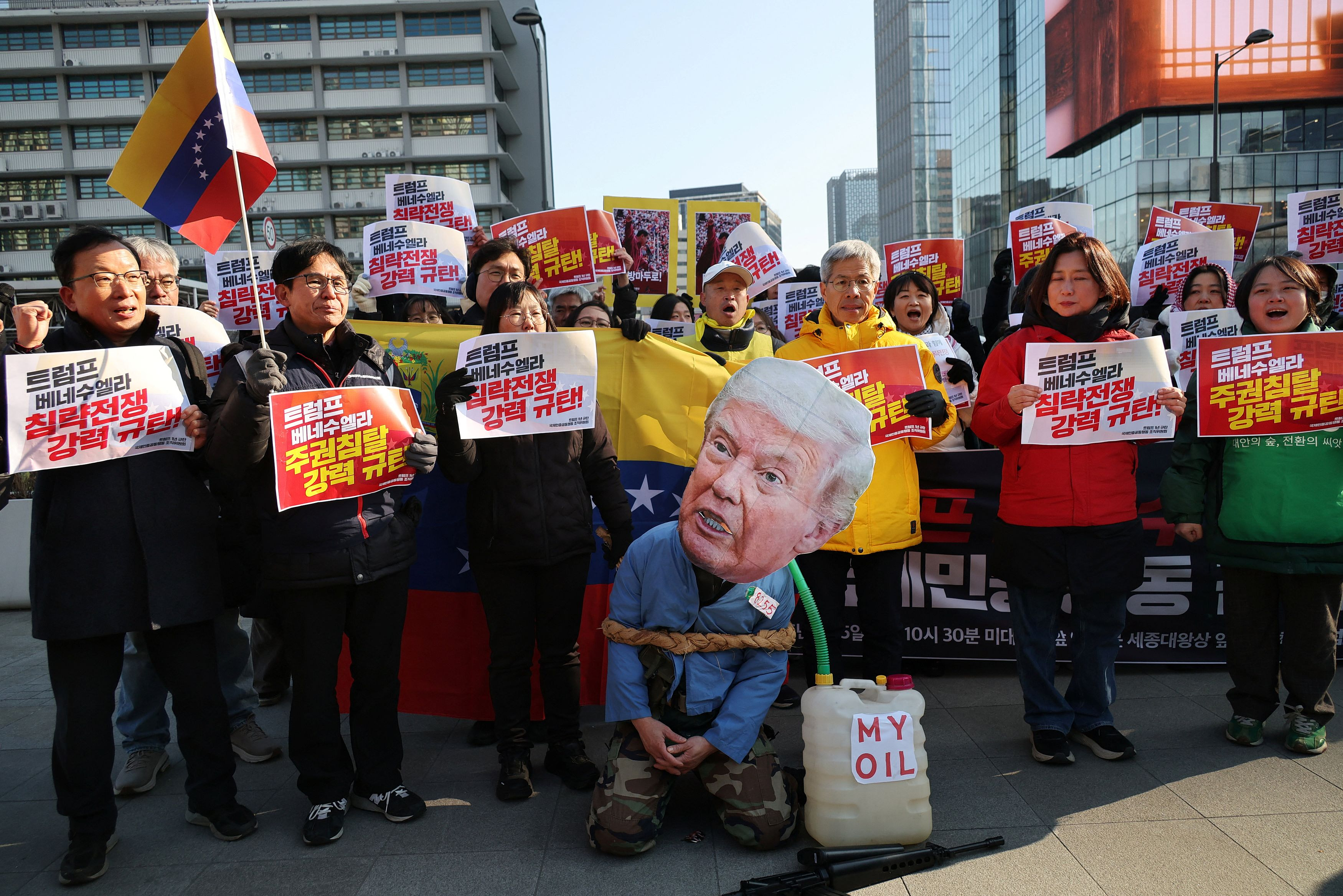
The operation has drawn international concern, with several countries questioning its legality. The U.N. Security Council will meet to discuss the legality of Maduro’s capture, which has drawn criticism from Russia, China, and other Maduro allies. U.N. Secretary-General Antonio Guterres warned that the U.S. action sets “a dangerous precedent.”
Washington defends the operation under Article 51 of the U.N. Charter, citing self-defense against drug trafficking and threats allegedly coordinated by Maduro with foreign powers and criminal groups. Legal experts, however, argue the raid violated international law, noting it lacked Venezuelan consent and Security Council authorization. Professors Tom Dannenbaum and Adil Haque emphasized that the seizure infringed on the immunity of a sitting head of state and exceeded U.S. jurisdiction.
The Security Council’s ability to challenge the U.S. is limited by its veto power, ensuring that Washington cannot face formal U.N. accountability.