 Μake us preferred on Google
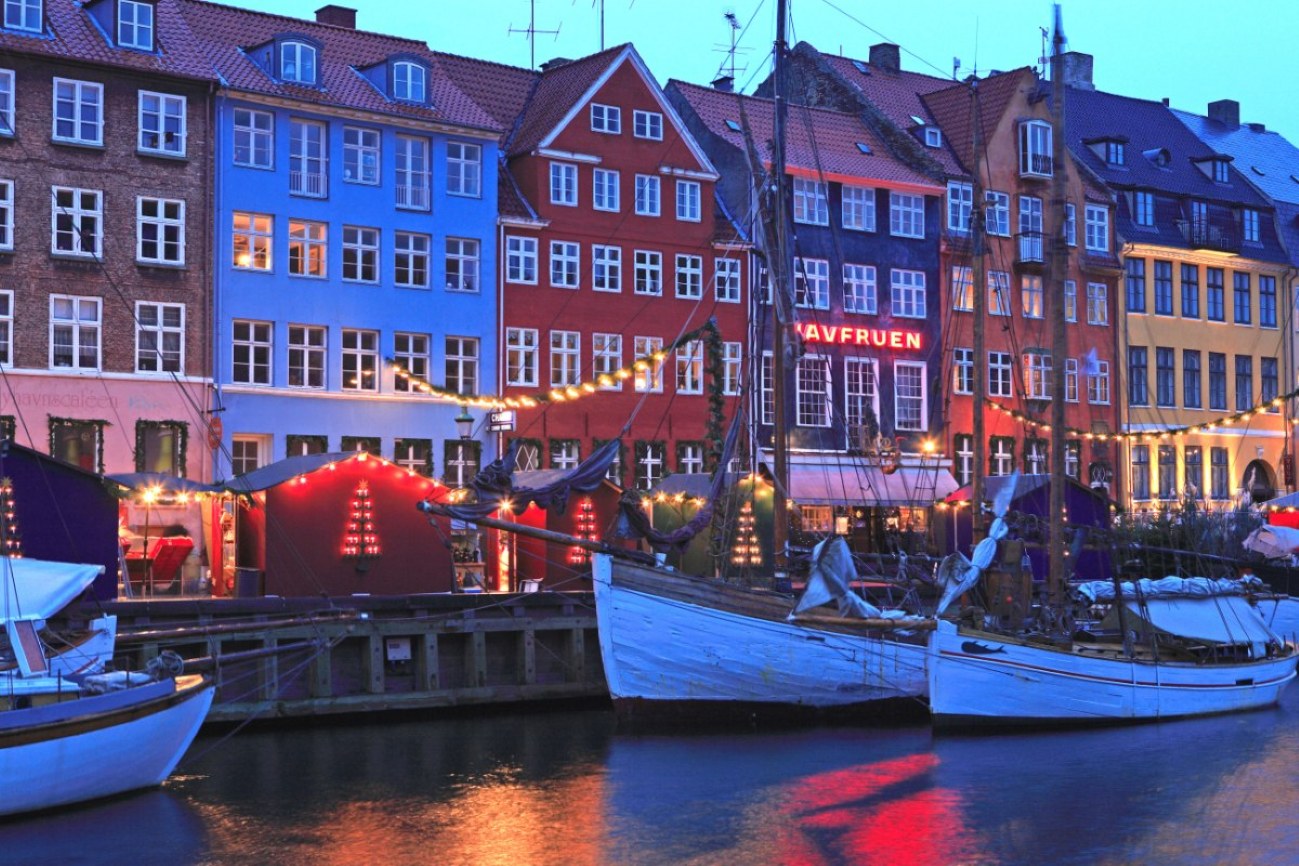
 Three European cities top the list as the most livable in the world, according to the 2025 annual Economic Intelligence Unit (EIU) ranking.
The capital of Austria, Vienna, was toppled from the top spot after three years of dominance by Denmark’s Copenhagen, with two other European cities, Zurich (3rd) and Geneva (5th), also in the top ten.
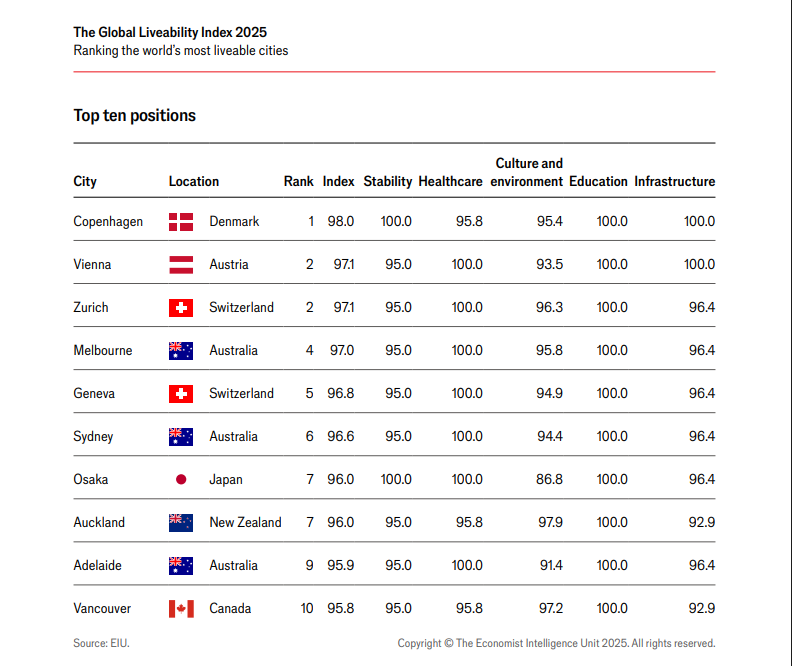
Australian cities, which are consistently ranked among the most livable in the world, unsurprisingly featured in the list, with Melbourne (4th), Sydney (6th), and Adelaide (9th) finding a spot in the top ten.
Japan’s Osaka (7th) represents the only Asian city in the top ten, while Vancouver from North America comes in at ten.
The Economist magazine’s EIU ranked 173 cities around the world based on a number of factors, including healthcare, education, stability, infrastructure, and the environment.
Athens was among the biggest movers up the rankings, gaining 6 spots from 91st to 85th place, according to the survey carried out between April 14th and May 11th, with an index of 78.1, below the 76.1 average.
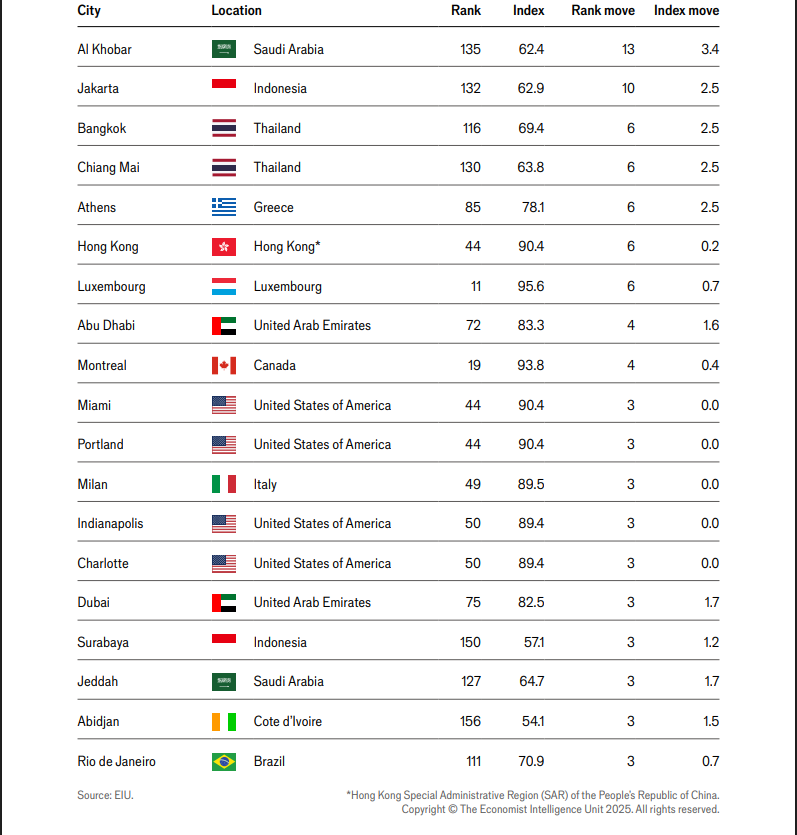
The average score for livability across 173 cities in the index stands at 76.1 out of 100. However, the survey stresses that scores in the stability category are on a decline in light of rising geopolitical tensions, civil strife, and widespread housing crises.
The livability score is reached through category weights, which are equally divided into relevant subcategories to ensure that the score covers as many indicators as possible.
Indicators are scored as acceptable, tolerable, uncomfortable, undesirable, or intolerable. These are then weighted to produce a rating, where 100 means that livability in a city is ideal and 1 means that it is intolerable.
For qualitative variables, the EIU awards an “EIU rating” based on the judgment of our in-house expert country analysts and a field correspondent based in each city. For quantitative variables, the EIU calculates a rating based on the relative performance of a location using external data sources.