 Μake us preferred on Google
 When floodwaters surged through his area on August 26, nine-year-old Ram Thakur was climbing uphill with his mother and dozens of other people trying to escape. Looking back, he saw muddy water rising behind them, and the group began to run. His mother, who had been holding his hand, pushed him to climb faster and shouted at him in Nepali to keep going and not look back.
He did as she said and kept climbing. When he finally turned around, the water was still churning nearby, but his mother was gone.
Almost four weeks later, Thakur is still hoping his mother and father will come for him. He now lives with 26 other children in a government primary school in Nuwakot district that has been converted into a temporary shelter.
They are among more than 500 children staying in temporary shelters across Nepal’s flood-hit districts whose parents are either dead or missing. Nepali law requires a person to be missing for 12 years before they can be declared dead. There is an exception for disasters, but relatives must apply to a district court for a judicial declaration of death.
That leaves Thakur and the others in limbo. On paper, they are not orphans. In reality, they have been without their parents since the floods, which killed more than 1,400 people and left at least 5,000 missing.
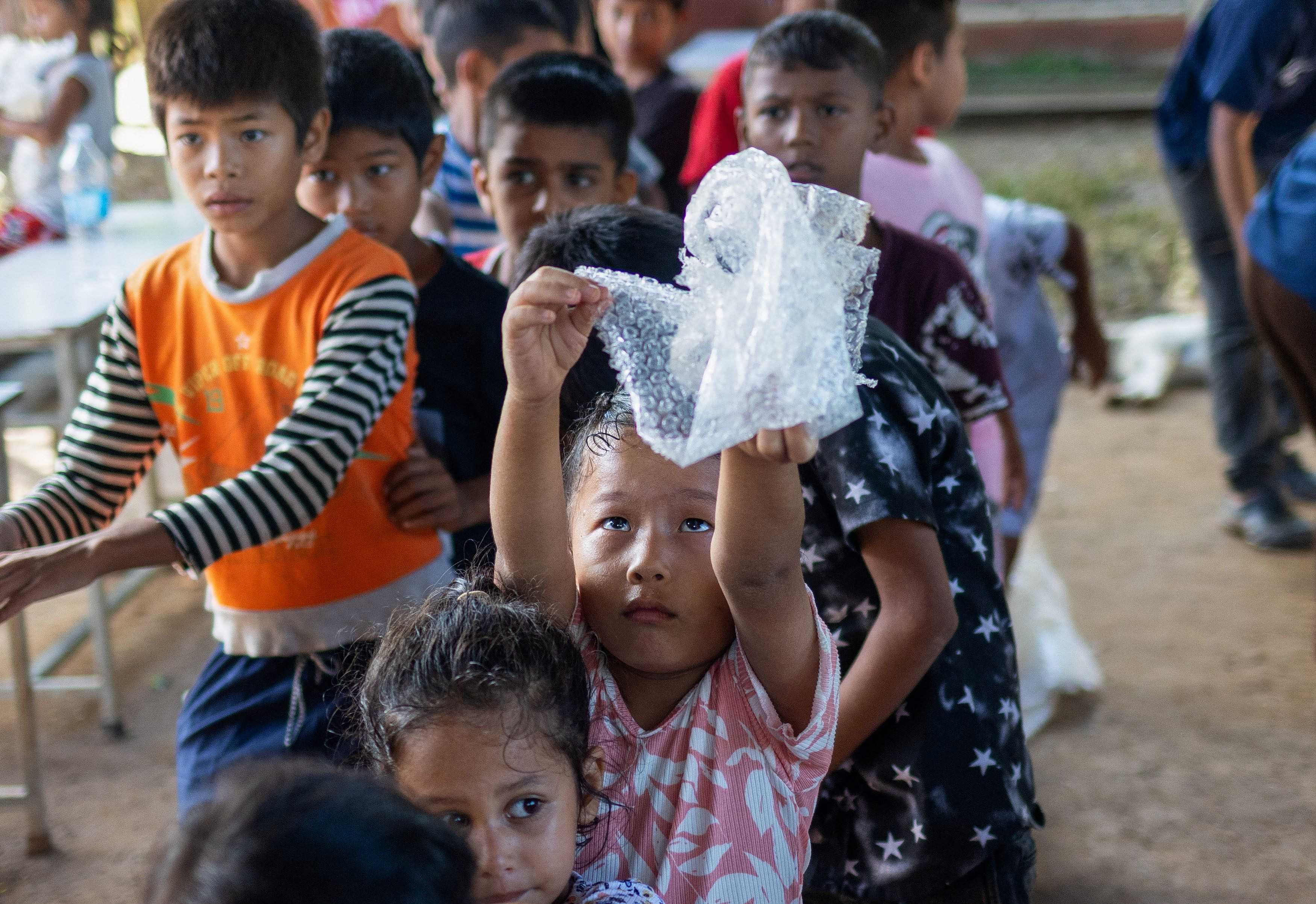
Children displaced by the deadly flash floods and mudslide, stand in a queue to receive free clothes at a school turned into a temporary shelter, in Devighat, Nuwakot district, Nepal, September 5, 2026. REUTERS/Adnan Abidi
Waiting for His Parents
August 26 started as a normal school day for Thakur. He was walking to school with his mother around 8 a.m. when disaster struck. His father, a guide and driver who started work at 10 a.m., was still at home.
Then people began yelling at them to run because a flood was coming. Thakur and his mother walked, climbed and ran until they were separated. He spent a day stranded on a hill with 13 others before an army helicopter rescued them. He said he was terrified and hungry and feared he would die, adding that his school bag with his biscuits and lunchbox had been swept away.
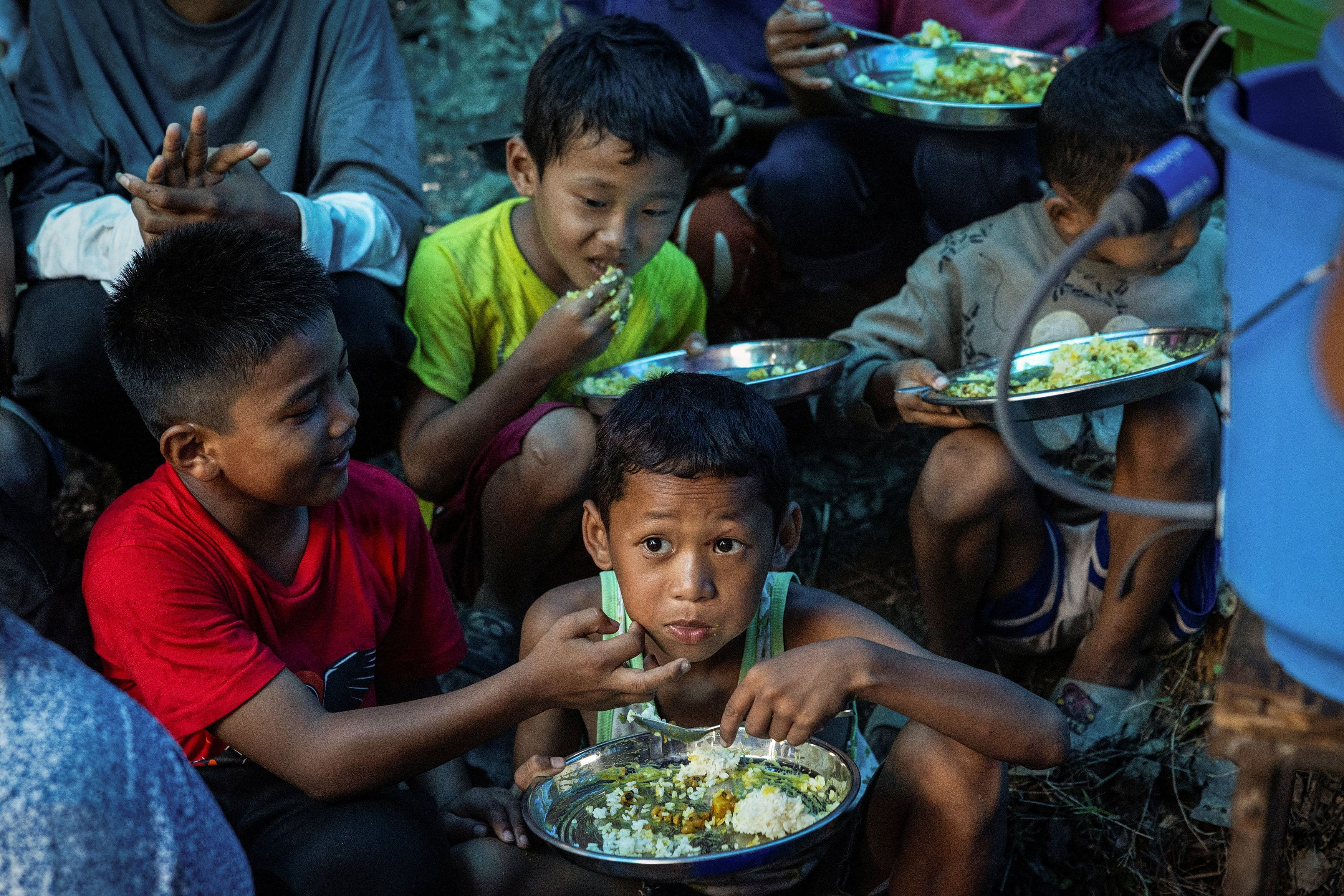
Eating a lunch of lentils, rice and greens with the other children at the shelter, Thakur said he could not understand why his parents had not come to find him yet. He said they both knew how to swim, so they should have arrived by now.
A counselor at the shelter said Thakur still rushes outside every time he hears a helicopter, hoping his parents have been rescued.
A post-flood assessment carried out this month by Nepal’s National Child Rights Council and Save the Children found more than 1,000 children living in temporary shelters. Of these, more than 100 had no relatives with them, and 439 were without their parents but had other family members present, said Ayush Joshi, program director for Save the Children in Nepal.
Overall, the floods displaced more than 32,000 children, according to Leon Muwoni, head of child protection at UNICEF Nepal. Officials and aid groups are working to trace their families, and so far 18 children have been reunited with their parents.
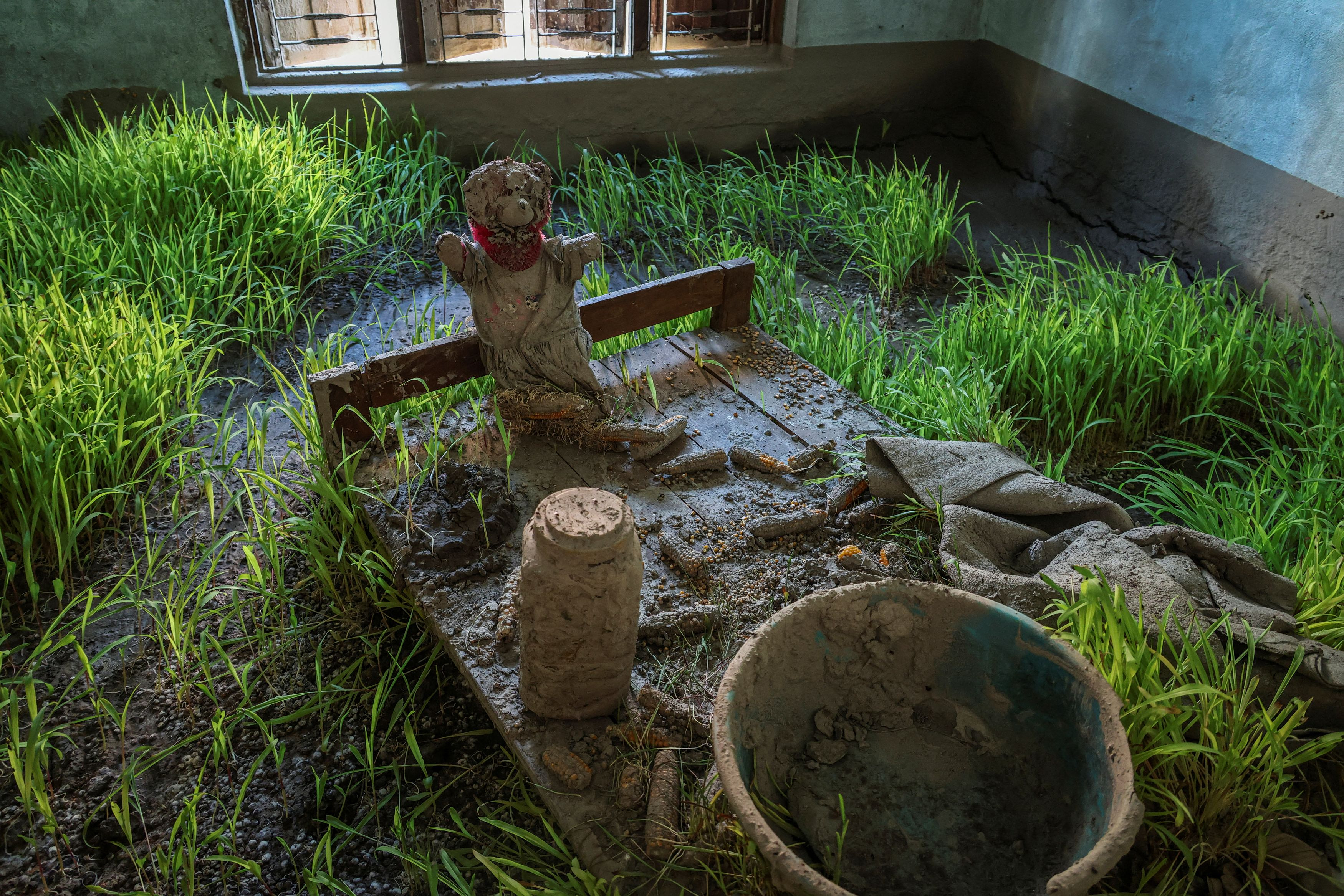
Corn sprouts from mud-covered storage inside the home of Chiranjivi Pudasaini, 54, alongside a toy doll belonging to his granddaughter, a week after flash floods and mudslides struck Devighat, Nuwakot district, Nepal, September 9, 2026. REUTERS/Tyrone Siu
Silent From Shock
Thakur’s shelter has eight rooms. Local nonprofits have set up six of them with waterproof mats, bedding and stuffed toys, and workers are building bunk beds. One room stores food supplies and another serves as a kitchen. Most of the staff are Nepal police officers, and the rest work for nonprofits, along with one counselor. All of them are women.
About 100 kilometers (60 miles) away, at a children’s shelter in Dhading, four-year-old Shibani Tama has stopped speaking. Both of her parents have been confirmed dead.
Caregivers say she remembers little about her neighborhood or her relatives, and no family members have come for her. The only thing she has told rescuers and counselors is that she was at school when teachers hurried her and other students uphill.
Yamuna Bhattarai, a caregiver at the shelter, said Shibani does not talk to anyone, will not let anyone comb her hair and only allows her clothes to be changed every two or three days after a lot of coaxing. She said it is deeply upsetting to see Shibani and other children in such severe shock, and that all of them urgently need psychological support.
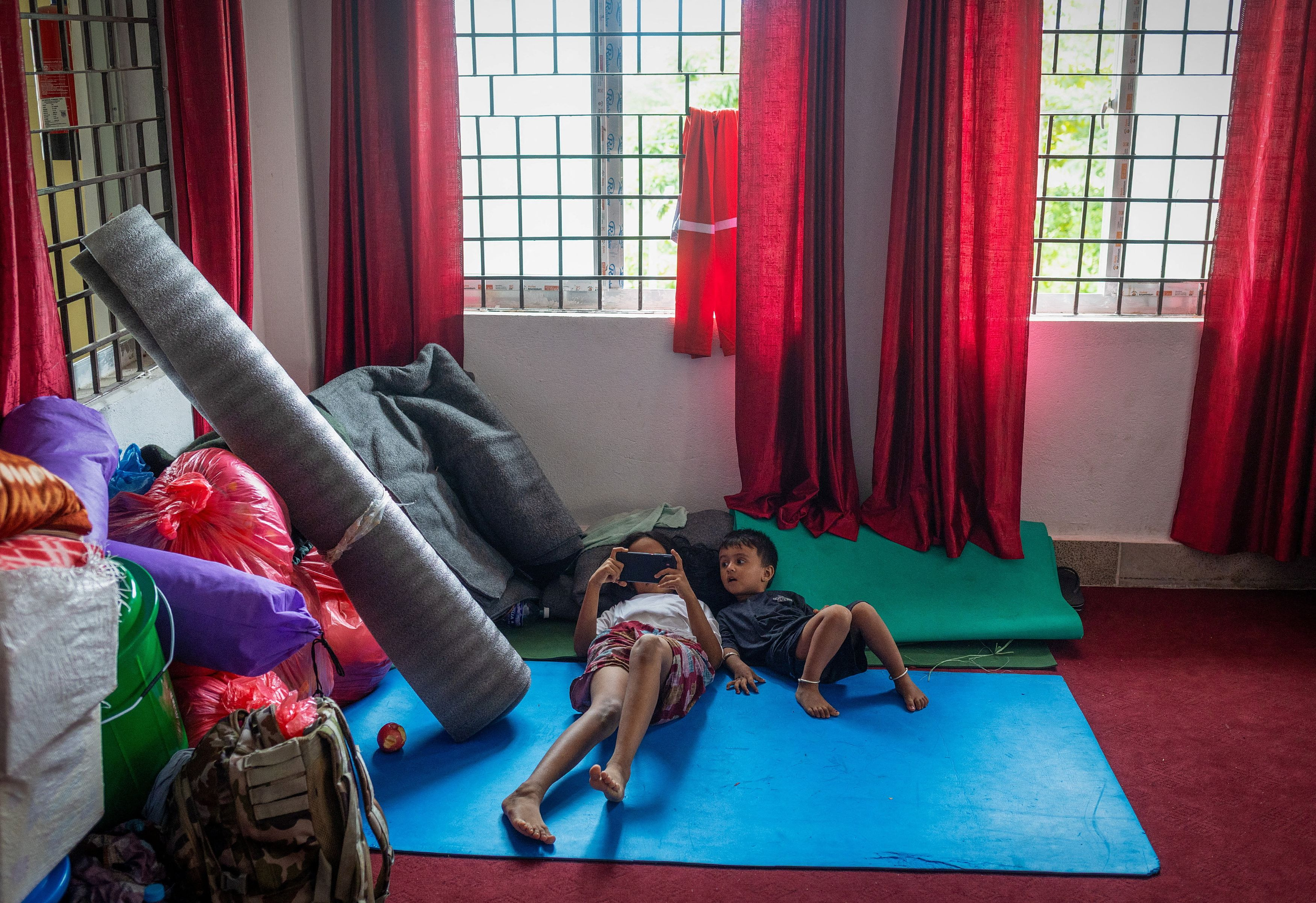
Children displaced by the flash floods and mudslide, look at a mobile phone as they take shelter inside a hospital, at Devighat, Nuwakot district, Nepal, August 30, 2026. REUTERS/Adnan Abidi
Children Caring for Children
Many children who lost both parents never learned to wash their hair, change their clothes or feed themselves. Others are now looking after younger siblings despite being young themselves.
Ten-year-old Sanju Lama was heading to her grandmother’s home in Rasuwa, the district hardest hit by the floods, with her two-year-old brother when strangers grabbed them and pulled them to safety. Floodwaters swallowed her home, and her parents, who were expected to be home at the time, are missing.
Bhattarai said loud noises startle Sanju, even someone calling her name. She holds her little brother’s hand almost constantly and often wakes up frightened at night. She spends much of the day reading English poems to him. According to Bhattarai, the two now have only each other.
UNICEF says 18 schools in the affected districts were destroyed and another 20 were damaged, leaving children without safe places to learn, play and heal. Dozens of schools sit near riverbanks and remain at risk, and an estimated 10,000 school-age children face an uncertain future in education.
Support Falling Short
Aid workers, counselors and childcare staff at school shelters in Dhading say their efforts to help the children feel safe often are not enough. Toys, books and games have been handed out, but few children use them. Many remain withdrawn, distracted or too overwhelmed to play.
Joshi said Save the Children has provided toys and school supplies to children in the shelters. In some cases, volunteers have seen children whose parents are missing using dollhouses to create families with parents. He said the children likely do not grasp what has happened or why, and have no sense of what tomorrow or the future will bring.
Many children are living in crowded shelters with little privacy. At the same time, officials and aid groups say they must be cautious about releasing children to people claiming to be relatives. Muwoni said some children whose relatives have been found are being kept in shelters when those relatives cannot provide enough documentation or proof of guardianship, to protect them from trafficking and child labor.