 Μake us preferred on Google
 When European Commission President Ursula von der Leyen proposed opening the door for Canada to become the European Union’s (EU) first “associate member,” she introduced a political concept that has no corresponding status in EU law. That ambiguity is exactly what makes the proposal interesting.
The question is not whether Canada will join the EU. It is how far integration with the Union can go without leading to membership.
The relationship already has solid foundations. Although full ratification is still pending, the EU-Canada Comprehensive Economic and Trade Agreement (CETA) has been provisionally applied since 2017. Canada has been associated with Pillar II of Horizon Europe since 2024. A Security and Defence Partnership followed in 2025, and in 2026 Canada became the first non-European country to take part in the EU’s Security Action for Europe (SAFE) instrument, opening SAFE procurement to Canadian companies and products. Von der Leyen is now proposing an “Alliance for the Future” covering areas such as technology, defense industries, the Arctic, energy, critical minerals and economic security. What is missing is an institutional framework that can connect these different strands.
The Legal Framework
Full accession offers little guidance. Article 49 of the Treaty on European Union (TEU) refers explicitly to a “European State,” and the current proposal does not involve Canadian accession. A more relevant legal route may be Article 217 of the Treaty on the Functioning of the European Union (TFEU). It allows the EU to establish an association with a third country involving reciprocal rights and obligations, common action and special procedures, without setting any geographical requirement.
Article 217 TFEU has not been chosen as the legal basis for a Canadian arrangement. No agreement has yet been negotiated from which a definitive legal basis could be determined. Its relevance lies elsewhere: the existing EU Treaties already leave some room to build a privileged relationship with a third country without granting it EU membership or representation in EU institutions.
If that route were chosen, Article 218 TFEU would govern the EU procedure. An association agreement requires unanimity in the Council and the consent of the European Parliament. Depending on its scope and the division of competences, national ratification could also be needed if the final agreement were a mixed one. The content of the agreement would determine the procedures needed to approve it.
The Key Challenge
The harder part is deciding how deep that relationship could become. The European Economic Area (EEA) shows how extensive participation in the Single Market can work, but it is not a ready-made solution for Canada. Its current accession framework is designed for European countries, and EEA participation involves the four freedoms (free movement of goods, services, capital and people) as well as extensive adoption of relevant EU legislation. Deeper market integration would therefore raise more demanding questions about regulatory alignment, oversight and enforcement.
Switzerland offers a different comparison. It remains outside both the EU and the EEA, while taking part selectively in parts of the Single Market through bilateral agreements that combine market access with regulatory commitments.
An Alternative Route
A Canadian arrangement could take the form of differentiated participation. Trade, research, defense, energy, critical minerals, technology and mobility would not need to involve the same level of integration. Access in each area could be matched by corresponding obligations, including regulatory commitments, financial contributions where appropriate, governance arrangements and dispute settlement mechanisms.
This could give “associate membership” real substance without creating de facto EU membership under another name. More fundamentally, Canada could test the boundary between the EU’s external relations and European integration itself: constitutionally outside the Union, yet functionally integrated into selected European structures.
The term “associate member” also calls for some caution. A deeply associated Canada could take part in consultations and other forms of decision-shaping without gaining decision-making rights within EU institutions. That distinction is essential if association is to remain institutionally separate from membership.
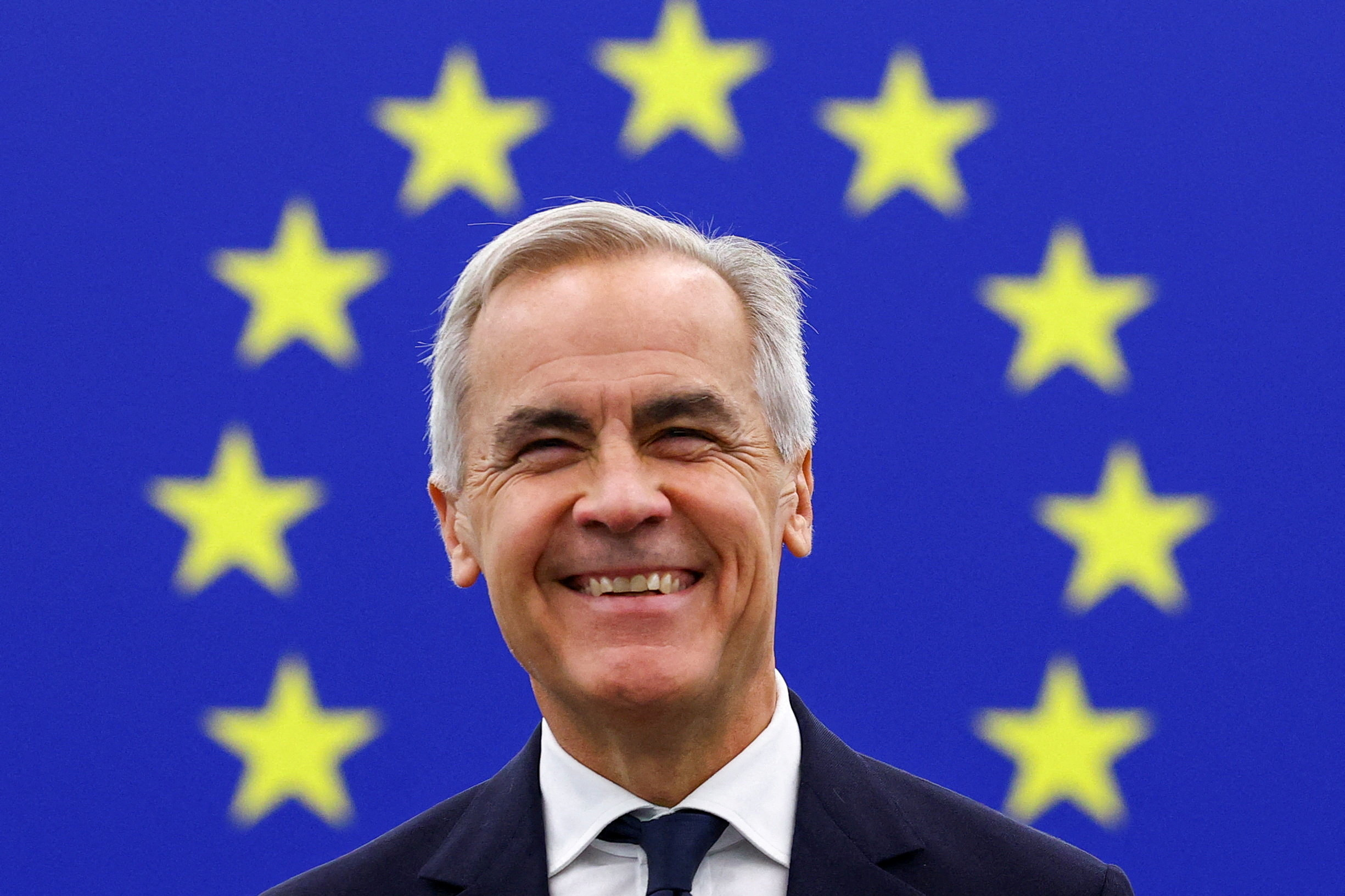
The geopolitical context helps explain why such an arrangement has become conceivable. Canada’s economy is deeply integrated with that of the United States, and Europe cannot replace that relationship. The underlying logic is diversification. As Canadian Prime Minister Mark Carney told the European Parliament, the goal is “collective resilience.” This goes beyond defense to include energy, critical minerals, advanced technologies and supply chains. In these areas, reducing concentrated dependencies can give governments more room for political choice without requiring economic separation from existing partners.
Closer association with the EU adds an institutional dimension to that diversification. Preferential access to a European market of 452 million consumers offers scale, while the EU legal order can provide a degree of predictability in a more volatile international economy. EU decision-making is often slow because political discretion is limited by rules, institutions and multiple levels of approval. What looks like rigidity from the inside can sometimes create predictability for those on the outside.
That advantage should not be overstated. Significant barriers remain within the Single Market, especially in services, capital and energy. Its appeal to outside partners depends partly on the EU’s ability to reduce its own internal fragmentation.
Association Not Committment
The Canadian case also raises a question about the relationship between deep association and enlargement. Candidate countries accept extensive obligations with the goal of gaining the rights of EU membership. Association has a different end point. Deep participation by Canada would not include a vote in the Council, seats in the European Parliament or the other political rights reserved for member states. New forms of association would need to remain clearly separate, institutionally, from the EU’s enlargement process.
For now, “associate membership” can be seen as a political proposal in search of an institutional form. Issues such as market access, regulatory alignment, financial participation, mobility, governance and dispute settlement mechanisms still need to be clarified. The EU-Canada Summit in Montreal on October 29-30 will offer an early opportunity to give the proposal a more concrete shape. Whether it produces a defined institutional framework, or only identifies areas for further negotiation, remains to be seen.
The significance of the Canadian case may ultimately lie less in the label than in the substance behind it. The EU already has association agreements and other forms of privileged cooperation with third countries. What could set the Canadian case apart is the effort to bring several areas of selective participation, from trade and research to defense, energy, critical minerals and technology, into a more coherent relationship, without requiring the extensive adoption of EU law that comes with EEA participation.
For the foreseeable future, a tailored arrangement of this kind seems more realistic than a model based on broad adoption of the EU acquis. Its relevance could also extend beyond Canada, especially to the EU’s relations with partners such as Australia and New Zealand. If it works, it could offer another option for structuring relations with like-minded democratic partners that want closer cooperation with the Union without seeking EU membership. In that sense, Canada could serve as an early test of how much substance the Union can give to differentiated external association while keeping a clear line between association and EU membership.
Dr. Apostolos Samaras holds a Ph.D. in European Law from the Law School of the National and Kapodistrian University of Athens. He is a Research Fellow at the Hellenic Foundation for European and Foreign Policy (ELIAMEP).