Caracas and several surrounding states experienced multiple explosions, aircraft activity, and plumes of black smoke early Saturday, prompting Venezuelan President Nicolás Maduro to declare a national emergency. The strikes, confirmed by a U.S. official to Reuters, follow months of threats by U.S. President Donald Trump against Maduro, including warnings for him to leave power.
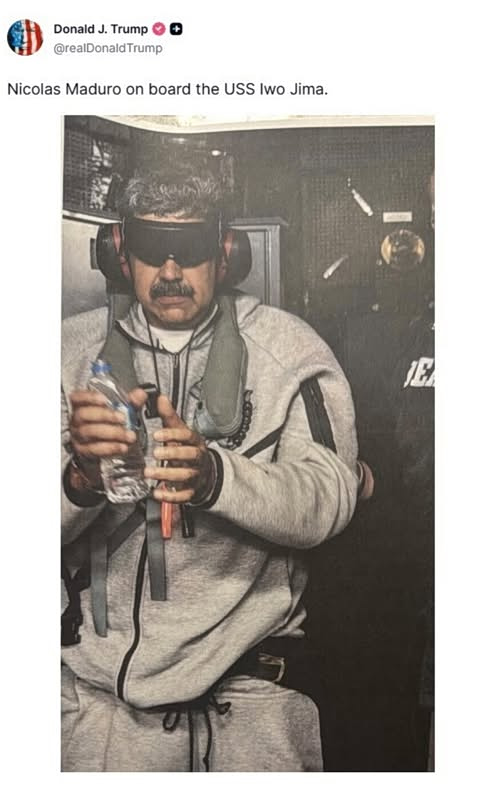
Trump posted on X claiming that Maduro has been captured.
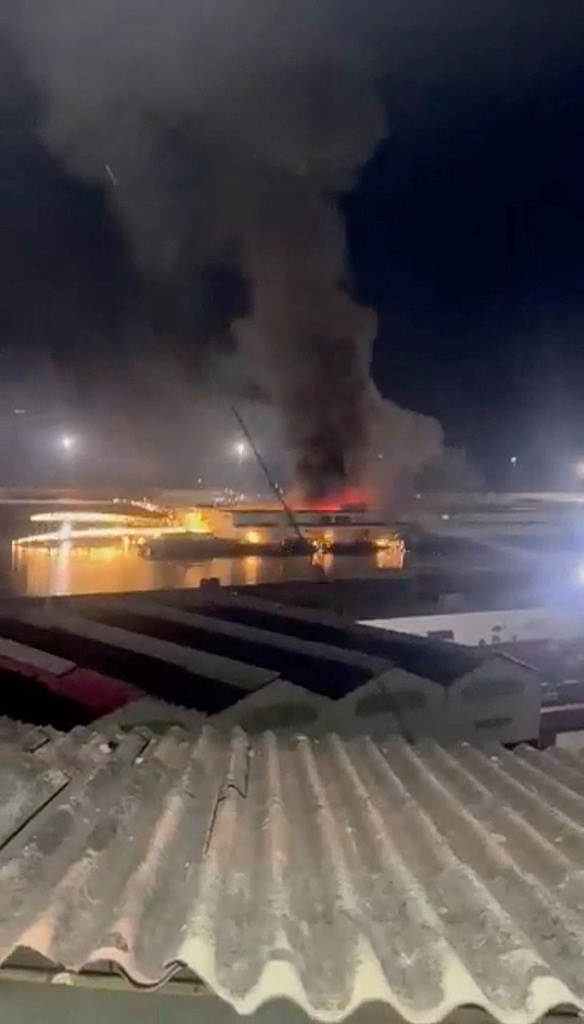
A column of smoke rises following an explosion at the port, in La Guaira, Venezuela, January 3, 2026 in this screen grab obtained from social media video. Social Media/via REUTERS THIS IMAGE HAS BEEN SUPPLIED BY A THIRD PARTY. NO RESALES. NO ARCHIVES. NEWS USE ONLY. Verification: – Port layout, road layout, road divider, gate and buildings matched file and satellite imagery – Date confirmed by official statement and media reports
Residents said the disturbances were concentrated in the southern part of Caracas, close to a major military base. The same area was reported to be without electricity following the incident. The Venezuelan government said attacks also targeted the states of Miranda, Aragua, and La Guaira, mobilizing defense forces. Witnesses described bright orange flashes in the sky, loud blasts, and power outages in southern Caracas near a major military base, with the disturbances lasting roughly 90 minutes.
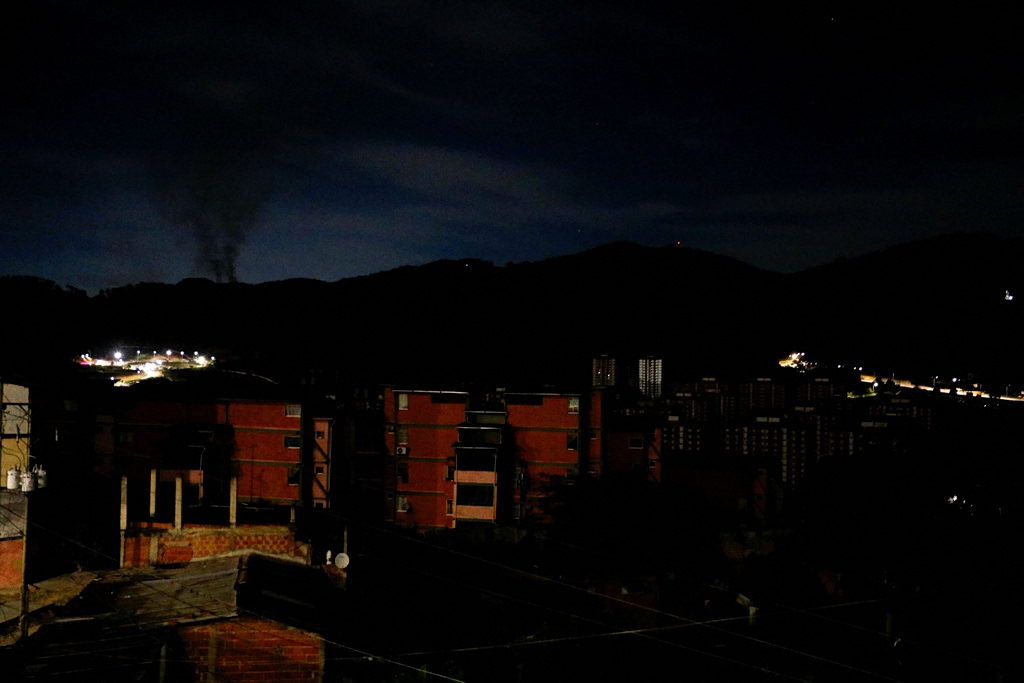
Smoke rises near Fort Tiuna during a full blackout, following explosions and loud noises, amid rising tensions between administrations of U.S. President Donald Trump and Venezuelan President Nicolas Maduro, in Caracas, Venezuela, January 3, 2026. REUTERS/Leonardo Fernandez Viloria
The Venezuelan government, led by President Nicolás Maduro, issued a statement rejecting what it called “military aggression” by the United States. Explosions were reported not only in Caracas but also in the states of Miranda, Aragua, and La Guaira.
Maduro declared a national emergency and urged social and political forces to “activate mobilization plans” in response. He also accused the U.S. of attempting to seize Venezuela’s oil and mineral resources, declaring that “the United States will not succeed” in taking control.
The strikes follow a major U.S. military buildup in the region, including aircraft carriers, warships, and fighter jets, as part of a campaign that also includes a blockade of Venezuelan oil, expanded sanctions, and targeted strikes on vessels alleged to be involved in drug trafficking.
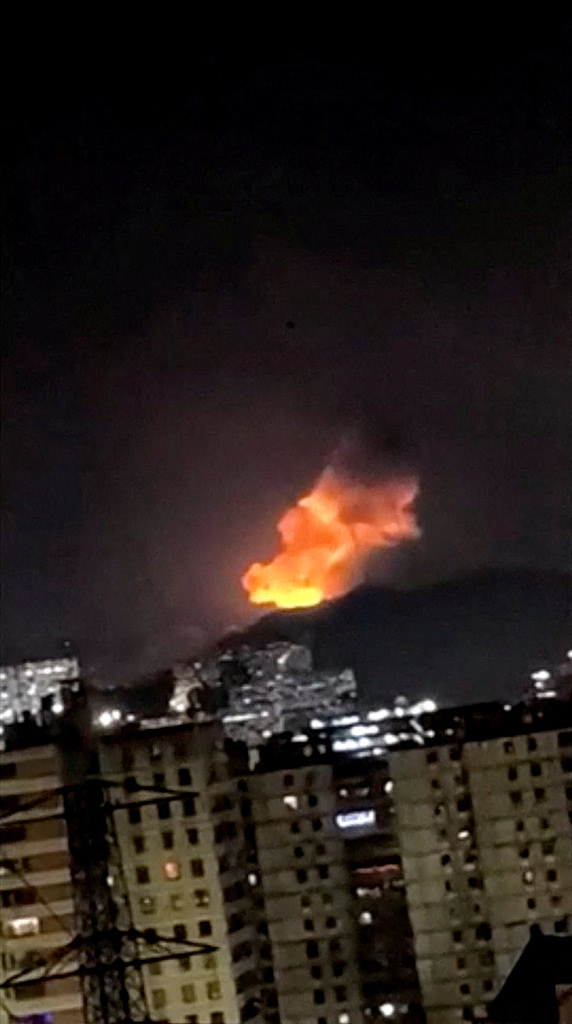
A column of smoke rises during multiple explosions in the early hours of the morning, in Caracas, Venezuela, January 3, 2026 in this screen grab obtained from video obtained by Reuters. Video Obtained by Reuters/via REUTERS THIS IMAGE HAS BEEN SUPPLIED BY A THIRD PARTY. TPX IMAGES OF THE DAY
Meanwhile, Colombian President Gustavo Petro published what he claims is a list of the bombed installations in Venezuela.
Balance confirmado hasta el momento: pic.twitter.com/Tt9JdoyfKr
— Gustavo Petro (@petrogustavo) January 3, 2026
The developments come amid ongoing U.S. pressure on Maduro, including expanded sanctions, an increased U.S. military presence in the region, and strikes on vessels allegedly involved in drug trafficking in the Pacific Ocean and Caribbean Sea. President Donald Trump has also repeatedly promised possible land operations in Venezuela.
The Pentagon referred questions to the White House, which declined to comment. Yet, the US embassy in Venezuela has urged US citizens to depart Venezuela, and to discouraged any travel to Venezuela.